Creating opportunities is like working on small puzzles, we don't know when we might stumble upon that last missing piece that will make all the work we did to assemble all the pieces worth it. @warikoo
People say they want agents. Most of the time they actually need better intermediate representations.
The system cannot act intelligently on a mess it never structured.
Curious how with so much content to learn and keep up with on Youtube, Articles, Research Papers, how do you deal with learning debt.
I keep accumulating things to consume , adding them to long list of "watch later" or "bookmarking" shit on multiple platforms never to return to it.
Trying to solve this problem for myself.
Dear @rpoghaziabad , my passport application (File No: GZ5067523945726) has been stuck for over 3 months with the status showing "Police Verification Report is under review at the RPO."
Could you please look into this and help expedite the clearance? 🙏 @passportsevamea
Sometimes, the best output of a side project can be a sharper worldview, not a working product that sells.
Before this project I had a fuzzier idea of where LLMs help, where document structure matters, and how quickly stale data turns a nice-looking prototype into a liability. That is not a tiny outcome. That kind of clarity usually gets borrowed second-hand and only half believed.
I had to build through it to actually trust it. The repo is the artifact. The change in how I think is the bigger return.
I suspect a lot of "failed" side projects are only failures if you insist on judging them by whether they turned into a company.
If you cannot explain your fact statuses cleanly, your extraction system is not ready for users.
The backend ontology always leaks into the UI. Better to design it on purpose.
In the coming few years, most engineers will heavily rely on AI to build software. Loops will produce and review code, while engineers will be out of the loop, figuratively and literally.
The final product, which is supposed to be used by humans, is unrecognizable by the engineers who built it. Bugs and performance issues will arise, and the engineers will go back to the loops to fix them.
The loops will fix the bugs but produce more others. Eventually, we will reach a stage where we can’t possibly know what is wrong with the system, because the agent built its own framework, libraries and abstraction that only it understands.
The product will get into a state where no one can read or understand the code and only the loops can fix them.
Loops need tokens, and engineers will have no choice but to shovel them like coal into the Titanic’s boilers.
Very few engineers will be able to understand and troubleshoot systems. Those rare engineers who kept their skills sharp will be in high demand when we reach that state.
By all means use AI but not to an extent it dulls your critical thinking.
I built a clause store before I had a good UI. That was the right call.
The temptation with anything AI-shaped is to rush the interface because the interface is what people can react to. I get it. But in this case the clause store was where the product started getting honest.
Once each extracted fact could point back to a clause, section, page, and evidence span, debugging changed completely. I could inspect mistakes. I could argue with a result concretely. I could fix the system instead of only changing the phrasing around it.
UI matters. It just matters less than having something real to stand on.
I trust systems more when they can say "I do not know" in a structured way.
That sounds obvious until you look at how many products refuse to do it. They blur uncertainty into tone. They phrase missing facts as if they were exclusions. They let the UI sound cleaner than the underlying evidence deserves.
In this project, one of the best things the system learned to do was separate present, not found, ambiguous, conflicting, and requires manual review. That made the output less magical and more trustworthy.
I think more AI products should get comfortable with that trade. A smaller truth is better than a polished bluff.
RAG is often used to avoid doing schema design.
If the real problem is representation, better retrieval just gets you to the same misunderstanding faster.
The smartest thing a builder can do is kill the wrong ambition without discarding the right artifact.
Sometimes stopping is not the failure. Sometimes stopping is the most technically honest decision in the project.
I have felt anger, grief, and frustration during this protest, partially due to my inability to partake, and partly because of conversations I have had with family and friends who have been blinded, hold unrequited hate for people who don't deserve it, and lack empathy for everyone who needs it.
However, this is also the first time I have realized just how much power the truth holds. Asking them point-blank:
"What if it was your child who committed suicide?"
"Can you look into the eyes of a crying mother and tell her, 'Your son was JUST weak'?"
"How can someone's suffering make you happy? Doesn't that make you everything Sanatan is not?"
They perceive an existential threat that they will never witness in their lifetime, but years of reading lies become their truth. This is heightened by a lack of personal opinion, because they themselves were never inquisitive enough to rebel when they were young.
They have invested so much time cultivating a view that standing up for what is right makes them insecure, and thus, their pride renders them insensitive.
But in a time like this, I keep reminding myself that persistently asking the right questions is the only thing that shuts them down. It may not change them, but it sure nudges their beliefs enough to stop patronizing us.
If your decisions are guided by what three people will think behind your back rather than the future your children or their children will inherit, then you are nothing but a coward.
And the reality is that such people are close and dear to us, and we love them. That is the pain we will have to endure and live with as a generation that is too rebellious for elders who are too meek to question and too weak to answer.
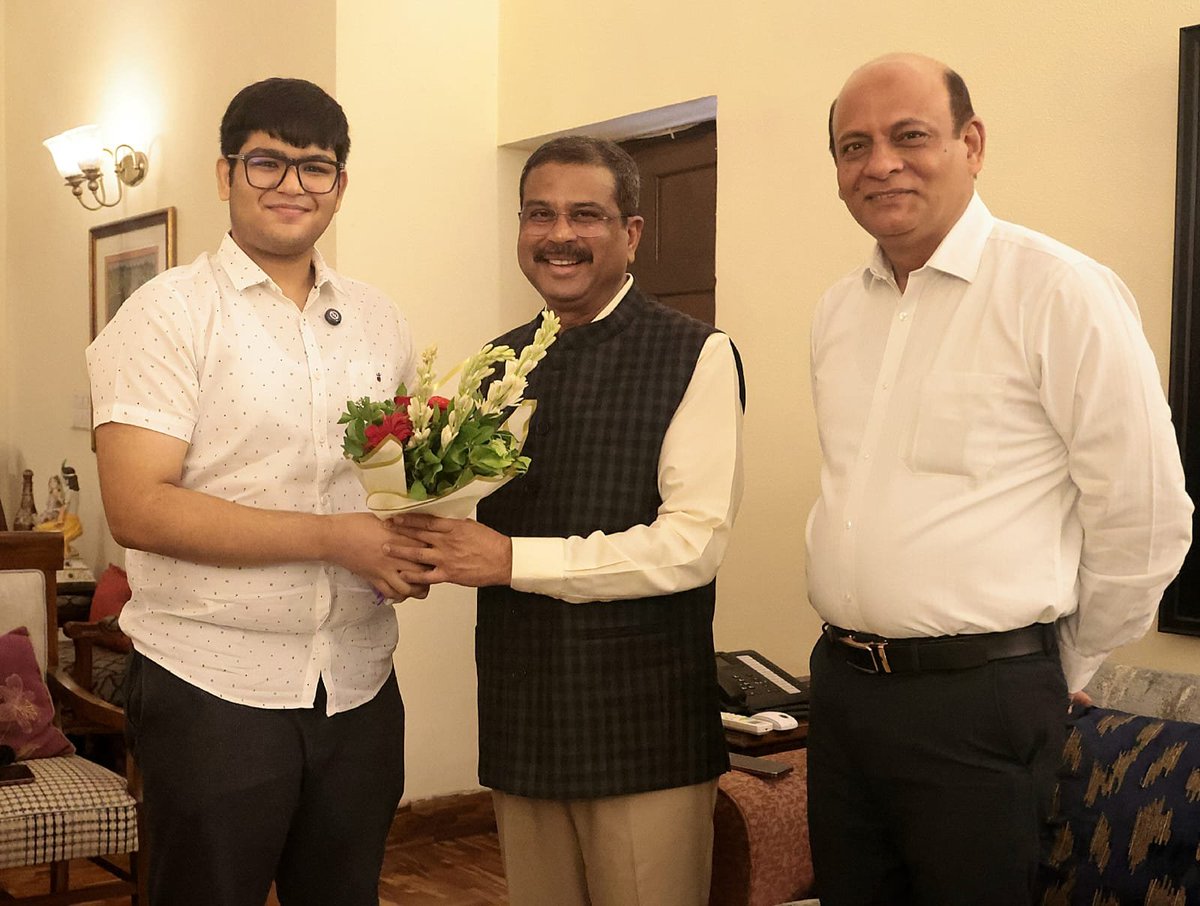
Met Panshul Bansal from Haryana, who has secured AIR 2 in NEET UG 2026. Congratulated him on this outstanding achievement and wished him success in his career .
His accomplishment reflects the dedication, perseverance and aspiration of India's young minds. I am confident he will contribute meaningfully to the nation's healthcare ecosystem through excellence and service.
Building a gold corpus is boring right up until it saves you from shipping nonsense.
It is slow work. You read policies line by line. You argue with labels. You clean up edge cases that nobody on the outside will ever praise. Then one day the benchmark catches a regression that a polished demo would never admit.
That happened repeatedly in this project. The benchmark was small on purpose, just 20 reviewed policies, but it was enough to force the pipeline across insurers and formatting styles while still being manually checkable.
People often talk about evals like they are optional maturity work. In anything even slightly high-stakes, they are not maturity work. They are the floor.
In high-stakes domains, provenance is not a feature. It is the product.
If the system cannot show where a fact came from, confidence is doing more work than evidence.
The hidden moat in insurance is not recommendations. It is source governance.
Lots of people can build a comparison UI. Lots of people can run a model over a few documents and get something that looks plausible. The hard part is keeping product truth tied to current, official, version-correct source material.
That means knowing which document wins when wording, brochure, CIS, and benefit tables disagree. It means knowing when a product is stale, renamed, variant-split, or quietly withdrawn. It means having the discipline to say "we do not know yet" when the source bundle is incomplete.
This is less glamorous than agent demos. It is also much closer to the actual work.
My extraction pipeline improved the moment I stopped using the LLM as the parser.
That sounds obvious after the fact. It was not obvious in the middle of the build.
I wanted the elegant story where one strong model, a decent prompt, and some preprocessing would do most of the work. What actually helped was the boring separation of concerns:
- parser: recover layout and structure
- table engine: preserve header lineage
- clause store: give each fact a legal address
- extractor: map concepts to evidence
- LLM: refine only when the deterministic path runs out of road
Once those roles were separated, mistakes became debuggable. Before that, "the model probably misunderstood it" was doing too much work.
Public PDFs are not a dataset. They are a maintenance obligation.
The moment users expect freshness, you are no longer doing one-time extraction. You are signing up for ongoing source governance.