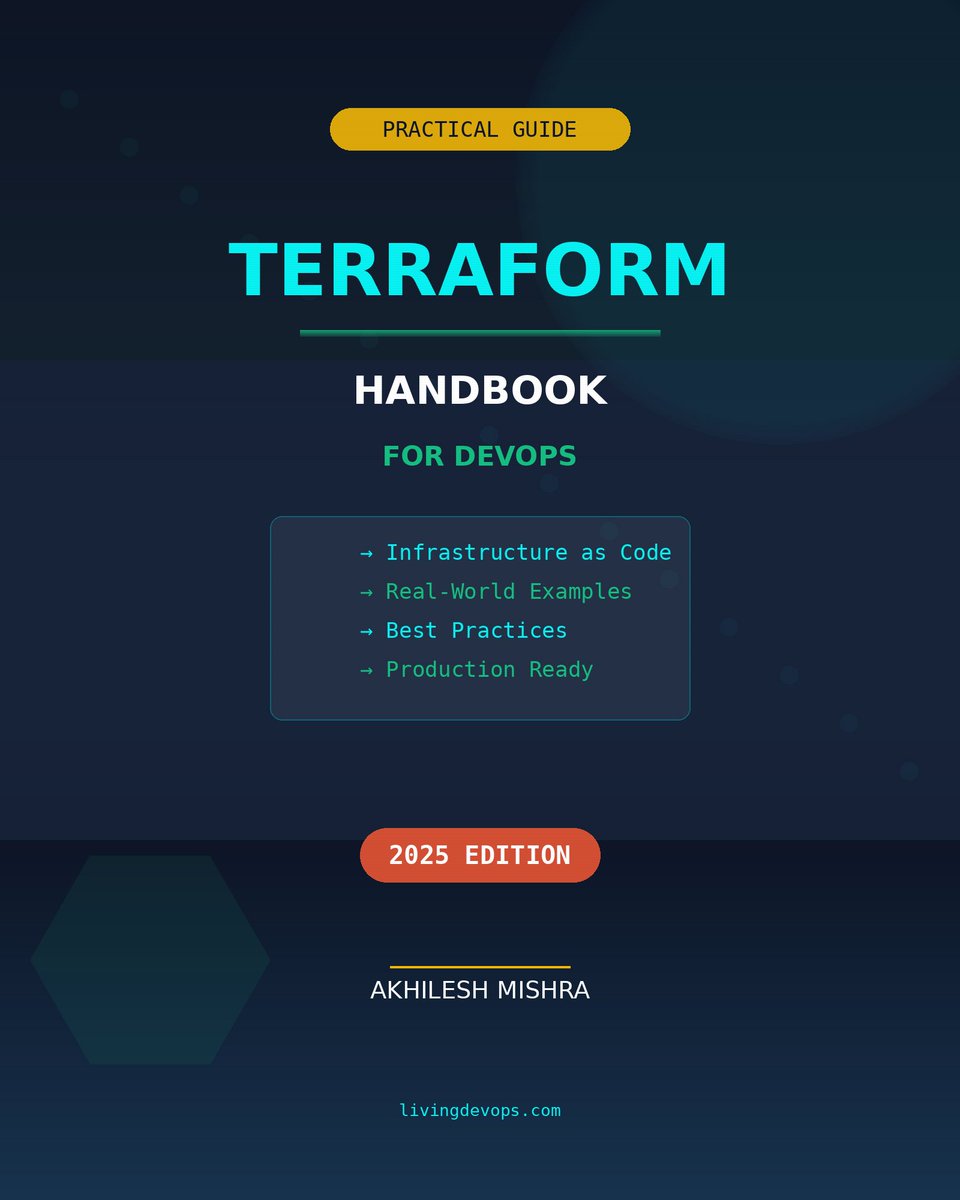
Terraform is the one skill that separates DevOps engineers who click through consoles from those who deploy infrastructure in seconds.
I've had written a comprehensive "Terraform Handbook for DevOps Engineers" ebook that thousands of people loved
and I'm giving it away for free.
To get it for free, just do 3 things.
✓ Follow me (for DM access)
✓ Retweet this post
✓ Comment "Terraform"
And I will personally send you that.
P.S. If i missed sending you due to some issues, just DM me and I will share
Before you learn Kubernetes, understand why to learn Kubernetes. Or should you?
25 years back, if you wanted to run an application, you bought a $50,000 physical server. You did the cabling. Installed an OS. Configured everything. Then run your app.
Need another app? Buy another $50,000 machine.
Only banks and big companies could afford this. It was expensive and painful.
Then came virtualization. You could take 10 physical servers and split them into 50 or 100 virtual machines. Better, but you still had to buy and maintain all that hardware.
Around 2005, Amazon had a brilliant idea. They had data centers worldwide but weren't using full capacity. So they decided to rent it out.
For startups, this changed everything. Launch without buying a single server. Pay only for what you use. Scale when you grow.
Netflix was one of the first to jump on this.
But this solved only the server problem.
But "How do people build applications?" was still broken.
In the early days, companies built one big application that did everything. Netflix had user accounts, video player, recommendations, and payments all in one codebase.
Simple to build. Easy to deploy. But it didn't scale well.
In 2008, Netflix had a major outage. They realized if they were getting downtime with just US users, how would they scale worldwide?
So they broke their monolith into hundreds of smaller services. User accounts, separate. Video player, separate. Recommendations, separate.
They called it microservices.
Other companies started copying this approach. Even when they didn't really need it.
But microservices created a massive headache. Every service needed different dependencies. Python version 2.7 for one service. Python 3.6 for another. Different libraries. Different configs.
Setting up a new developer's machine took days. Install this database version. That Python version. These specific libraries. Configure environment variables.
And then came the most frustrating phrase in software development: "But it works on my machine."
A developer would test their code locally. Everything worked perfectly. They'd deploy to staging. Boom. Application crashed. Why? Different OS version. Missing dependency. Wrong configuration.
Teams spent hours debugging environment issues instead of building features.
Then Docker came along in 2012.
Google had been using containers for years with their Borg system. But only top Google engineers could use it, too complex for normal developers.
Docker made containers accessible to everyone. Package your app with all dependencies in one container. The exact Python version. The exact libraries. The exact configuration.
Run it on your laptop. Works. Run it on staging. Works. Run it in production. Still works.
No more "works on my machine" problems. No more spending days setting up environments.
By 2014, millions of developers were running Docker containers.
But running one container is easy. Running 10,000 containers? That's a nightmare.
Microservices meant managing 50+ services manually. Services kept crashing with no auto-restart. Scaling was difficult. Services couldn't find each other when IPs changed.
People used custom shell scripts. It was error-prone and painful. Everyone struggled with the same problems. Auto-restart, auto-scaling, service discovery, load balancing.
AWS launched ECS to help. But managing 100+ microservices at scale was still a pain.
This is exactly what Kubernetes solved.
Google saw an opportunity. They were already running millions of containers using Borg. In 2014, they rebuilt it as Kubernetes and open-sourced it.
But here's the smart move. They also launched GKE, a managed service that made running Kubernetes so easy that companies started choosing Google Cloud just for it.
AWS and Azure panicked. They quickly built EKS and AKS. People jumped ship, moving from running k8s clusters on-prem to managed kubernetes on the cloud.
12 years later, Kubernetes runs 90% of production infrastructure. Netflix, Uber, OpenAI, Medium, they all run on it.
Now advanced Kubernetes skills pay big bucks.
Why did Kubernetes win?
Perfect timing.
Docker has made containers popular. Netflix made microservices popular. Millions of people needed a solution to manage these complex microservices at scale.
Kubernetes solved that exact problem.
It handles everything. Deploying services, auto-healing when things crash, auto-scaling based on traffic, service discovery, health monitoring, and load balancing.
Then AI happened. And Kubernetes became even more critical.
AI startups need to run thousands of ML training jobs simultaneously. They need GPU scheduling. They need to scale inference workloads based on demand.
Companies like OpenAI, Hugging Face, and Anthropic run their AI infrastructure on Kubernetes. Training models, running inference APIs, orchestrating AI agents, all on K8s.
The AI boom made Kubernetes essential. Not just for traditional web apps, but for all AI/ML workloads.
Understanding this story is more important than memorizing kubectl commands.
Now go learn Kubernetes already.
Don't take people who write "Kubernetes is dead" articles are just doing it for views/clicks. They might have never used k8s.
Para evitar el impuesto del 8% a videojuegos, jóvenes crearon una plataforma que te dice quién es tu diputado y cómo escribirle. Sí, más útil que cualquier sitio del gobierno. No es solo gaming, es democracia. ¿Ya la usaste? Presiona con inteligencia.
Todo lo dicho en el video representa únicamente una opinión personal.
Si yo fuera dirigente de un partido opositor, promovería la candidatura de @KarlaMaEstrella para la alcaldía de Hermosillo.
Que se enfrentara en la elección @DianaKarinaBa
Sería poético.
Pero como no, pues no!
Si han visto a mi sobrino, por favor avisa al 6623434448. Si puedes compartir, te agradecemos.
José Alberto Mendivil Bojórquez desaparecido en Hermosillo. 🤍
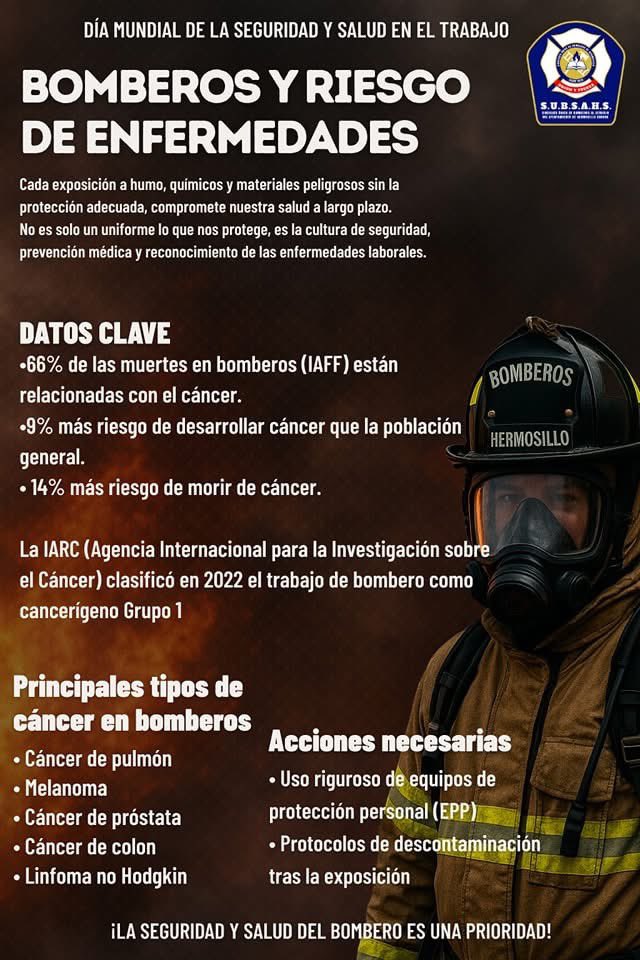
La seguridad y la salud del bombero no pueden esperar.
Hacemos un llamado respetuoso pero firme a los diputados responsables de la Comisión de Salud, Comisión de Asuntos Laborales y Comisión de Protección Civil para que analicen de manera urgente esta situación.
Existen ya jurisprudencias en otras ciudades y amplia información avalada por instituciones internacionales que respaldan nuestra causa.
Desde el 2022, la Organización Mundial de la Salud (OMS) reconoció oficialmente que ser bombero es desempeñar un trabajo cancerígeno.
Cada día, cada servicio, cada emergencia… arriesgamos nuestra vida.
La exposición continua a químicos tóxicos, humo y condiciones extremas nos convierte en víctimas silenciosas del cáncer y otras enfermedades ocupacionales.
No pedimos privilegios:
•Exigimos que el ISSSTESON realice las consideraciones y adecuaciones necesarias para el reconocimiento del cáncer y demás enfermedades laborales en bomberos.
•Solicitamos la apertura del análisis para la jubilación temprana, justa y proporcional al desgaste físico y emocional que implica nuestra labor.
Proteger a quienes protegen no es un favor, es un deber.
No se puede esperar más.
Reconocer nuestras enfermedades y garantizar nuestra dignidad laboral es un acto de justicia y humanidad.
¡La seguridad y salud del bombero no pueden esperar!
@palomateranv@irissanchezchiu@amairanipe25@DavidFigueroaO@OscarOrtizCTMS@DelValleColosio@ManuelScott07@MarcelaMAVAL@CongresoSon@IssstesonGob@gobiernosonora@HermosilloGob@AdolfoSalazar_@tonoastiazaran
Here's my latest ISS shot formatted for use on a mobile phone. Feel free to download it and use it as a wallpaper.
If you want to download it with less compression, or get a free 4k/ultrawide download for your computer, check the link in the reply to this post.