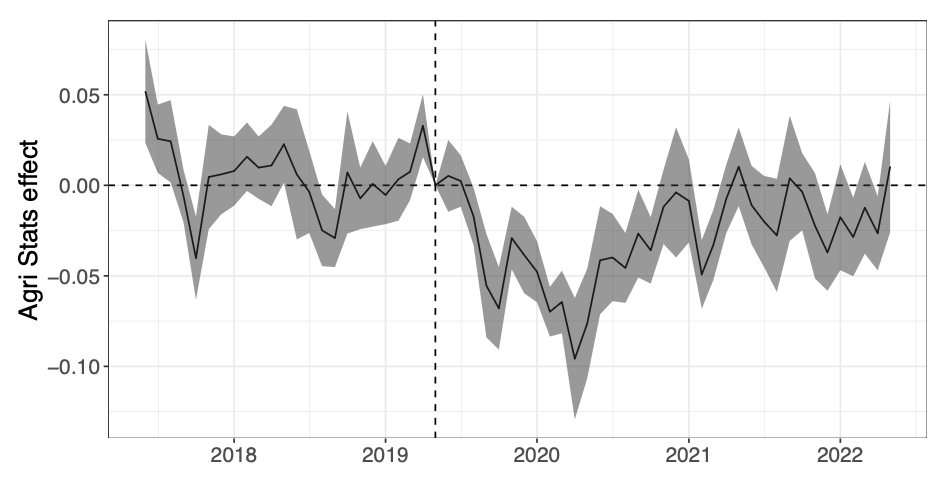
Competing turkey processors shared detailed price, quantity, and cost data with each other through a common data provider. When the provider left the market, the relative prices of participants fell by 5% in the following year. Were they colluding?
A 🧵 about my JMP: 1/
My fantastic student 𝗟𝗶𝗼𝗿 𝗦𝗵𝗮𝗯𝘁𝗮𝗶 from @KelloggSchool@NorthwesternU is on the job market! His JMP studies how firms deploy talent to pursue new innovation opportunities, combining novel measures from patent data with clever identification.
If you're hiring in finance or economics, especially in innovation, climate & energy, take a close look at him! He is amazing!
https://t.co/ZstHSojmHC
Very excited to see my fantastic student 𝗧𝗮𝗸𝗮𝗮𝗸𝗶 𝗦𝗮𝗴𝗮𝘄𝗮 on the job market! His JMP studies the macroeconomic trade-offs of banking regulation, combining clever time-series identification, bank-level evidence & a new quantitative macro-finance model.
If you're hiring in macro or macro-finance, take a close look at him. He is truly amazing!
https://t.co/4bmuCsxBKV
@NUEconomics@NorthwesternU
A motivation for this project is to develop methods that can help in doing so.
My website: https://t.co/gueiXBEeHf
Full paper: https://t.co/q0rDEItmAq
Theory paper for the bounds: https://t.co/yHoqyEhzRM
Hope you like it, especially if you're on a search committee! 20/20
Competing turkey processors shared detailed price, quantity, and cost data with each other through a common data provider. When the provider left the market, the relative prices of participants fell by 5% in the following year. Were they colluding?
A 🧵 about my JMP: 1/
So, "safe harbor" rules that allow firms to share aggregated information may not always be effective at preventing collusion. A more fruitful regulatory strategy may be to use existence of an exchange as a signal to search for evidence of collusion. 19/