Want to explore how to take back the #OpenWeb in #HigherEd?? Then come to my workshop at @OEBconference#OEB2022 Wednesday, Nov 23! Time: 10:00 – 13:00. https://t.co/K3Lvcskq6m
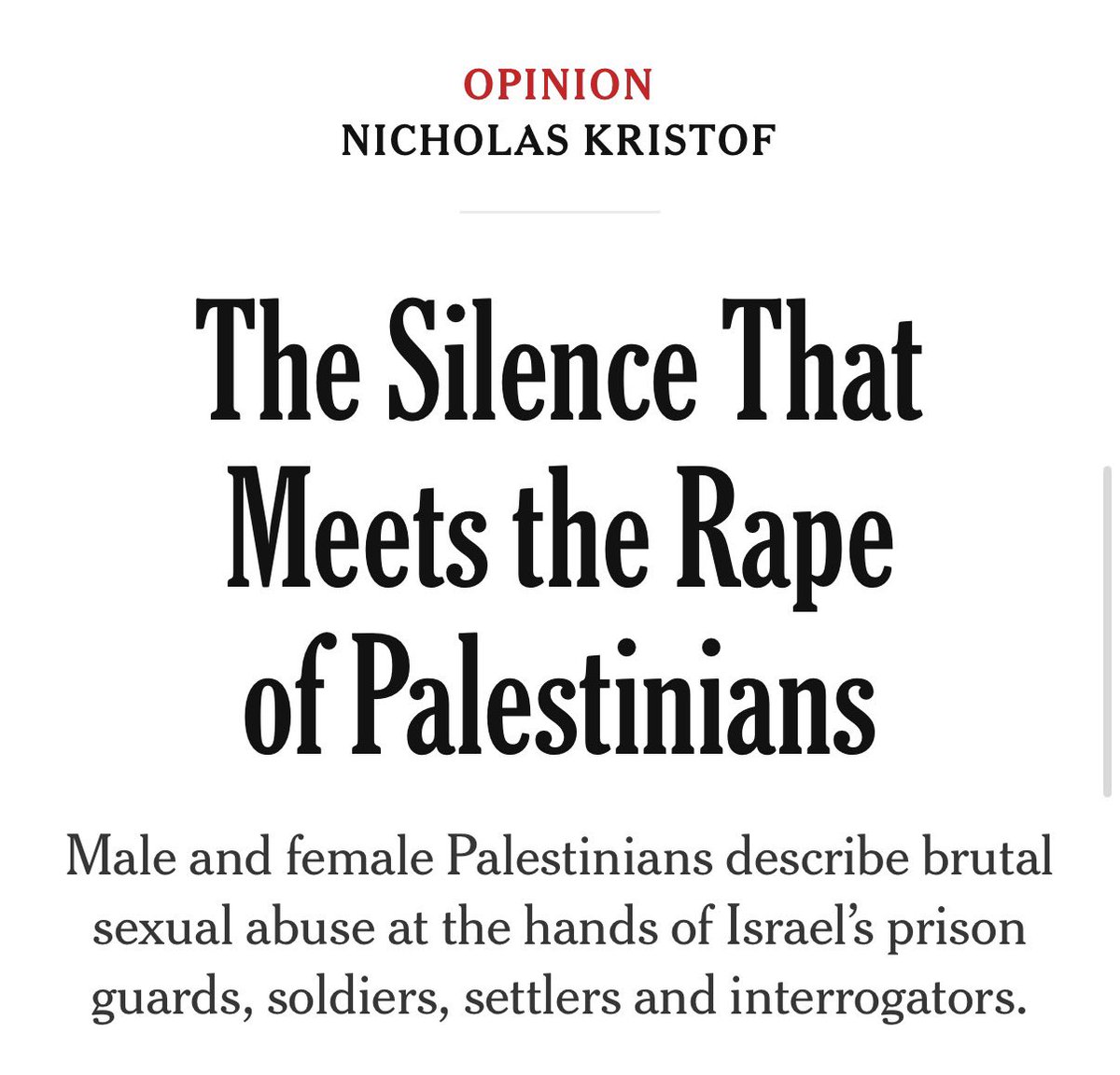
This is a hard article to read, but I hope you'll do so. I've spent some time reporting on widespread rape and other sexual violence of Palestinian male and female prisoners by Israeli authorities, and the article is now published. The assault victims were warned not to give speak of what they endured -- they were sometimes told they would be killed or raped if they gave interviews -- but they found the courage to do so. One man described being raped three times in a single day in Israeli prison, the third time after he tried to protest. A young woman said the guards would come in at the beginning of each shift and strip her naked and abuse her. Another reported that she was shown photos of herself being raped and warned they would be released unless she cooperated with Israeli intelligence. Even three children who had been detained told me they had been sexually abused. Look, whatever our position on the Middle East, we should be able to agree on being anti-rape. Sexual assaults were horrific when Israeli women were targeted on Oct. 7, and they're equally horrific when Israeli authorities use them against Palestinians day after day after day. We should be able to find common ground in opposing rape. Here's a gift link to the article: https://t.co/aMMHId49OO
If there is absolutely one piece of journalism you must read today, make sure it is this hard hitting reportage by @NickKristof on the rape of Palestinian prisoners by Israeli guards. I do hope mainstream news channels in America make it their focus tonight
Web history disappears when it can’t be preserved.
Today, many publishers are blocking the Wayback Machine from archiving parts of the public web, putting decades of digital history at risk.
Tell publishers: don’t block the Wayback Machine. Sign the petition ➡️ https://t.co/m1l2K4swKI
#WaybackMachine
🚨BREAKING: Anthropic just published a study mapping exactly which jobs its own AI is replacing right now.
The workers most at risk are not who anyone expected. They are older. They are more educated. They earn 47% more than average. And they are nearly four times more likely to hold a graduate degree than the workers AI is not touching.
The argument is straightforward. Anthropic built a new metric called "observed exposure." Not what AI could theoretically do. What it is actually doing right now in professional settings, measured against millions of real Claude conversations from enterprise users.
For computer and math workers, AI is theoretically capable of handling 94% of their tasks. It is currently handling 33% of them. For office and administrative roles, theoretical capability is 90%. Current observed usage is 40%. The gap between what AI can do and what it is already doing is enormous. The researchers are explicit about what comes next. As capabilities improve and adoption deepens, the red area grows to fill the blue.
The demographic finding is what makes the paper uncomfortable. The most AI-exposed workers earn 47% more on average than the least exposed group. They are more likely to be female. They are more likely to be college educated. This is not a story about warehouse workers or truck drivers. It is a story about lawyers, financial analysts, market researchers, and software developers. The exact group whose education was supposed to insulate them.
Computer programmers showed the highest observed AI exposure at 74.5%. Customer service representatives at 70.1%. Data entry keyers at 67.1%. Medical record specialists at 66.7%. Market research analysts and marketing specialists at 64.8%. These are not predictions. These are measurements of work that is already happening on AI platforms right now.
Then there is the pipeline finding nobody is talking about loudly enough.
Anthropic's researchers found a 14% decline in the job-finding rate for workers aged 22 to 25 in highly exposed occupations since ChatGPT launched. No comparable effect for workers over 25. Entry-level roles were never just jobs. They were the training ground where junior analysts became senior analysts, where junior lawyers learned how arguments hold together. If that layer disappears, nobody has answered the question of where the next generation of senior professionals comes from.
The detail buried in the paper that most coverage missed: 30% of American workers have zero AI exposure at all. Cooks. Mechanics. Bartenders. Dishwashers. The technology reshaping professional careers is completely irrelevant to roughly a third of the workforce. The divide is no longer between high skill and low skill. It is between presence and absence.
The company publishing this study is the same company selling the AI doing the replacing. Anthropic had every commercial incentive to soften these findings. They published them anyway.
If you spent four years and $200,000 on a degree to land a white collar career, the company that builds Claude just confirmed your job is more exposed than the bartender pouring drinks at your graduation party.
Source: Anthropic, "Labor market impacts of AI: A new measure and early evidence"
PDF: https://t.co/taYgsIfiTj
The web is disappearing 🕳️
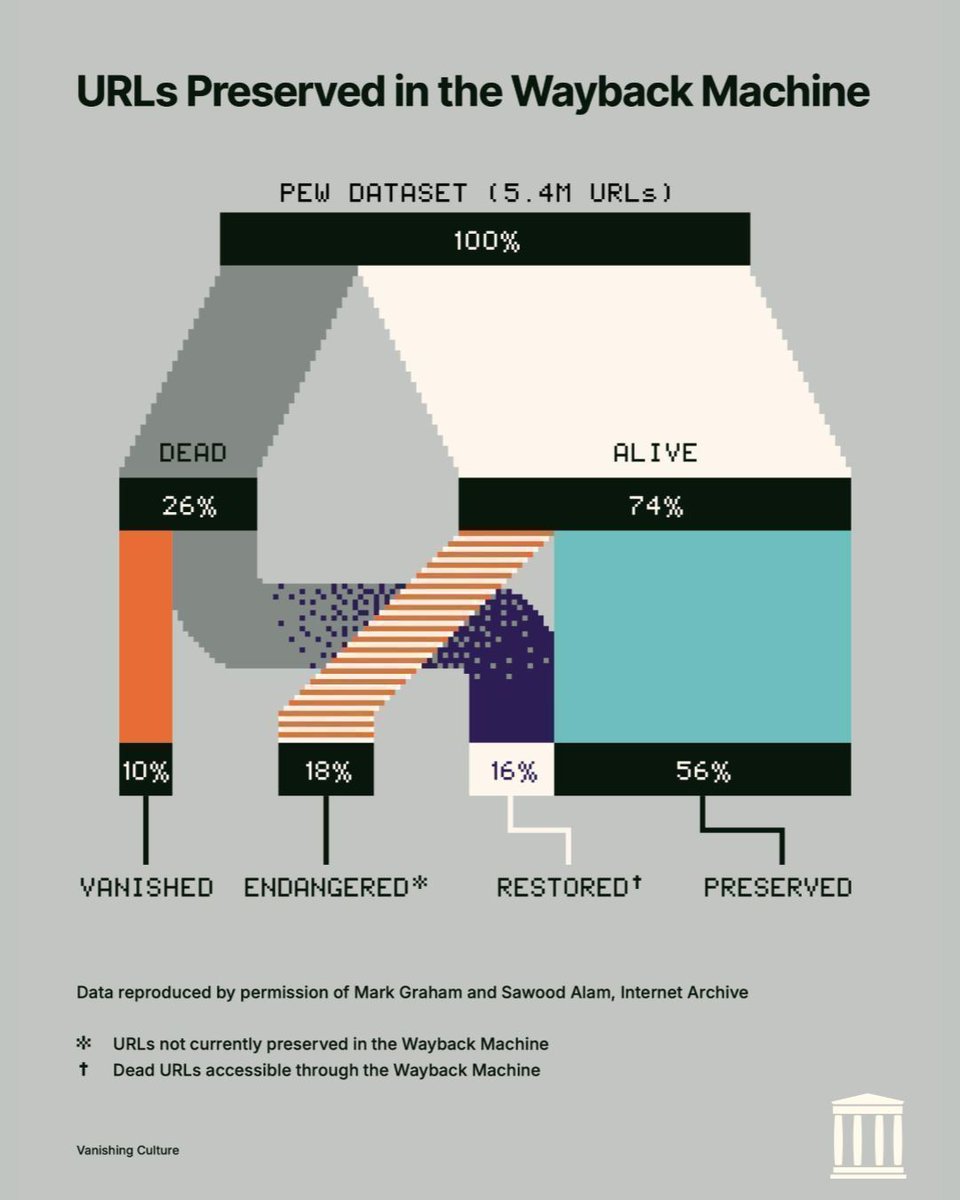
According to a Pew Research Center report, 26% of pages from 2013-2023 are no longer accessible.
But that’s not the whole story.
In a new study published in Internet Archive's book, VANISHING CULTURE, data scientists working with the Wayback Machine have found:
16% have been restored through the Wayback Machine.
56% are preserved before they disappear.
Preservation is the remedy for cultural loss.
📚 Read VANISHING CULTURE free from the Internet Archive
📖 Download & read: https://t.co/BrawXOwMBr
🛒 Purchase in print: https://t.co/EB58IliqDm
#VanishingCulture #DigitalMemory #InternetArchive #BookTwitter
In the face of UN's inability and Italy's unwillingness to protect me from the impact of US sanctions in Europe, I am glad #Courage is acting to defend me, ICC judges/prosecutors and Palestinian HR organisations.
PLEASE SIGN the PETITION and share.
Best-selling Irish author Sally Rooney has told the high court that the proscription of Palestine Action under terror laws means she is unlikely to be able to publish new novels in the UK and may have to withdraw her current books from sale.
The ban on Palestine Action as a terrorist organisation could also leave the Normal People author’s British publisher and the BBC - which has adapted two of Rooney’s works for TV - at risk of being accused of funding terrorism if they pay her royalties, she said.
The effect on Rooney’s work was held up as an example of how the ban is impacting freedom of expression on the second day of the landmark judicial review into whether the government’s proscription of Palestine Action is lawful.
Rooney has repeatedly affirmed her support for Palestine Action, which has targeted the sites and subsidiaries of Israeli arms company Elbit Systems in the UK amid Israel’s genocidal war on Gaza.
In witness statements provided to the high court on 27 November, Rooney said Israel had committed genocide in Gaza – a view shared by a UN commission. She said Palestine Action's activity was from a “long and proud tradition of civil disobedience - the deliberate breaking of laws as an act of protest”.
Rooney added: “I myself have publicly advocated the use of direct action, including property sabotage, in the cause of climate justice. It stands to reason that I should support the same range of tactics in the effort to prevent genocide.”
Back in August, Rooney said she intended to use royalties from her work “to go on supporting Palestine Action”. Following this, Rooney said she was warned by the independent producer of her BBC dramatisations that any payment to her for those shows could be a breach of terrorism laws.
In September, she was advised not to travel to the UK to accept the Sky Arts Award for Literature in recognition of her latest novel, Intermezzo.
Rooney has also called out the “years-long imprisonment without trial” of Palestine Action activists and expressed fears for those currently on hunger strike.
The final day of the judicial review is scheduled for Tuesday 2 December.
Francesca Albanese is given a standing ovation at the Nelson Mandela 🇿🇦 Annual Lecture
As they chant:
“The People United can never be defeated”
The whole world should stand & applaud the bravery of Francesca
Free Palestine 🇵🇸
Un pezzo di storia.
L’appello promosso da Primo Levi, Natalia Ginzburg, Edith Bruck e altri su @repubblica il 15 luglio 1982. Parole incredibilmente attuali anche 43 anni dopo
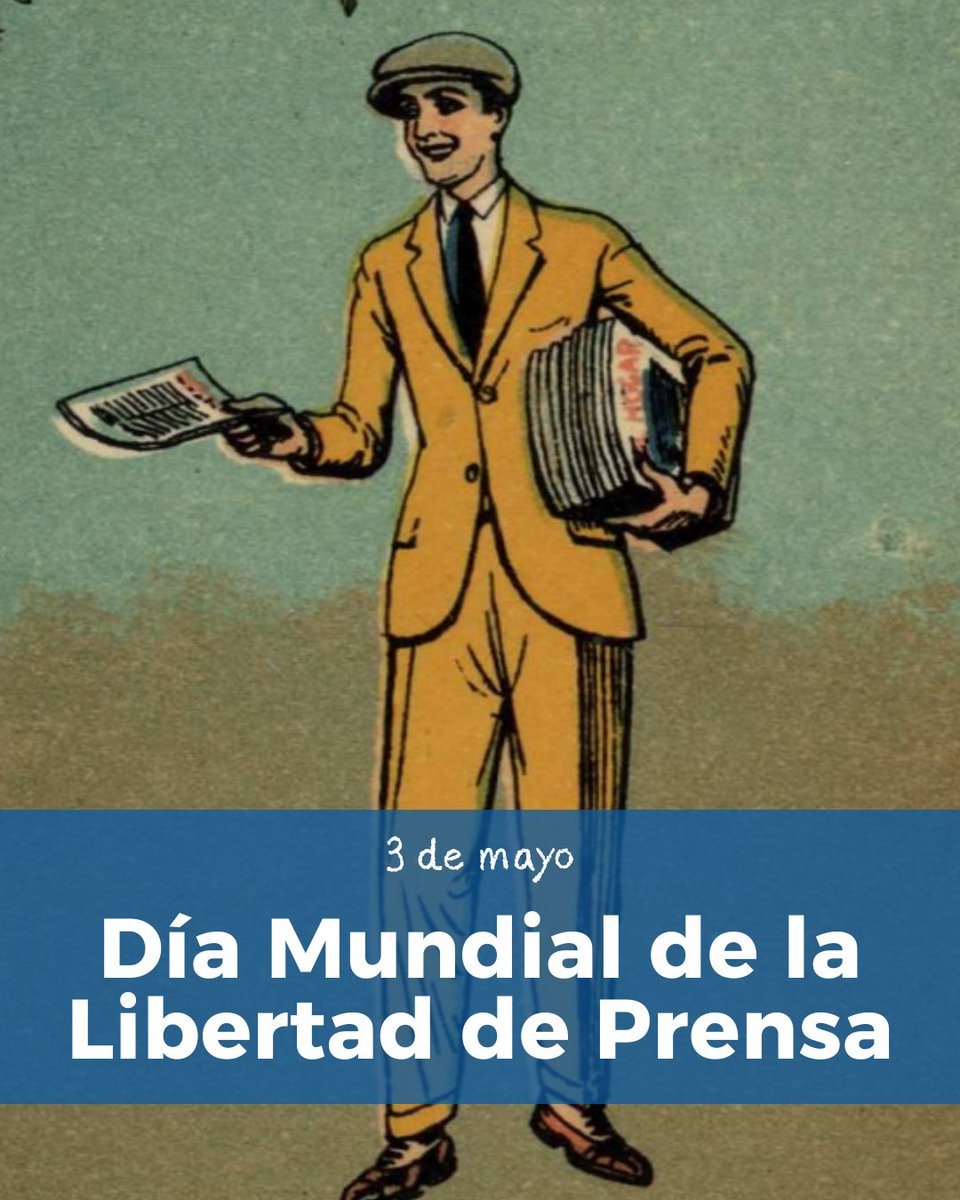
🗞️✨ Hoy es el #DíaDeLaLibertadDePrensa, una fecha para defender el derecho a una información veraz, rigurosa y plural. Porque una sociedad libre necesita periodistas críticos, comprometidos y bien formados.