Bird's-Eye Views of Victorian London
These aerial views of London were drawn by Thomas Sulman in the 1880s while soaring above the city in a balloon. The drawings were then engraved on woodblock by George William Ruffle (1838-1901) and W.M.R. Quick.
https://t.co/68JraqbgxE
We are called "the elderly." But that quiet label hides something most people rarely stop to consider. We are the last living witnesses of a world that no longer exists.
Look at us and you might see gray hair, slower steps, and the patience that time teaches.
But listen to our story — really listen — and you'll realize something extraordinary.
We are the only generation in human history to have lived a fully analog childhood and a fully digital adulthood.
That's not a small thing. That's one of the most breathtaking journeys a human being has ever been asked to make.
We were born in the 1940s, 50s, and early 60s, into a world still rebuilding from the rubble of World War II.
Our toys were marbles and hopscotch and card games at kitchen tables. When the streetlights flickered on, that was it — childhood adventures were over, and it was time to go home. No smartphones. No streaming. No endless scroll.
We built our memories in the real world. With scraped knees and laughter echoing down streets and friendships formed face to face.
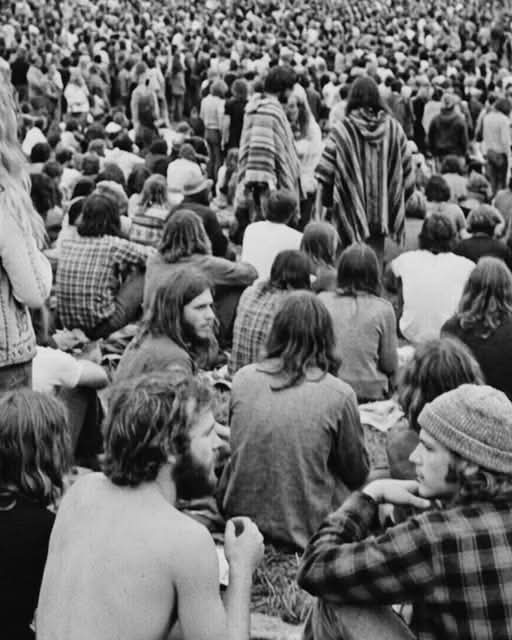
In 1969, we sat in living rooms staring at black-and-white televisions as Neil Armstrong took humanity's first steps on the Moon. Hundreds of thousands of us stood in muddy fields at Woodstock believing — really believing — that music and community could reshape the future.
We fell in love to vinyl records spinning on turntables. We waited days, sometimes weeks, for handwritten letters to arrive. We learned patience because information didn't come instantly. Mistakes were fixed with erasers — not a delete button.
Then the world transformed.
Machines that once filled entire rooms shrank to devices lighter than a paperback. We went from rotary phones and party lines to seeing the face of someone we love on the other side of the ocean — instantly, on something that fits in a pocket.
We watched the birth of the personal computer. The arrival of the internet. The smartphone. Artificial intelligence.
And through every single shift — we adapted.
Not because it was easy. Because that's what our generation does.
We also carry the weight of history in our bodies.
We grew up afraid of polio and tuberculosis. We watched science defeat them. We witnessed the discovery of the structure of DNA, the decoding of the human genome, the transformation of medicine itself. We survived pandemics across decades — and kept going.
Few generations have been asked to absorb so much change in a single lifetime.
And through all of it, certain things never changed.
We still know the joy of a cold glass of lemonade on a hot afternoon. The taste of vegetables picked straight from a garden. The value of a long conversation that unfolds slowly, without a screen interrupting it.
We have celebrated births and mourned losses. Carried the stories of friends who are gone. Watched the world become something our younger selves couldn't have imagined — and found ways to belong in it anyway.
We are not relics.
We are living bridges between two entirely different worlds.
Our memory carries something the modern world needs — proof that progress doesn't have to erase wisdom. That speed doesn't have to replace patience, kindness, or reflection.
So when someone calls us elderly, we can smile.
Because behind that word is something remarkable.
We crossed two centuries. Witnessed eight decades of transformation. Walked from handwritten letters to artificial intelligence — and never lost our sense of what actually matters.
When I first learned about the Pax Romana, I assumed it meant Rome had figured something out. That somewhere between the chaos of the Republic and the madness of later emperors, there was this golden window where civilization actually worked. And in a sense, that's true.
The Pax Romana ran from 27 BC to 180 AD. Two centuries of relative stability across an empire stretching from Scotland (ok from Hadrian's Wall) to Syria, holding roughly 70 million people together under a shared legal framework (although local customs were maintained).
As a share of the world's population, that's staggering.
I can travel from one end of Europe to the other today and cross a dozen borders. A Roman merchant did the same trip without showing a single document.
Daily life improved in real, measurable ways. Aqueducts brought clean water into cities. Roads connected markets across continents.
Trade flourished. If you were born in the right place, in the right class, the Pax Romana meant your children would likely grow up without experiencing war firsthand. That's rarer in human history than most people realize.
But the more I read, the harder it became to separate the peace from the price of it. Rome didn't negotiate its way to stability. It burned Carthage to the ground (I'm aware this was before the PAX began but it set an impressive precedent).
And it crushed Jewish revolts with a brutality that wiped out entire communities. Tacitus (a friend of the show), writing in that same era, described conquered peoples watching Rome reduce their lands to ash (or wastelands depending on the translation) and calling it peace.
Every aqueduct Rome built, it also built on the threat of total force. As Tom Holland put it: "The capacity of the legions to exercise extreme violence was the necessary precondition of the Pax Romana."
The order was real, but so were the cost. I don't think history asks us to resolve that contradiction, only to hold both sides of it at once.
The civilization and the violence were a package deal. Most people prefer to admire one and forget the other.
I'm not sure that's honest.
I’ve just watch something quite incredible it literally made the hairs on the back of my neck stand up.
Watch till the end TRUST me it’s bloody worth it, what a rallying cry from a truly brilliant man. 👏👏👏 WOW!
“At night there would be complete silence, but for the stirring of animals and the calling of the hours by the town watch. Deep sleep was possible in the medieval town, untainted by either human or mechanical noises.”
Lewis Mumford, The Culture of Cities