stablecoin bid-side liquidity backing PLS and the entire pulsechain ecosystem is extremely low.
Like, under $3,000,000 low
Most coins are paired to PLS as their primary liquidity pair, for reflexivity.
It is all onchain, meaning no hidden pools on centralized exchanges or OTC.
This allows savvy investors mathematical certainty for different potential scenarios of inflows/outflows causing huge price volatility up and down
PulseChain, PulseX, HEX, ProveX all have more potential for maximum gains than Bitcoin does, because BTC has a 1.6 Trillion dollar market cap already. It's been around for 17 years already. You are not an early adopter in $BTC.
Those 4 coins all do things that BTC can't.
PulseChain has better potential, better technology, higher throughput, lower fees, is more secure, and is less owned by governments and banks to boot.
HEX did a 10,000x in price in the last 10 years and doesn't make electricity companies and mining hardware manufacturers rich at the cost of the price.
PulseX removes middlemen from trading, its just you and the code.
ProveX uses zero knowledge tech to enable peer 2 peer trading and issue other kinds of proofs.
Better potential, better tech.
another round of piteas fud, another day goes by where i personally use their api thousands of times literally 24/7/365. there have been many many baseless claims that have garnered too much attention for me to not say anything. @piteasio is the NUMBER ONE aggregator on PulseChain. competition is good, but it doesn’t come close. (NOT a sponsored post)
Happy Hour returns this Friday at 5pm ET!
Could LPX be the new killer dApp on PulseChain?!
Join the LPX crew - @JGoldX369, @DaveLEV4us & @Defi_Holliday - as THE @BigKurkowski & I learn all about it!
Plus, we'll chat crypto, markets, the RH eco & more!
https://t.co/Z0p4IXPYIe
SIGMA / Megapost 1 @_SigmaProtocol#PulseChain
Let's be honest about how most people hold crypto.
You bought something because someone you follow tweeted about it. Maybe you diversified a little. Probably not in any systematic way. You have a wallet full of things you believe in and no real idea what your actual exposure looks like on any given day.
That's fine. That's most people.
Traditional finance figured out a better way to do this a long time ago. Index funds. Put money in, get diversified exposure to a basket of assets, rebalancing happens automatically without you thinking about it. Simple idea. Incredibly powerful in practice. Vanguard built one of the largest financial institutions on earth on this concept.
DeFi never really cracked it.
There are attempts on Ethereum. They're slow, manually managed, require governance votes to create new products, and charge you for the privilege of someone else deciding what's in your basket. Traditional finance cosplay more than anything genuinely new.
Then there's Sigma
Sigma is a permissionless index protocol on PulseChain. Anyone can deploy an on-chain index basket, i call them DTFs, in minutes. Pick your assets, pick your strategy, deploy. Nobody has to approve it. No company in the middle.
Every index fund that exists today rebalances on a schedule. Quarterly. Annually. Whenever the manager feels like it. These rebalance events are completely predictable which means they're completely exploitable. Sophisticated traders front-run them every single time. The fund ends up buying assets that just ran up and selling into its own pressure.
Sigma doesn't have rebalance events.
Every mint is the rebalance.
When you mint a DTF token the protocol buys the constituent assets according to the strategy weights. But specifically, it buys more of whatever is currently underweight relative to target. Asset ran up and is now overweight? Next mint buys less of it. Asset is lagging and underweight? Next mint buys more. Every single mint is systematically buying the cheaper assets and trimming the expensive ones. No schedule. No front-running surface. No predictable event to exploit. Just continuous correction through normal user activity.
The strategy types:
Equal Weight: everyone gets the same slice. The mechanism continuously hunts back toward equal allocation. Every mint buys the laggards. Over time you capture what academics call the equal weight premium the well documented tendency of equally weighted portfolios to outperform cap-weighted ones over long periods, specifically because of the systematic buy low discipline.
Market Cap Weight: weight by market cap, normal or inverted. Inverted means you're systematically overweighting small caps and the rebalancing mechanism is continuously accumulating them as they drift. There's a DAO-set maximum drift parameter so a single failing asset can't drag the whole basket down.
Liquidity Weight: weight by actual on-chain LP depth rather than market cap. On a permissionless chain where anyone can deploy a token and set whatever price they want, liquidity is harder to fake than market cap. Normal weights toward the deepest most established pairs. Inverted systematically accumulates the thin illiquid ones and as a side effect, every mint into an inverted liquidity DTF adds buying pressure to the least liquid assets on the chain, bootstrapping depth that benefits the whole ecosystem.
Mutual: you define it. LP providers in the DTF govern their own parameters through a nested voting layer.
Redemption is always the underlying tokens, pro-rata. You're not redeeming from a fund. You're burning a receipt and getting back what the receipt was for. The protocol never holds your assets in any structure that resembles fund management.
Liquidity comes from PulseX LP token staking directly into the DTF contract. LP providers earn protocol fees on top of their existing DEX yield. The deeper the liquidity, the better the execution on mints, the more attractive the DTF, the more LP providers stake. It feeds itself.
When a constituent asset drifts significantly from its target weight, either from price movement or thin liquidity, the DTF becomes the most efficient place to correct that imbalance. Arbitrageurs who notice an asset is underweight in a thick DTF can mint, let the protocol buy the underweight asset at scale, and capture the spread between the pre-mint price and the corrected weight.
The thicker the DTF the more attractive the arbitrage. The more attractive the arbitrage the more minting activity. The more minting activity the more the weights correct. A sufficiently liquid DTF doesn't just passively track its constituents, it actively pulls prices toward equilibrium through the economic incentive of the arbitrage opportunity itself.
This creates a flywheel that compounds with TVL.
More soon...
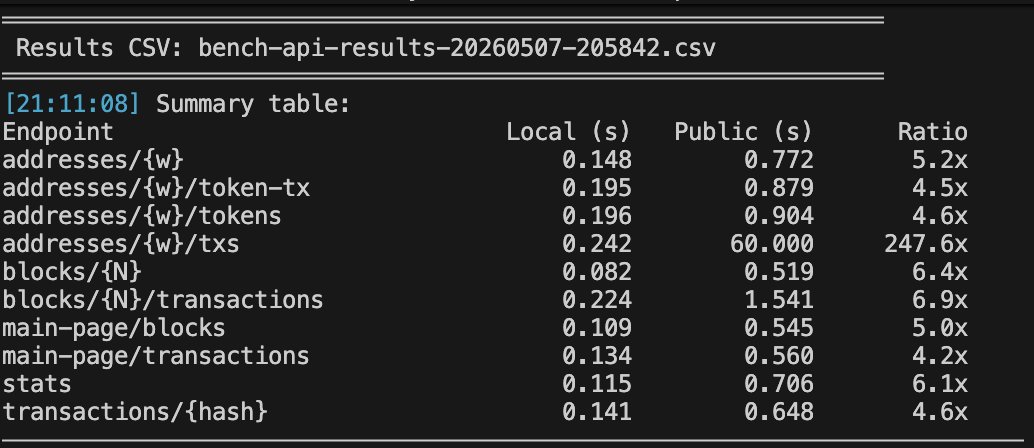
When PulseChain launched, the one thing I knew we were going to be missing was infrastructure.
Not hype.
Not another token.
Not another chart.
Infrastructure.
Ethereum had years to build out the tooling, RPCs, indexers, data services, dashboards, wallet support, integrations, and all the invisible pieces that make a chain actually usable.
PulseChain needed a lot of that on day one.
So that’s where I focused.
It is a relatively thankless part of the ecosystem. Most people only notice infrastructure when it breaks. It does not really have a flashy narrative. It does not pump because a node stayed online. It does not trend because a backend service quietly handled traffic for another app.
But a lot of projects depend on it.
That work was hard, and for the most part, I do not really make anything from it. I did it because I thought it needed to be done.
At this point, I consider a lot of that infrastructure work done. Or at least done enough that I can start shifting more attention toward the next missing pieces.
Software is like an onion.
There are layers upon layers.
Most people only see the final app, the interface, the button they click, or the thing they directly use. But underneath that are all the other pieces that have to exist first: RPCs, APIs, data services, indexers, contracts, routing logic, security assumptions, UX standards, integrations, and a dozen other things nobody really wants to think about until something breaks.
Some software cannot properly exist until other software exists beneath it.
And when those lower layers are missing, someone has to build them.
That is a lot of what my work on PulseChain has been. Not just building the thing people see, but building the things the visible thing depends on.
That also means I have had to put my own personal opinions aside in a lot of cases.
There is software out there that I do not personally agree with. There are projects I would not use myself. There are decisions I may not like, products I may not believe in, and approaches I may think are wrong.
But infrastructure has to be agnostic.
If you are building foundational layers for an ecosystem, you cannot only support the things you personally like. You cannot alienate every project you disagree with. You cannot build in a way that says, “This only works for my corner of the chain.”
That is not how we grow.
A real ecosystem needs room for different products, different opinions, different strategies, and different types of users. Even when I disagree with someone, that does not automatically mean they should be cut off from the infrastructure layer.
That is not always easy.
But I think it matters.
And to be clear, I see a lot of devs working very hard on a lot of things.
I do not like shitting on people who are actually building good things. I can personally disagree with someone’s direction and still respect the work they are putting in. Those two things are not mutually exclusive.
There are projects I might not use myself. There are design choices I might not make. There are products I might think should go a different direction.
But if someone is showing up, writing code, solving problems, and trying to make the chain more useful, I respect that.
The beauty of software is that none of this has to be winner-take-all.
If another dev does not like Cappy, but they like a feature in it, they can implement that idea in their own way. If they think I missed something, they can improve on it. If they think my approach is wrong, they can prove it by building something better.
That is how this should work.
And in cases where there is strong overlap, I will even help where I can, as time allows.
That is how you grow.
That is how you get taken seriously as a chain.
In my opinion, anyway. I can be wrong.
That is part of why I’m building Cappy.
If you do not like Cappy, you do not have to use it. I mean that sincerely. I am not building a wallet because I think everyone has to agree with my taste, my priorities, or my product decisions.
I am building the wallet I personally would want to use.
That may not be the wallet you want to use. That’s fine. Some people like Microsoft Word. Some people like Google Docs. Some people like Rabby. Some people like MetaMask. Some people want something simple. Some people want something powerful. Some people want every possible feature. Some people want as little friction as possible.
There is no single perfect answer for everyone.
But the wallet I wanted to use on PulseChain did not exist in the form I wanted it to exist, so I decided to build it.
A lot of the pieces of this chain, I honestly thought other people would eventually figure out. In some cases, they did. In other cases, not really.
I thought we would attract more external devs. I thought more projects would port over. I thought more teams would support their forks. I thought more of the obvious gaps would get filled over time.
Maybe I was wrong to expect that.
Maybe I should have seen it differently from the beginning.
Either way, it is what it is.
At some point, I stopped waiting for other people to build the things I wanted to see exist.
That does not mean I think I am always right. I am not infallible. I am sure I will make decisions some people disagree with. I am sure some people will not like the way I build things. I am sure some people will think I should be working on something else.
That is fine.
You can dislike the software I write and not use it.
It really is that simple.
But I am going to keep building the things I believe are important.
People ask, “What about Sigma?”
I am working on it in parallel with Cappy.
People ask, “What about Cross Chain IcosaHedron?”
I am working on it in parallel with Cappy.
People ask, “What about the other ten pieces of software the ecosystem still needs?”
That is exactly the point.
These things are not always separate in the way people think they are. A wallet needs infrastructure. Cross-chain systems need reliable data. DeFi products need tooling. User-facing apps need lower-level services that most people will never directly touch.
Some things need other things to exist before they can function properly.
And if those other things do not exist, someone has to make them.
I am not randomly jumping between projects.
I am building the layers that make the next layer possible.
I have been told many times that I should run a foundation, or try to organize things, or try to be some kind of public face for the ecosystem. I do not know if I would even be good at that. Maybe I would. Maybe I would not.
What I do know is that I am at least decent at software.
So that is where I am putting my energy.
I can try to do the things I wish more people were doing.
Am I the happiest with Richard right now? No.
Do I respect what he has built? Yes.
Am I still hopeful for the future? Yes.
Those things can all be true at the same time.
I have more or less put everything on the line to move quickly and build things I think matter. The infrastructure phase was the first big priority, and I think that work is now far enough along that I can focus more heavily on actual products people can touch, use, critique, and hopefully benefit from.
Many of you support me, and I see that.
I do not take it lightly.
All I can really promise is this: I am going to keep trying to give this ecosystem the best software I can.
Not because everyone has to use it.
Not because I think I am the answer to every problem.
Not because I agree with every project.
But because I still believe PulseChain deserves better tools, better infrastructure, better user experiences, and more people willing to actually build the missing pieces.
That is what I am trying to do.
Thanks for coming to my Ted Talk. I hope you like the things I do. None of this is any kind of advice, especially financial and P.S. Cappy comes with a block explorer that (hopefully) people find fast and functional enough to like. It was a requirement to make Cappy work. Modified Blockscout fork.
Something to talk about with Cappy....
It's quite honestly, expensive. It's what I was alluding to with why Rabby dropped #PulseChain support. But regardless of that expense, I feel like we need these features.
One way of making this able to exist long term, is actionable fees. Like on swaps. But honestly, while it's probably a requirement to have, I personally dislike egregious fees.
So most of those, I will be capping at 0.25%. Which is the Rabby default and something I agree with as reasonable.
But I also want to try to do something better. So I am also playing with the idea of adding Cappy Pro. This will be fully on chain settled, self swapping to stables (it will auto dump what you put in).
Cappy Pro would be a subscription, $5/30 days of enablement. At minimum it will offer 3 things for up to 3 addresses.
1. Reduced fees on swaps and such (0.1%)
2. Proxied Private RPC. Cappy's API will strip metadata from your TX's and proxy the TX through its API RPC backend. So no other RPC or actor will know your IP or other identifiable information. Just that you used Cappy to sign the TX. (and maybe later will round robin that through various VPN's so they don't even tie back to Cappy).
3. TX watcher, something we all love to do. Add a list of addresses you want to monitor and it will concatenate the view of TX's involving those addresses. With label support. (maybe push notifications in the future).
3a. (Maybe) whale watching. Put in a token address and it will show live TX history of any movement over a certain balance size.
Do you agree with this, disagree with this? Are these features things you would like to see exist?
I'm working to publish the first beta release of Cappy this weekend if possible.
Rabby was the wallet I wanted to use. The simulator, the native DeFi tools, the way it got out of your way and let you use the chain. Then they dropped PulseChain support.
People kept using it anyway, half-broken, because nothing else came close. I thought about building a replacement. Honestly, I didn't want to.
I already run RPC nodes and data services for several PulseChain products, so the ops weren't the part that scared me. The moral weight of running a wallet itself was. People trust this kind of software to act consistently every time, and getting that wrong has different consequences than getting most other software wrong.
Then a well-known community member got drained. Using Rabby on PulseChain, in that half-broken state. The simulator was one of the things that stopped working when Rabby left. If it had still been alive that day, the malicious transaction would have flagged before signing. They would have seen the hack coming, and walked away.
I asked the obvious question: why are they still using Rabby? Other wallets objectively work better on PulseChain right now. Then I looked at my own Chrome extensions. Why am I still using Rabby too?
Because it's the wallet I want to use. The wallet I wish worked the way it did before.
Cappy is that fix. I am keeping everything that made Rabby good, and rebuilding the parts #PulseChain needs.
Cappy's current status.
Only supports ETH and PLS
Working
Token balances and pricing
24hr historical portfolio pricing
Sending tokens + simulation
Swaps via @piteasio + simulation
Bridging via official bridge, bidirectional
Transaction history
Approval audits + revocation
Trezor + Ledger HW wallet
WIP
The DeFi tab, will always be a moving target.
@LibertySwapFi ? if they are interested
Buy via ProveX - partially working
Lending, Phiat? What else?
WalletConnect (should be easy enough)
Token logos (I'm lazy about it rn)
NFT's - half done. Mostly just missing art indexing
What else do you want to see? $HEX $HDRN native app built in is on my list. @_SigmaProtocol integration ofc. All of that kinda goes into the DeFi tab stuffs.
The 9th PLSFolio PulseForge Buy & Burn has concluded, with 26,686 $SPARTA tokens bought and burned.
The May competition has now begun.
The number-one token at the end of the month will receive a Buy & Burn.
The 8th PLSFolio PulseForge buy & burn has concluded, with 11,675 $SPARTA tokens bought and burned.
The April competition has started, and the prize pool is already at 8.65M PLS.
The number one token at the end of the month will receive a buy & burn.
@RichardHeartWin@yourfriendSOMMI@CryptoCoffee369
“Energy and persistence conquer all things.” -Benjamin Franklin
Markets test patience.
Those who persist through quiet cycles often stand strongest when momentum returns.
PulseChain is still building.
HEX already showed what conviction can do.
SPARTA is for those who understand persistence.
⚔️ SPARTA
CA: 0x52347C33Cf6Ca8D2cfb864AEc5aA0184C8fd4c9b
TG: https://t.co/JaRIBsrVgx�
@CryptoCoffee369@CabanaCrypto@RichardHeartWin
“The best way to predict the future is to create it."-Peter Drucker
The biggest opportunities rarely appear when everything looks obvious.
They appear when things are quiet.
PulseChain is still expanding.
HEX continues to build believers.
SPARTA is positioning for the future battlefield.
⚔️ SPARTA
CA: 0x52347C33Cf6Ca8D2cfb864AEc5aA0184C8fd4c9b
TG: https://t.co/JaRIBsrVgx�
💎🚀 @iambroots@yourfriendSOMMI@Hexologist31 Hey HEX fam, we’ve reached the final day of our 5-day SPARTA series…thanks for riding with me! PulseChain is bottoming out with HEX on PulseChain at $0.0019. Your SPARTA verdict: Grand vault at $0.0048 ($656K MC, 217M HEX treasury + Heart’s Law) for massive asymmetric upside! Full CA: 0x52347c33cf6ca8d2cfb864aec5aa0184c8fd4c9b. Poll: Buy / HODL / Watch. Burns intel awaits…drop your HEX story below! What a journey… let’s keep building together. #SpartaElite #CryptoLuxury
@S1ckAlpha@MemeMaestro369@CryptoCoffee369
Everyone:
“I will buy when it pumps.”
Spartans:
“Why would I buy the top when the battlefield is on sale?”
DCA in the boring days.
Celebrate in the glorious days.
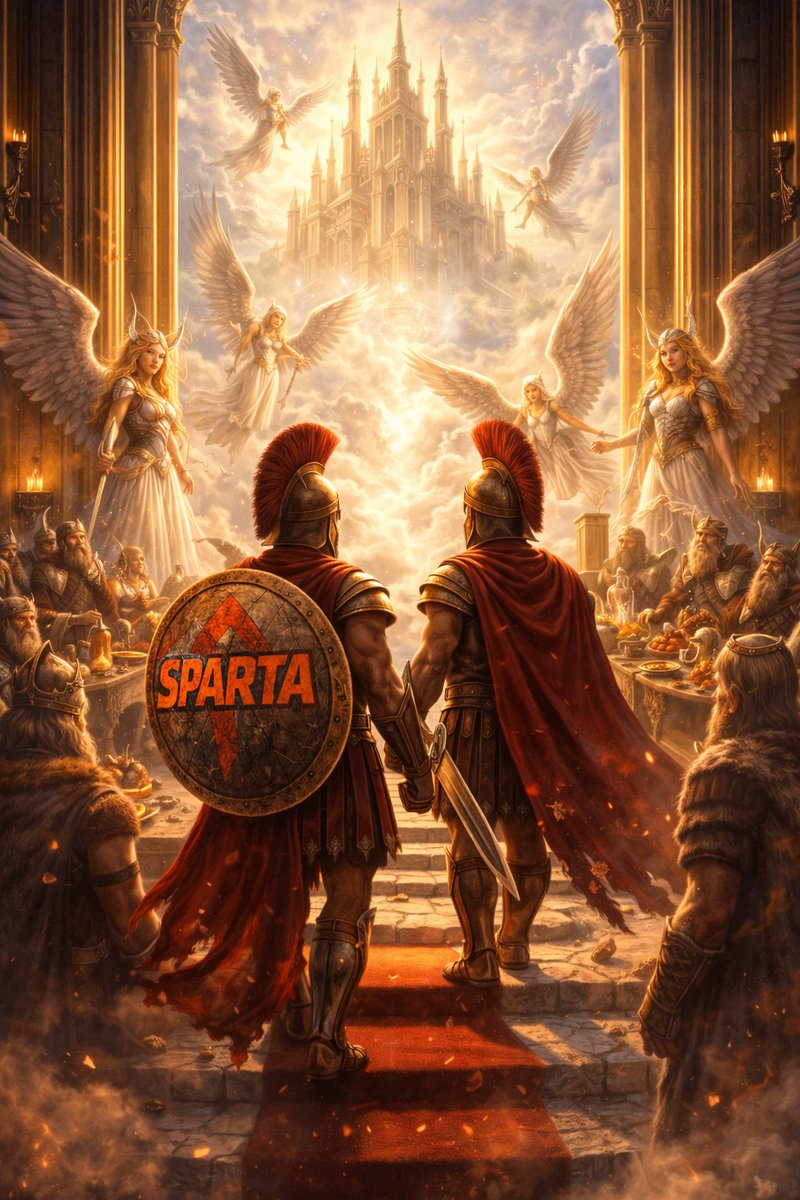
That is how you earn your seat in Valhalla.
⚔️ SPARTA
CA
0x52347C33Cf6Ca8D2cfb864AEc5aA0184C8fd4c9b
TG
https://t.co/JaRIBsrVgx
⌚🚀 @CryptoCoffee369@yourfriendSOMMI@iambroots Hey HEX fam, just like I promised yesterday…here’s your timeless portfolio boost! As PulseChain bottoms out, with HEX on PulseChain at $0.00209, SPARTA is your Patek powerhouse! 💎 Eternal burns + 217M HEX treasury + Heart’s Law = pure asymmetric explosion at $0.0051 ($691K MC). Full CA: 0x52347c33cf6ca8d2cfb864aec5aa0184c8fd4c9b. Let’s build legacies together��tag a connoisseur who needs this in their bag! Tomorrow: Ascent celebrations incoming. #PulseChainLuxury #HEX #CryptoLuxury
Spartans! 🛡️
Price is sitting at $0.0037 right now.
You know what that means...every single person who buys today is stacking a hyper-deflationary asset at a price that the burn mechanism is actively working against.
The supply is shrinking. The price history only begins here.
Load up. Tell a friend. AWOO!
Valhalla has limited seating 🔥⚔️
CA: 0x52347C33Cf6Ca8D2cfb864AEc5aA0184C8fd4c9b
https://t.co/PGitd1F2IA