Digital transformation & institutional consulting firm delivering systems, health & safety solutions, general supplies for public & private sector institutions.
Safety standards are often defined, but not consistently applied. This inconsistency creates gaps that increase operational and regulatory risk. Structured systems help ensure uniform implementation across institutions.
#OccupationalSafety#WorkplaceSafety#ISO45001#NEBOSH
Contractor activities can become major safety risks when oversight systems are weak or inconsistent.
Structured verification and monitoring systems help institutions reduce operational, legal, and safety risks.
#WorkplaceSafety#ComplianceManagement#InstitutionalSystems
Many organizations manage compliance through disconnected processes. This often results in gaps in reporting, limited visibility, and inconsistent implementation of safety standards.
A structured system approach is essential for maintaining consistency and institutional control.
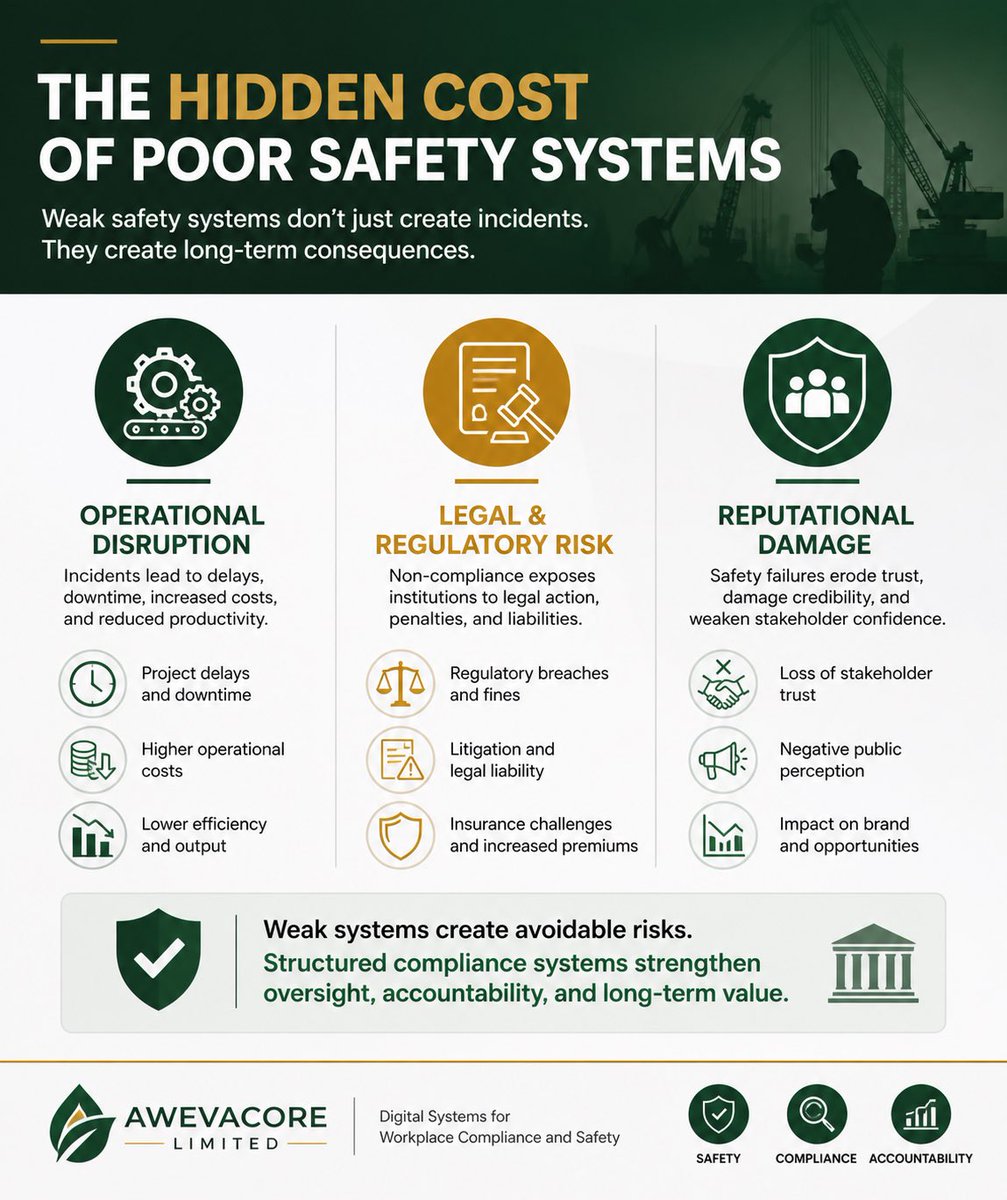
The cost of poor safety systems goes beyond incidents—Operational disruption, Legal exposure, and Reputational risk.
Weak systems create avoidable failures. Structured compliance systems help institutions maintain accountability and reduce long-term risk.
#OccupationalSafety
Workplace compliance ensures safety and regulatory standards are met.
Without structured systems, processes become fragmented and difficult to manage. Digital platforms improve oversight, reporting, and accountability.
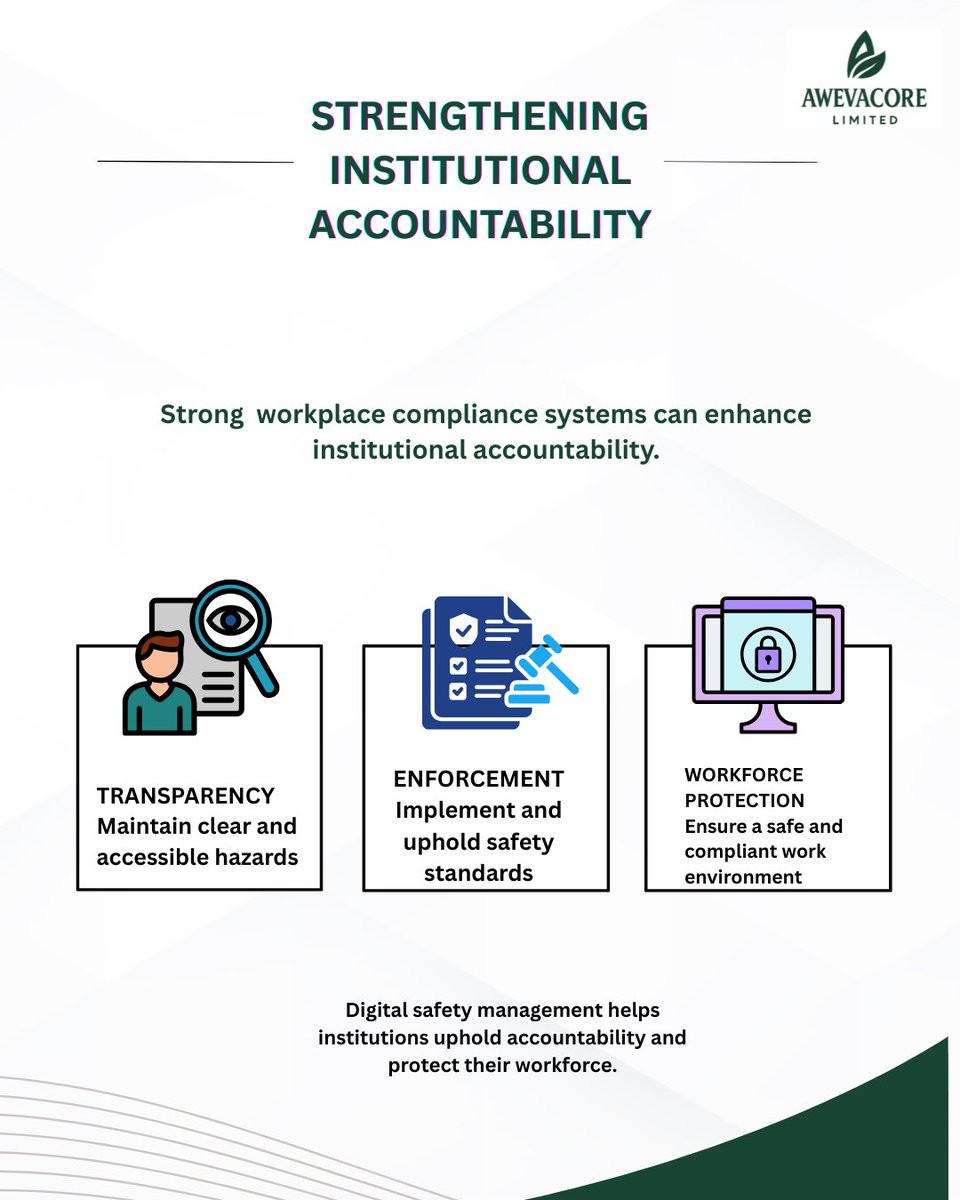
Workplace safety is not only an operational concern but also a governance priority. Strong compliance systems support institutions in maintaining accountability, transparency, and adherence to established standards.
#awevacore#NWCSMS
One of the key challenges in workplace safety management is inconsistency in implementation. Structured digital systems help standardize processes, ensuring that safety standards are applied consistently across institutions.
#awevacore#NWCSMS
Across many sectors, workplace safety management is evolving from manual processes to structured digital platforms. These systems provide institutions with the tools needed to improve oversight, reporting, and long-term safety management.
Strong workplace compliance systems contribute to institutional accountability. When safety management is supported by reliable digital systems, organizations are better equipped to maintain transparency, enforce standards, and protect their workforce.
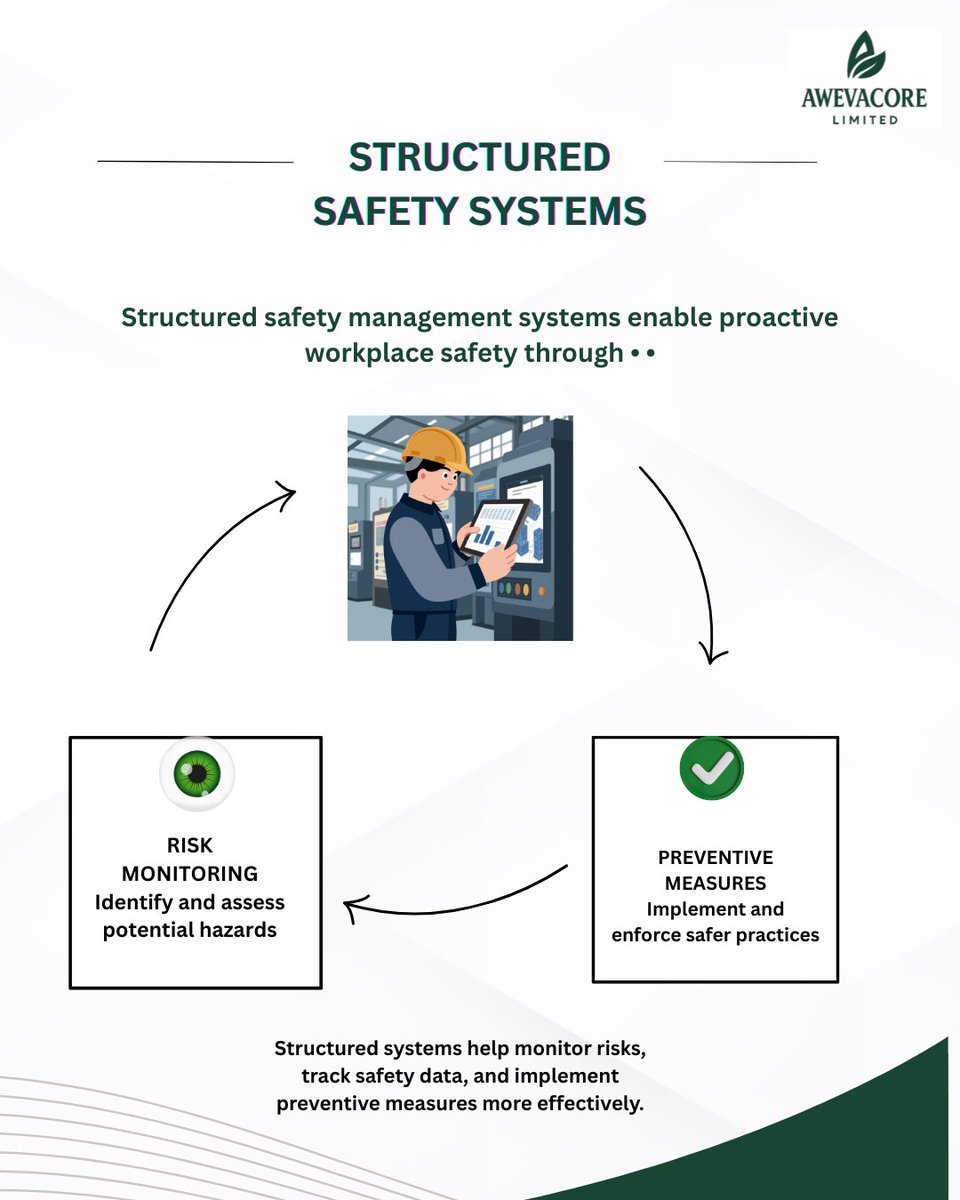
Structured safety management systems allow organizations to move beyond reactive responses to workplace incidents. With the right systems in place, institutions can monitor risks, track safety data, and implement preventive measures more effectively.
Public sector institutions play a critical role in setting standards for workplace safety and compliance. Digital systems can support these institutions in strengthening oversight, improving reporting structures, and ensuring that safety standards are consistently implemented.
Structured digital systems are essential for modern workplace safety management. By enabling effective reporting, incident tracking, institutional oversight, and data-driven decision-making, organizations can strengthen accountability and improve operational efficiency.
Digital platforms improve workplace safety by enabling better reporting, incident tracking, oversight, and data-driven decisions. They strengthen institutional accountability and operational efficiency.
Workplace compliance ensures organizations meet safety and regulatory standards through structured systems and processes. It helps protect employees, reduce risks, and maintain accountability and transparency.
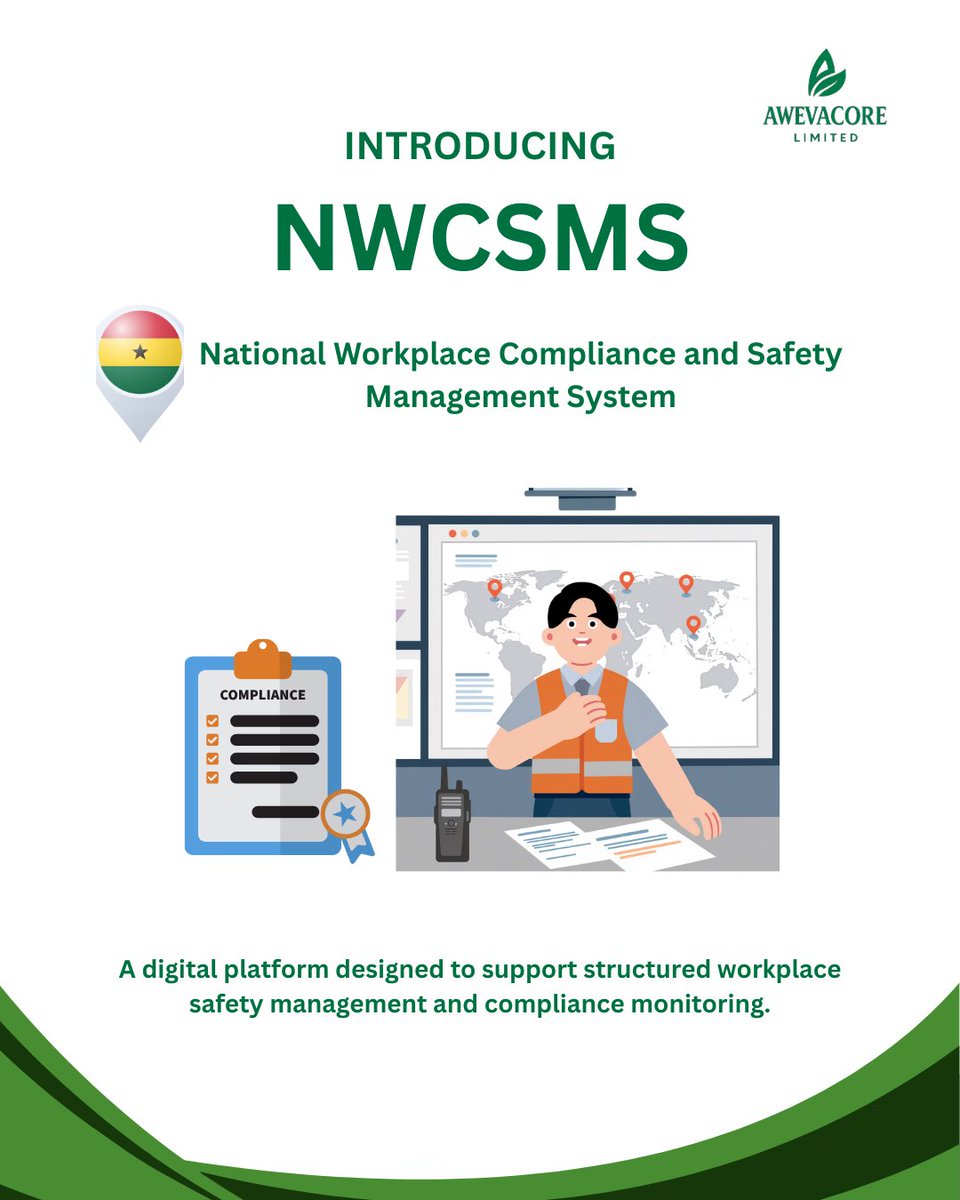
The National Workplace Compliance and Safety Management System (NWCSMS) is a digital platform being developed to support structured workplace safety management and compliance monitoring.
Many organizations still manage workplace compliance through fragmented or manual processes. This often leads to limited oversight, delayed reporting, and inconsistent safety standards. Digital systems help strengthen compliance and accountability.
Many institutions still operate with fragmented systems that slow decision-making and reduce efficiency.
Structured digital platforms improve coordination, strengthen data management, and support more effective operations.