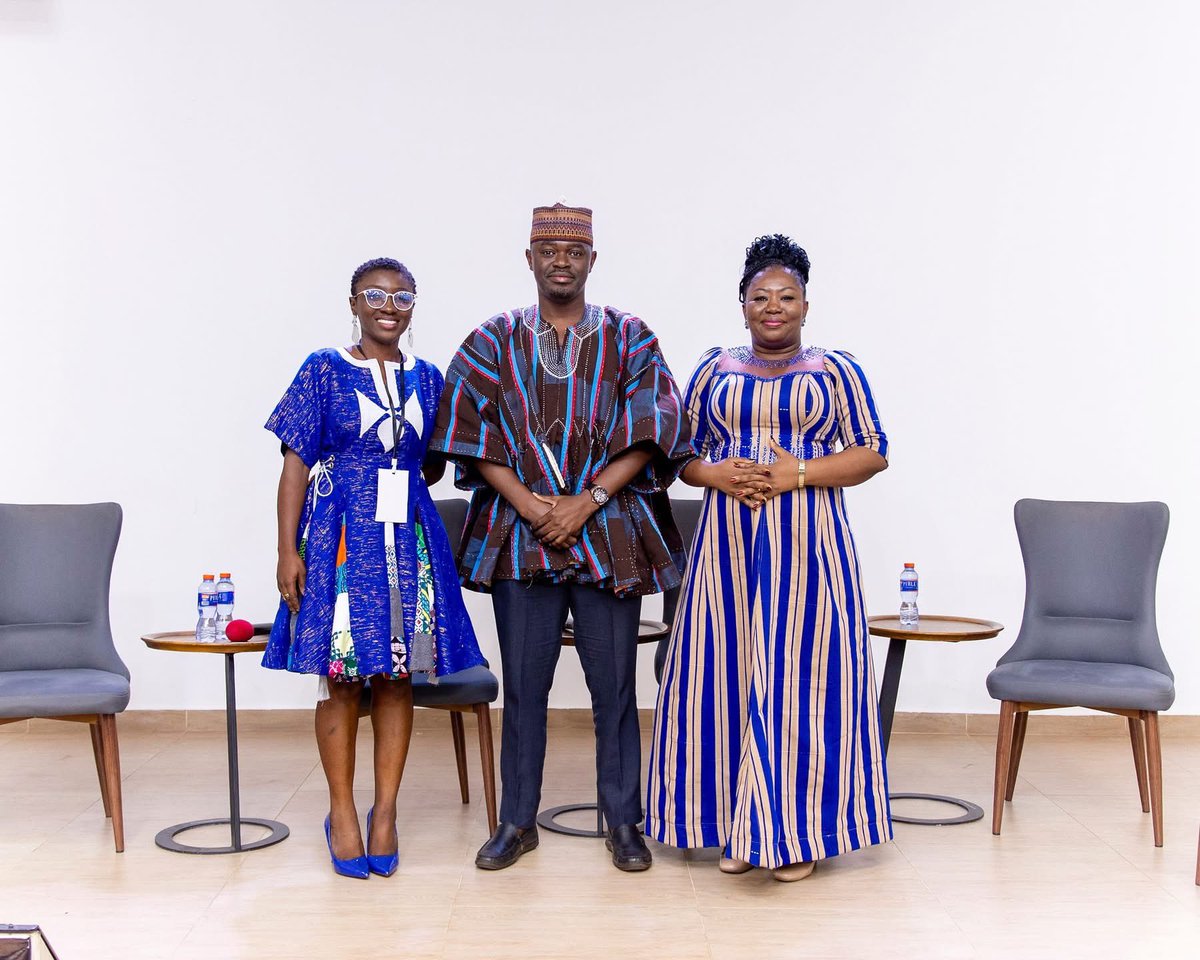
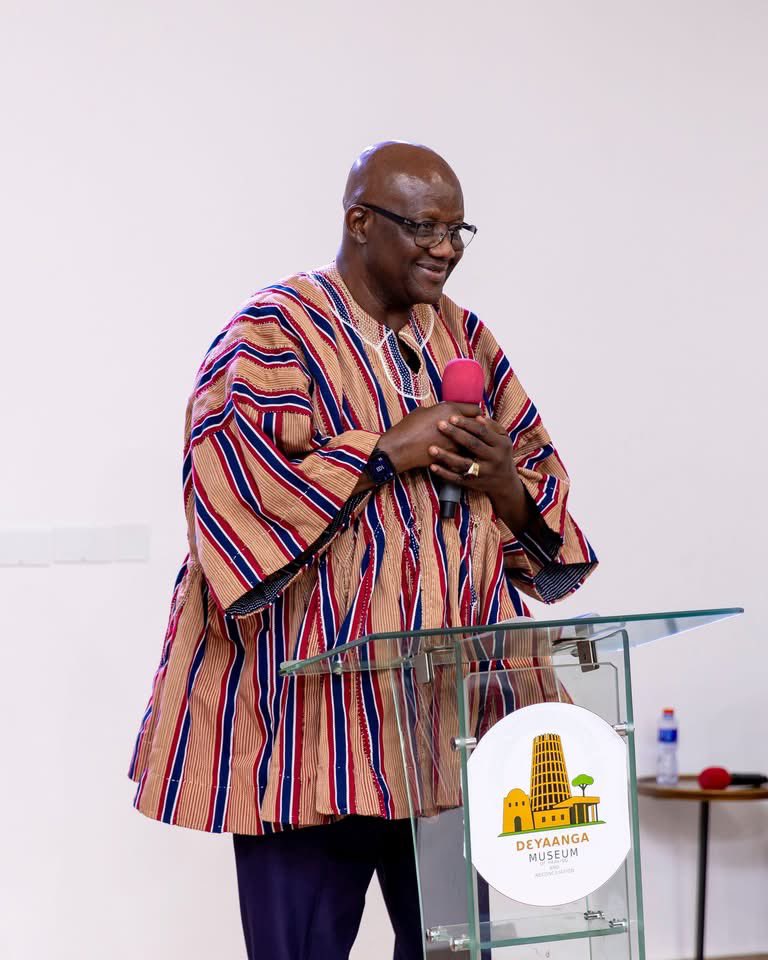
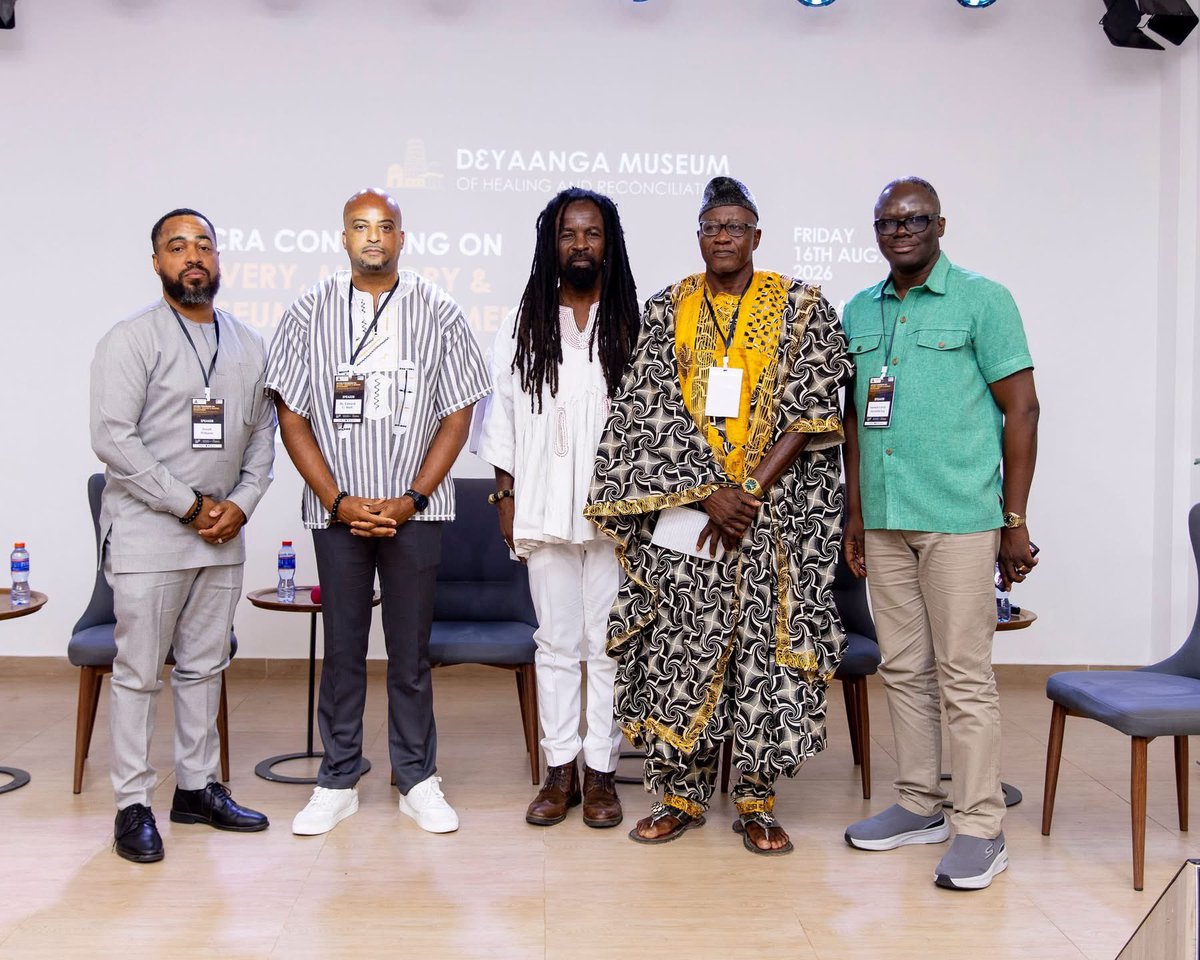
I had an interview this morning on @Citi973 this morning to discuss the Deyaanga Museum Initiative and to rally support. If you are interested in knowing more, partnership or just supporting because you believe that it’s time to give this communities up north an opportunity to share their own narrative, read out.
“Ahead of the Accra Convening on Slavery, Memory and Museum Development, the Museum’s Convener, Emmanuel Agang-zesum Awine, and Board member Professor Eric Kyere joined JoyNews for a conversation on the vision behind the programme.
They spoke about the histories of slave-raided communities in Northern Ghana, the need to preserve their memories and the place of the Deyaanga Museum of Healing and Reconciliation in Africa’s wider reparations movement.
The interview also highlighted what to expect at the Convening: conversations on diaspora reconnection, cultural memory, reparative healing and the opportunities that heritage can create for communities in Northern Ghana.
We are grateful to JoyNews for giving this work a national platform.”
Visit our Facebook page for more: https://t.co/FikdAtQ4rV
1. I have been on the case of GoldBod for a while.
2. It is a super-agency created by the Ghanaian government last year to buy all the gold from artisanal and small-scale mines (as well as 30% of the output of large-scale mines) in the country.
3. Initially, its trading funds were advanced by the Bank of Ghana (BoG) to its super-aggregator in local currency (Cedis). Going forward, the Finance Ministry/National Treasury has been handed the baton from the BoG to fund the GoldBod's 2 super-aggregators.
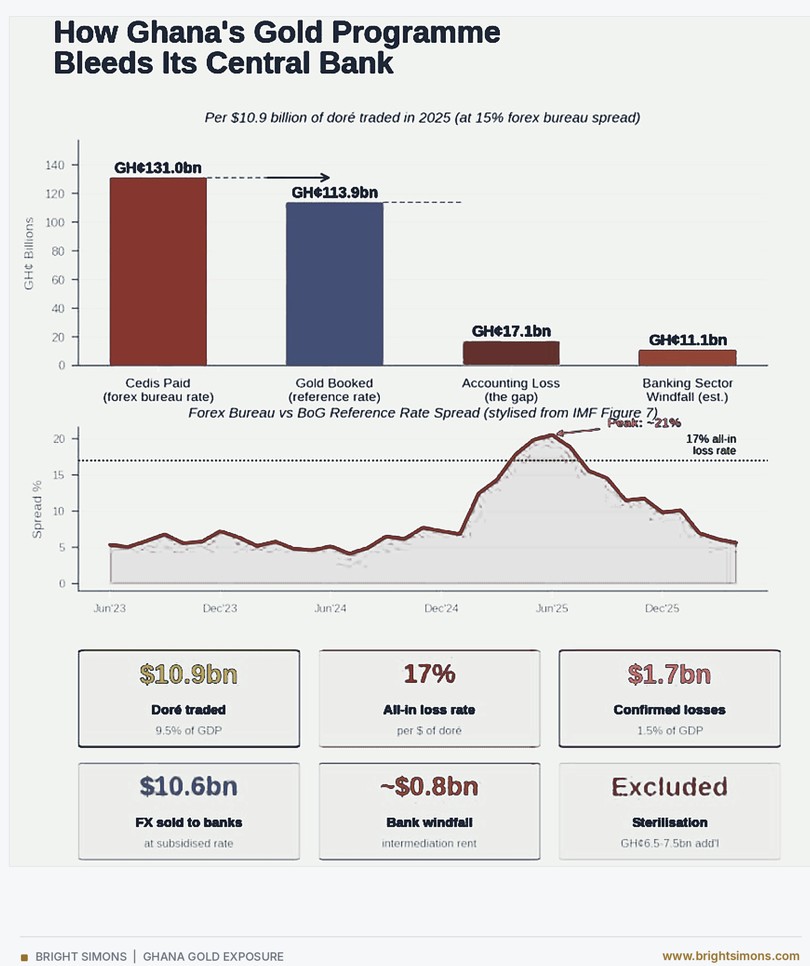
4. A recent IMF report confirmed longstanding concerns about structural economic losses in GoldBod's model. In 2025 alone, the BoG's cost margin for each dollar of forex inflow in the GoldBod model was ~$0.17 on average (or $1.7 billion in aggregate). The govt says this cost has dropped to below $0.12 and it intends to bring it even lower, under $0.05. (Note: the cost of "sterilisation", as explained below, is not included in all these calculations.)
5. At any rate, the government has long argued that the benefits of the policy in the form of a stable currency (with implications for inflation and interest rates) far outweigh the costs.
6. The question is whether these "benefits" are due mostly to the hike in gold prices and thus would have manifested anyway without the GoldBod.
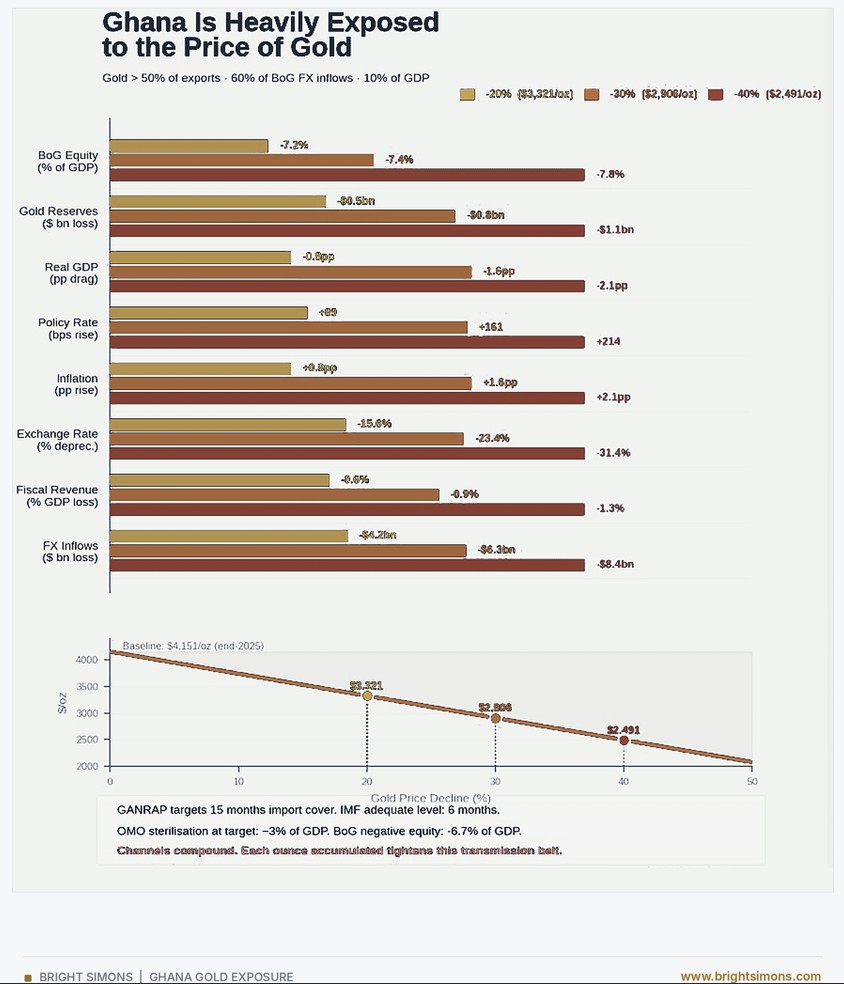
7. Whilst that debate is unsettled, the fact that Ghana is heavily dependent, macro-fiscally speaking, on the price of gold staying at record highs is undeniable.
8. As you can see in the attached charts, that dependency/over-exposure could well be the biggest risk to the country's recovery from a disastrous debt crisis in 2022.
9. I estimate that Ghana ranks first among similarly hyper-exposed countries because the vulnerability is structural and institutional, rather than just compositional.
10. The key issue is the extreme intertwining of currency stability policy with gold volume performance. The plan to build 15 months of import cover reserves based on state-controlled gold exports is a clear sign of this excessive entanglement.
11. The strategy has also led to "sterilisation" costs (i.e. an effort to prevent the Cedi injections used to buy artisanal gold from stoking inflation) approaching 3% of GDP.
12. In the midst of all this, the BoG's equity has swung from positive $1bn at the end of 2021 to negative ~$8bn at the end of 2025.
13. Back to the gold price shock scenario: our modelling suggests that a 30% correction would wipe out roughly $1.65 billion from the BoG's gold holdings and stretch the GoldBod operational model to breaking point.
14. The IMF's stress test shows that at a 45% decline (to $2,283/oz), with gold at 50% of reserves, BoG's equity will fall to -9.0% of GDP.
15. A fragile central bank is the last thing to take into a fiscal stress scenario. For all our sakes, gold prices better hang up there in the skies. Like the sun above Gibeon in the biblical days of Joshua.
The big question is…How do we engage African communities that were raided during the slave trade,communities whose people were forcefully recruited into colonial armies, or as cheap labour on European plantations with descendants of the African diaspora who seek to reconnect with their ancestral roots?
How do we welcome our returning brothers and sisters not as pilgrims or tourists to be exploited but as kin genuinely searching for healing and reconnection?
If you want to be part of this conversation, register and join the Accra Convening :
https://t.co/pOE67e3NcM
I was studying something related to how a new class of fuel trading companies (OMCs) in Ghana now prefer to own all outlets directly rather than build franchises, when Zen's IPO came into focus (after a friend had mentioned it.) Zen was founded between 2008 & 2013 by a former high-flying international business and finance professional.
I am puzzled by several things and wonder if anyone knows the business well enough to answer some questions.
Examples:
1. The newly incorporated listed holding company had virtually no history of its own so it used a "specially combined" group history that PwC used for a "limited assurance" without an audit opinion. Pretty standard in those places where stuff like even SPACs are celebrated but somewhat uncommon in these parts. For e.g. what happened to the exchange's "three years of audited accounts" rule?
2. The real confusion for me is that the December 2025 restructuring is not accompanied by an audited post-reorganisation balance sheet or a proper pro forma "capital bridge".
3. The Zen that was listed said it had GHS40,000 in cash and assets; GHS40,000 in equity; and, naturally, no material liabilities or operating history.
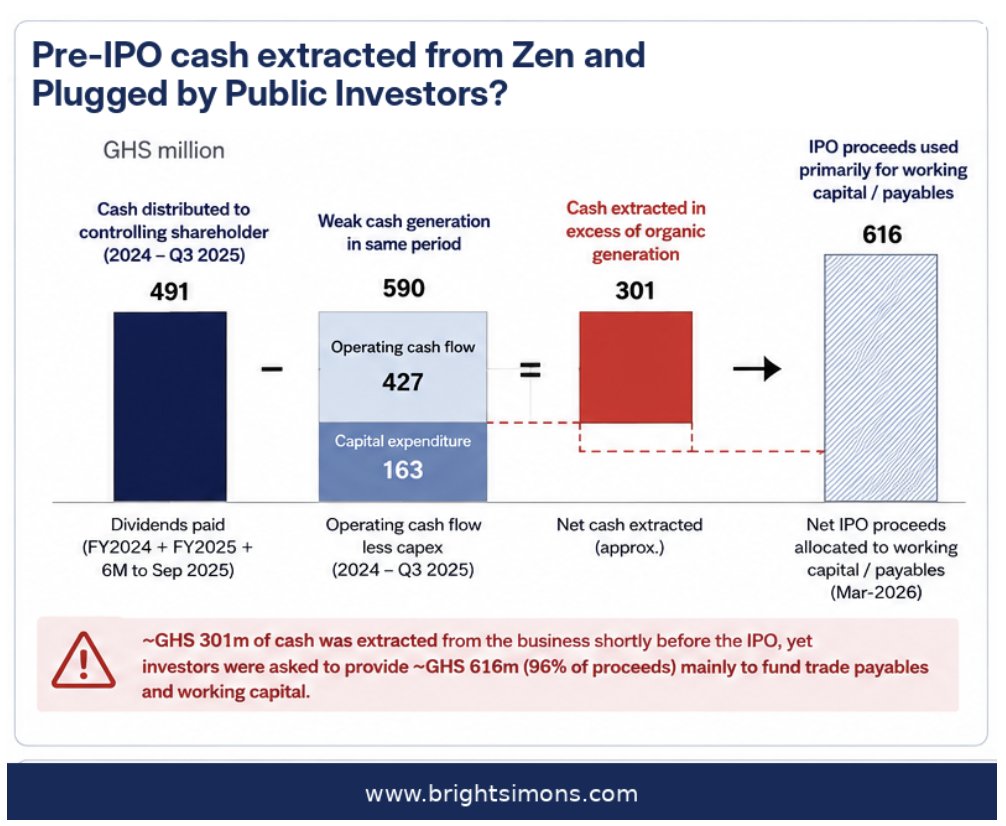
4. The founder kept 80% of the company and offered investors 20% through the IPO generating GHS 640 million in proceeds from institutional investors (mostly from the pensions world.) 96%+ of the proceeds was earmarked for working capital ("trade payables".)
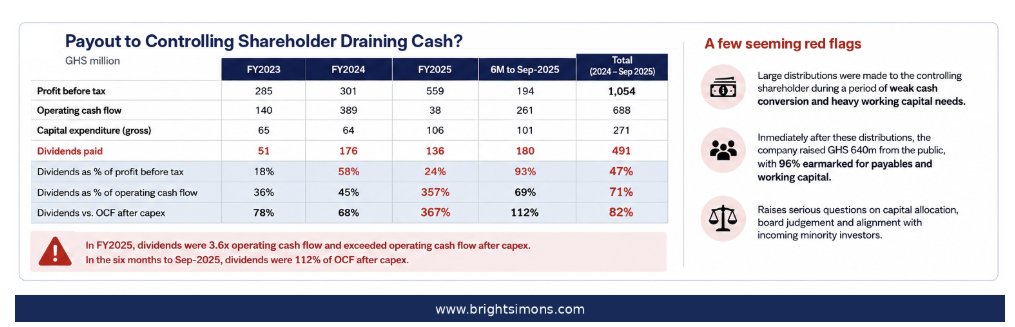
5. The prospectus’s dividend narrative is difficult to reconcile with Zen’s recent cash flows. The prospectus records dividends of approximately:
GHS51.3 million in FY2023;
GHS175.6 million in FY2024;
GHS135.9 million in FY2025;
GHS179.5 million in the six months to September 2025.
6. That is about GHS542.3 million over the disclosed periods, of which approximately GHS491 million was distributed from FY2024 through September 2025. Basically, the Founder had massive cashouts before bringing the institutional investors in.
7. No biggie. Institutional investors are savvy and sophisticated and if they are fine, then it means they think it is deserving. But secondary trading could leave retail investors holding the can so it is still worth a closer look.
8. In that regard, the concerning dividend in the record is the 2025 one because it occurred shortly before the December 2025 reorganisation and the March 2026 public offer. Those FY2025 dividends were approximately 3.6 times operating cash flow;
operating cash flow less capital expenditure was negative by approximately GHS68 million. A bit hard for me to fathom.
9. The post-listing accounts show:
- cash of only GHS112.6 million;
- substantially larger inventories;
- substantially larger trade and other payables; &
- no accessible proceeds-reconciliation statement.
10. This has me scratching my head a bit because the money was intended to fund trade payables and working capital. Yet, trade and other payables reportedly rose to approximately GHS806 million, rather than visibly falling.
11. The financial forecasts apparently omit the IPO proceeds and their deployment. The forecast cash-flow statement begins with approximately GHS147 million of cash and then proceeds to projects operating activity, investment and dividends. Why no IPO proceeds net costs?
12. Zen says it had no related-party transactions as at the prospectus date, yet forecasts hundreds of millions of cedis of related-party balances. Who are these "related parties." Are they owned by the Founder?
13. The first post-listing accounts contain a very large and unexplained “other income” line.
14. Zen’s official share-capital and share-count figures do not reconcile cleanly across the prospectus, GSE database and first post-listing accounts. Could be minor arithmetic issues but surprised that top accounting firms cleared that.
15. And least concerning: the valuation methodology is described but not disclosed with enough detail to reproduce or stress-test the GHS5 offer price.
Why is any of this of public interest when most of the IPO buyers are sophisticated institutional investors? Well, now that the shares are on the public markets, investor protection (especially of secondary retail buyers) makes this a public policy matter to a degree.
We may return to the issue.
We rationalise underdevelopment when we justify low thinking & poor imagination by blaming poverty.
If I got a dollar anytime someone said to me that so and so shallow reasoning outcome should be excused because so and so people are disabled by "bread and butter issues," I would have beat Musk to a trillion dollars.
I blame Maslow. He made it too easy for his ideas to be bastardised. Now, the "poverty blocks thinking" excuse has a pyramid to hide behind.
The animated video attached to this post depicts the so-called "Antikythera Mechanism." It is more than 2000 years old.
Discovered in fragments in 1902 by a Greek Politician, several experts worked day & night to reassemble and unlock its inner workings.
The machine, sometimes called the world's first analog computer, embodies 500 years of Greek conceptual thinking. But for what?
It tracked the moon, aligned calendars, & modelled the cosmos.
Why was such exquisite and painstaking engineering deployed to grasp such distant phenomenon?
Didn't the Greeks have mouths to feed? Leaking roofs to patch? Textiles to weave?
They did, but the stars could not wait.
We like to tell ourselves a tidy story about progress. First bread, then stars. First fix the roads, the drains, the clinics, the hunger - and only then, much later, may a poor society permit itself to dream about higher concepts. Survival first then imagination.
What the Antikythera machine tells us is that progress doesn't have that patience.
The Greeks realised that watching the constellations could help manage harvests better. Reading Orion might save a fortune from drowning. Learning about fluids and screws together can overcome an invading army.
Meeting basic needs also opens the door to climbing higher logic.
Imagination is not the scarce resource we like to pretend it is. It is everywhere, already at work, disguised as survival.
Given the reputation of the Greeks as pioneers, you might be tempted to think that this was merely the product of broad social enlightenment.
Well, the period during which the pieces that became Antikythera were being assembled over hundreds of years were far from advanced. Thw average Greek was far from Plato.
Most Greeks then were poorer than the average Botswanan or Moldovan today. Most couldn't read. Life expectancy was barely 40.
In some Greek towns then, when a pandemic hit, random people were selected, painted, slapped & tossed out of the town in the hope of abating the disease (read about "pharmakos"). Hardly Xanadu.
Yet there were pockets, subcultures, of mind-boggling genius. People calculated the size of the Earth using sticks & shadows. And the distance to the moon using rods and discs.
Such pockets can be found today in Kokompe and Suame Magazine too, in the little folds of our daily lives.
The spirit is in the soups that take 4 hours to make. And the funeral mourning display and its sequenced rhythms.
Do these elaborate tapestries not flourish in the midst of poverty because they matter more than food?
The real question is why so little of these sparks of elaborate imagination and creativity accumulate into broad changes in our societies.
Into industrialisation, modernisation, city planning, and all the higher order systems we seem to crave.
Funny enough, Antikythera also begs this same question.
That machine did not start an industrial revolution. It became a fossil. The workshop vanished, the patrons died, the knowledge stayed trapped in too few hands - and the sea swallowed the rest.
What was missing was not genius. It was a big enough subculture to grow around it. Call it a conversion belt. Think of it as the difference between a miracle and a civilisation.
And this is exactly where too many of our economies stall today. We celebrate the occasional hero, the sudden breakthroughs, but fail to form clubs to sustain the spark.
Yes we are saddled with "bread & butter issues," but we can always choose to make it about "bread & stars" if we want.
1. A friend kindly sent me a short clip of architect David Adjaye extolling the virtues of Bank Square, the new HQ of the Bank of Ghana that he designed for contractor GoldKey to build.
2. Since the imposing building divides opinion on its elegance and beauty, I was very keen to hear what the designer himself had to say.
3. It was surreal!
4. I heard the architect talk about how when he saw the other designs entered into the competition by rival bidders, he literally burst out laughing. He said that his competitors had thrown up all manner of "Dubai like" glass and steel buildings that look like "dancing" structures.
5. His choice of design was heavily informed by the deeper symbolism of what the new Bank of Ghana HQ stood for. He had concluded that the apex body managing a nation's wealth cannot look transient. It must project absolute permanence and ascendance.
6. He thus bypassed lightweight design trends of the current era in favor of heavy, earth-bound stone to project regulatory power and systemic stability. In fact, he said he would have done a ramped-earth tower if he had the chance! And then, with a glint in his eye and a chuckle rolling down his throat, threatened to build one somewhere very soon.
7. So, why surreal?
8. Regular readers may recall that I have worried in the past about the cost overruns during the building's development. I think that by the time the various features that were suspended to get it over the finishing line are added, it may top $600 million. But that was not what jolted me. At all.
9. It is the uncanny semblance between the architectural logic behind BoG's Bank Square and that behind a cluster of buildings built between 1917 and 1973 for a financial institution in Rhode Island that used to finance hospitals in Providence.
10. The cluster of buildings then came to be taken over by banks. One was eventually donated to the Rhode Island School of Design, which is how I came to know their story in the first place. You see, I had once considered pursuing the artistic portion of my creative passions.
11. When you look at the Sovereign Banking Tower (as the main tower in the cluster aforementioned is sometimes called when not being called "One Financial Plaza") and its adjacent sister buildings, and then flip your glance over to Bank Square in Accra, you can't help but gasp.
12. Exactly the same thinking that drove Adjaye many decades after and in a totally different cultural setting can be found in the design language of John Carl Warnecke & Associates. It is manifested in the rectangular prism with beveled vertical edges adorning the skyline of Providence.
13. See attached images (incl one of the rejected "dancing" designs).
14. What is at work here? I think it is the same spirit that drove both Newton and Leibniz working oceans apart to independently invent the calculus: creative telepathy.
15. There is a bond that binds all feats of intellect regardless of culture, context, and circumstance.
@JDMahama I am ready & available to help my country. I don't really know what else we have to prove.
We are literally building a unicorn. If the government can't support financially, at least it can provide an enabling environment
And the Bills heading to u will destroy it all
Africa and LatAm don't compare notes often enough. Which is a shame given our historical ties. Last time I was in Colombia, I felt so much at home! So, truly delighted to be doing my bit for South - South knowledge exchange. 😊
I will be speaking in English but thinking in Spanish! 🥷
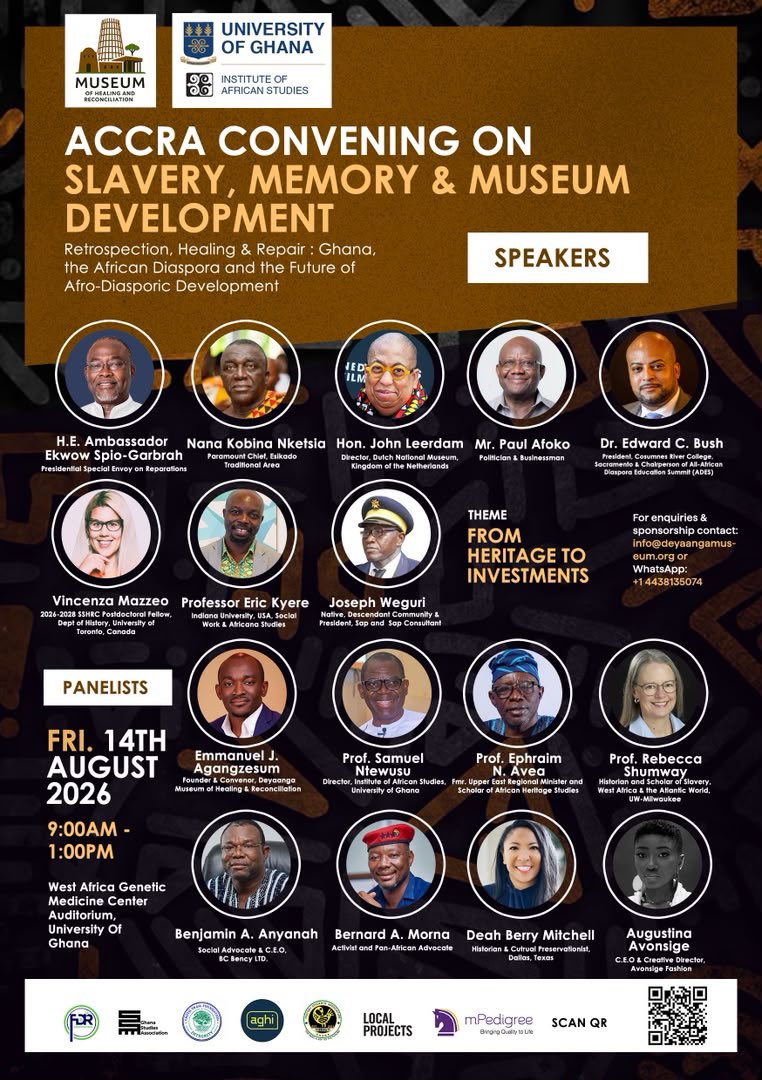
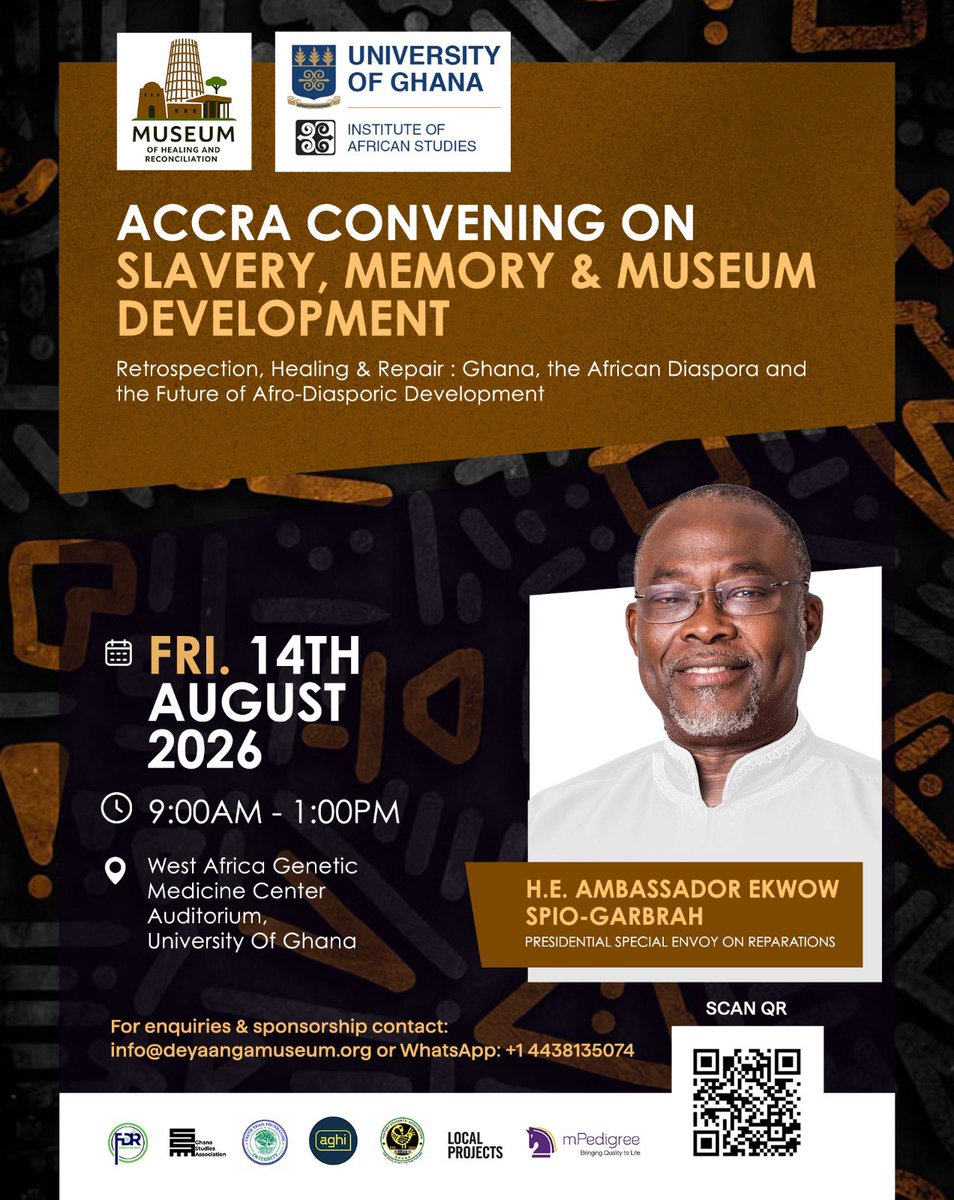
Accra Convening on Slavery, Memory, & Museum Development
📍 University of Ghana, Legon
📅 August 14, 2026
We are pleased to invite scholars, students, practitioners, and members of the public to the Accra Convening on Slavery, Memory, and Museum Development.
This gathering is not centered on narratives of victimhood. Instead, it foregrounds bravery, resilience, and historical agency, asking a forward-looking question:
How can we harness collective memory for healing, repair, and sustainable development?
Bringing together leading voices from Ghana, North America, Europe, the Caribbean and beyond, the convening will explore:
-Memory and historical responsibility
-Diaspora–Africa reconnections
-Heritage as a pathway to investment and development
-The role of museums in reconciliation and future-building
Beyond the Accra event, we are also organizing community engagements in Northern Ghana.
These offer a unique opportunity for:
-Researchers and graduate students seeking field experience
-Diaspora participants interested in ancestral connections
-Practitioners looking to engage directly with communities shaped by histories of raiding, migration, and survival
This is an open invitation—including to members of the African diaspora—to be part of a meaningful intellectual and community-centered project.
🔗 Register here: https://t.co/Wbr3iy2Njp
If you are interested in participating in the community engagement component, feel free to reach out to me directly here.
We are move beyond just remembering the past as loss alone and toward understanding it as a resource for connection, healing, and development.
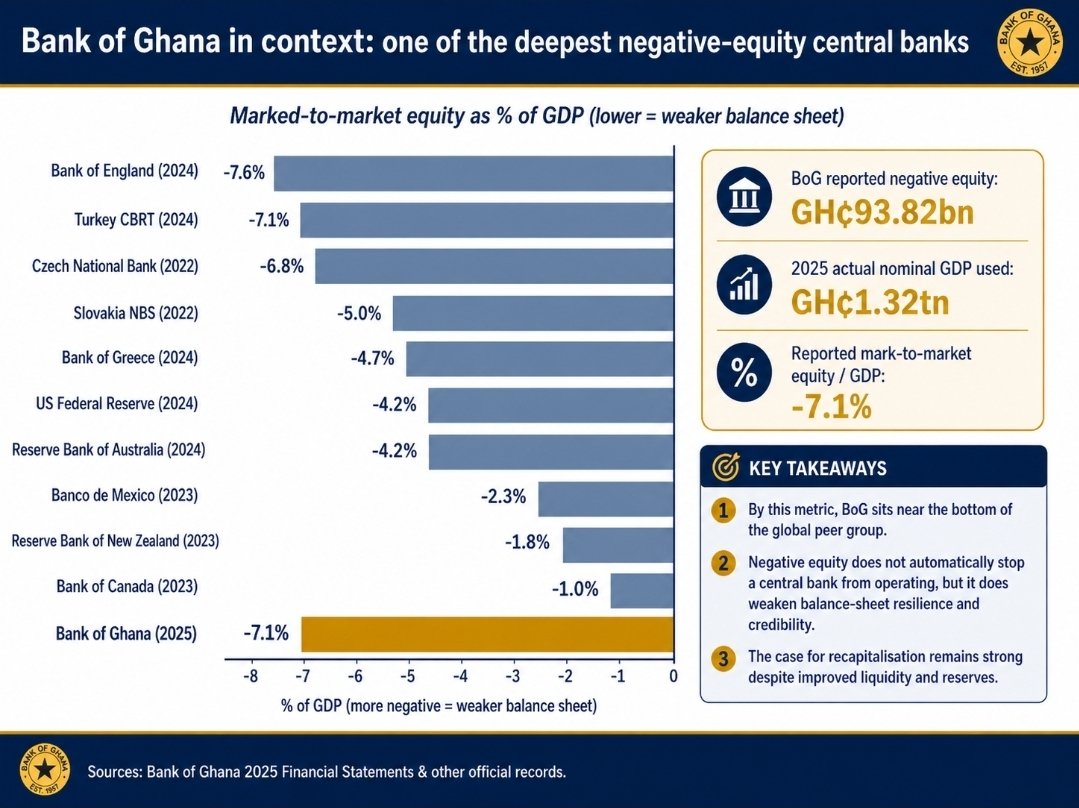
1. Bank of Ghana dropped a bombshell into the polarised political atmosphere this week: its delayed 2025 financials.
2. Delayed because by law the audited statement should have been approved by the Board and submitted to the Minister by end-March 2026.
3. The statements was not ready by end-March. They were approved and audited at end-April and published on May 1.
4. Meaning the BoG barely met the second legal deadline: publication by June.
5. Clearly, the BoG wrestled with a lot in the financials. Some even say that the change from Deloitte to KPMG was abrupt. Let's just leave that at gossip.
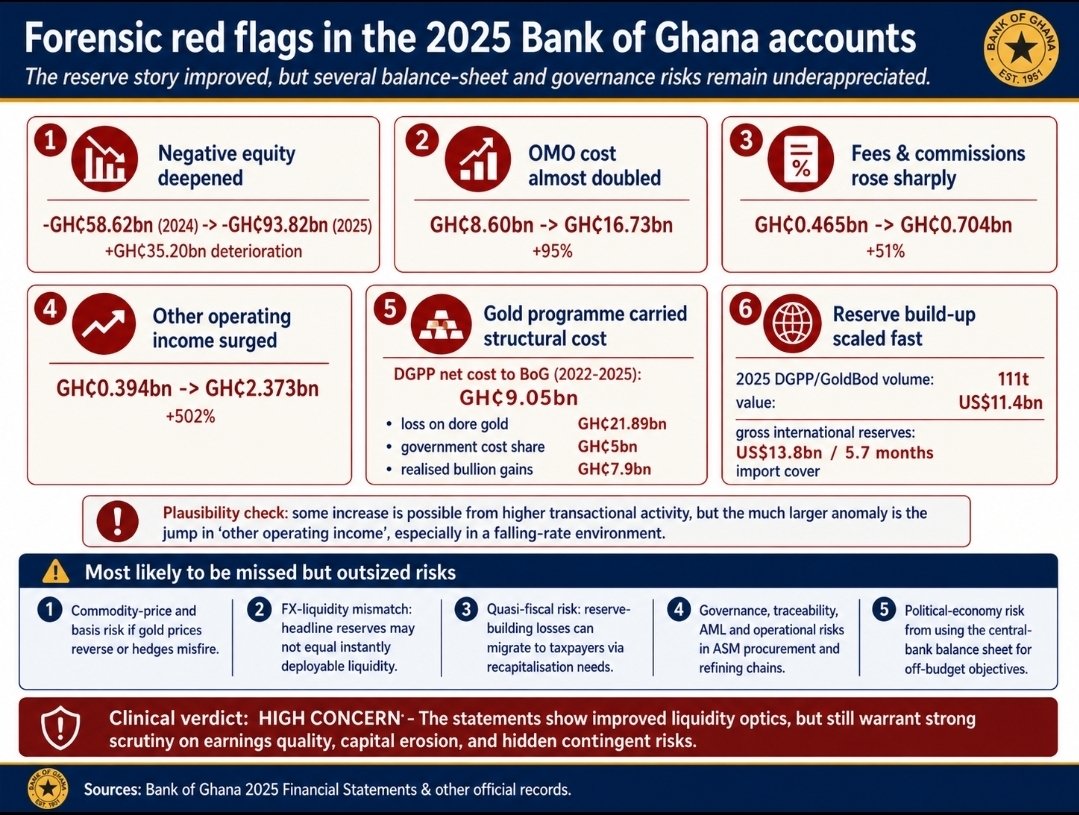
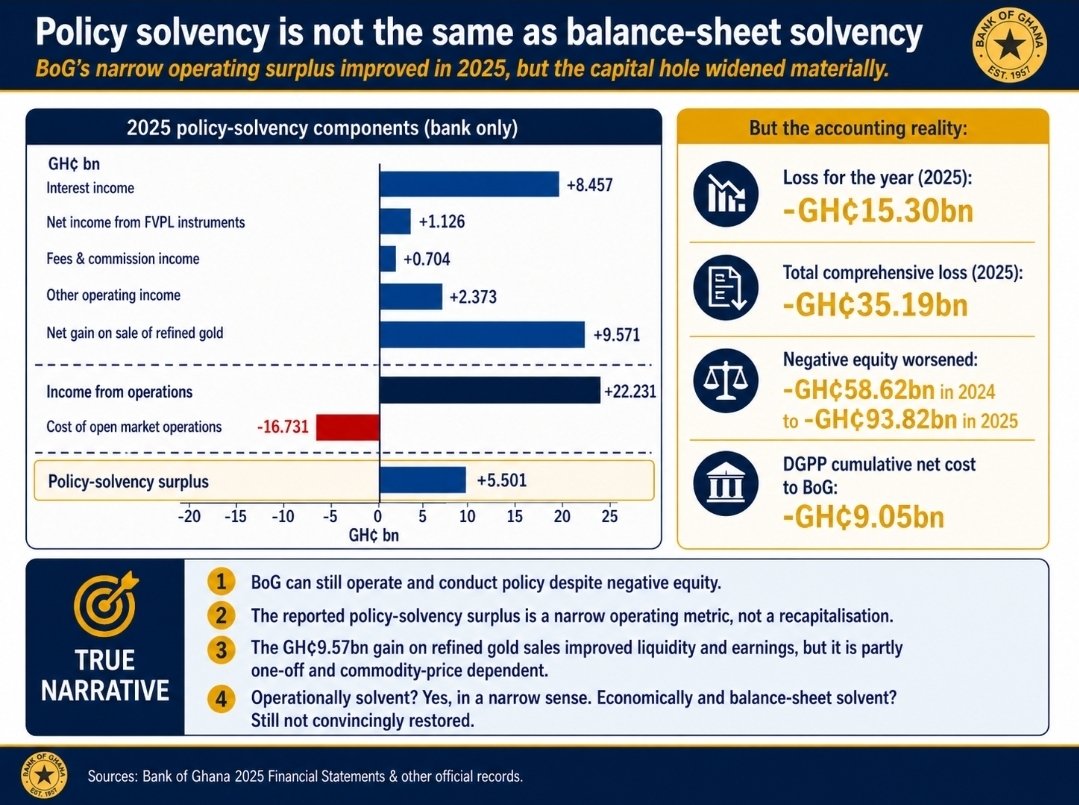
6. I have many substantive things to say. For now, I will sum them up in the attached infographics and a leave a few short notes here.
7. The ruling NDC really criticised the BoG when it was in opposition for the capital hole of ~$4.3 billion. The current Opposition, which was in government then, now gets to pay them back for the capital hole widening to ~$7.4 billion+. Central Bank independence? Ghanaian politicos have never believed in that theory.
8. Tossing the partisanship aside, there are some grave issues that need better explanation.
9. The BoG's losses and negative equity position (benchmarked against GDP) are some of the worst any central bank anywhere has reported. And for successive years. Unlike Czech Republic, which also reported negative equity for successive years, the BoG's losses include massive quasi-fiscal items.
9. The gold programs are far costlier than they were made to look. Nearly a billion dollars in losses.
10. The BoG would like us to believe that it is "policy-solvent", i.e. its income is enough to cover the costs of its mandate, but it seems to be relying a lot on accounting gymnastics.
11. It announced a surplus of $436 million on the operating income ledger. But that is only because it booked $760m in a one-off gold reserves sale. Without that it would have reported a $323 million operating loss.
12. Likewise, its "other income" jacked up from $31m in 2024 to nearly $170m+ in 2025 because it got reimbursed by the Finance Ministry for IMF SDR allocation costs. The problem is that the SDR allocation cost doesn't tally for 2025. The cost should have been about $35m. So, how does the Ministry refund $170m+?
13. "Other assets" have also seen a big jump because apparently commercial banks took a bunch of dollars from the Gold-for-Reserves program and, as at year end, was yet to settle. Because of that "other assets" jumped from ~$900m to ~$2.1 billion.
14. Meanwhile, the costs associated with the aggressive cedi management (OMO) has hit nearly $7.5bn (OMO liabilities).
15. That said, the BoG has broad national support to stay the course so I don't see the NPP succeeding in reaping a lot of political benefits from attacking it. Unless the cedi starts to slump. And, to be fair, some of this year's losses stem from the Cedi's sharp rally leading to the BoG's dollar assets losing value.
Much to chew on, so more later.
In a thought-provoking piece, IMANI’s VP, @BBSimons challenges dominant narratives about artificial intelligence, arguing that AI does not truly “think” but reflects the collective intelligence of human society.
Read here:
🔗 https://t.co/g01f9r0fra
#IMANI#AI
I will be chairing a book launch and lecture by Amisah Bakuri, an Assistant Professor at the School of Theology and Religion at Vrije Universiteit, Amsterdam on April 24th.
According to the author, “The presentation is based on thirteen months of ethnographic fieldwork examining how Ghanaian and Afro-Surinamese Pentecostal communities in Amsterdam navigate daily life . Also, Dutch involvement in transatlantic slavery in West Africa, including Ghana, where people were enslaved and forcibly taken to the Americas, especially Suriname.
https://t.co/hFuFiTpVrP