A MEDIA HOUSE IS NOT A BATTLEFIELD
--------------
Today, a drone struck the headquarters and studios of Tigrai TV in Mekelle, damaging the station and forcing it off the air.
How does a government that claims to respect law, civilian life and democratic principles explain a military strike on a television station?
Journalists are not combatants. Cameras are not weapons. Newsrooms are not battlefields.
This attack is especially alarming because Ethiopian authorities had already suspended Tigrai TV's license and prohibited other Ethiopian media outlets from rebroadcasting or using its material. Now its physical headquarters has been struck.
Whatever disagreements a government may have with a media organization, the answer is law, due process, rebuttal and open public debate - not bombs or drones. Only Abiy Ahmed considers, if in Tigray, media and journalists are legit military targts.
The international community, the African Union, human-rights organizations and press-freedom institutions should demand an immediate, independent investigation into who ordered and carried out this strike and whether a civilian media facility was deliberately targeted.
The people of Tigray have already endured years of war, displacement, communications restrictions and immense suffering. Silencing one of the region's principal sources of information at a moment of renewed fighting only deepens the danger.
A government confident in its case answers journalism with facts.
It does not answer a television studio with a drone.
#Tigray #PressFreedom #ProtectJournalists #Ethiopia #cpj
Interview with Samrawit Silva on the humanitarian crisis in Tigray. She was in Tigray until recently helping people in desperate situations, amidst the Abiy regime's punishing siege on Tigray.
https://t.co/vM7iCAp7nT
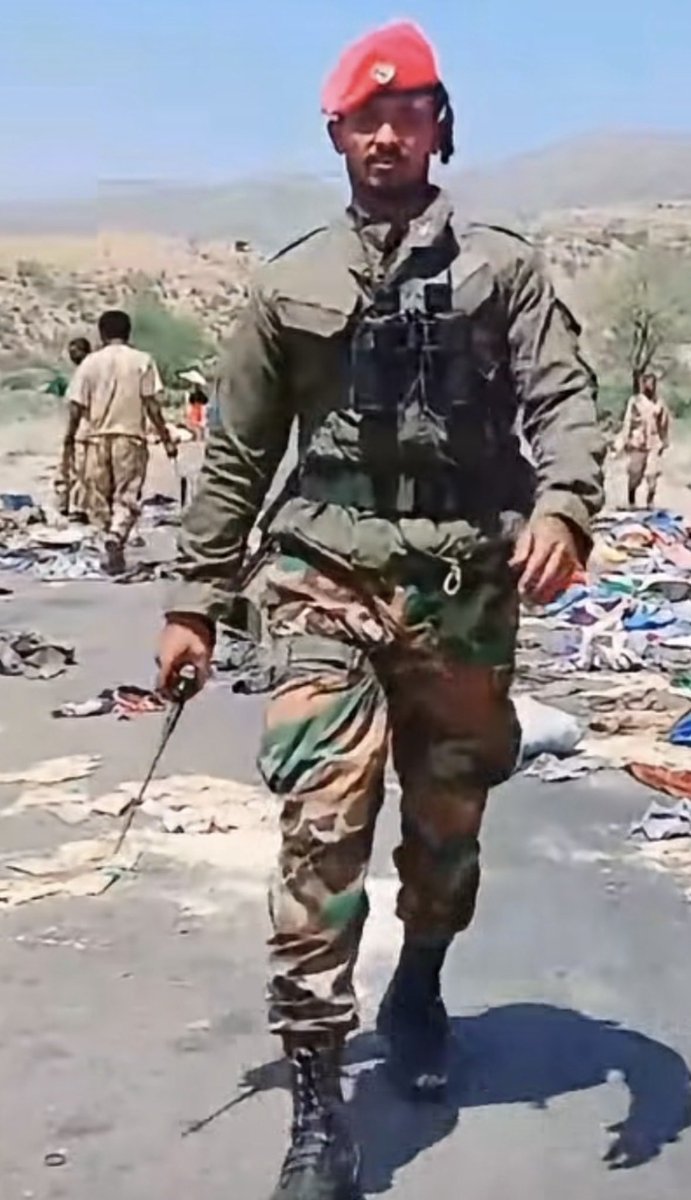
Ethiopia: Video footage circulating on social media that shows government forces searching Amhara farmers’ grain warehouses and making the grain unusable has sparked wave of public outrage
To every policymaker, every observer, every ally reading this:
If you’re talking about peace in Tigray, and women are not at the center of that conversationㅡYou’re not talking about peace. 15/n
But we refuse to accept that.
We must.
Because true peace requires more than the absence of bullets.
It requires the presence of justice, the protection of rights, and the inclusion of those most affected. 14/n
The silence of the courts is not just a bureaucratic failure—it’s a loud, terrifying statement about whose lives matter. And in this moment, it is women and girls in Tigray being told, once again, that their pain is negotiable, that their safety is expendable. 13/n
As someone who works on issues affecting women’s health and dignity, I’ve seen this pattern far too often:
• Where there is political instability, women’s rights are the first to fall.
• Where there is impunity, it is women’s bodies that pay the price.
• And where women are excluded from decision-making, they are left to live and die by choices made without them.
This cannot continue. 12/n
We are watching this unfold in real time.
Women in Tigray are being killed, violated, and denied justice—not just because of interpersonal violence, but because the systems meant to protect them were never rebuilt.
Because they were never invited to help rebuild them. 11/n
They are left out of peace processes.
Their specific needs are sidelined.
Their trauma is either politicized or ignored.
And without women at the table, the so-called “solutions” become part of the problem. 10/n
But this is not only a legal or political failure.
This is a gendered crisis.
Because every time a government collapses, a peace deal is negotiated, or a system of power reshuffles, women’s safety becomes negotiable—or worse, invisible. 9/n
Part of the answer lies in political breakdown. Tigray is now gripped by lawlessness—there is no functioning regional administration, no reliable system of accountability, and no safe recourse for victims. Criminals roam freely. Survivors and those seeking justice are harassed, threatened, and silenced. 8/n
The recent attack inside a courtroom in Mekelle where a femicide hearing turned violent and judges were forced to flee was not just an incident.
It was a message. A warning.
That even in the places where justice should live, fear is king.
But how did we get here? 7/n
Survivors and families seeking justice are walking into courtrooms where perpetrators hold more power than judges. Where the rule of law is not only broken, but being actively sabotaged. 6/n
Since the so-called ceasefire, intimate partner violence and femicide have surged across Tigray. Women who survived wartime rape are now being killed in their homes by the very men they once trusted. 5/n
And while the gunfire may have paused with the Pretoria Cessation of Hostilities Agreement, the violence against women did not.
If anything, it has worsened. 4/n