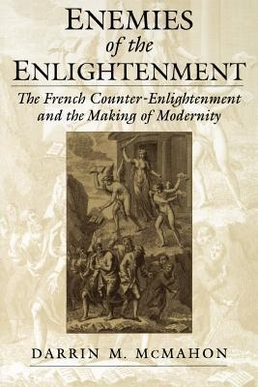
"Unlike other historians, such as Gordon Wood or R.R. Palmer, who emphasized an expanding blaze of radicalism, the conservative writer argued that the birth of the American Republic was a 'revolution of memory,' a return to what he sometimes called the 'old moral order'..."
Most works of art disappear. A few continue to reward attention across generations.
What allows them to endure; form, depth, tradition, criticism, or our willingness to encounter them again?
What makes a work last?
https://t.co/Kedqw4thfK
Not everything valuable needs to justify itself through usefulness.
Beauty asks us to stop, look, listen, and pay attention. It reminds us that the world is more than something to use.
Why beauty still matters:
https://t.co/9VyRZp0IW8
We have never had access to so much written material, yet access is not understanding.
Deep reading cultivates attention, patience, and judgment—capacities increasingly valuable in an age of scrolling, summaries, and AI.
Why deep reading still matters:
https://t.co/7iSTRwAw7q
The main topics of my recent booklength output:
- a theory of moderate, prudential conservatism
- the intellectual history of urban republicanism
- Roger Scruton on aesthetics and political philosophy
- Civility and further middle class values -
Being educated is more than possessing a degree.
It means learning to judge carefully, sustain attention, recognize the limits of our knowledge, and remain intellectually curious.
Education succeeds when learning becomes part of who we are.
https://t.co/OF8YwrS6K9
A university should prepare students for work—but not only for work.
Its deeper purpose is to cultivate judgment, intellectual independence, and the ability to connect knowledge across disciplines.
What is a university for?
https://t.co/uHVJzogPWb
AI can produce answers. Education must still form the mind that judges them.
The question is not whether students should use AI, but what they must learn to use it without becoming dependent on it.
What should students still learn in the age of AI?
https://t.co/bnoizi94Do
Education should prepare us for work—but not only for work.
It should also cultivate judgment, perspective, and understanding.
Perhaps the real question is what we mean by “useful.”
On education beyond utility:
https://t.co/SpRsCGV6mM
Tradition and originality are not opposites.
For T. S. Eliot, genuine renewal requires memory, judgment, and an understanding of what came before.
Why T. S. Eliot still matters:
https://t.co/tiPRUfgpOO
Education reaches beyond the accumulation of knowledge.
Its highest aim is wisdom—the capacity to understand, judge, and live responsibly.
On education and the pursuit of wisdom:
https://t.co/HRVav1p9gJ
A teacher does more than transmit knowledge.
At their best, teachers guide attention, cultivate judgment, and form independent minds.
On the teacher as an intellectual guide:
https://t.co/qxjfFvl2pX
@JoDemocracy The strength of civil society lies in mediating between individuals and the state, though political change ultimately depends on enduring institutions and traditions.
Training teaches us how to perform a task.
Education asks broader questions: How should we think, judge, and understand?
On the difference between training and education:
https://t.co/3yzzpFiLW1
A classroom is more than a place where knowledge is delivered.
At its best, it is a community of attention, where understanding grows through shared inquiry.
On teaching and learning:
https://t.co/GVZ1z9Xw6q
Education shapes more than knowledge.
It cultivates the moral imagination—the capacity to understand, judge, and see beyond ourselves.
On education and character:
https://t.co/vJMpPtSLdt
Standards do not limit learning.
They give students something to strive for and make excellence possible.
Why students need standards:
https://t.co/j6chBj5f4B