Truck entries into Gaza fell sharply in March 2026, reaching just 3,685 by March 29—only 21% of pre-war levels and 34% of the humanitarian protocol target. This sharp decline highlights the persistent shortfall in both trade and humanitarian access.
These fees stem from the Israeli imposed opaque entry system and severe restrictions on the number of trucks allowed in, creating artificial scarcity and driving up prices.
Ending these practices and restoring free movement of goods is essential for real economic recovery.
Today marks a pivotal moment for Gaza.
The newly formed Technocratic Government of Gaza officially received its letters of appointment, signed by the Board of Peace, with a formal public announcement expected in the coming hours. This is not a symbolic step. It is the beginning of a new governing phase for Gaza—one defined by competence, accountability, and reconstruction rather than factional rule.
What makes this moment historic is who this government represents—and who it does not.
This cabinet is composed of independent Gazan professionals who belong neither to the Palestinian Authority nor to Hamas. These are individuals rooted in Gaza’s society, economy, and institutions—many of whom lived through the war, endured its consequences, and remained engaged with their communities throughout the most difficult months.
Leadership and Key Figures
The government will be headed by Dr. Ali Shaath, a respected academic and public policy figure known for his technocratic approach, independence, and long-standing engagement with governance, development, and institutional reform.
Among the prominent members of the cabinet are:
@ayed621 Eng. Ayed Abu Ramadan – a leading economic and private-sector figure in Gaza, widely recognized for his role in sustaining commercial life under blockade and conflict, and for advocating practical economic recovery mechanisms grounded in local capacity.
Dr. Samira Helles – a seasoned professional with deep experience in public administration, social policy, and institutional rebuilding, bringing a strong focus on governance, transparency, and social resilience.
Hana Tarzi – a prominent civil-society voice, representing community engagement, humanitarian coordination, and the lived experience of Gaza’s social fabric during the war and its aftermath.
Together, these figures represent a new governing ethos: professional, civilian, locally anchored, and future-oriented.
What This Means for Gaza
This development is not merely a change of names—it is a structural shift.
Gaza is entering a phase that prioritizes:
Reconstruction over militarization
Institutions over factions
Service delivery over slogans
Economic revival over dependency
Dignity, accountability, and normal life over permanent emergency
The technocratic government is expected to focus on rebuilding critical infrastructure, restoring public services, stabilizing the economy, coordinating humanitarian and development efforts, and preparing Gaza for long-term governance reform and regional integration.
Beyond Gaza
This moment matters not only for Gaza’s residents or for Palestinians as a whole.
A stable, functional Gaza governed by professionals rather than armed factions is a cornerstone for regional stability, Israeli-Palestinian de-escalation, and credible international engagement. It opens the door for reconstruction funding to be tied to transparency and performance, and for Gaza to re-enter regional economic frameworks rather than remain isolated and volatile.
This is not the end of Gaza’s struggle—but it may well be the beginning of its recovery.
For the first time in many years, Gaza is being offered something it has been denied for too long:
a chance to be governed by its people, for its people, with the future in mind.
This is the full list of the Technocratic Government of Gaza, whose first meeting is expected to convene in Cairo soon:
🔸 Dr. Ali Shaath – Head of the Administrative Committee
(former Deputy Minister of Transportation in the Palestinian Authority)
🔸 Ayed Abu Ramadan – Head of Trade and Economy
(Chairman of the Gaza Chamber of Commerce). @ayed621
🔸 Eng. Omar Shamali – Head of the Telecommunications Portfolio
(Director of Palestinian Telecommunications in Gaza)
🔸 Abdul Karim Ashour – Head of the Agriculture Portfolio
(Director of Agricultural Relief / community activist)
🔸 Dr. Aed Yaghi – Head of the Health Portfolio
(Director of the Palestinian Medical Relief Society)
🔸 Dr. Jaber Al-Daour – Head of the Education Portfolio
(President of Palestine University)
🔸 Eng. Bashir Al-Rais – Head of the Finance Portfolio
(Engineering and financial consultant)
🔸 Eng. Ali Barhoum – Head of Water and Municipal Affairs
(Municipal consultant, Rafah)
🔸 Hana Tarzi – Head of Social Affairs and Women’s Affairs
(Lawyer and civil-society activist)
🔸 Dr. Arabi Abu Shaaban – Head of the Land Authority Portfolio
🔸 Mohammad Bseiso – Head of the Judiciary Portfolio
🔸 Major General Mohammad Tawfiq Helles & Major General Mohammad Nasman – Heads of Police and Security Affairs
A civilian, professional, Gaza-rooted governing team preparing to move from emergency to reconstruction.
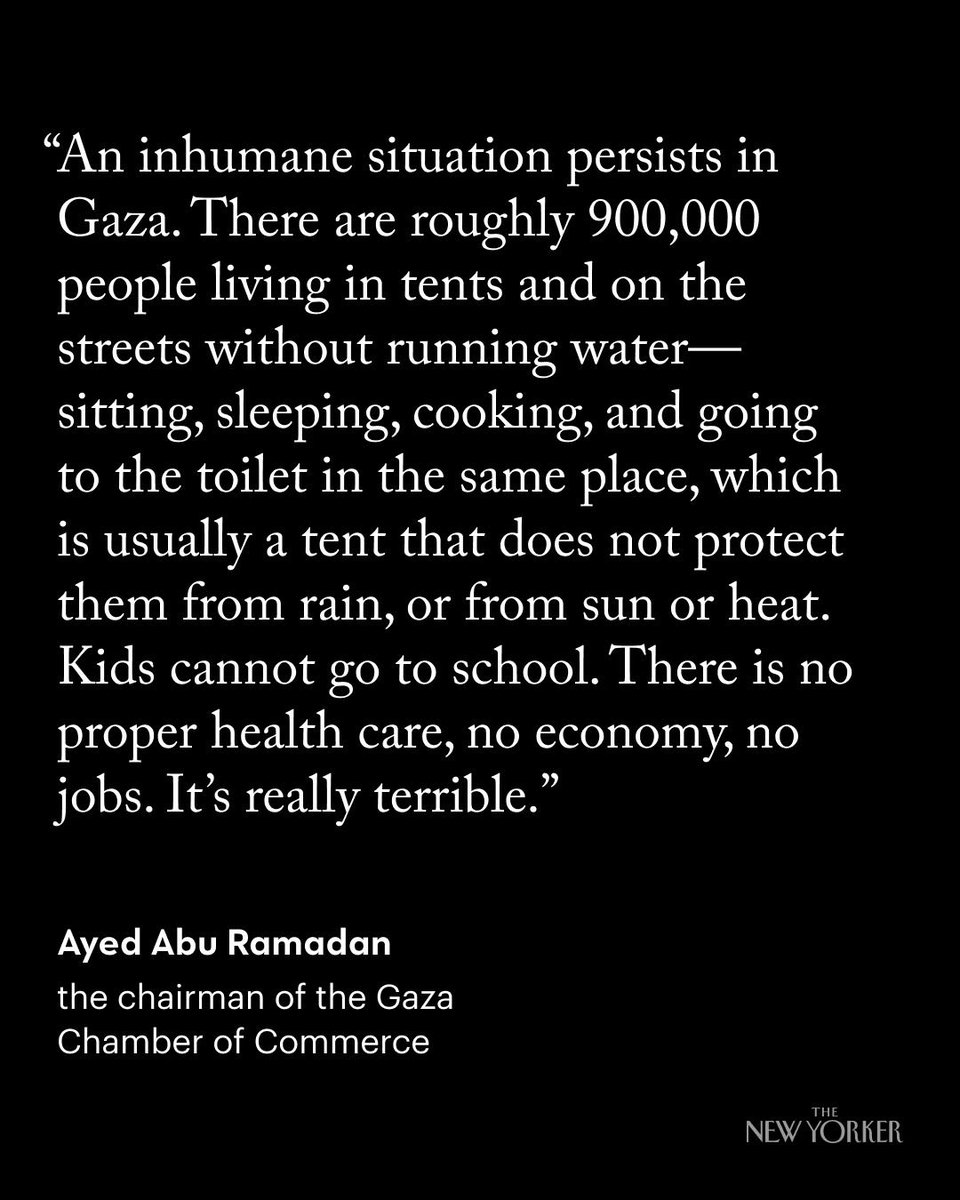
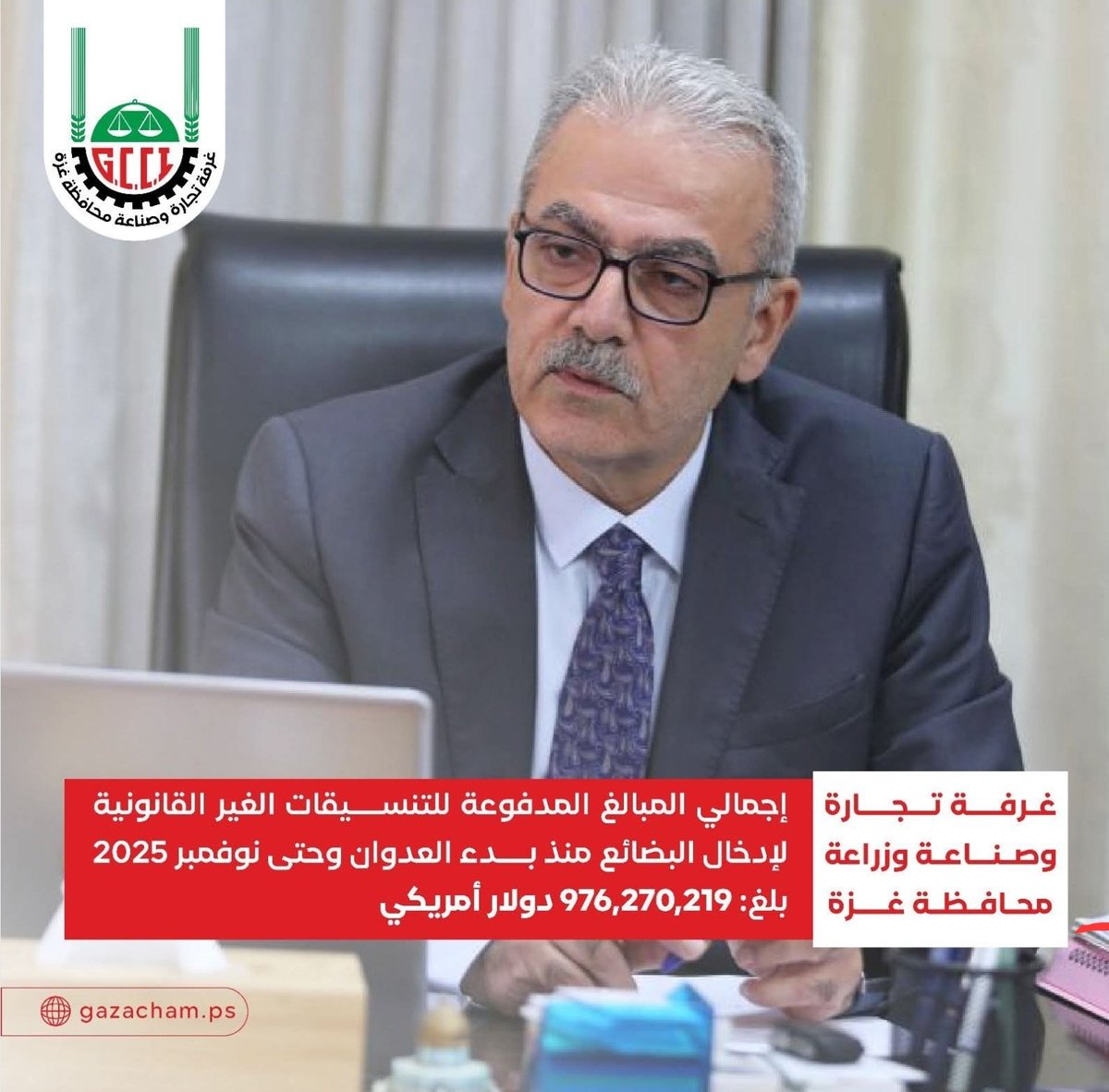
Yesterday, Ayed Abu Ramadan, Chairman of the Gaza Chambers of Commerce, released a shocking press release: from the start of the war until November 2025, $976,270,219 in illegal “coordination fees” was paid to move goods into Gaza.
A black market was engineered jointly by those who set the policies and procedures on the Israeli side and those who executed them on the Palestinian side. Out of this corruption, a new class of war millionaires emerged while an entire population starved.
For any journalist willing to invest time in this story: the names, the networks, and the cross-border partnerships behind this operation will shock you. Nearly $1 billion in black money pushed the price of basic food to unimaginable levels — at one point, desperate families were forced to pay $8 for a single egg.
This crime stands above many others because it robbed people of food, dignity, and survival. It demands a full investigation — by serious media, and by the justice systems on both sides.
مشاهد عظيمة تغيظ الاعداء،
الدمار هائل والمدينة في وضع كارثي ولكن العزيمة كبيرة والأمل بوجه الله اكبر
يجب أن تنتشر هذه المقاطع لأنها تغيظ إسرائيل وإعلامها.