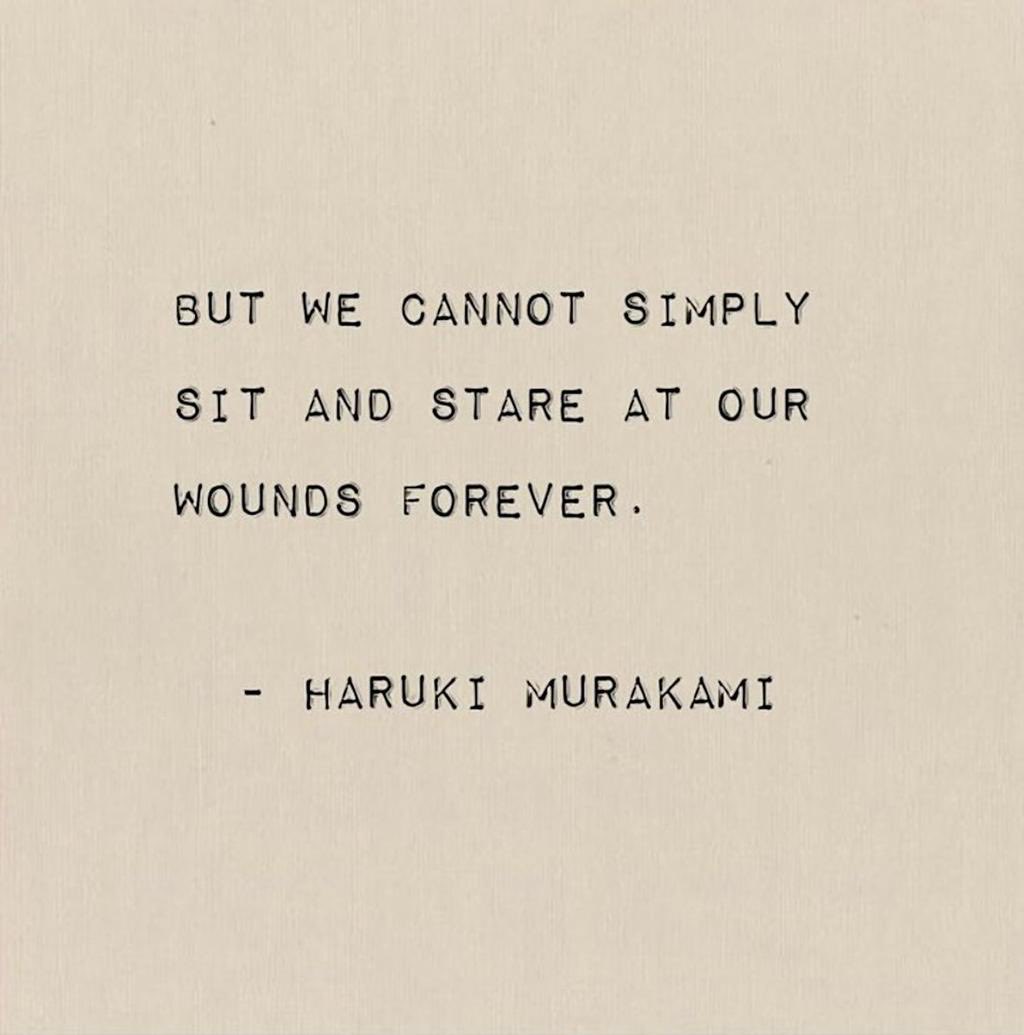
Brainmaxxing is fascinating because neuroplasticity means our brains can change through what we repeatedly practice.
But repetition doesn’t automatically mean improvement. We can become just as skilled at overthinking, avoiding discomfort, and ignoring exhaustion.
So here’s the uncomfortable question:
Are you actually rewiring your brain for growth, or just becoming more efficient at the patterns keeping you stuck?
There’s a difference between protecting yourself and avoiding discomfort.
Protection is recognizing when something is harming you and choosing not to keep paying that price.
Avoidance is allowing the fear of what might happen to prevent you from discovering what could happen.
But here’s the uncomfortable question:
Am I saying no because something is genuinely costing me my well-being, or because I’m afraid of what I might have to confront if I say yes?
We call it obsession when it leads nowhere and genius when it produces something extraordinary.
Same repetition. Same sacrifice. Same inability to stop.
Are we celebrating the obsession itself, or only the people whose obsession happened to pay off?
And here’s the question I have to ask myself: Am I pursuing something I truly believe in, or have I become so consumed by proving I can succeed that I’ve stopped questioning what it’s costing me?
There’s a difference between someone valuing you and someone valuing what you do for them.
But here’s the more uncomfortable question:
Are they taking advantage of you, or have you taught them that they can have unlimited access to you without ever having to reciprocate?
And what are you afraid will happen if you stop giving?
Harvard University — Why we misjudge how we'll feel
Why the Brain Talks to Itself: Sources of Error in Emotional Prediction (2009), Daniel Gilbert and Timothy Wilson.
Finding: People systematically make mistakes when predicting their emotional responses to How much of our present life do we sacrifice worrying about a future we cannot accurately predict?
Harvard research suggests we’re not always very good at predicting how we’ll feel about the future.
That made me wonder:
How much of our present life do we sacrifice worrying about a future we haven’t experienced?
And how many decisions have we avoided because we believed we already knew how the story would end?
There’s an important distinction between what is happening and what we’re telling ourselves about it.
But not every struggle exists only in our minds. Some problems are very real.
Perhaps the question isn’t whether everything is okay right now, but whether we’re responding to what’s actually happening or to everything we fear might happen next.
I think one of the hardest things to recognize is that being needed can feel a lot like being loved.
You become so accustomed to being the person everyone depends on that you stop asking what you actually want.
But here’s a question: If someone no longer needed you, would you still know who you are without that role?
There’s value in removing unnecessary decisions. But I wonder if discipline can become so automatic that we stop questioning what we’re doing.
Are we building routines that support the life we want, or becoming so committed to our routines that we forget why we started them?
Sometimes discipline is knowing when to reconsider the plan.
But what if happiness isn’t something we’re supposed to feel at the end of every day?
Some of the most meaningful decisions we make bring stress, uncertainty, and even sadness.
Does that mean we’re living the wrong life?
Maybe the better question isn’t “Am I happy today?” but “Am I living a life I actually want to participate in?”
I wonder if a calm mind is less about controlling what enters it and more about recognizing what deserves our attention.
We can’t prevent every worry, regret, or disappointment from appearing.
But how often do we keep something alive simply by returning to it?
Maybe the question isn’t what we’re growing in our minds, but what we keep watering long after it stopped serving us.
Working backward can show us the steps, but there’s another question worth asking.
Are we overwhelmed by the distance between where we are and where we want to be, or by our expectation that we should already be further along?
Sometimes the destination isn’t the problem. It’s the timeline we’ve imposed on ourselves.
What’s interesting is how easily taking care of ourselves becomes something we feel obligated to explain.
We don’t want to disappoint anyone, seem antisocial, or miss out.
But here’s a question: If we know a decision is right for us, why do we still need everyone else to be comfortable with it before we make it?
Have you ever explained yourself so many times that you started questioning whether you were even making sense?
You try different words. Give more examples. Replay the conversation afterward.
But here’s something worth asking:
Are they actually misunderstanding you, or are you uncomfortable with the possibility that they may never see things your way?
And when does explaining yourself become something you’re doing for your own reassurance?
There’s something liberating about realizing people can see you at your most embarrassing and life still goes on.
But I wonder if the real freedom isn’t in being rejected. It’s in no longer allowing the possibility of rejection to make our decisions for us.
How much would we dare to do if we stopped trying to control what everyone thought of us?
But what if the real competition isn’t with anyone, including yourself?
What if some of those distractions, fears, and habits are telling you something you haven’t stopped long enough to understand?
We spend so much time trying to defeat parts of ourselves. Have we considered understanding them first?