Someone forgot to tell Tiger he's a house cat.
When a coyote wandered into a South Pasadena apartment complex, a fearless feline named Tiger decided the neighborhood wasn't big enough for the two of them.
Instead of running, Tiger chased the much larger predator through the property before casually sitting down to watch it retreat.
But why would a house cat challenge an animal that could easily overpower it? Animal behavior experts have an explanation.
Read the full story at A-Z Animals: https://t.co/D93g0RK9Us
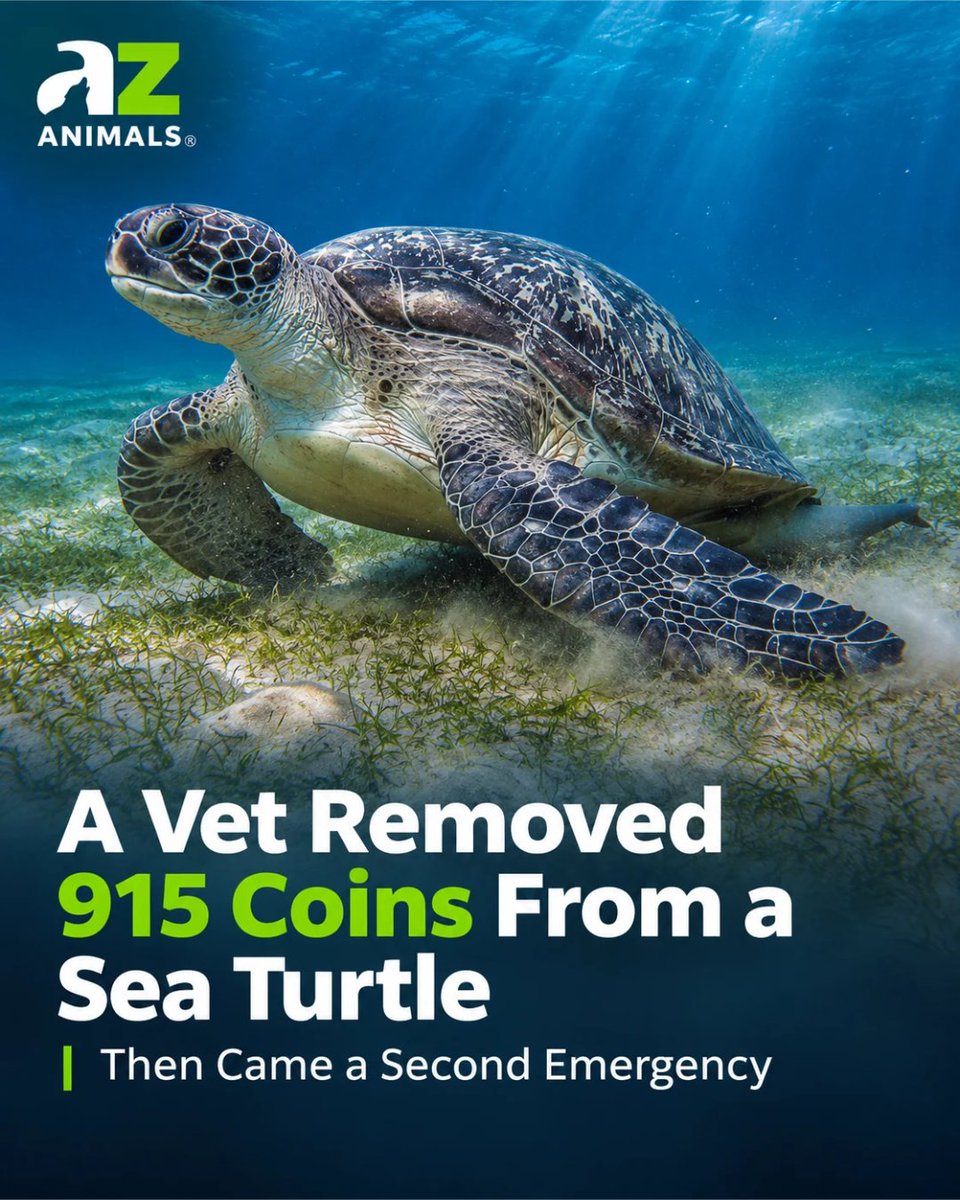
A sea turtle swallowed 915 coins weighing 11 pounds, all because people believed tossing money into her pond would bring good luck.
Veterinarians spent hours removing the coins, and at first, it appeared she would recover. But just days later, a second medical emergency took a devastating turn.
The heartbreaking story of Omsin, the sea turtle nicknamed "Piggy Bank," reminds us that even well-intentioned human actions can have deadly consequences for wildlife.
Read the full story at A-Z Animals: https://t.co/pnVBqZB4xr
Jaguars are supposed to be loners.
Apparently, nobody told the jaguars.
After 13 years of research, scientists documented male jaguars cooperating, traveling together, and even grooming one another.
This discovery is changing what we know about these big cats.
https://t.co/wCYG3G9QN3
How big can a grizzly bear get? In Yellowstone National Park, one enormous grizzly bear tipped the scales at an incredible 715 pounds, making it the heaviest documented grizzly bear in the Greater Yellowstone Ecosystem!
Yellowstone is home to some of North America's largest and most powerful predators, but this massive grizzly bear stands out even among the park's legendary wildlife. What does it take for a wild grizzly to grow to such an extraordinary size?
In this A-Z Animals video, we explore the story behind Yellowstone's 715-pound giant, compare its incredible size to other grizzly bears, and uncover the factors that allow these powerful predators to thrive in the wild.
From their massive strength and remarkable diets to their vital role in Yellowstone's ecosystem, grizzly bears are among the most fascinating animals in North America.
Could an even bigger grizzly bear be roaming Yellowstone today?
What really happens behind closed doors on factory farms?
Nina Jackel, founder of Lady Freethinker, exposes the troubling realities of industrial animal agriculture, the dairy industry, and the treatment of farm animals.
Watch her eye-opening conversation with A-Z Animals Managing Editor Ashley Haugen on our YouTube channel.
https://t.co/UpzcJPqlx9
South Carolina's salt marshes are hiding an incredible world of wildlife, and Captain Robert Hopkins of Barrier Island Eco Tours has spent decades exploring it.
Join A-Z Animals as we uncover fascinating animal behaviors, incredible survival stories, and one unforgettable dolphin rescue that left an entire boat in tears.
Watch our full interview on our YouTube channel!
https://t.co/Wkr6XW6Uy2
What makes two deer so determined to fight that even falling down a hillside won't stop them?
Visitors exploring a California redwood forest got an unforgettable lesson in deer behavior when two battling bucks tumbled onto a boardwalk and immediately resumed their showdown.
The reason? The RUT! During fall breeding season, rising hormones drive male deer to compete for dominance and access to mates.
Would you have stayed to watch or headed the other direction?
Shared via @isabellalogan on Instagram
In parts of Europe and America, a black cat crossing your path is said to bring bad luck. But in Scotland and Japan, black cats have traditionally symbolized prosperity and good fortune.
What do you think: bad luck, or just another cat crossing your path?
Not only is November Pet Cancer Awareness Month, but it is also Senior Pet Month and Adopt a Senior Pet Month.
That gentle climb up the stairs? It’s a reminder that age isn’t the end of adventure; it’s just a slower, softer kind. Senior pets still have so much love (and meows) to give.
🎥: midlifemama40
Meet the stumpy cuttlefish, five fascinating new residents of the Wild Reef exhibit at Shedd Aquarium! These relatives of squid and octopuses can instantly change their color, patterns, and skin texture to camouflage themselves.
Their fluttering fins help them balance, eight tiny arms hide longer prey-grabbing tentacles, and their unusual pupils change with the light!
Watch these masters of disguise in action, and see if you can catch them changing colors!
Video Credit: Shedd Aquarium/Samuel RC Elia
Polar bears aren't hunting us. The polar bear myth, the science, and what actually keeps people safe.
Watch the full chat on our YouTube channel.
https://t.co/ebN1wEnmyJ
What if one of the ocean's cutest animals is also one of its most important predators?
Sea otters help save California's kelp forests by eating sea urchins that would otherwise destroy these underwater ecosystems.
We spoke with a marine biologist from Monterey Bay Aquarium to learn why sea otters are essential to ocean health.
Watch the full interview on the A-Z Animals YouTube Channel!
https://t.co/0xCqQxCl5M
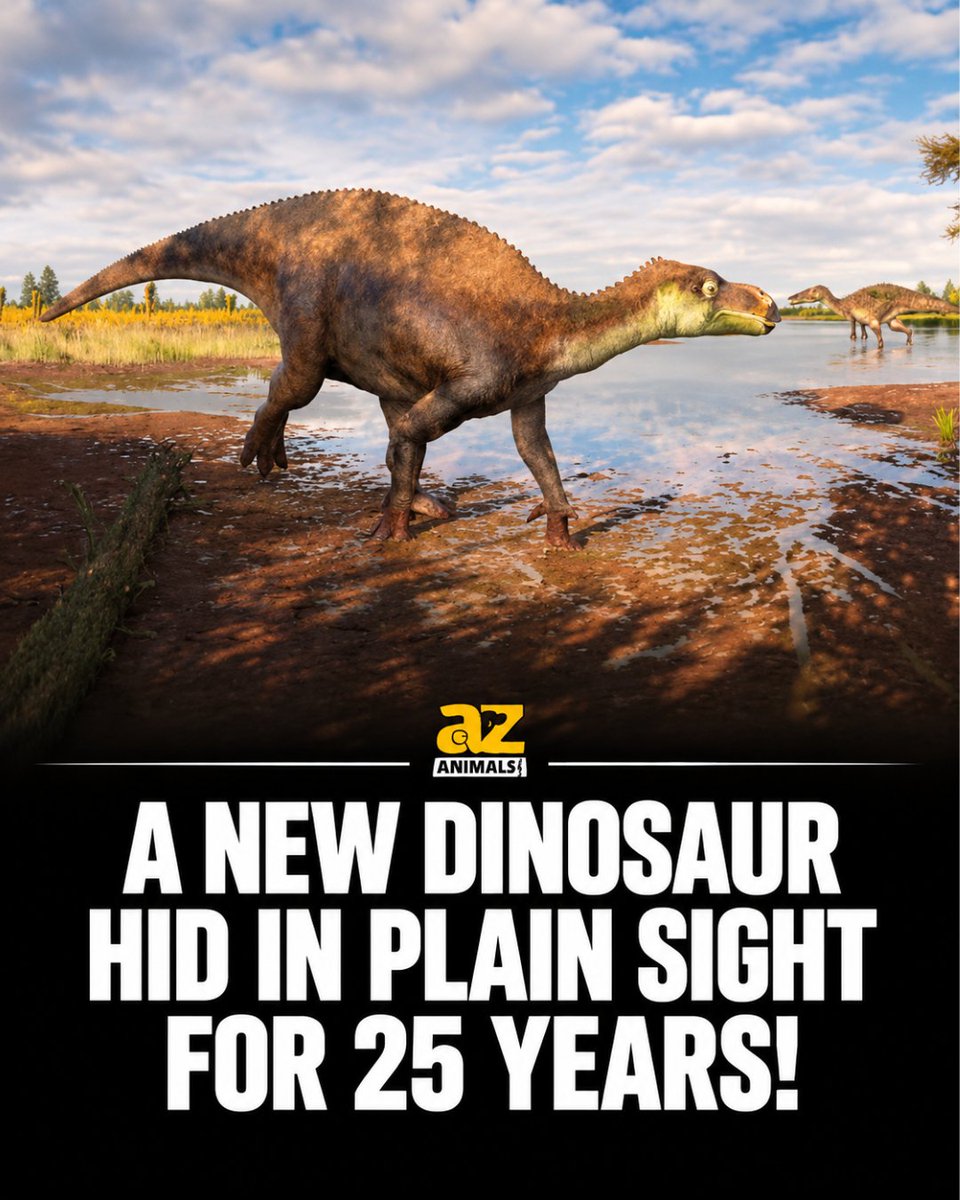
A NEW DINOSAUR was hiding in a museum for 25 YEARS! Mistaken for Iguanodon, the 125-million-year-old fossils actually belonged to an entirely new species, Paludohadros proudlovii.
Scientists say more undiscovered dinosaurs could be hiding in museum collections!
https://t.co/MkvqDZ7naV
Australia's humpback whales were nearly wiped out. Now their babies are breaking growth records!
Hunted to the brink of extinction by the early 1960s, eastern Australia's humpback whales have made one of the ocean's most remarkable comebacks. Their population has rebounded to an estimated 40,000+ whales, and scientists have uncovered another extraordinary discovery.
Using drones to measure 865 whales over four years, researchers found that these humpbacks grow faster than any other humpback population measured so far! By age five, they reach nearly 36 feet long, and by ages six or seven, they're already about 90% of their adult length.
Scientists are investigating whether their krill-rich diet helps fuel this incredible growth. But there's a catch. Researchers warn that changing ocean conditions and a potential population crash could threaten their recovery.
It's an inspiring conservation success story, but the next chapter is still being written.
When a house fire broke out in Fleetwood, Pennsylvania, a dog named Charlie was trapped on the second floor as flames and smoke filled the home. With neighbors desperately calling to him from below, Charlie made a terrifying leap from an upstairs window.
He survived the fall, but suffered burns and required emergency veterinary treatment, oxygen, and IV fluids. Thankfully, Charlie recovered and was reunited with his family!
Although the family lost their home, they didn't lose their beloved dog. This incredible escape is a powerful reminder of how quickly a house fire can turn deadly for pets.
Watch Charlie's heart-stopping escape and remarkable survival story!
https://t.co/apen1lkoDf