People who have been in research fields develop a felt sense that most "research" (in almost any field that isn't exactingly technical) is research theater, and many superstar careers enjoy star status not because of a unique connection to the truth but because of a unique connection with an audience. No one really has the time or stature to, from a position of objectivity and trust, bring popular researchers to heel. But it will get increasingly hard to hide from serious critique. The machines can do critique now, at the level of depth and rigor previously only possible for the academically deranged. We're going to have to revise a lot of what we "know" about the world that isn't really knowledge but is actually just received popular consensus - like floating voltages without grounding wires. The grounding wires are coming.
When I write memos I typically try to avoid sounding like a supervillain explaining his plan to henchmen, but I recognize that there are differing approaches and schools of thought.
@jasonmcgowan@kalanifsitake Kalani has shown that you can be both tough and loving. You can be fiercely competitive while being kind and respectful. Kalani’s example shows that, even in football, humility and meekness are strengths and not weaknesses. He is a man of integrity—a Christlike man.
“People working in an environment where they’re repeatedly told ‘it’s okay if something is off by just a little bit,’ may start feeling that way about other areas of their life too.”
A new @BYUMarriott study found tolerance standards may paradoxically affect business ethics.
A growing number of high-school seniors in the North are making an unexpected choice for college: They are heading to universities in the South. 🔗https://t.co/lQgm0yPlE5
The @Surgeon_General's new report on parenthood paints a dark portrait of parenthood. You'd never guess parents report their lives are
✔️ Less lonely
✔️ More meaningful &
✔️ Happier
than childless adults:
Even worse is someone claiming to have made a ton of money and selling their knowledge of how to do it. I call it selling treasure maps. If the map really works—why make a living selling it instead of just using it yourself?!
Many students buy in and it’s incredibly fulfilling to teach them. A few don’t buy in and are very vocal in their evaluations. Thankfully, they are in the minority. However, the trends discussed by @mattyglesias are absolutely aligned with my observations.
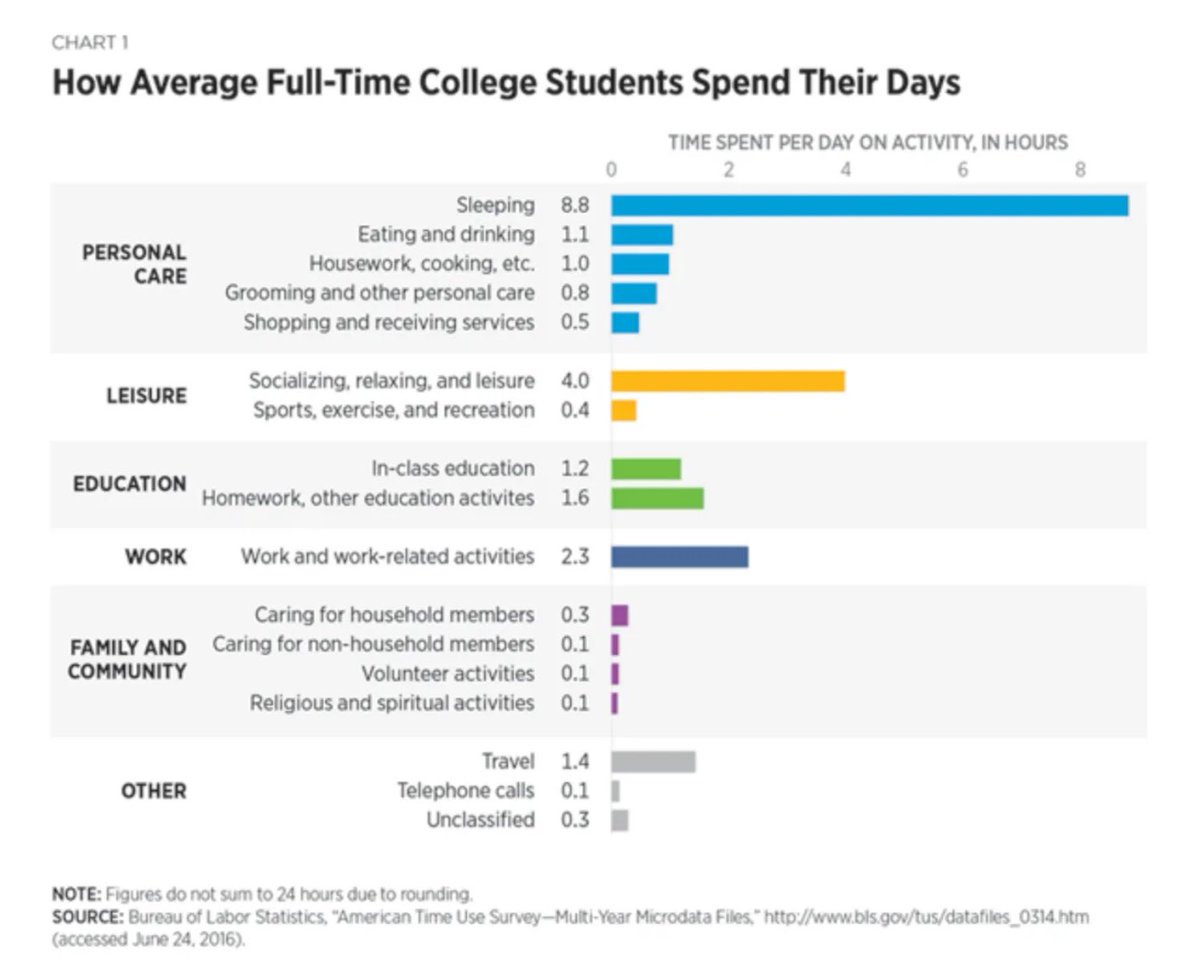
A full time college student typically needs to be taking 12+ credit hours, which would usually mean 10+ classroom hours and 20+ hours of homework per week. The average full time student is in class 8.4 hours and does 11.2 hours of homework per week.
“Full time” college students spend less than three hours per day in class or doing homework.
A downstream consequence of the marketization of higher education — the customers are getting what they want and what they want is easy classes.
https://t.co/DH6whQHA6L
I spend a lot of time trying to convince my students that the hard work I require will benefit them. You don’t get stronger by getting rid the weights in the weight room.
It's very possible that even if AI gets better than humans at *every conceivable task*, humans will still have plentiful well-paying jobs.
How, you ask?
By the magic of COMPARATIVE ADVANTAGE!
https://t.co/KsekdNYGXU