@hanmanalaa@ChineseEmbKenya Basically what they are saying is that they want our raw materials with zero tarrifs and ship finished products back at a higher price😂
There's nothing africa benefits actually, its more about them than it is about Africa 😂
@CodeByNZ It's understandable for web developers building websites to go with React, those building web applications and have knowledge in the three knows Angular is the god.
Angular gives you everything you need out of the box.
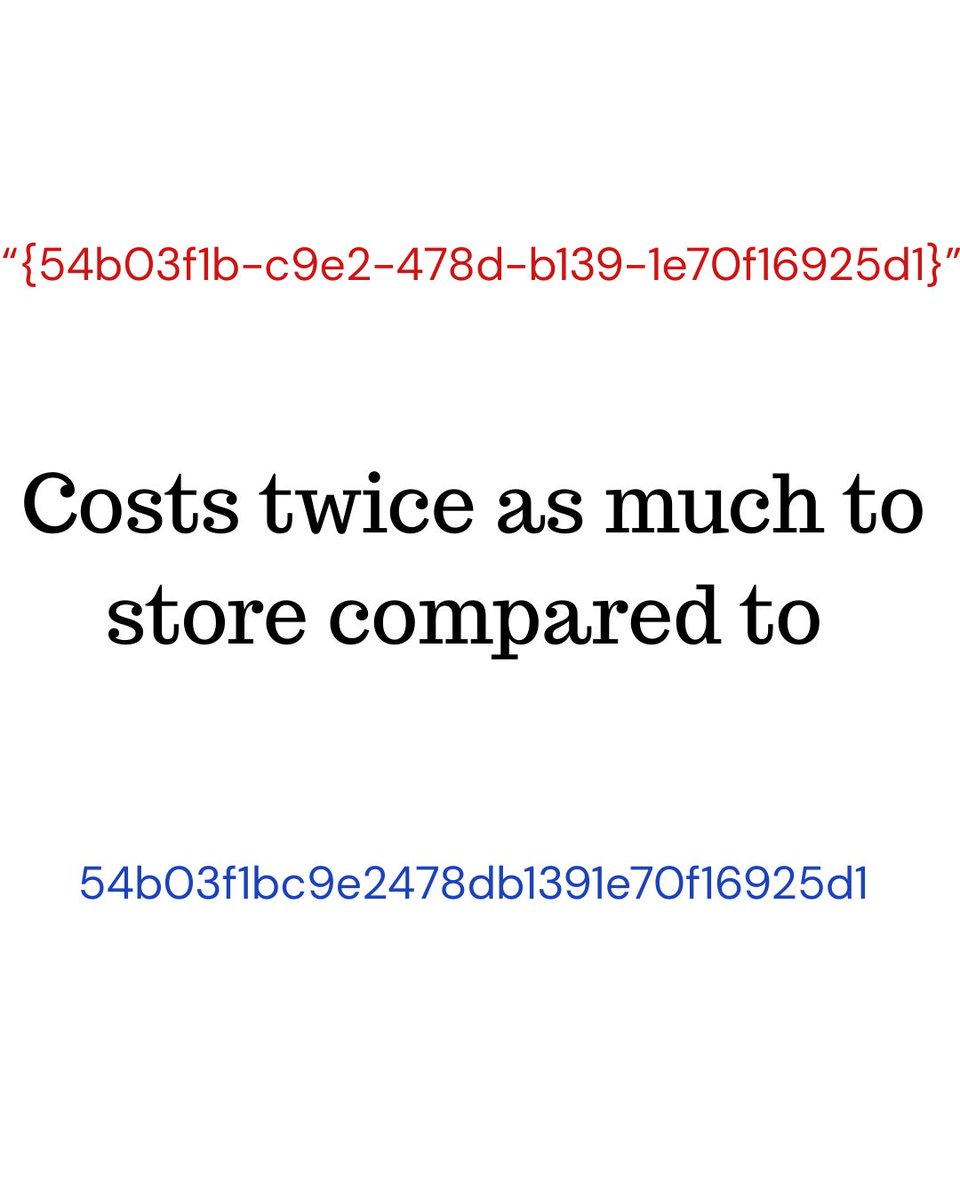
UUIDs are 128 bit (16 bytes), you can choose to store it natively as UUID costing 16 bytes per entry. You can also store them as ascii text costing 38 bytes per entry.
You may say why do I care about storage in 2025? I'd like to switch your attention from storage and space to IO and performance.
If you index the UUID field it makes a big difference if your key is 16 or 38 bytes. Every page in the index has fixed size, we subtract the constant page header size and the header per index entry. This leaves us with precious and scarce space per page to store our keys and values.
If you have 38 bytes keys you will be storing less keys per page compared to if you have a 16 bytes keys. A single page IO (physical or logical) will give you ~double the number of UUIDs in 16 bytes compared to 38 bytes, resulting in less IOs in general, translating to more performance.
This isn’t so bad if you're doing point queries, but it matters for range and full scan queries more, especially with UUIDv7 where range queries are more relevant.
@dev_TEMITAYO It is due to its compliance with ACID properties of database.
Both have their best use cases.
For a microservice architecture you can leverage both.