Mental health is not talked about enough in Rwanda. A lot of young people do not know how protect their mental health and they do not know how to cope. A lot of issues that young people are facing can be solved by educating people and prioritizing mental health.
For once I love that we are all (majority) standing against this madness ✊🏽 TikTok, Instagram, Substack, X, everywhere women stood up. Men are supporting women and pickmeshas are getting what they deserve, … It might not change the situation but it will ease it. 👏🏽
Hon. Minister, I think this reflection feels dismissive because it deflects from the actual concerns people are raising about gendered enforcement and police violence against women. It reduces a collective concern about law enforcement and violence to a a debate about fashion, commercial sexualisation and cultural identity.
1 - You suggest we shouldn’t be quick to describe this as « the state policing our bodies ». But the police announced that they would start monitoring indecency, and these restrictions were subsequently enforced. A police officer told one woman, « Ninongera kubona uwo mukondo urambona », meaning, « If I see your belly button again, you will see what I will do. » Another one said, « harazamo n’igiti, » meaning « we will beat you. »
If the state announces a vague policy like this and allows it to be enforced while evidently targeting women, then what is this if not the state policing women’s bodies?
2 - I agree with what you said that women’s bodies are not inherently sexual. If you believe that to be true, then I hope you understand that giving random security people, police officers, organisers and now youth “agents of change” the authority to enforce an undefined idea of decency will give more men permission to sexualise and then harass women according to their personal desires.
We literally still do not have a clear definition of what is being enforced exactly, yet the number of people empowered to enforce it is expanding. This is dangerous for women and for the nation as a whole.
3 - So, this is why these questions about fashion trends and cultural alternatives feel dismissive in regards to the conversation happening right now. They do not address the legal ambiguity, the gendered enforcement or the violence women are being threatened with. They redirect responsibility from the institutions exercising power to the women being punished.
4 - I agree that our fashion choices are shaped by commercial interests, algorithms and foreign influence, which is the same for all aspects of life beyond just clothing. So, the fact that something influences people, or that some members of our society deem something to be immoral or indecent, does not give the state legitimate authority to regulate it through vague policies and threats that especially seem to target one gender?
5 - Once women feel safe, we can definitely participate freely in conversations about what shapes people’s fashion choices. I think you can objectively agree that whatever shapes someone’s choice of clothing is not inherently a crime, and it cannot justify threats of violence.
As Minister of State for Youth and Arts, I’ve never seen a long tweet from you addressing the high level of youth unemployment, how many jobs you’ve created as a ministry, the poor education system, or other problems young people in Rwanda are facing… but dress codes?😭🤦🏾♂️
Honorable Minister, if you’ve been reflecting on the debate then I’m assuming you know that the police threatened women to beat them up if they don’t cover themselves. If it’s not a dog, why is it dog shaped? If it’s not about oppression and policing our bodies, why does the
I have been reflecting on the debate around how some of our young people dress, and I wonder whether we are asking ourselves the deeper questions.
When concerns are raised about increasingly revealing fashion trends, the conversation quickly becomes: “Why does the State want to police our bodies?”
But perhaps we should also ask: who is shaping these trends in the first place, and why?
Parents in different parts of the world have pointed out something interesting: clothes marketed to little girls are often shorter, tighter or more appearance-conscious than equivalent clothes for little boys of the same age.
Why?
Why are girls introduced so early to the idea that femininity is connected to displaying the body? And why, as they grow older, is that message reinforced through fashion, advertising, music, dance, films, music videos and social media, where the female body is so often presented through the lens of sexual desirability?
This is not an argument that the female body is inherently provocative. It is not. Nor should women and girls be made responsible for managing other people’s sexuality by simply being told to cover themselves.
The question is not what is wrong with the female body. The question is why our culture and commercial industries so persistently commodify it.
And there is another dimension to this conversation that matters to me: cultural identity.
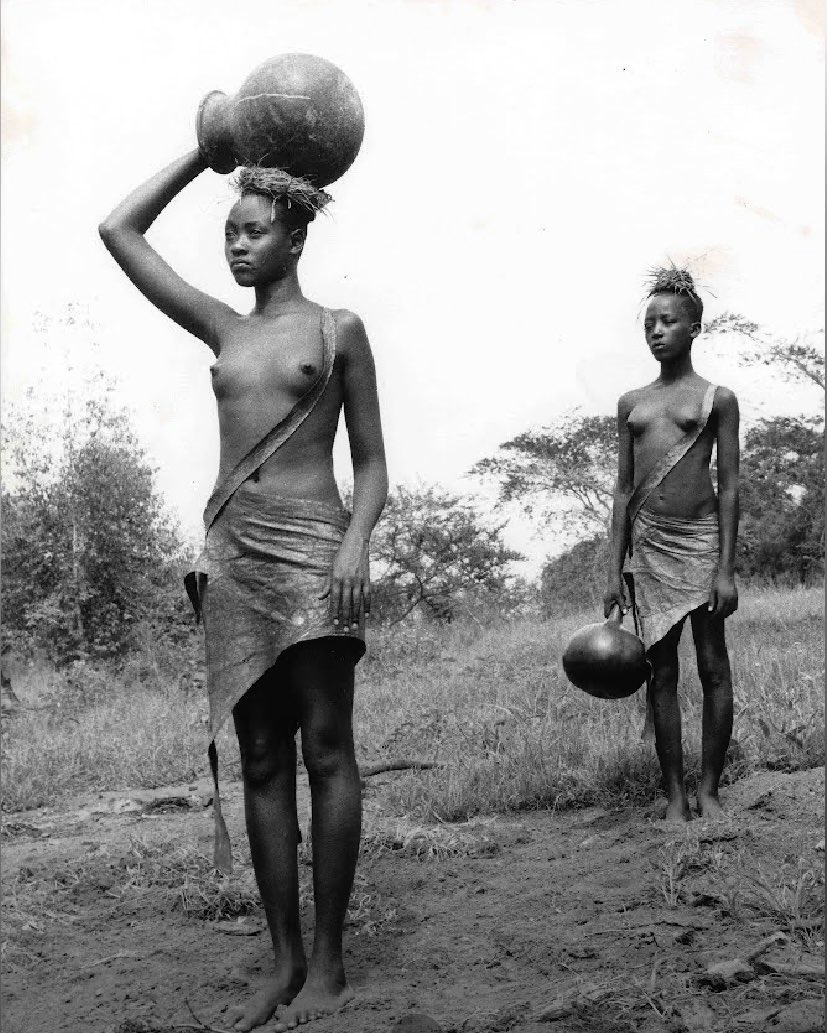
For many years, much of what we wore was imported—not only the clothes themselves, but increasingly the ideas of what was fashionable, modern, attractive or desirable.
But modernity does not have to mean cultural erasure.
Across our continent, we can see powerful examples of societies that have made their cultural identity part of contemporary fashion. Nigeria, among others, has demonstrated how local fabrics, patterns, craftsmanship and aesthetics can be worn with pride and continuously reimagined for modern lifestyles.
That should challenge us too.
What does contemporary Rwandan fashion look like when it is confident enough to draw from who we are, while remaining creative, youthful and open to the world?
This is not about freezing culture in the past, prescribing one acceptable way of dressing, or rejecting influences from elsewhere. Culture has always evolved. The question is whether we are participating in that evolution as creators, or simply consuming what others create for us.
Industries manufacture aspiration. Algorithms amplify it. Celebrities normalize it. Markets profit from it. And when we do not produce enough of our own cultural references, other people’s definitions of beauty, desirability and modernity can very easily become our own.
So before reducing every conversation about these trends to “the State wants to control our bodies,” perhaps we should encourage our young people—girls and boys alike—to exercise something even more important than the freedom to choose: the critical thinking to interrogate the choices being presented to them.
Who benefits from this trend?
Who defined this as desirable?
Why is sexual visibility so disproportionately expected of the female body?
What parts of ourselves are we losing when we imitate without questioning?
And what could we create if we looked at our own culture not as something belonging to the past, but as material for the future?
Freedom is not only the ability to choose. It is also the ability to understand what is shaping our choices—and the confidence to create alternatives of our own.
to dress in the precolonial era but if we go out in big 2026 with our shoulders exposed the police tells us to cover up and threaten to beat us if we don’t.