Biopharma CEO "This presentation contains forward-looking statements, as a result of risks and uncertainties..."
AI/Tech CEO "We will cure all diseases in less than 10 years"
GFY
Propaganda bullshit. Expected, I suppose, from a Nashi propagandist.
I have 3 miniature humans that aren't my hobby - they're my entire raison d'être. To say nothing of my delightful wife that I greatly enjoy spending as much time with as possible.
Every single late night at the office, business dinner, investor event/retreat, trip to a supplier, visit to a customer, etc is a direct trade-off against my being an involved and present father (and husband). It's a difficult balance! And yet I've done it.
The real talk side of the "hustle culture" bullshit that nobody talks about is how your work output falls off a cliff around ~60 hours. Maybe a bit more if you're super young, but I doubt it. In most cases, that 80th hour at your desk is performative - it's theater.
Balanced lives (whether it's raising kids, sailing, tinkering on hobby cars, fitness, whatever) directly lead to balanced thinking and a FAR more sustainable lifestyle than "all work no play."
And, more importantly, it models for your employees that balance is actually good for output, morale, retention, etc.
Building big, impactful companies is a marathon. An ultra marathon. 10 years of marathons back to back. Your mind (and body) do need to actually rest and restore, or else you burn out. Fact of life.
Nonsense claims like this are propaganda from the (typically) VC crowd who want to see MOAR HOURS as if that makes PMF happen, under the misguided belief that hours in linearly equals company value out.
Have hobbies. Have kids. Take a vacation with your partner. And also work hard to build your company. The balance is difficult to find, but very doable.
Sputtering? Zero chances. I’m empathetic to the personal stories, but don’t think these anecdotes reflect the reality on the ground. I’m feeling more positive now than in years.
Biotech is a cyclic business. We had a bubble of overbuilding, overhiring, and overfunding, followed by retrenchment for a couple years. We’re in a healthier place now. We still have 2x more VC funding in biotech than a decade ago. IPOs dried up but are coming back. XBi is up significantly. And we’re now entering an expansion part of the cycle.
Lab vacancy rates have more to do with the massive lab build out, creating a huge glut of supply, than a long term pullback in biotech relative to pre-pandemic bubble lab usage. Ridiculous rents in the face of demand drove overbuilding of labs, which take years to come online - thus the glut today.
I’m an optimist on the sector and on Kendall specifically. Interest rates, M&A, catalytic data, sector rotation into biopharma, and fading macro risks all create tailwinds. Boston remains the global epicenter of biopharma R&D. In the US, I’m concerned about further FDA chaos, but am hopeful we can manage thru that…
China is both threat and opportunity - bringing new drugs to patients globally is a good thing. And raising the competitive pressure to do things faster and cheaper in the US is healthy. Appropriate regulatory changes need to happen, and I think will over time.
But fundamentally the Boston biotech cluster, and the western biotech sector more broadly, are poised for a renewed positive run over the next few years.
The reports of our death, or sputtering, are greatly exaggerated…
Today in @Nature we report a new prime editing strategy that can rescue a common cause of many genetic diseases in a disease-agnostic manner. This approach converts a redundant endogenous tRNA into an optimized suppressor tRNA, enabling a single prime edit to rescue premature stop codons across different diseases.
(1/15)
https://t.co/zs0qu5bhXx
Unprompted, Jaylen Brown praises Tatum and says the Finals MVP could have gone to him:
“Jayson, I can't talk enough about his selflessness. I can't talk enough about his attitude. It's just how he approached not just this series or the Finals but just the playoffs in general.”
Jaylen Brown on Jayson Tatum:
“The media have said all different types of things: We can't play together, we are never going to win. We heard it all. But we just blocked it out, and we just kept going. I trusted him. He trusted me. And we did it together.”
When you read posts like this, it's clear that the biopharma industry has done a terrible job communicating the value prop of our industry.
A reminder on some of those points:
Grab a coffee, this will be a long one
✔️ Drug spending is far less than hospital care & physician services and has stayed fairly consistent for decades
✔️ While gross prices are increasing (largely in anticipation of higher PBM rebates), net drug price has actually fallen YoY for the past few years
✔️ Drugs improve outcomes & reduce massive downstream hospital costs - how many heart attacks (& associated costs) have statins prevented?
✔️ Drugs democratize healthcare: health provider services could vary significantly in quality & cost (even in the same hospital!); but if you have insurance and are near a pharmacy, you can get the best drugs in the world
✔️ The vast majority of drugs eventually do go generic and costs plummet. ~90% of scripts are filled with generic drugs - nearly all were once expensive branded drugs. Compare that with every other cost in healthcare, which increases at a higher rate than inflation
✔️ Indexing on drug prices alone misses the context that increasingly medicines are low-volume products, targeting niche diseases or produced in small batches - naturally the list price will be higher, but the "N" will be lower to compensate
That's not to say that the industry is perfect or that Blake & others don't have valid points worth addressing. It's absolutely true that some manufacturers game the patent system and artificially extend IP well past the point at which generics should have entered. AbbVie famously did this with Humira. Legislation should emerge to curb this. I'd even support forcing manufacturers to assist generic companies for difficult-to-produce medicines once drug patents have expired, such as novel biologics or cell & gene therapies.
But it's also worth understanding each individual situation - if a manufacturer takes an "old" drug but spends real R&D money improving it, either via more convenient / less frequent dosing, lower side effects or new indications - they should be rewarded for doing so.
Blake brings up the EpiPen, but prior to this innovation, epinephrine injection required a vial & syringe. Anaphylaxis can be very disconcerting for a non-medically trained parent, as they are watching their kid's throat close up. Every second counts - easier & faster dosing is life saving. Mylan also predominantly drove workplace, school & societal education on the value of having an autoinjector on-hand, absolutely saving many lives. Were they personally motivated to do so? Yes - but they also foot the bill. Once they stop, who will pick up that service to ensure we remain adequately supplied for the next emergency?
It's also true the US pays disproportionately more than other countries for the same drugs. Every manufacturer seeks to profit in the US market, and to a much lesser extent Europe & Japan. After that, the drug may be break-even or even lose money. The US does subsidize global drug development, although global citizens do help accelerate trial enrollment & collectively contribute ~50% of revenue in most cases. In return, the US typically gets access to the best medicines fastest - although, there's certainly an altruistic element here.
Since the IRA was mentioned, I'll also cover that. The below makes the industry's argument sound a bit like a South Park episode, but it has quite a bit more teeth than that.
The primary gripes with the IRA are:
(1) Price controls kick in after 9 years for small molecules vs. 13 years for biologics. This creates the wrong incentives, since biologics are more likely to be higher priced, niche drugs! Ironically, small molecules are easier to genericize, tend to be much cheaper and are more easily dosed across the population (i.e. compare an oral pill vs. an injection for an elderly person). Thus, this clause will actually increase drug prices
(2) There's no floor on CMS price cuts - while the minimum is 25%, there's no guarantee they won't go much deeper. Without that guarantee, investors have to underwrite investments assuming a worst-case scenario, which will just reduce the amount of R&D spend overall, hamstringing the development of next-gen medicines we need. Raising prices upfront to compensate doesn't work, since payors will push back & restrict formulary tiering
(3) The exemptions disincentivize parallel development across multiple orphan indications. We should be encouraging as much R&D as possible for patients with few options - not siphoning it away.
It's not that the industry isn't open to regulation, it's that short-sighted legislation ends up creating the wrong incentives & damaging the ecosystem that gets life-saving medicines funded.
The IRA trickles down to early-stage investing as well. All VCs accept that most investments will be illiquid for many years and likely fail. Life sciences VCs accept the extra risk that R&D costs hundreds of millions / billions of $, takes 10-15+ years & >90% fail. Moreso, even successful drug development companies won't have revenue for the first decade of their existence.
Against that backdrop, early-stage VCs historically get some exit liquidity from late-stage investors. However, severe pricing risk will limit the # of late-stage investors willing to fund even those rare successes through commercialization. If that happens, we need to be prepared for a lot of early-stage capital to dry up and be deployed in friendlier sectors. That's not to say some R&D is inefficient (i.e. the Nth PD-1 inhibitor) - but we shouldn't throw the baby out with the bathwater.
Lastly, despite all the rhetoric around drug pricing driving higher costs to patients, that shift is predominantly due to high-deductible insurance plans and co-insurance. The shift towards specialty biologic drugs is a contributor, but again legislation such as the IRA is incentivizing more of those, not less and net drug prices are actually declining.
Layers of middle men such as PBMs actively incentivize higher drug list prices that are then aggressively rebated, since they capture a profit based on the size of the discount they "negotiated" for insurance providers. Yet, only the high list price ends up getting reported in the media. It has become an easy punching bag regardless of your affiliation.
How can we as an industry do a better job of balancing public discourse around healthcare spend & the role of biopharma companies?
Jaylen Brown and the Boston Celtics have agreed on a five-year supermax extension worth up to $304 million, the richest contract in NBA history, his agent Jason Glushon of @GlushonSM tells ESPN.
“Pharmaceutical discovery and development is the most complicated activity that humans do” Amazing, accurate, and even inspiring quote from CEO and founder Joshua Boger
The founder and former CEO of Vertex Pharmaceuticals, Joshua Boger, was once asked: "What does it take to be a good leader in a pharmaceutical company?"
Boger said, "Pharmaceutical discovery and development is the most complicated activity that humans do.
Going to Mars is easy, going to Mars is engineering! I mean, I'm not an engineer but if you give me a hundred billion dollars, I guarantee you I can put you on Mars. There's nothing stopping me except organisational momentum and money.
But if you give me a hundred billion dollars and say, in five years or ten years you have to cure Alzheimer's disease... I'll say... I'll give it a go but I have no idea whether I could do it!
Drug discovery and development is just an insanely complicated activity to do that you need to keep teams of people together for a very long time.
And this is what distinguishes it from most of the high-tech, ie. I have a high-tech idea, I should be shipping it in 18 months. If I have a pharmaceutical idea I may be shipping it in 18 years!
So I need to keep a team of people together on the discovery and development side for 12 to 15 years on average.
The most important thing is understanding team dynamics and the difference in personalities that are necessary to build a team and hold it together. To do that, you the leader have to be incredibly passionate about what you're trying to do. It's a combination of empathy and passion...
And you have to lead by example. Very often I was the last person to cut the lights out at midnight or 1 am. And it's not just the number of hours... the people who report to you can see you, and they can tell whether or not you're thinking about the mission all the time..."
Ethan Quinn is your 𝐍𝐂𝐀𝐀 𝐒𝐢𝐧𝐠𝐥𝐞𝐬 𝐍𝐚𝐭𝐢𝐨𝐧𝐚𝐥 𝐂𝐡𝐚𝐦𝐩𝐢𝐨𝐧‼️
The redshirt freshman pulls off the comeback and wins the fifth singles title in program history!
No. 2 Quinn 🆚 No. 8 Styler ✅ 6-7(2), 7-6(5), 6-2
#BeMore // #GoDawgs
If Miami can win three in a row, I’ve got to think Boston can, too. A lot needs to change in order for that to happen and for the C’s to force a Game 7, but it surely is in the realm of possibility.
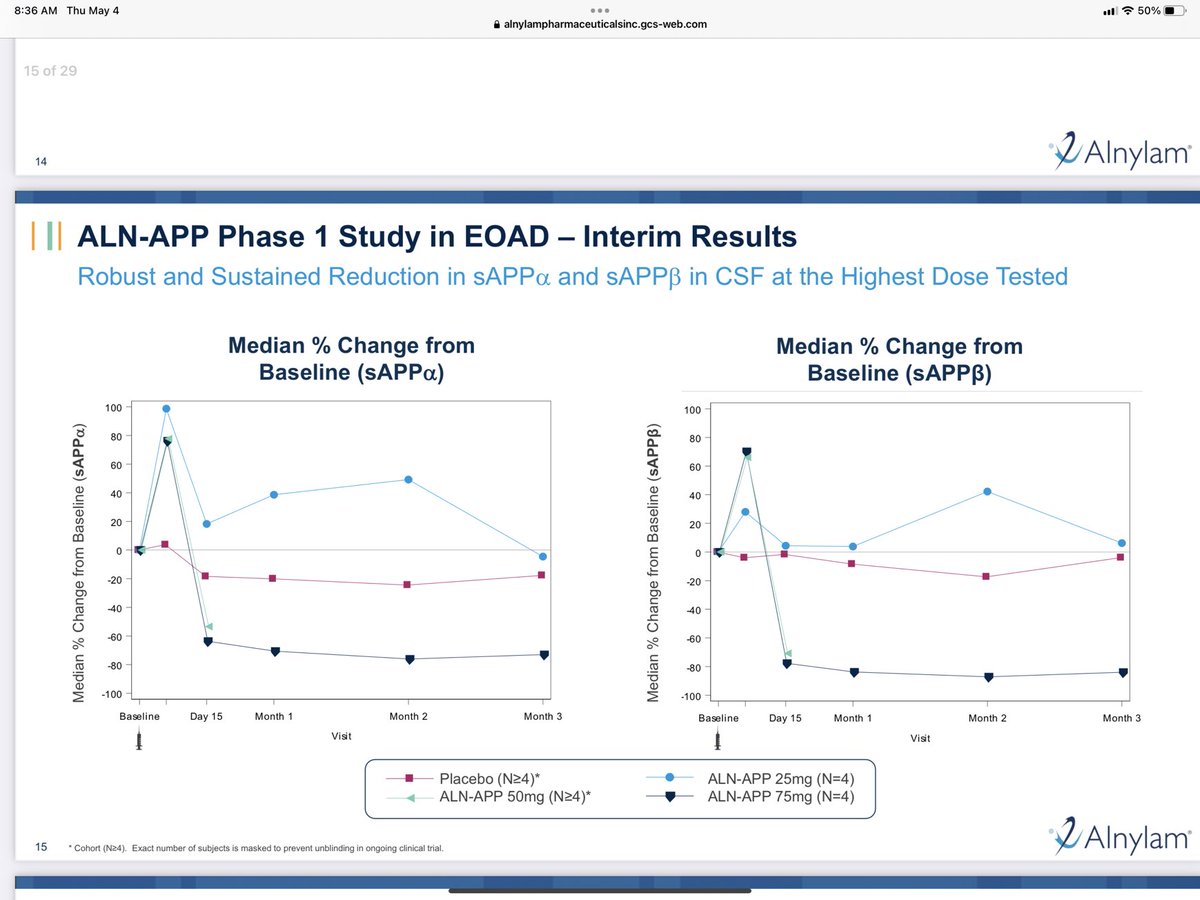
New CNS #RNAi data from @alnylam!
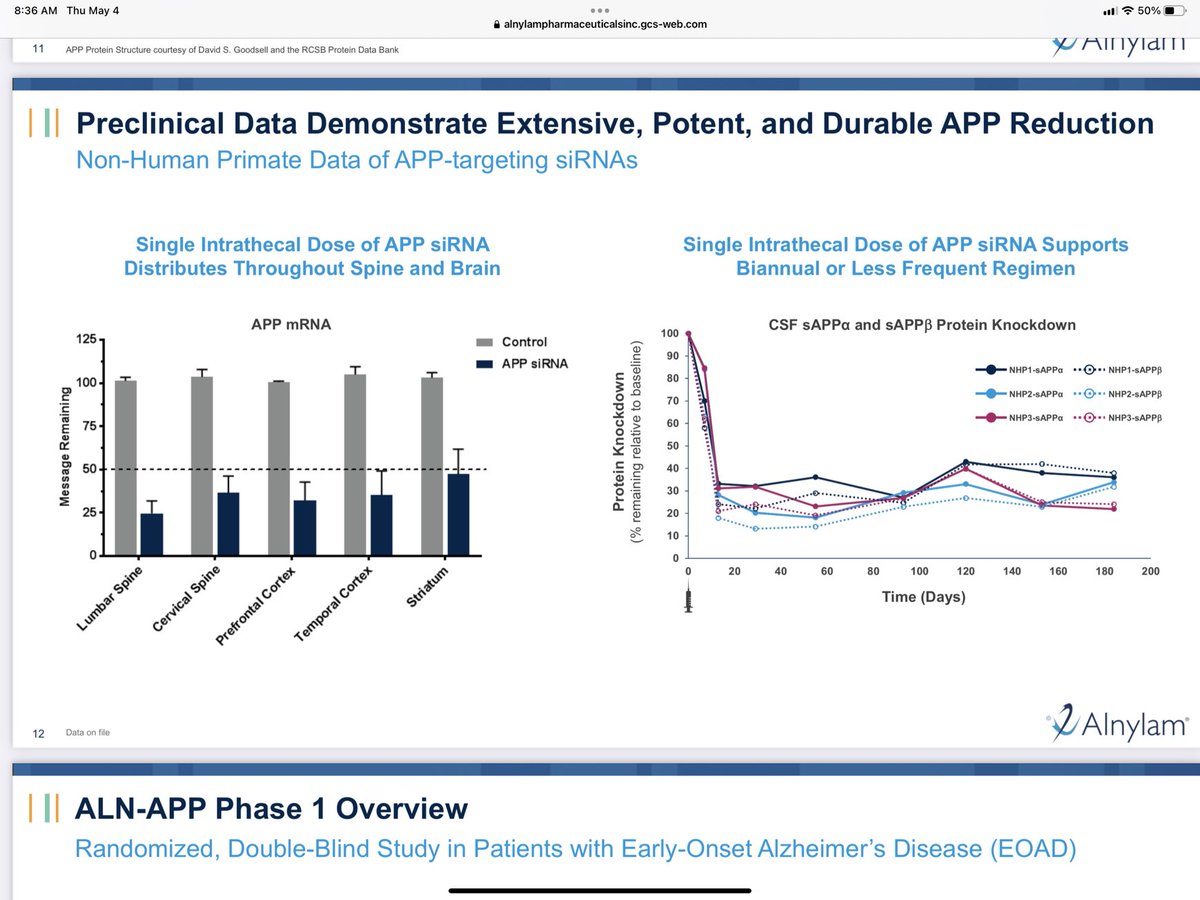
Unbelievable >80% APP silencing at top dose!
See translation from NHP to human… “Monkey see, Human do” for RNAi in CNS… JUST LIKE LIVER!
Implications? We will see reproducible and modular approach for RNAi toward major Neuro degenerative Dz!
What a week for neuroscience AND nucleic acid therapies
1. Accelerated approval for SOD1 ALS using a antisense oligonucleotides @biogen@ionispharma
2. Promising interim P1 date for Alzheimer’s Disease using siRNA @Alnylam@Regeneron
Slowing cognitive and functional decline by 35% vs placebo is certainly noteworthy. Looking forward to a full data release but cautious with 24% of patients with brain swelling. https://t.co/0CzfabjQCB