Fun fact:
When the PLO was founded in 1964, the West Bank was ruled by Jordan and Gaza by Egypt.
Yet the PLO didn't demand the "liberation" of either.
Its founding charter called only for the elimination of Israel.
If this conflict had always been about creating a Palestinian state, why wasn't Jordan's control of the West Bank or Egypt's control of Gaza considered occupation?
Sometimes history asks uncomfortable questions.
When Politics Trumps Military Power
When China launched its surprise invasion in 1962, New Delhi’s decision not to deploy the Indian Air Force offensively to gain air superiority over the battlefields and sever exposed Chinese supply lines through Himalayan passes is widely regarded by military historians and former Indian air chiefs as one of independent India’s biggest strategic blunders. The then prime minister relied heavily on civilian intelligence officials and personal advisers rather than consulting the Air Force’s top brass. U.S. Ambassador John Kenneth Galbraith also reportedly counseled caution against introducing combat aircraft, fearing further escalation, even though the PLAAF lacked adequate forward airbases, radar coverage and all-weather maintenance facilities in Tibet at the time.
Fast-forward to India’s May 2025 Operation Sindoor. New Delhi’s decision to cease hostilities just three and a half days into the operation helped revive Pakistan’s international image, particularly in the Islamic world. It was widely perceived, rightly or wrongly, as having held its own against a more powerful adversary.
That perception has proved consequential, raising Pakistan’s strategic salience and helping pave the way first for the Saudi-Pakistan mutual defense pact and now for its extension into a trilateral Sunni alliance with Turkey. It has also left Pakistan’s de facto ruler, the self-styled air marshal, more emboldened. All of this has important implications for India’s security.
Like the sidelining of Air Force leadership in 1962, Operation Sindoor was launched under a political directive restricting the Indian Air Force to striking only cross-border terrorist camps. That ran counter to a fundamental principle of air warfare: begin by neutralizing the adversary’s air defenses and airfields.
Only on the operation’s third and final day was the Air Force authorized to strike Pakistan’s air defenses and bases. Yet, just hours after major damage was inflicted on those air defenses and bases, New Delhi abruptly ended the operation, without seeking to translate its battlefield advantage into a concrete political outcome that would be difficult for the world to dispute.
Did U.S. pressure play a role? Possibly, though not in the way Trump later portrayed it, in keeping with his characteristic flair for claiming credit. The ceasefire took effect just 85 minutes after Pakistan’s DGMO called his Indian counterpart, suggesting that the groundwork for a truce had already been laid through prior U.S. intervention. Washington likely provided Pakistan with the off-ramp it needed to save face.
One jarring fact sticks out: It was not New Delhi but Washington (first Marco Rubio and then Trump) that announced that the Indian operation was immediately ceasing. India’s own ceasefire announcement came almost 100 minutes after the truce had already taken effect.
India’s problem in both 1962 and 2025 was not simply a lack of military capability but excessive political control over how that capability could be employed. When political leaders tie the military’s hands, the strategic costs can last long after hostilities end.
Boy George @BoyGeorge
MERCI! ❤🇮🇱
Merci pour ta chanson "We will dance again", à la mémoire des victimes du 7 octobre, des massacrés du Festival Nova.
Tu savais que tu risquais gros. Tu savais que tu perdrais amis, fans, collaborateurs, contrats.
Tu le savais, mais tu l'as fait, parce que tu aimes les juifs par-dessus tout.
A une époque où tant d'artistes choisissent le silence, où d'autres expriment leur soutien à une "cause" pour masquer leur antisémitisme, toi tu as décidé de ne pas nous tourner le dos et de chanter la souffrance des israéliens.
Une prise de position rare! Et la question se pose:
Que se passe-t-il quand une telle célébrité ose défendre Israël?
Nous le voyons:
elle attire des torrents de haine, des appels au boycott. Quand d'autres célébrités qui réclament la disparition d'Israël sont hissées sur le podium.
Tu n'es pas juif, tu l'es de coeur.
Tu encaisses les réactions hostiles, mais tu persistes, tu assumes. Tu renverses les mantras habituels de la gauche.
C'est à cela que ressemble le courage, en 2026.
King George 👑, nous juifs israéliens, espérons être à la hauteur de tes engagements!
Fun fact:
Between the 1880s and 1948, Jews purchased roughly 1.5 million dunams of land, mostly from Arab owners. That’s about 370,000 acres, enough land in raw area for hundreds of thousands, potentially millions, of homes and buildings, depending on how densely it’s developed.
So when you declare Jewish land purchases in Palestine “illegitimate,” what you’re actually saying is that Jews had no legitimate right to buy land from Arabs who willingly sold it to them.
Xenophobia 101.
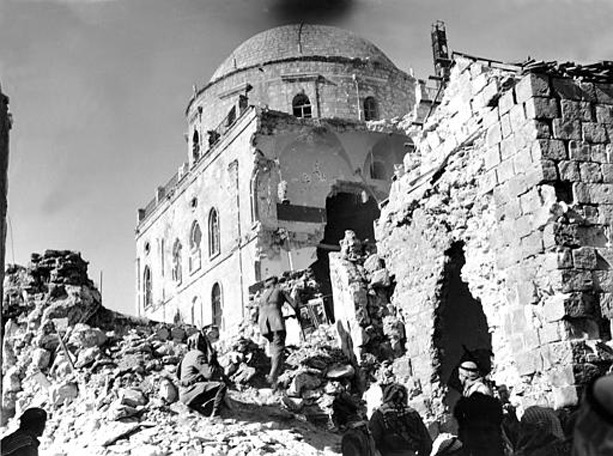
When Jordan controlled the Old City (1948–1967), it ethnically cleansed every Jew, destroyed or desecrated every synagogue, and banned Jews from crossing to enter their holiest sites.
No one called it genocide. No one called it apartheid.
BJP's own core vote bank staged nationwide protests against UGC, and they didn't bother holding meetings with them. But they're holding FCRA meetings with people who don't even vote for them. Taken for granted lol.
Woman who complained against Tarun Tejpal was not just his daughter's age but also a close friend of his daughter. Not just that, he was close friend of this woman's father who trusted him.
After the first night of the incident, he messaged her "FINGER TIPS"
Everytime I read this case I feel so disgusted.
BUT
This woman was totally thrown under the bus by feminists who are usually first to cancel every man & painted TT as a victim.
Bill Gates held a top secret Q Clearance for 7 years, through the entire pandemic. He’s not an elected official. He’s not a scientist at NIH. He’s just a very wealthy private citizen who helped shaped the government’s COVID response.
https://t.co/EAAlYr9bEH
The hysteria over FCRA tells you precisely why India needs FCRA.
Follow the argument and then follow the money.
India is saying something extraordinarily simple: if money enters this country from a foreign source, India has the sovereign right to know who sent it, who ultimately controls it, where it is being spent and for what purpose.
What exactly is objectionable about that?
Around 16,200 registered organisations received nearly ₹23,000 crore in foreign contributions in 2024–25 alone.
So please spare us the fiction that the FCRA Bill will “shut down civil society”.
What is being tightened is accountability.
And suddenly there is panic.
We are told regulating foreign-funded NGOs is an attack on democracy.
Since when did democracy mean that an unelected organisation financed from another country acquires a constitutional right to operate without rigorous scrutiny?
Its 2:16 AM in India right now, and we have huge news coming in from the USA. R. Praggnanandhaa is the Champion of Grand Chess Tour St. Louis Rapid and Blitz with a round to spare!
Praggnanandhaa drew against Javokhir Sindarov in the penultimate round to seal the tournament win with a score of 23/35 points - 1.5 points ahead of the field!
Big congratulations to Praggnanandhaa and his team on this amazing victory - this is the first Rapid and Blitz tournament which Pragg has won!
Graphic: Anmol Bhargav
#chess #chessbaseindia #praggnanandhaa
Last month's killing of three Indian sailors by the U.S. Navy in international waters near Oman continues to raise troubling questions, with experts asking whether it represented "an avoidable and excessive use of force by the United States," according to this New York Times report. Although international law requires using the least destructive means to stop a ship suspected of carrying prohibited cargo, the U.S. Navy fired missiles into the engine room of a stationary commercial vessel, killing its chief engineer and two other crew members. Yet, despite public anger in India, New Delhi neither demanded an apology from Washington nor sought compensation for the victims' families. https://t.co/kNpPky0O8v
After spending months denouncing Spain as a "loser," a "horror show," a "terrible partner," "hopeless" and a "wasted cause," President Trump found himself in the awkward position of personally presenting the World Cup trophy and winners' medals to the victorious Spanish team on American soil. It was a moment of poetic justice.
More than $13 billion in revenue from Venezuelan oil sales has flowed directly to the U.S. government this year, according to this news report. India, nudged by Washington, has become the largest destination for Venezuelan crude and thus the biggest source of those revenues. The result, critics argue, is an arrangement that increasingly resembles a colonial relationship, with Washington controlling Venezuela's principal source of national income. https://t.co/nLCZOdeloi
Nationalists Abroad, Patriots at Home
American journalism has one set of labeling conventions for domestic politics and another for foreign politics.
U.S. mainstream news organizations generally avoid attaching ideological labels to domestic political figures and parties that those figures and parties reject, unless the label reflects an established academic consensus. But in their foreign coverage, they often do not apply that same standard.
Thus, Japan is described as pursuing a "nationalist agenda" in this @nytimes article, while the Trump administration's stridently nationalist program is routinely framed simply as "America First."
Nationalists are always foreign.
Likewise, India's governing BJP is routinely described as a "Hindu nationalist" party, despite the party defining its own ideological foundations in its constitution and manifestos as "Integral Humanism" and "Positive Secularism." Yet U.S. news organizations rarely describe the Republican Party as "Christian nationalist," even though Christian nationalism has moved from the political margins to a central pillar of the party’s identity and policy agenda. A survey by the Public Religion Research Institute (PRRI) found that a majority of Republicans are now either "adherents" or "sympathizers" of Christian nationalism.
The contrast is even clearer in Europe. Parties such as Christian Democratic Union of Germany, Christian Social Union in Bavaria and Italy's former Christian Democracy literally include "Christian" in their names, yet they are never described as "Christian nationalist" parties. In Western political science, "Christian democracy" has become the accepted term for a mainstream tradition of center-right constitutional politics. https://t.co/zvbFfrDfP2
Given Trump's propensity to abandon his own commitments, any agreement with his administration comes with an uncertain shelf life. It may survive for weeks, days or even mere hours.
Just hours after Washington announced a 123 agreement with Saudi Arabia to advance its planned civilian nuclear energy program, Trump cast the deal into doubt by adding a new condition: Saudi Arabia must first establish diplomatic relations with Israel.
He did much the same with Iran, signing an MOU at Versailles on June 17 with great fanfare before effectively shredding it less than three weeks later by resuming airstrikes.
India's visa- and passport-free border with Nepal is a strategic asset, but also a security vulnerability. Terrorists, smugglers, criminal syndicates and foreign intelligence operatives routinely exploit this openness. In recent days alone, Indian authorities arrested a fugitive Khalistan militant and two U.S. nationals for illegally crossing the border.
Securing this nearly 1,800-km frontier while preserving its openness has become one of India's most difficult strategic challenges. Millions of Nepali citizens live and work in India, making any move to fence or close the border both impractical and damaging to a vital bilateral partnership.
The answer is smarter, not tighter, border management: making the frontier difficult for criminals and terrorists to exploit while keeping it virtually seamless for legitimate travelers. That means deploying AI-enabled facial recognition, automated license plate readers, biometric screening and integrated databases at major border crossings, while using drones, thermal imagers and other surveillance systems to monitor the porous stretches through forests and the Terai. Linking border checkpoints with national crime databases would enable authorities to identify wanted suspects in real time.
But technology alone is not enough. Effective border security requires close coordination with Nepal through joint patrols, real-time intelligence sharing and updated legal frameworks that allow terrorists and other fugitives to be extradited quickly and without political wrangling.
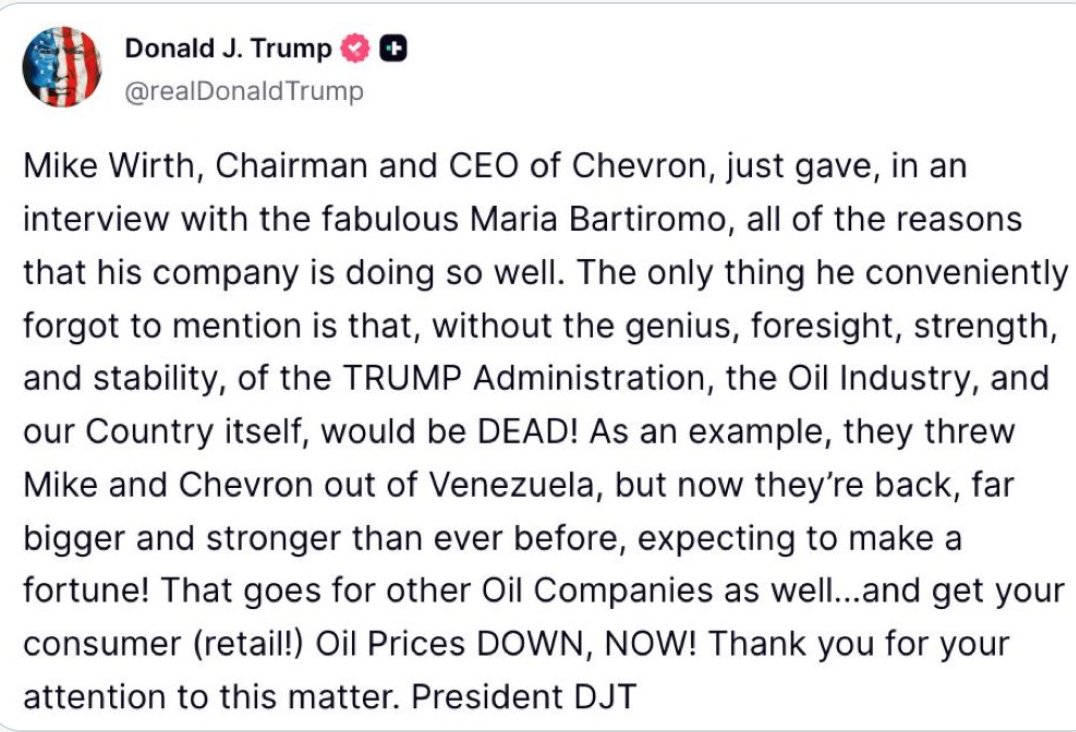
The Iran war has created a massive financial windfall for U.S. oil majors, and Trump wants credit for that. Trump’s Iran war was driven by his doctrine of America’s global “energy dominance” — a strategy aimed at extending U.S. control over critical energy resources, as seen earlier in Venezuela. Together, Iran and Venezuela sit atop roughly a third of the world’s proven oil reserves.
Seven years after the abrogation of Article 370, the trajectories of India's Jammu and Kashmir and Pakistan-held Jammu and Kashmir have diverged in striking ways.
In Indian Jammu & Kashmir, the post-2019 transition has increasingly been defined by democratic restoration and economic integration. An elected government is in office. Once-routine hartals, stone-pelting and separatist shutdowns have disappeared, while counterterrorism operations have become more targeted and civilian life more stable.
Record tourist arrivals, major infrastructure projects (including the Chenab Rail Bridge and new highway corridors) and rising investment have injected fresh momentum into the economy. The constitutional changes have extended full political rights to previously marginalized communities, even as demands for the restoration of full statehood and greater powers for the territory's elected government remain unresolved.
Across the Line of Control, the picture is markedly different. Pakistan-held Kashmir has been convulsed by recurring mass protests, which have been met with police shootings, mobile and internet shutdowns, and sweeping state repression, including the arbitrary detention of protesters under anti-terror laws. The protests have been fueled by grassroots resentment over Pakistan profiting from the region's natural resources while leaving local people to bear mounting economic hardship. Political discontent has deepened over governance, accountability and electoral representation.
The contrast is difficult to ignore.
Repression as a Sign of Insecurity
Why is Bangladesh's current regime so afraid of a nearly 80-year-old woman?
Sheikh Hasina's virtual address to the Foreign Correspondents' Club of South Asia in New Delhi has provoked a vitriolic, India-centric response from the regime despite its relentless repression of her Awami League, Bangladesh's traditionally largest political party and the movement that led the country to independence.
Since Hasina was driven from power in Islamist-backed mob violence on August 5, 2024, more than 20,000 Awami League members or sympathizers, including former ministers, lawyers and journalists, have been jailed, according to human rights organizations and local media.
Even more disturbing has been the killing of Awami League members, which has unfolded in three broad phases: mob lynchings immediately after Hasina's ouster, targeted political attacks and deaths in custody.
Bangladesh's leading newspaper, Prothom Alo, reported that at least 87 Awami League members and affiliates were killed in attacks and arson during just two days, from August 4 to August 6, 2024. The International Crisis Group, for its part, estimated that around 250 people, largely Awami League activists, were killed between August 5 and August 11, 2024.
Since then, the killings of Awami League activists have continued alongside deadly Islamist attacks on minorities, particularly Hindus, indigenous communities in the Chittagong Hill Tracts, and Ahmadiyya Muslims. Thousands of Hindu homes, businesses and places of worship have reportedly been looted and burned since Hasina's overthrow.
Amid mounting human rights abuses, intensifying political repression and escalating Islamist violence, Bangladesh has become South Asia's ticking time bomb.
Who Really Toppled Sheikh Hasina? Why Yunus's Own Words Matter
The current Bangladesh regime, which draws its legitimacy more from the July-August 2024 uprising than from the flawed February 2026 elections, which lacked any semblance of fairness, is understandably "outraged" over Sheikh Hasina's assertion at the @FCCNewDelhi event that her government's overthrow resulted not from a spontaneous, organic movement but from an orchestrated, foreign-assisted regime-change operation.
The regime has good reason to fear Hasina's narrative.
Muhammad Yunus himself acknowledged that the campaign to overthrow Hasina was not spontaneous but "meticulously designed" and deliberately executed. Standing beside an applauding Bill Clinton at a Clinton Global Initiative event in New York on September 24, 2024, Yunus said: "It's not just [that it] suddenly came, it's not like that," adding, "It was very well designed, even the leadership — people don't know who the leaders are, so you can't catch one and say, 'it's over.' It's not over."
Yunus then introduced Clinton to the "brain" behind the operation that toppled Hasina — Mahfuz Alam, who had previously been arrested over alleged links to the Hizb ut-Tahrir terror outfit, which is proscribed in Bangladesh as well as several Western countries. After the regime change, Alam sought to recast himself as a "student" leader with no connection to Hizb ut-Tahrir. Yunus later appointed him as a minister-level adviser.
The Biden administration, after more than a year of pressure against Hasina's government, swiftly welcomed her ouster and facilitated the return of U.S.-based Muhammad Yunus to Dhaka to lead the interim administration, effectively endorsing a violent transfer of power.