Architecting solutions and launching ideas into reality | Dedicated to building seamless products | Passionate about learning and adapting to the future of tech
Huge milestone unlocked!
After almost 3 to 4 months of rigorous building, testing, and waiting, Nexora: Desktop & PC Control has officially been granted Production Access!
Massive congratulations to the entire team at Launch Your Concept for the relentless hard work, and a big thank you to Google Play Console for finally giving us the green light. Seeing this approval screen makes every hurdle of the last few months completely worth it. Checkout below! 👇
The app is now fully ready for production.
In just a few days, you will be able to download it and experience seamless, wireless connection between your devices:
📱 Mobile App: Available on the Google Play Store
💻 Desktop App: Available on the Microsoft Store
Get ready to control your PC right from your fingertips. We are almost live!
#BuildInPublic #LaunchYourConcept #Nexora #AppDevelopment #SoftwareEngineering #GooglePlay #TechStartup #googleplayconsole @googledevs@GooglePlay@MicrosoftStore
Huge milestone unlocked!
After almost 3 to 4 months of rigorous building, testing, and waiting, Nexora: Desktop & PC Control has officially been granted Production Access!
Massive congratulations to the entire team at Launch Your Concept for the relentless hard work, and a big thank you to Google Play Console for finally giving us the green light. Seeing this approval screen makes every hurdle of the last few months completely worth it. Checkout below! 👇
The app is now fully ready for production.
In just a few days, you will be able to download it and experience seamless, wireless connection between your devices:
📱 Mobile App: Available on the Google Play Store
💻 Desktop App: Available on the Microsoft Store
Get ready to control your PC right from your fingertips. We are almost live!
#BuildInPublic #LaunchYourConcept #Nexora #AppDevelopment #SoftwareEngineering #GooglePlay #TechStartup #googleplayconsole @googledevs@GooglePlay@MicrosoftStore
Apologies for the radio silence! 📻
I had to travel out of station for a few days and couldn't keep up with the #BuildInPublic posts.
It never feels good to break a streak when you are pushing hard, but the batteries are recharged and we are back.
Tomorrow, the series resumes. Let’s get back to shipping. 💻
#BuildInPublic #Startups #LaunchurConcept
Milestone unlocked: 350 followers! 🤝
Thank you to everyone supporting the journey so far.
The startup ecosystem thrives on connection.
I am looking to network with more CEOs,
founders, and
builders
who are passionate about pushing the limits of digital technology.
If you want front-row seats to real engineering, product launches, and startup growth—drop a follow.
A lot of interesting stuff is in the pipeline!
#TechCommunity #FounderJourney #Startups #Innovation
Spot on. We hit this exact wall with our internal dev agent last month. The token bleed from re-reading stale files is insane. Definitely checking out the CORVUS paper!
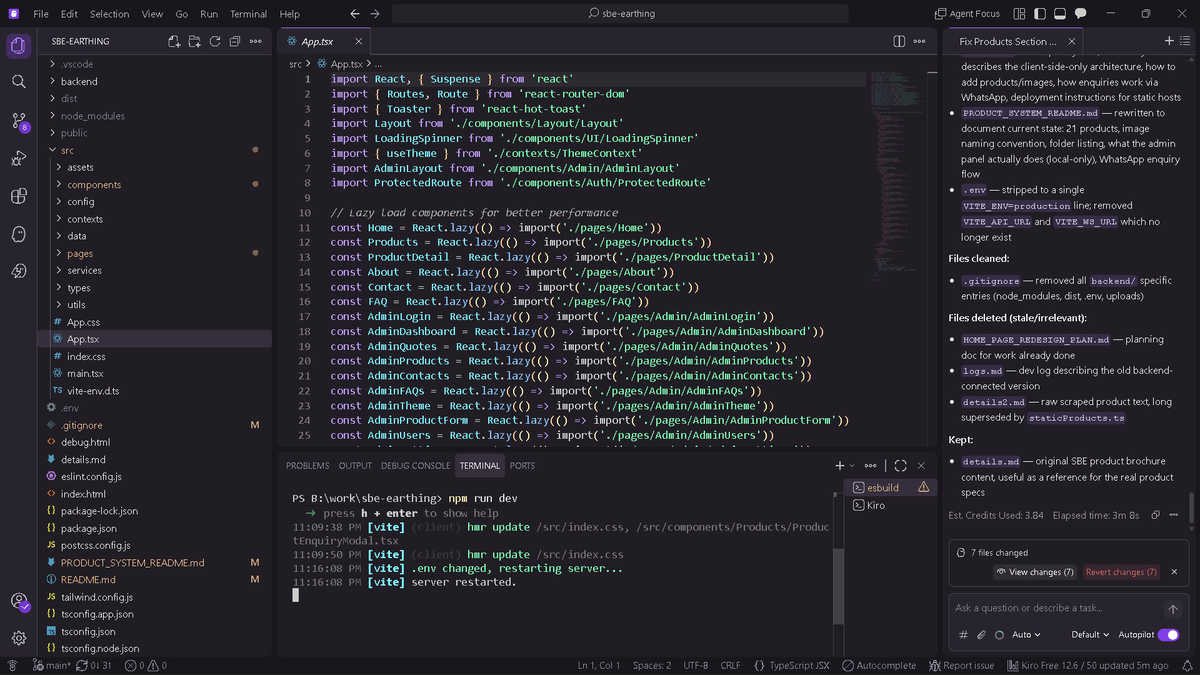
Day 6 of #BuildInPublic
Real growth happens when traditional industries meet modern architecture.
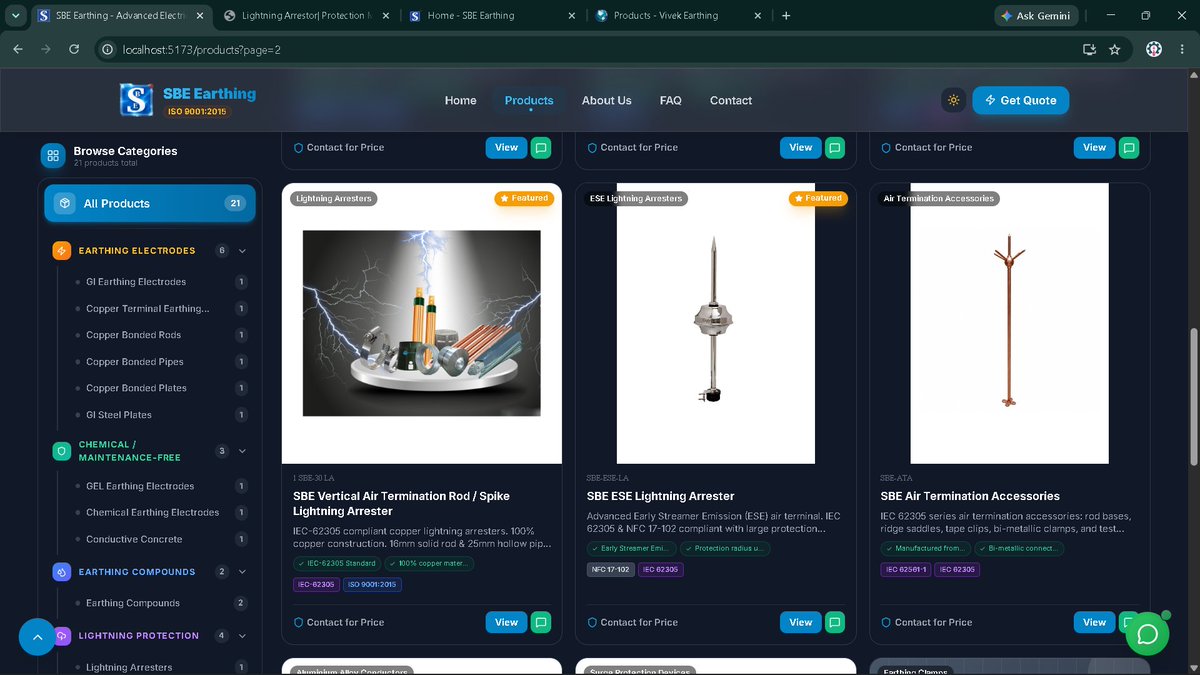
Currently heads-down on a major project for SBE Earthing. They are already scaling fast in the physical world; at Launch Your Concept, we are building the digital infrastructure to amplify their brand and scale their reach online.
Laying the groundwork today. Here is a raw, behind-the-scenes look at the code setup and a sneak peek of the early UI. Not live yet, but the vision is locked in.
#DigitalTransformation #WebDev #SoftwareEngineering #LaunchYourConcept
1/5
The myth that "bigger AI is better" is costing businesses thousands. New highly optimized models like DeepSeek V4 are destroying expensive frontier APIs in performance and cost. Smart startups are adapting. 🧵👇 #AI#TechStartups#LaunchurConcept
Everyone can build an AI agent that looks like magic in a demo. But put it in production? It falls apart.
There is a massive gap between a flashy agent and one that holds up under real user traffic.
The secret? Real production agents rely on the LLM far less than you think.
If you are building AI applications, here is a masterclass on the best practices for building agents, distilled from top engineering teams like Anthropic, Intercom, and Klarna.
> The Problem: "The Loop"
At its core, an agent is just a loop: The model reads context, makes a decision, executes a tool, appends the result, and repeats until finished.
But in production, this freewheeling loop creates massive risks:
> Compounding Error: A 95% success rate sounds great, until you chain 20 steps together and success drops to 33%.
> Hallucinations: Confidently wrong outputs reaching users (like the infamous Air Canada chatbot policy invention).
> Runaway Loops: Weak stopping conditions drain tokens and money.
> Lost Memory: If the plan lives only in the model's context, a crash wipes out the entire thread.
To fix this, the best teams rely on 4 core pillars:
1. CONTEXT: Control the Inputs
Your model is only as good as what it sees. Stop dumping massive chat histories into the context window.
> Own your prompts: Treat them like source code—version-controlled and tested.
> Prune aggressively: Only feed the model what the current step requires. Relevance always beats volume.
> Strict Tooling: Treat your tool definitions (schemas/names) as high-priority interface design so the model doesn't guess the wrong parameters.
2. CONTROL FLOW: Deterministic Over Autonomy
The surrounding software should drive the bus, not the LLM.
> Build escape hatches: Every loop needs a hard stop—max iterations, timeouts, and explicit completion conditions.
> Invoke deliberately: Use deterministic, traditional code for 90% of the workflow. Only invoke the LLM at the 10% of decision points that genuinely require open-ended reasoning.
3. STATE: Keep the Model Stateless
Where does the agent's memory live? In your application, not the model.
>Treat the LLM as a pure function: Current State + New Event = Next State + Action.
> Store the actual ground truth (progress, history) in serializable storage.
> This guarantees clean crash recovery, lets you pause/resume workflows, and makes scaling behind a load balancer incredibly easy.
4. SCOPE: Narrow & Supervised
Asking one massive agent to "do everything" is a recipe for failure.
> Build narrow, hyper-focused agents with a single job.
> Use deterministic code to orchestrate which small agent runs and when. (Klarna used this approach to handle 2.3M structured conversations in a month).
> Design Human Handoffs: Escalating to a human isn't a failure; it is a first-class feature for high-risk actions.
The Tradeoffs
> Single vs. Multi-Agent: Letting sub-agents talk directly to each other creates chaos. The winning pattern? One orchestrator that spawns isolated, short-lived agents that report back.
> Cost vs. Value: Autonomy burns tokens rapidly. Only use it when the task's value justifies the compute bill.
> The Bitter Lesson: Base models will get smarter and replace some of our hand-crafted scaffolding. But constraints like state recovery, finite context, and token costs aren't going away anytime soon.
Takeaway
Building a reliable production agent comes down to writing solid deterministic software that only consults an AI at a few deliberate checkpoints. Start simple, control the state, and only add AI autonomy where it actually makes sense.
I was reading up on this recently and came across an incredible breakdown in the ByteByteGo Newsletter by their engineering team. It totally shifted how I view agent architecture, so I took some notes and wanted to share them with you guys here.
Highly recommend checking out their full deep dive on the blog: https://t.co/7p4kwqv4XA
We are thrilled to announce that Nexora is ready for production!
After rigorous testing, our wireless remote app is dropping in a few days on both the Play Store and Microsoft Store. The wait is almost over. See 👇 #TechNews#ProductLaunch#Innovation