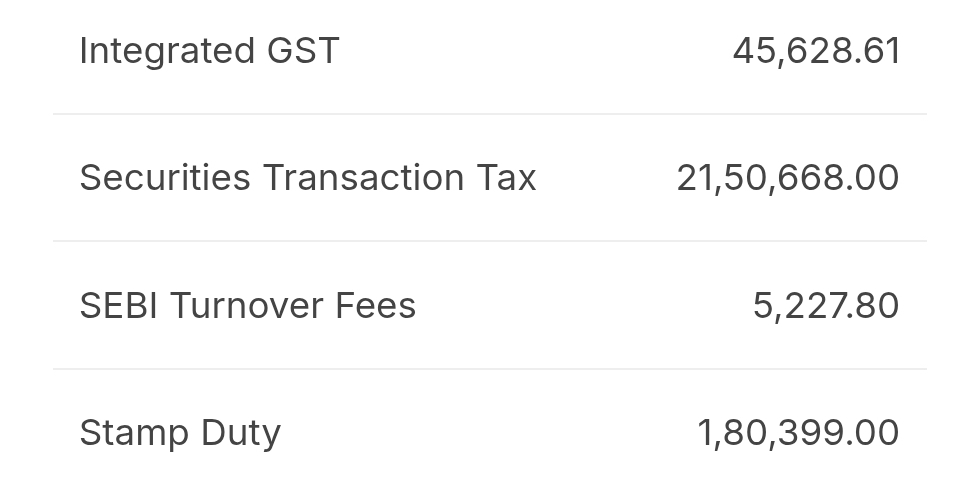
This will be the best decision by the govt if it’s done.
LTCG 12.5% To 5%
STCG 20% To 10%
STT - 0%
Many people just lose big because of STT & other charges.
This is need of the hour.
An employee with your bank behaved like this with a delivery boy just because he was late @UCOBankOfficial
I hope you take cognizance and also action
He not only assaulted but threatened the man with false molestation rape case as well
India needs better STT Reforms to encourage market participation and remove unethical double taxation from financial markets
We need to understand the history of STT, LTCG & STCG in India to see how investors are treated as cattle by the policymakers
STT stands for Securities Transaction Tax, which was introduced in 2004 by P. Chidambaram to simplify tax collection in the markets.
The core idea was to collect the tax at the time of transaction as government removed LTCG from the equation. The tax for securities held less than 1 year was 10% in 2004 under the provision of Short Term Capital Gains tax.
In 2008, STCG was increased from 10% to 15%. This is literally a 50% hike in taxation. This affected active market participants who held securities for less than one year.
In 2018, FM Arun Jaitley reintroduced a 10% LTCG tax on securities held for more than one year and still kept STT alive. STT was originally added in place of the LTCG tax to make tax collection easier but now market participants had to pay both forms of taxes.
In 2024, FM Nirmala Sitharaman dropped a bomb on the market participants by raising LTCG tax to 12.5% (from 10%) and STCG tax to 20% (from 15%).
This was a flat 25% and 33% hike for long-term and short-term investors, respectively. There was still no consideration to remove STT from the provisions.
In 2026, investors were expecting FM Nirmala Sitharaman to deliver tax cuts as India was underperforming global markets & FIIs were leaving. Sitharaman raised the STT on F&O transactions by 150% to disappoint market participants again.
The biggest problem with STT is that you cannot adjust it against your capital gains tax the way you adjust TDS deducted from your salary. You will be paying tax even if you make a loss on your trades/investments. This is purely unethical as STT was introduced to avoid the hassle of capital gains tax.
India's STT collection has increased from 11,500 Crores in FY 2018-19 to more than 60,000 Crores in FY 2025-26. This is the annual growth rate of 27% in tax collection against a poor 6% growth rate in India's GDP.
Retail Investors are constantly raising their voice against this double taxation. It can be solved by simply allowing these options.
1. Give choice to the market participants to adjust STT paid by investors against LTCG/STCG tax at the end of the financial year
2. Refund STT to the investors similar to income tax refund if they made a loss at the end of the financial year
3. Reduce the STT rate to maintain a stable tax collection instead of aiming to grow abnormally higher than India's GDP growth
India's market veterans never speak on this issue as it still takes some spine to speak against unfair policies in the largest democracy of the world
India's market culture is growing rapidly and it needs fair policies from the government to support market participants
This is an open letter to policymakers on behalf of every retail market participant still burdened by unfair double taxation, as no one is speaking up for them in Parliament
Sonam Wangchuk as a teenager!! The clarity of thought, the wisdom is unparalleled.
He is fasting. He is doing Satyagrah against the evil people who are waiting for his death
It was not even his battle, but he is here anyway!! Please protect him🙏🏻🙏🏻
Every voice matters!!