I am still trapped on the same SSRI I was prescribed at 7 years old because every attempt to come off has resulted in severe, debilitating withdrawal....
At 23 years old, I decided I wanted to come off antidepressants. Despite having been on them virtually my entire life — throughout my childhood and brain development — my doctor tapered me off in just 6 weeks, following the same outdated and dangerous guidance many doctors still use today.
What followed was a severe full-body neurological crisis: nonstop physical, cognitive and psychological suffering unlike anything I knew a human being could endure.
When I went back to my doctor and told him I was in withdrawal, I was told antidepressant withdrawal “doesn’t exist,” that symptoms of “discontinuation syndrome” are “mild and only last two weeks,” and that what I was experiencing was proof I needed the drugs
After months of torturous suffering and countless emergency room visits, I had no choice but to reinstate the antidepressant. But even after reinstating, the neurological damage from the rapid, doctor-directed taper did not go away.
That is why the term “withdrawal” is often deeply misleading. For many people, coming off antidepressants can trigger a devastating neurological injury that persists for years.
I still do not feel normal. I am intermittently bedridden, and even as I type this, my brain feels like it is on fire.
I genuinely do not remember what happiness, love, or emotional connection are supposed to feel like anymore. So much of my cognition, personality, creativity, and ability to access my mind the way I once could feels altered or gone. Some days the suffering becomes so overwhelming that I genuinely do not know how much longer I can continue living in this condition.
Today, at 30 years old, I am still on the same medication I was prescribed as a child. I desperately want to come off, but every attempt has caused severe, debilitating withdrawal that has made it physically impossible.
#MentalHealthMonth #NobodyToldMe #medicationinjury #HHS #HealingJourney #overmedicalization #SSRI
Lost $80 on the Final Four because my entire X feed was people claiming they were printing money on prediction markets.
Spoiler: they were getting paid affiliate commissions every time someone signed up. Wins not included.
Built the whole thing in a weekend. Score feeds, probability models, API integrations. Got nervous I was missing out on a glitch and took it live before testing properly. Turns out I was already way behind the window — VPS bots running at milliseconds, platforms had live data built in. The edge had been closed for a while.
They knew that. That's why they were selling signups instead of trading.
X right now is the same thing with AI. Affiliate linkers, regurgitated storylines, "I built an agent that makes me $10k/month." Most of it has no substance and the people posting know it.
Don't build because your feed is making you anxious. Build something that actually means something to you.
Gary Brecka just flipped everything we’ve been told about depression:
We’re told low serotonin causes depression, so we take SSRIs to “fix” it.
But Brecka says SSRIs don’t raise serotonin — they just ration what little you have.
90% of your serotonin is made in your gut from tryptophan. If your gut or methylation is off, your brain never gets what it needs.
Research shows that gut bacteria play a key role in serotonin production — up to 90% of the body’s supply is synthesized in the intestines, not the brain.
He argues many mood disorders (depression, anxiety, ADHD, ruminating thoughts) may actually start in the gut — not the brain.
This shifts the conversation from lifelong meds to fixing root causes. Real hope for people who’ve been struggling.
This one really made sense to me. I’ve seen how gut issues can tank mood and energy. The idea that we might be able to support natural serotonin production feels way more empowering.
What do you think — could gut health and methylation be a bigger piece of mood disorders than we’ve been told?
Mark Cuban says one of his companies is saving $50K/month using an AI agent that just takes pictures
"One of my Shark Tank companies is called RebelCheesedotcom, they sell vegan cheese and ship it all over the world and they like a lot of companies that ship products in boxes"
"You know there's different size boxes for UPS or DHL and there's a different price to ship to a different zone, also they don't ever charge you the right price"
"So they wrote a little agent that took a picture of the box when it's getting ready to ship and determined the size looked at the price list, look at the invoice, took a picture of the invoice, compared them and when they were different created the credit request and are saving $50,000 a month and it's all automated they don't have to touch it"
David and I have been swing trading together for over two years. Learning, losing, finding our niche. Every trader has their own signals they listen to, their own patterns they trust. So I stopped trying to fit our style into someone else's tool and built a custom one.
Something that tracks and calls out exactly what we deem important, nothing more, nothing less. Now we have SwingTrader.
The scanner finds plays automatically based on our criteria, low float tickers scored and ranked in real time. High surface dilution flags like active EFFECT filings, recent reverse splits, all surfaced right in the row before most people notice them. Every ticker has an inline chat tab inside its story modal. David uses it to think through a position while he's already looking at the data. Adds notes to any stock for if it pops up again in the future.
The watchlist is for his own ideas. Any ticker he's tracking gets re-scored every cycle and stays until he dismisses it, so nothing he's watching goes stale or gets forgotten.
The alert desk is where he sets his own conditions. RSI below a certain level, price hits a target, it fires when criteria are met. His own logic, running in the background.
When something catches his eye and he wants to go deeper, he can pull up a full Claude analysis on any ticker with one click. Dedicated page, full chat, goes deep on the setup, filings, and technicals. Not a summary. A real analysis. And every morning at 6:45am ET, before the market opens, the system pushes a three-sentence brief to his phone. Overnight outcomes labeled, score calibration updated, what to watch today. He starts the session already oriented. He submits chart images for Claude to vision analyze it, code it, and add it to a growing library of our setups. Every pattern we have ever identified is searchable, with win rates attached. The playbook builds itself.
Underneath all of it is a learning system that logs every scan hit above 55 with a full snapshot: price, RSI, setup type, volume spike, risk flags. Fifteen trading days later, outcomes get auto-labeled. Score calibration reads all of that and applies dynamic multipliers to the scoring weights. Setups that win get boosted. Poor performers get penalized. Every night, Claude synthesizes feedback, playbook history, and outcomes into a structured knowledge base: confirmed edges, blind spots, stated criteria versus revealed preferences. Open any ticker and it pulls memory and similar past setups instantly.
It turned into something bigger than a dashboard. A system that not only learns from David but helps him learn and challenges his theories. I turned this around in two days in my spare time using Claude Code.
What's next: I'm pulling in our actual positions from our broker to further alert and learn from our actions. After that, an autonomous trading bot. The data collection, scoring, calibration, and knowledge base have been structured from day one with this in mind. & then we'll just keep building.
A Stanford study found that people who played Pokémon heavily as kids developed a small region of the brain that responds specifically to Pokémon characters.
Researchers scanned adults who grew up playing on Game Boy and showed them images of Pokémon like Pikachu and Bulbasaur.
Their brains lit up in the same exact spot, a consistent area in the visual cortex tied to recognizing specific categories of objects.
The reason comes down to childhood. When you’re young, your brain is more flexible, and spending hours memorizing hundreds of similar-looking Pokémon essentially trained it to carve out space just for them.
(via @Stanford)
$AREB stated it would NOT appeal its Nasdaq delisting notice. The stock sold off hard. A day later… they appealed.
That statement & reversal has major market impact. What changed, and when? Investors deserve a clear timeline and full transparency.
RFK Jr: "There are studies coming out of Stanford and Harvard that show a lot of mental illness, including anxiety and depression, are related to food. Food is medicine. By changing your diet, you can lose some of those diagnoses."
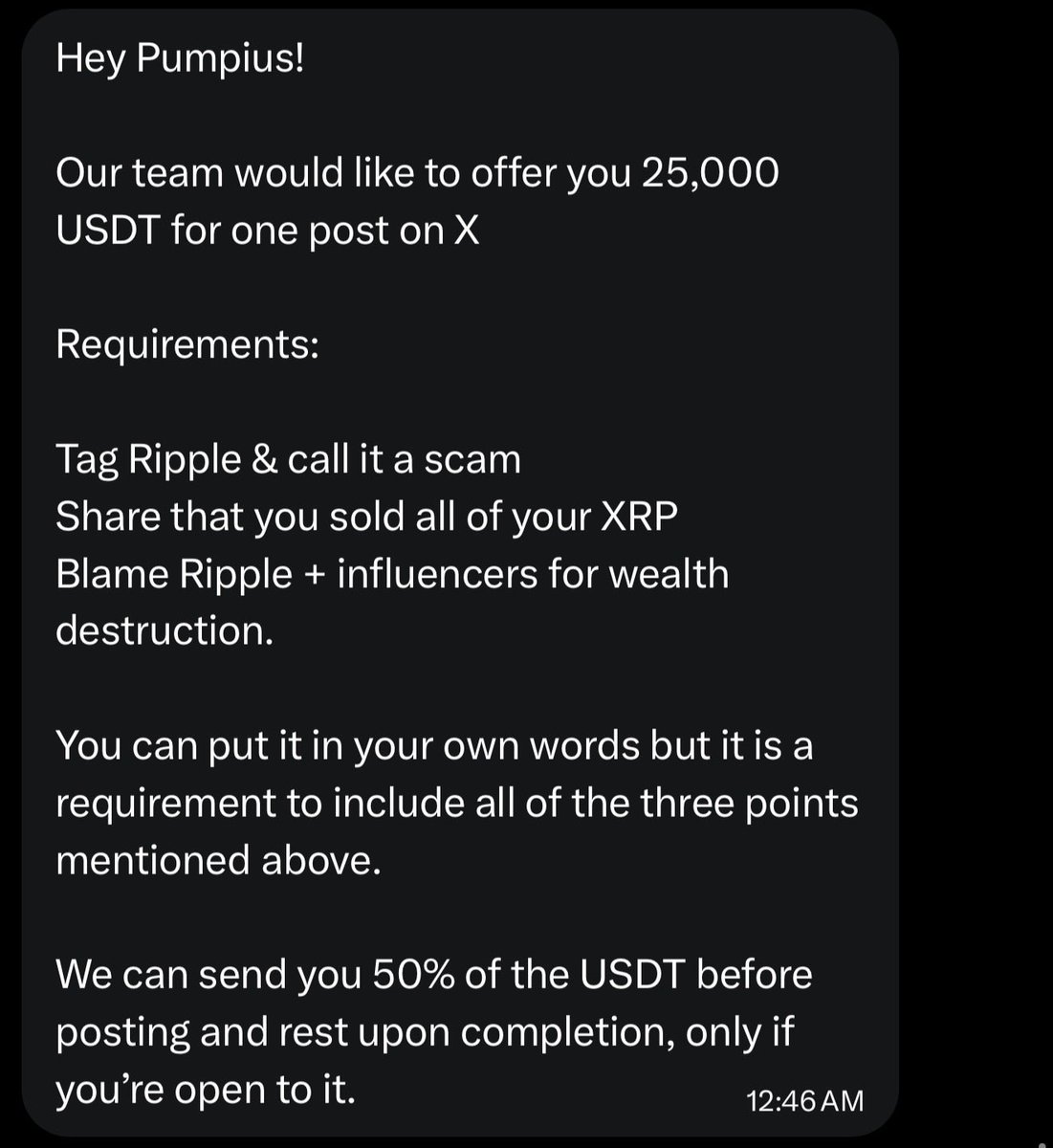
I just received a private message offering me $25,000 to defame Ripple and XRP.
A paid script telling me exactly what to say. Call it a scam. Claim I sold everything. Blame Ripple and influencers for wealth destruction.
Let that sink in.
So ask yourself this.
Who is funding this campaign?
Who benefits if XRP is defamed?
And how many accounts you see daily attacking Ripple are not organic voices but paid proxies following the same script?
This is how narratives are engineered. With money.
And if they are this desperate now, imagine what they are trying to stop from coming next.
I will not be bought.
But I will expose it.
Pay attention.