For our clients, that means Claude-certified engineers with production experience behind the AI solutions we build with them.
We're proud of this one, and we're building from here: bringing Claude to more of our clients' toughest engineering problems.
Last year, BairesDev became a Harvard Business School case study. This month, our CEO, Darren Shimkus, will discuss it with a new group of HBS students.
Darren will bring that story to this year's students and add his own perspective to the conversation. For us, it's also a chance to learn from how a new group of future leaders reads our journey.
A year later, this is still one of our proudest milestones.
➡️ A Talent Retention Tool that uses AI to identify early when employees may need support, so our PeopleX team can start the right conversations in time. Over the past year, those conversations reduced turnover by 50% and re-engaged 94% of the employees identified.
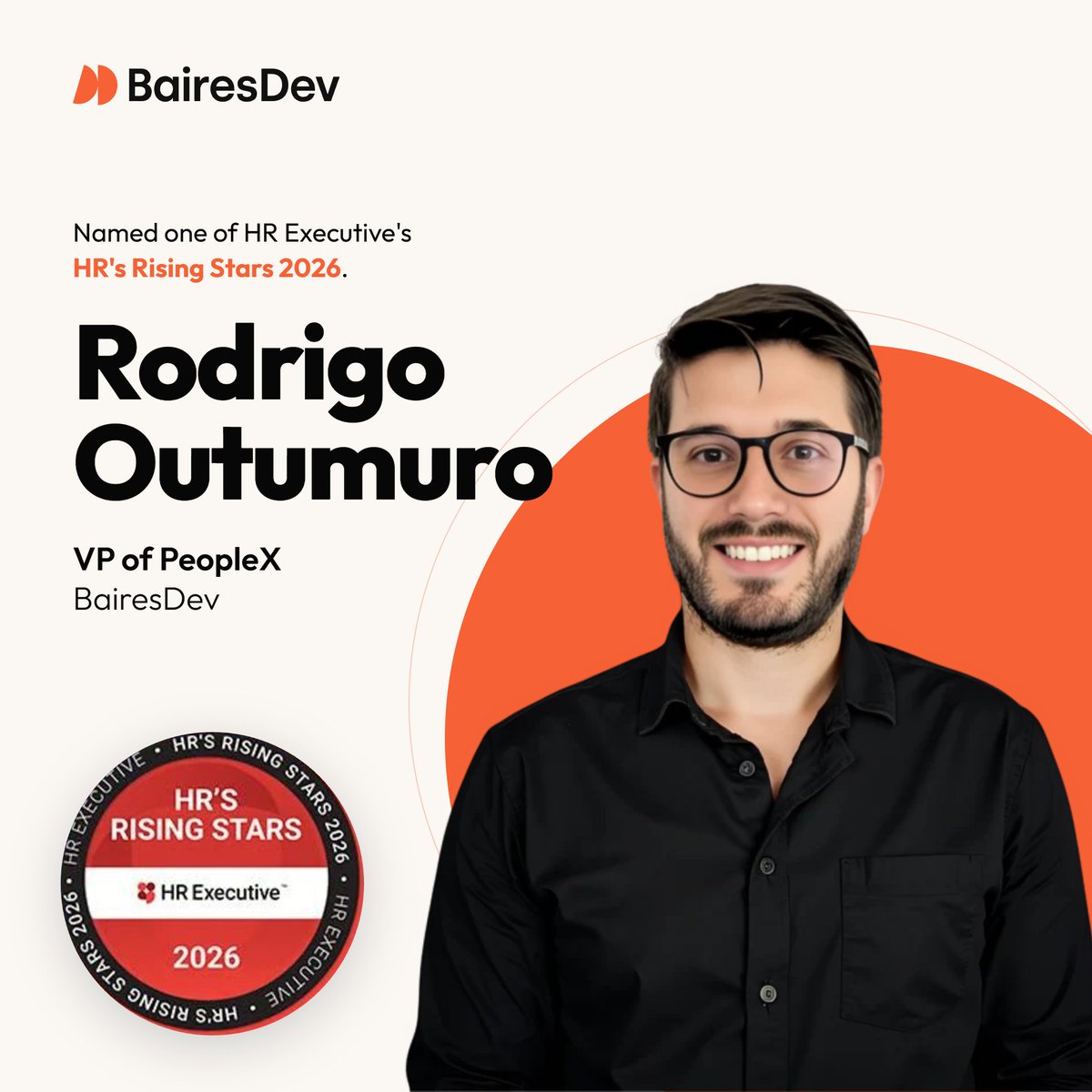
Rodrigo Outumuro, our Vice President of People Experience (PeopleX), has been named one of HR Executive's HR's Rising Stars 2026.
This year, nominations were judged with a new emphasis on showing impact through data. Rodrigo joins leaders from Deel and UPS in this year's class.
Our business is providing engineering talent, so people strategy is what keeps client engagements staffed and stable. With 4,000+ professionals working remotely across 40+ countries, we have to see risks before they show up in the numbers.
As execution moves to AI, tomorrow's senior engineer manages fleets of agents and audits a digital workforce, and institutional knowledge gets encoded into systems of record and domain-specific models rather than carried in people's heads.
What the room does agree on is that ad hoc talent development is finished. The organizations that come out ahead will be the ones that designed the ramp on purpose, whichever of the three answers they pick.