🇮🇳 India has a new chess moment to remember!
🤩 Praggnanandhaa becomes the first Indian ever to win Norway Chess event!
🔸 4 classical wins in a row
🔸 5 classical wins in total
🔸 2 wins vs Magnus Carlsen, with both colours
🔸 A statement to the chess world
👏 Congrats Pragg!
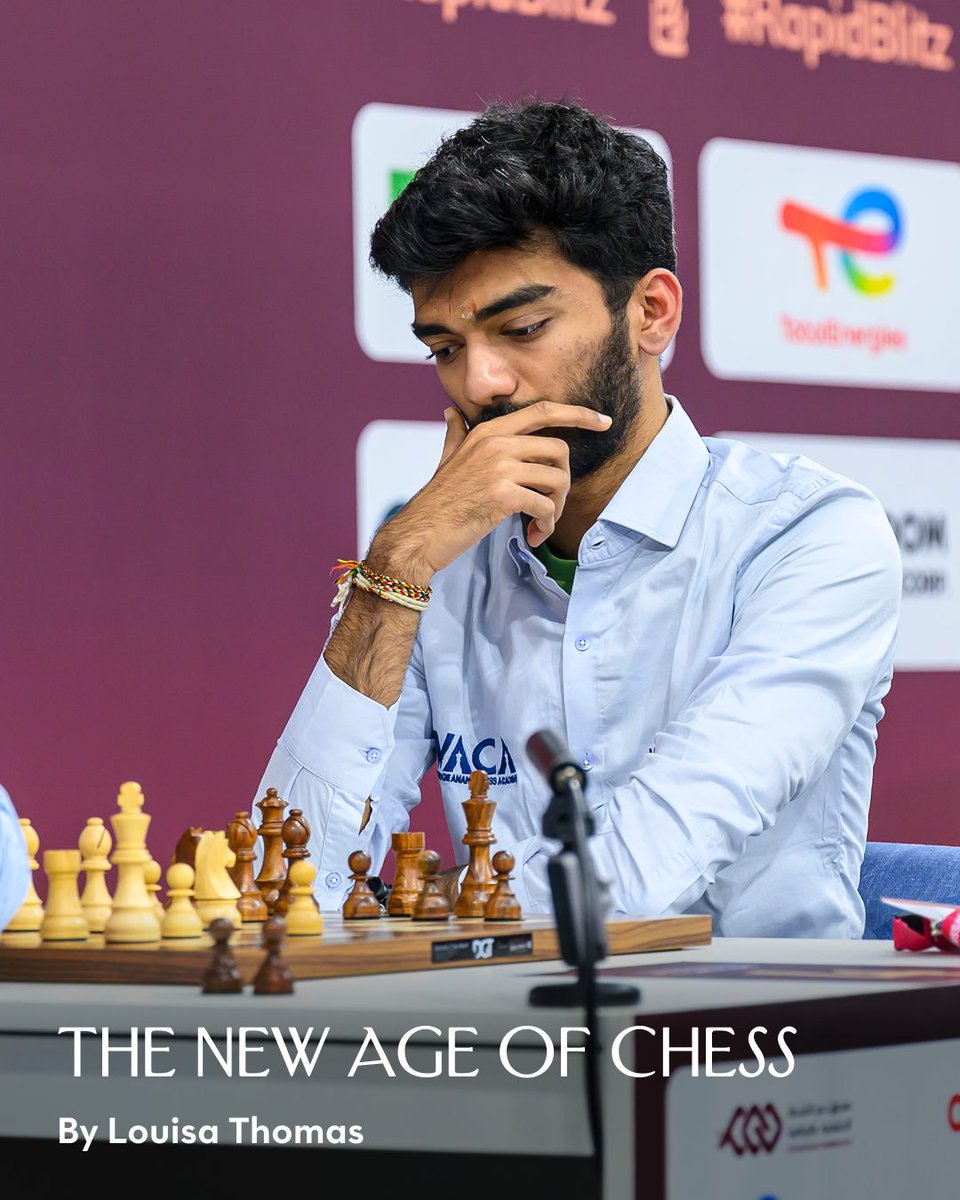
“Lately, it has been hard not to feel a little cynical, or even nihilistic, about the prospects of human beings in the age of A.I. Why play chess, if a computer always wins?” Louisa Thomas writes. “The beauty of chess goes beyond logic; it includes desires, ideas, and feelings. That is the game’s difficulty, too.” Read more about the new age of chess. https://t.co/EZJhPqQ0sk
♟ The FIDE Council has approved the amendments to the Rating Regulations, effective as of 1st of October, following the proposal from the Qualification Commission.
The amendment is designed to ensure the fairness and integrity of the FIDE rating system and provide a level-playing field for all top-rated players. The change will apply to players rated 2650 and above and will affect approximately 70 top-rated Grandmasters.
The amendment addresses the application of the 400-point rule. The rule stated that a difference in rating of more than 400 points shall be counted for rating purposes as it were a difference of 400 points. There are no restrictions of how many times it can be applied during a single tournament.
The current wording in FIDE Rating Regulations will change to include the following, given here in bold:
“8.3.1 For each game played against a rated player, determine the difference in rating between the player and their opponent, D.
A difference in rating of more than 400 points shall be counted for rating purposes as though it were a difference of 400 points, for players rated below 2650. For players rated 2650 and above, the difference between ratings shall be used in all cases.”
The accuracy of ratings and competitive fairness are paramount for chess.
This amendment ensures that rating adjustments at the highest level accurately reflect a player’s performance against a pool of statistically equal opponents, safeguarding professional standards set by FIDE.
One efficient way to improve our chess strength is by enhancing our Concentration.
Things that disturb our ability to concentrate include our five sense organs (when they are overly stimulated), our THOUGHTS (about the past/future, result related, rating related, tournament standing related, worrying about what could go wrong or what already went wrong, etc. ), and EMOTIONS (such as fear, sadness, anger, jealousy, frustration, anxiousness, self-doubt, worrying about others' opinions of ourselves, etc.).
The less intense these (sense stimulation, intensity of thoughts and emotions) are, better the concentration will be.
It is impossible to avoid thoughts and emotions from arising in our minds. When they occur, it is better to be aware of their presence and not overly react or indulge in them. Stay calm when we realise we are thinking about something else, just remind ourselves what is more important to us at that moment, which is to focus on the position before us and analyse it as well as we can.
Those thoughts and emotions will lose their power.
It is also essential not to be too aware of our opponent's over-the-board mannerisms/habits/gestures/body language, as they can also affect our concentration. We can choose to ignore them entirely and decide instead to focus on the position.
In these days of intense public scrutiny and media, as well as social media attention at the top level, it makes sense not to pay too much attention to public perception either. What others think about us is not within our control, and in some sense, it's not our business either.
The solution to most of our problems lies within ourselves.
Learning to overcome certain technical shortcomings in chess is easier to achieve and to fulfil an immediate requirement. For example, learning an opening for the upcoming important tournament. But learning to overcome shortcomings in our nature, which require much more mental effort, requires a true passion for the game and a higher level of commitment to our long-term ambitions.
It is necessary for every player to occasionally ask themselves whether their current work ethic is taking them nearer to their aim or not. How long will it take to achieve one's aim at the current rate of effort and progress?
That should guide the player to make the changes required. Without periodic introspection, we will be working aimlessly and as a matter of routine. We will soon get into our comfort zone and will not dare come out of it, which will get us stuck.
What should be the general approach for the parents/Coaches to help build a chess career?
a) Long-term ambition > short-term results
b) Teaching the child to focus on effort rather than on results. Effort > short-term result
c) Teaching the child to focus on the position at the board rather than thoughts and emotions. Focus on position > thinking about other things
d) Teaching time management at home
e) How to give advice to the child in a way that the child can accept and follow it
f) Enabling a child to develop good self-esteem
g) Don’t micro-manage all issues, don’t overanalyse every issue
h) Don’t panic when things go wrong in the short run and make drastic changes or generalise such negative events as characteristics of the child
@CholaChess@chessgurukul@ProChessT
One effective way to teach young children the importance of maintaining a good frame of mind is to encourage them to reinforce good values and healthy thinking on a daily basis.
When I was young, I remember, I used to go for long walks alone and tell myself something along the following lines: (not in any particular order)
a) I will be confident and believe in myself at all times, especially when things get really difficult and unpleasant
b) I will try to be happy within myself, no matter how unpleasant things turn out in the outside world
c) I will be open to accepting healthy criticisms, criticisms given with the right intention and use them to introspect to correct myself for the better.
However, if criticism is unwarranted or given with the sole intention of hurting my feelings or insulting me, I will either ignore such criticisms or use them as motivation to push harder and succeed in the path I have chosen.
d) I will have good concentration, and focus fully on the job at hand and not let my concentration be disturbed by the happenings around me (sound, movements, etc), by my own negative thoughts or by my own excitement when things go my way.
e) I will try to remain as objective and calm as possible and not be easily swayed by my fluctuating emotions.
f) I will try to be as ethical, as moral and respect values to the maximum extent possible and let them be my guiding principles while making decisions. Not my greed, or the temporary gains I can get by compromising on my values.
g) I will avoid bad influences in my life and stay away from them rather than responding to them with anger, impulsiveness and hate.
h) I will work very hard in upgrading my skills, and will be open to learning difficult, unpleasant things, if they are good for my growth.
i) I will manage my time better and stay away from distractions and bad influences both during tournaments and at home.
j) I will learn to handle disappointments, setbacks and defeats gracefully, maturely, without blaming or finger-pointing at myself or others for my misfortune. Instead, I will try to use such experiences to better understand myself, my shortcomings, and my strengths, and make the necessary changes.
k) I will try not to be swayed by others' praise, compliments, however well-intentioned or well-meaning they are. It is essential not to take ownership of others' compliments, as they can inflate our ego and lead us to lose sight of our values, becoming hard-headed and selfish in the process.
l) I will learn from others' mistakes, study others' experiences, respect and appreciate them for sharing them with me.
I was greatly influenced by the moral stories that my parents and grandparents told me in my youth. Thirukkural, Ramayana, Mahabharatha, Tinkle and Amar Chitra Katha (not equating ancient scripture with the other two for those who are extra sensitive). The bad qualities in me are entirely my own making.
Congratulations to @DivyaDeshmukh05 for winning the World Cup 2025 and the GM title! Bright future ahead, strong nerves.
Congratulations and huge respect for Koneru Humpy for the way she fought and carried herself throughout the event.