Arsenal had offered Vini Jnr one of the biggest packages in the history of the PL.
Conversations around being the face of PL, sky rocketing his brand economically and globally and a true chance at winning the Ballon d'Or. He was presented with testing himself in the best league in the world and leading Arsenal for another UCL push.
I have been critical of some of our movements in this market but this? The ownership / Berta / Mikel did absolutely everything to bring the best LW in world football to Arsenal.
When the time is right we will talk about the backstory because it was a rollercoaster. The club, even as recent as yesterday were supremely confident because of the package and conversations they had with the player directly and his camp.
Ultimately, the player is set to renew while Arsenal assess the market to bolster their attack and defence.
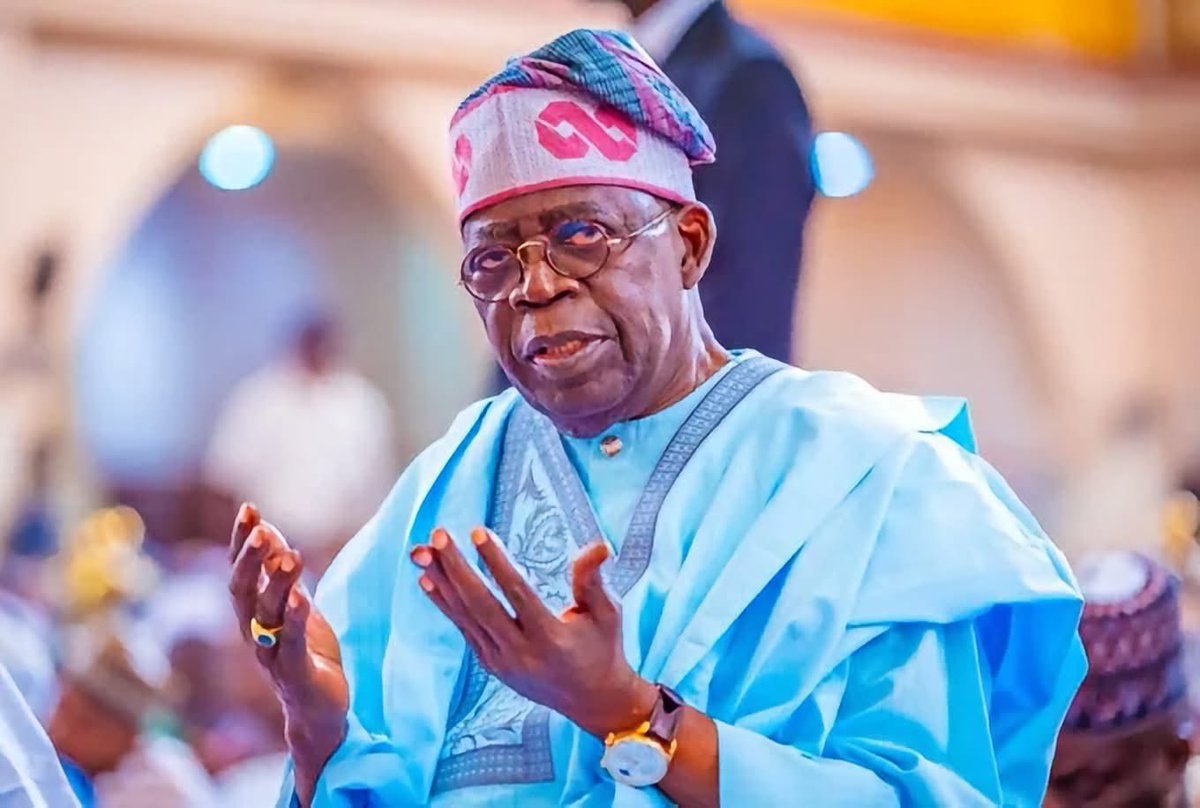
President Tinubu approves a 30–80% salary increase for armed forces personnel, which will take effect from September 1, 2026.
Under the new structure:
Officers above the rank of Colonel (Brigadier-Generals, Major-Generals, Lieutenant-Generals and Generals) will receive a 30 per cent increase.
Personnel from Colonel down to Warrant Officer will get a 50 per cent increase.
Rank-and-file personnel from Private to Staff Sergeant will enjoy an 80 per cent increase.
The adjustment will raise the annual salary bill for the armed forces from ₦660 billion to ₦924 billion.
To celebrate the arrival of adidas away jerseys, tomorrow I will be giving away a few adidas Away Arsenal jerseys here.
Donated by our football community on X and myself.
Winners will be sent their jerseys with free gifts as well from adidas.
I will announce the parameters tomorrow.
🚨Arsenal reach full agreement with Newcastle to sign Bruno Guimarães.
Total package worth up to £75M; fixed fee + performance-based add-ons now finalized following days of negotiations at ownership level.
Matthias Jaissle made a final attempt to keep Bruno, but was informed the player only wanted Arsenal after agreeing a 4yr contract + 1yr option.
Checkmate
#AFC @PurplePanel
🚨 𝐁𝐑𝐄𝐀𝐊𝐈𝐍𝐆: Arsenal and Newcastle United have reached a total agreement on an £80 million deal for Bruno Guimaraes.
The Brazilian is FINALLY on his way to Arsenal! 🔥
Thanks for your insight, bro. I was measured in my praise, which is why I acknowledged that Western civilisation has its flaws and contradictions. My point was simply that, in comparison with the rest of the world, it has been remarkably accommodating.
As for whether this accommodation is a consequence of labour market needs rather than philanthropic impulse, I think that proposition is too simplistic. There are highly developed countries with ageing populations and labour shortages that have consciously refused to embrace mass immigration. Japan is the obvious example. It has endured demographic decline for decades and faces not only an economic challenge but a long-term demographic one. Yet it would rather confront those problems than fundamentally alter its society through large-scale immigration.
Secondly, there is a difference between admitting immigrants because they are economically useful and accepting them as equal stakeholders in the state. Many Gulf countries also depend heavily on foreign labour. The UAE, for instance, has a population of about 11 million, yet only a little over one million are citizens. The remaining population, which keeps much of the country’s infrastructure and economy running, enjoys neither the political rights nor the pathway to citizenship available in many Western democracies. They remain, in effect, permanent second-class residents.
That is where I think the distinction lies. The West has not only admitted immigrants; it has, in many cases, allowed them to become full citizens, vote, hold sensitive public offices and even aspire to the highest elected positions. That is a very different proposition from importing labour while withholding membership of the political community.
I also think your examples of Masud Gharahkhani, Zohran Mamdani, Ilhan Omar and others as “outliers” actually strengthen my point rather than weaken it. Every society has exceptional cases. The question is whether the system permits them at all. The fact that an Iranian refugee can become Speaker of the Norwegian Parliament, or that Muslims can govern cities like London and New York, says something important about the openness of those political systems. Such trajectories are unimaginable in many countries, including some that rely even more heavily on immigrant labour.
As for colonialism and neo-colonialism, I don’t disagree that they helped build Western prosperity or that unequal global economic structures persist. Those are legitimate criticisms. But they do not answer the question of why Western societies have generally been more willing than equally wealthy, equally advanced non-Western societies to extend citizenship, political rights and public trust to outsiders. Colonial history may explain wealth. It does not, by itself, explain inclusion.
So my question remains. If labour market demand alone explains Western accommodation, why have countries with similar labour needs, such as Japan or the Gulf states, not adopted the same model of immigration, citizenship and political inclusion? That, to me, suggests there is something more at work than economics alone. It points to institutions, political culture and civic values that, despite their many imperfections, have made Western societies unusually open to incorporating outsiders into the national community.