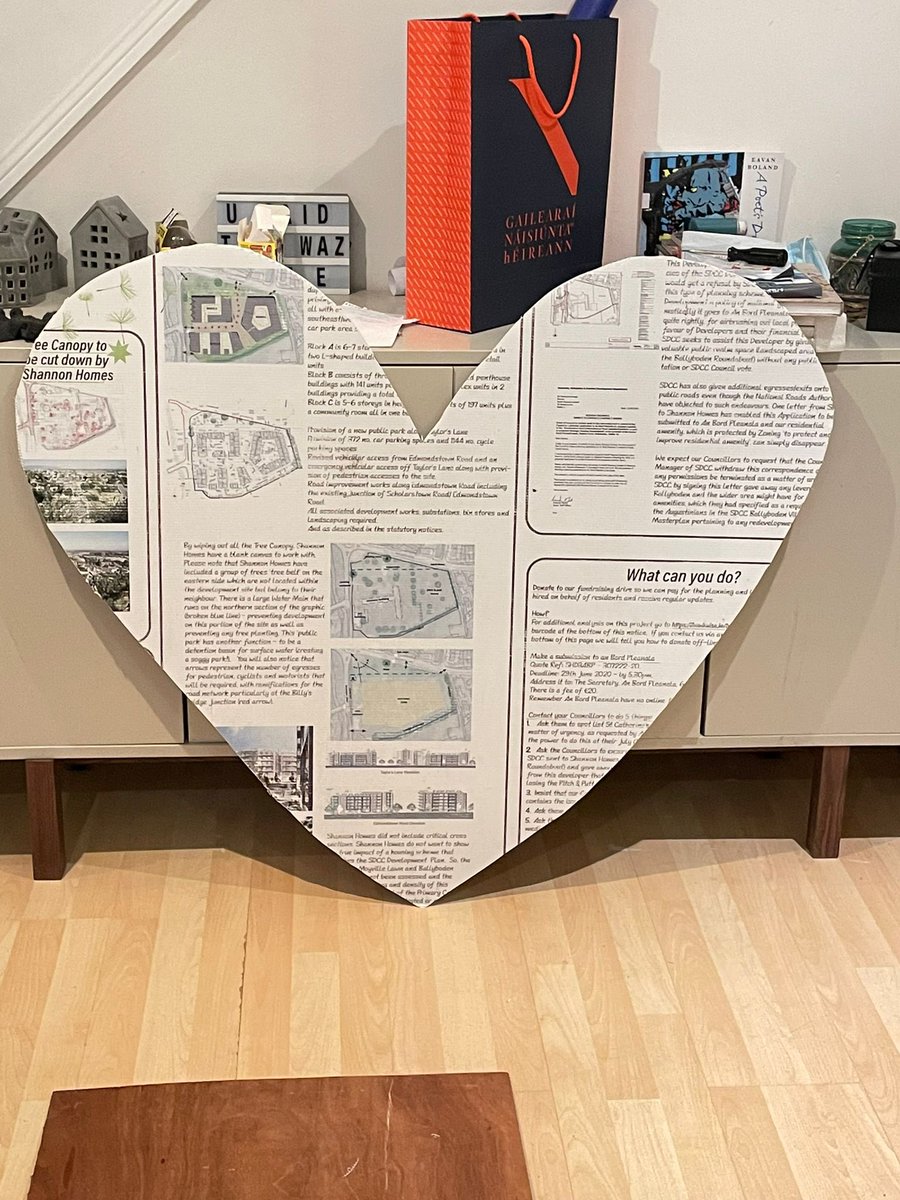
You can read Judge Holland’s decision -we won - it’s 120 pages but if you love #trees, #nature & #Ballyboden cheers🥂 & to all communities who want #Sustainability not #shds start reading ⬇️ Ballyboden may not look like a village but it acts like one 💚🌍
https://t.co/AbAUftNBoD
Please share these are local girls attending one of local schools and they are loved 🥰 by their family and friends. Let’s do the #Meitheal and retweet, repost, WhatsApp
Please share these are local girls attending one of local schools and they are loved 🥰 by their family and friends. Let’s do the #Meitheal and retweet, repost, WhatsApp
💔 OUR HEARTS ARE BREAKING FOR POOR LIAM 💔💔💔💔
Yesterday we rescued this tiny, terrified little whippet from around the Mulhuddart area, Dublin.
Thanks to the incredible locals who found where he was hiding and alerted us, we were able to get to him.❤️💔
He was absolutely emaciated, covered in dry, damaged skin and shaking uncontrollably. 💔💔💔
His leg was badly broken. He was so weak and frail that we had to carry him through the fields💔💔💔
With the help of our dogs, he finally trusted us enough to come out. We brought him straight to Village Vets Ashbourne, who took him in immediately and have cared for him amazingly ❤️❤️❤️
Today, after X-rays and consultations, we got the devastating news that Liam's leg cannot be saved. He needs an amputation tomorrow. 💔
This poor boy has already suffered so much. All we want now is to give him the chance of the happy, pain-free life he so deserves.❤️
PLEASE, PLEASE HELP US WITH LIAM'S VET BILLS.
Every €5, €10 or €20 makes a difference. If you can't donate, please share his story, that helps us too.
DONATE HERE: https://t.co/gBLskZcYFk
Please keep our little Liam in your thoughts tonight. ❤️
You are safe now, little man. We won't give up on you.❤️❤️💔💔
If you can foster this sweet boy from Saturday please text: +353 (87) 261 1463
Thank you ❤️❤️❤️💔💔💔💔
It is fitting that fragments of the historic city for which Frank McDonald campaigned for so long are now literally supporting — with 18th-century bricks, floorboards, and Edwardian tongue-and-groove panels — our small tribute to the great man.
Thank you Frank, for everything.
Known as Giorria in Ireland, Hares once had a special place in Irish hearts ☘️
It is well known that witches possess the ability to transform into creatures such as the hare, however, it is also believed in Ireland that elderly women who pass away are often reborn as a beautiful and free roaming Hare 🐰🪄
When harvest time came, one last sheaf of wheat or corn would be left standing so that a hiding hare could make a dash for safety, as this, of course, could be your Grandmother now living and loving her very best life 🌾 ✨
🎨 Nigel Artingstall
Abbert River works: Are fisheries works really river restoration - and were they lawfully assessed?
These fisheries development works on the River Abbert in Co. Galway are being presented as a positive intervention for wild trout and salmon.
The project involved significant in-stream and riparian works using tracked machinery within Lough Corrib SAC, including in-stream structures, timber deflectors and fencing, and the placement of around 350 tonnes of gravel within a protected river corridor during the bird nesting season.
IFI’s own Stage 1 screening records “Potential Effects: Yes” and “Significant: Yes” for otter, before stating that otters were present, could be affected, and that mitigation was required: “Otter are present in the vicinity of the works and are potentially impacted by the works. The works are not directly necessary for the management of this species. Mitigation measures are required to protect otter.”
Under Article 6(3) of the Habitats Directive, where significant effects cannot be excluded, Appropriate Assessment is required unless the project has first been properly demonstrated to be directly connected with or necessary to the conservation management of the site. Screening is not Appropriate Assessment, and mitigation cannot be used at Stage 1 to avoid that requirement.
However, no Appropriate Assessment was completed. These works cannot be treated as exempt simply because they are intended to benefit Atlantic salmon. A stated conservation purpose does not automatically place a project outside Article 6(3), and an intended benefit to salmon does not mean that the same intervention cannot adversely affect other qualifying interests of the SAC. It also has not actually been demonstrated that the works will in fact deliver a net benefit for salmon.
There are also serious problems with how the screening itself is presented. The determination repeatedly refers to the works as being approximately 25 km from the River Clare and 50 km from Lough Corrib, which could give the impression that the project is remote from the protected site. However, the works are actually within Lough Corrib SAC.
Calling something “fisheries enhancement” does not mean that it is automatically beneficial. These are hard physical interventions in a protected river. Large-scale gravel placement and installation of flow-deflecting structures can alter hydraulics, disturb existing substrates, mobilise sediment, and impact on aquatic fauna and riparian wildlife.
The use of timber is generally preferable to wholly rock-based engineering, but timber and natural large woody debris are not the same thing. Imported timber fixed into place by tracked machinery as a deflector is still fundamentally an engineered structure. The key question is whether natural river processes are being restored, or whether a hard structure is simply being built from wood instead of stone.
The involvement of the Office of Public Works raises another concern. The machinery used for these fisheries works is also involved in arterial drainage maintenance within the same catchment. Media coverage refers to further OPW works on the Derreen River, a tributary of the Abbert, yet no project-specific in-combination assessment of these activities was undertaken.
It is difficult to present gravel placement by an OPW excavator as an unqualified ecological success without also considering what the same drainage programme may be removing, disturbing or altering elsewhere in the river system.
There is now a substantial scientific literature questioning this older style of fisheries enhancement work. Fixed deflectors, bank protection and imported spawning gravel have been used for decades to manipulate rivers for salmonids, but reviews have found highly variable outcomes and provide no basis for assuming that works like this will deliver lasting ecological benefits. They can redistribute hydraulic energy, increase scour, alter sediment transport and leave spawning gravels embedded, armoured or otherwise unsuitable over time.
Gravel augmentation can be effective in the right circumstances, but only where the underlying hydrology, sediment regime and geomorphology are properly understood.
However, imported aggregates are not necessarily “spawning gravel”. No specification has been published for the Abbert material demonstrating its source, grading, particle shape, fine-sediment content or whether it was washed before use. Unsuitable material can itself damage spawning habitat. Excess fines can clog interstitial spaces, reduce oxygen supply to incubating eggs and generate substantial suspended-sediment plumes during placement. Poorly selected angular or tightly packed material can also produce a substrate very different from a naturally functioning spawning bed.
There is also an obvious biosecurity question when hundreds of tonnes of material are imported into a protected river: where was it sourced, and what measures ensured that sediment, plant material or invasive species were not introduced with it?
Much of this type of work remains piecemeal and driven by local fisheries interests, rather than forming part of a catchment-scale restoration strategy based on hydrology, geomorphology and ecology. As with salmon hatcheries, this model of “fisheries development” comes from an older way of thinking about rivers - managing them primarily for the fish they can produce, and often resulting in unintended damaging effects.
Modern river restoration increasingly focuses instead on restoring the processes that create habitat naturally - sediment movement, riparian woodland, large-wood recruitment, channel adjustment, and floodplain connectivity. Imported gravel and fixed deflectors may create visible habitat features in the short term, but that is not the same as restoring a functioning river.
Rivers are ecological systems, not fisheries. Restoration should start with natural processes and the whole ecosystem, not with engineering channels for salmonids.
The media report from the Tuam Herald is here:-
https://t.co/BZyRLeIiqD
The Inland Fisheries Ireland screening determination is here:-
https://t.co/DLrm2uRfpY
Imagine been told by local authorities there wasn't dereliction problem & then walking city & counting 700+ derelict properties within 2km of city centre, many of them homes
Thats what happened to me & @judesherry in Cork
Welcome to #DerelictIreland
Where profit comes over homes
This ⬇️ for the attention of @sdublincoco@ESBNetworks@eircom@TIITraffic on behalf of communities including businesses and #tidytowns . We pay #LPT , utility bills, motor tax and businesses pay rates as well. So time to tidy up the ‘scummy utility boxes’ please.
Eutrophication in Lough Gur, Co. Limerick, last week. Lough Gur is one of Ireland’s most important archaeological landscapes, with evidence of human occupation extending back more than 6,000 years. It is also an ecologically important shallow, high-alkalinity lake which should support extensive stonewort (Chara) communities.
The lake’s hydrology was significantly altered during the 19th century when an artificial drainage channel was constructed from its north-western shore. This lowered the lake level by an estimated 2.1 metres. The lake is fed mainly by groundwater, rainfall and runoff from the surrounding land.
Lough Gur has a long history of nutrient enrichment. Sediment studies indicate that phosphorus and nitrogen increased progressively after 1950 and rose steeply from around 1990, associated with agricultural intensification, settlement, and tourism. The lake remains below the Good status required by the Water Framework Directive.
The known external pressures are agriculture and domestic wastewater treatment systems. Nutrients can reach the lake through runoff and groundwater because soils are thin or poorly drained and groundwater vulnerability is extreme.
The public toilets beside the visitor centre may also have been underestimated as a historical source. The older toilets discharged to a septic tank and percolation area only around 30 metres from the lake. A 2012 planning condition required the outlet to be blocked and the tank made watertight, but a 2022 LAWPRO study could not confirm that this had been done.
Despite acknowledging that sewage could reach the lake, LAWPRO concluded that the toilets were not a significant pressure. This was based on a speculative calculation assuming that only 10% of visitors used the older toilets. Monitoring beside the amenity centre had recorded unusually high phosphorus concentrations, but the report suggested that resident and migratory birds might explain these results.
The wastewater system was subsequently described publicly as “non-conforming”, and Limerick City and County Council carried out a substantial upgrade during 2024-2025, including new storage tanks, a pumping station and rising main.
This does not prove that the toilets were the main source of pollution, and the upgrade may now have resolved the risk. However, it shows that the wastewater arrangements required major intervention after LAWPRO had ruled them out as a pressure.
The lake may also continue to suffer from legacy pollution. Phosphorus accumulated in the sediments over decades can be released during periods of low oxygen, decomposition and sediment disturbance. The conditions shown in this video may therefore reflect continuing agricultural and wastewater inputs, historical pollution, and internal recycling of nutrients from the lakebed.
Lough Gur is an internationally important archaeological landscape, an ecologically valuable lake, and an important recreational area. Restoring it will require all nutrient sources to be investigated objectively. Blaming birds while inadequately investigating a potentially controllable wastewater source was never an adequate response.
Apocalyptic scenes on the Cloneen side of #slievenamon this afternoon. Fire breaks dug and cleared in last 48 hours. Last maintained 30 years ago according to neighbouring farmers.
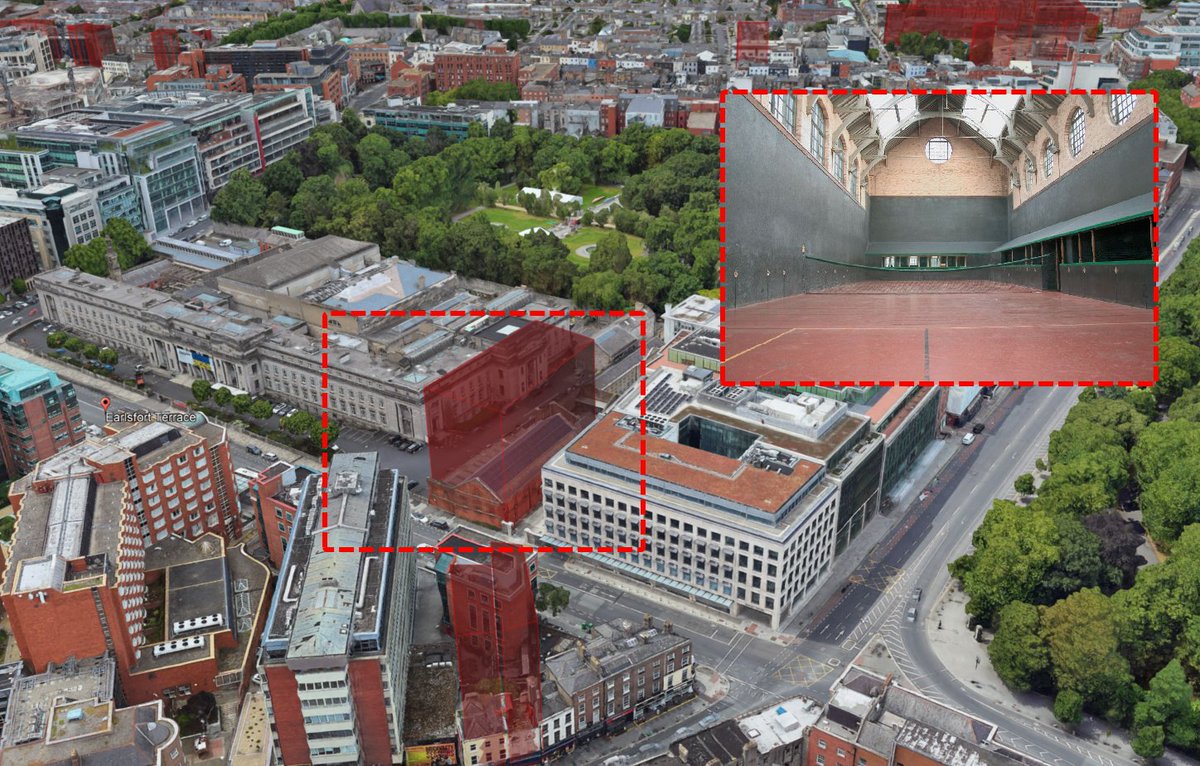
Anyone for real tennis? 🎾
Wouldn’t it be great if the only known purpose-built real (royal) tennis court in Ireland, lying vacant since 2007 , were brought back into use? Built in 1884–85 on Earlsfort Terrace, Dublin 02, for Edward Cecil Guinness, first Earl of Iveagh, it is famous as the venue for the 1890 Real Tennis World Championship, in which Thomas Pettitt of the U.S.A. defended the title in Dublin.
The men’s singles Real Tennis World Championship dates back to 1740, making it the oldest world championship in any sport, predating the modern Olympics and every other sporting world title.
Below is a webpage I built to highlight dereliction in Ireland, propose solutions, and showcase heritage buildings and structures at risk. The page includes quick facts, a summary, history and ownership, a dated photographic decline log, planning/enforcement history, vacancy/dereliction signals, reuse potential, recommended next actions, open questions, and sources.
ℹ️Research Page:
https://t.co/NvYDtThAa4
#Dublin #Ireland #Heritage #HeritageAtRisk #HousingCrisis #DerelictIreland #Tennis
The Dublin Heritage Blitz
A 1949–52 aerial photo from the Norman Ashe Aerial Photographic Collection, which I’ve colourised and annotated in red to highlight buildings that were demolished in the years that followed. It shows the churches of Dublin and the Four Courts almost frozen in time, as the city was cleared, particularly at Wood Quay (An Ché Adhmaid), to make way for a new Dublin Corporation (now Dublin City Council) office development on a four-acre site in front of Christchurch Cathedral: a riverside area of Dublin that was once a site of Viking settlement. In September 1978, a protest drew 20,000 people, including former President of Ireland Mary Robinson and poet Thomas Kinsella, to oppose the development. However, the effort was ultimately unsuccessful.
#Dublin #Ireland #Heritage #HeritageAtRisk #HousingCrisis #DerelictIreland