Cómo aumentar tu suerte como entrenador:
- Ver videos
- Escuchar más
- Estudiar a otros entrenadores
- Asistir a clínicas
- Ser mentor de alguien
- Ser guiado por un mentor
- Crear nuevos hábitos positivos
- Hacer preguntas
- Estar dispuesto a cambiar
- Organizarse
Mejora tu🍀
¡Feliz día del padre!
Menos a los papás que dan instrucciones desde la grada. Broma, a todos aunque hagan eso pero ojalá dejen de hacerlo, especialmente a los que son padre, madre, hijo y Espíritu Santo, ¡disfruten su día!
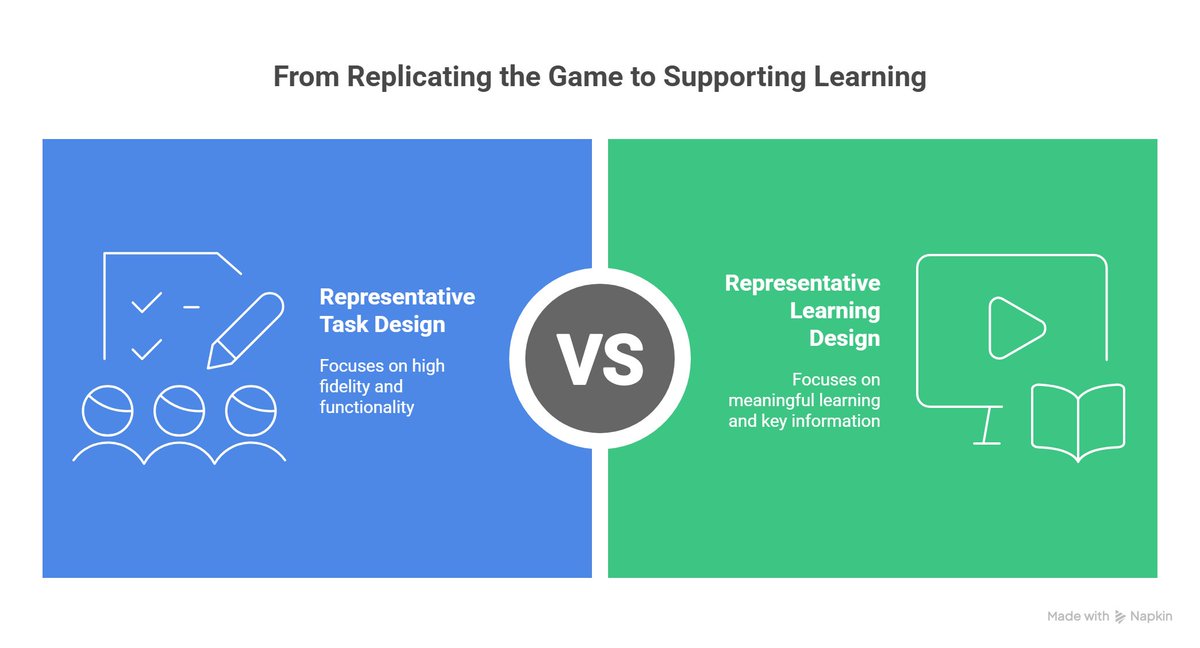
When coaches first hear about "representative practice," it’s easy to assume that every activity needs to look exactly like the full game; same numbers, same intensity, same space. But that’s not quite the goal. This is where it’s useful to distinguish between two important ideas:
- Representative Task Design is about how closely a practice task mirrors the full game. It aims for high fidelity and functionality
-Representative Learning Design, on the other hand, is about how meaningfully a task supports learning. It focuses on making sure the key information and actions from the game are still present, even if the activity is simplified.
In other words, it’s less about copying the game and more about keeping the “DNA” of the game alive.
One of the biggest mistakes coaches make when simplifying a practice task is removing the very skill or decision they want players to develop.
When we simplify a game, our goal isn't just to make it easier.
It's to keep the DNA of the game alive while reducing the complexity of the challenge.
Every game tells a story.There is an objective players are working towards. There are opponents trying to make that objective harder to achieve and teammates helping create solutions. Players must pick up information from the environment, make decisions based on that information and act to achieve an outcome. These elements form the DNA of most team and interactive sports. The challenge for coaches is preserving as much of this DNA as possible when scaling a task.
For example, a well-designed 2v1 can still contain many of the key ingredients of the full game. There is direction, opposition, information to pick up, decisions to make and a problem to solve. The task is simpler, but the story remains the same.
If we remove too many of these elements, we risk changing the problem players are trying to solve and ultimately what they learn.
The "DNA of the game" is my own way of thinking about some of the ideas behind the Foundation for Task Design model developed by Mark O'Sullivan and colleagues.
Nada más clarificador que ver cómo se dirige un partido Premini 🏀. Es un identificador cristalino de personas que han perdido el norte. Porque si la dirección de equipo es siempre fundamental, nada más clarificador que la dirección de un partido de niños y niñas de 9 o 10 años🧵
Familias... dudad al menos de este tipo de prácticas, no vaya a ser que vuestras hijas e hijos se acostumbren al grito, a las intimidaciones o a que todo vale para ganar (incluso las trampas). Y así, cualquier día, quizás más pronto que tarde, no les apetezca ir a entrenar.
Teaching through roleplay > whiteboards.
At a clinic in Australia, I was asked: How do you teach a player that 1-on-3 is a terrible shot?
My answer: Don’t draw it. Don’t just correct it. Roleplay it.
Put one player in the exact situation — attacks 3 defenders and shoots. Then pause and ask the whole team: “How does that decision affect YOU?”
Suddenly the lesson isn’t abstract. It’s felt. It builds real empathy and accountability. One bad shot impacts spacing, effort, and opportunity for everyone.
Players don’t just learn — they feel it.
La defensa individual es lo más difícil de cuantificar en baloncesto. Robos y tapones miden eventos aislados, no la disuasión continua que ocurre en cada posesión.
El Defensive Field Goal Percentage (DFG%) es uno de los pocos intentos serios de medir ese trabajo invisible. 🧵
El desastre de relator de @PrimeVideoLat está quitando toda la emoción a las finales de la NBA. No ve las jugadas, no conoce los jugadores, etc... ☠️☠️