Moeed Pirzada:
Gen. Munir’s control over Pakistan’s armed forces continues to expand.
After becoming Field Marshal, he made himself Chief of Defence Staff and then pushed through two new bills.
No previous military ruler or Chief Martial Law Administrator in Pak had attempted to exert such control over the Air Force and Navy.
Shahbaz Gill:
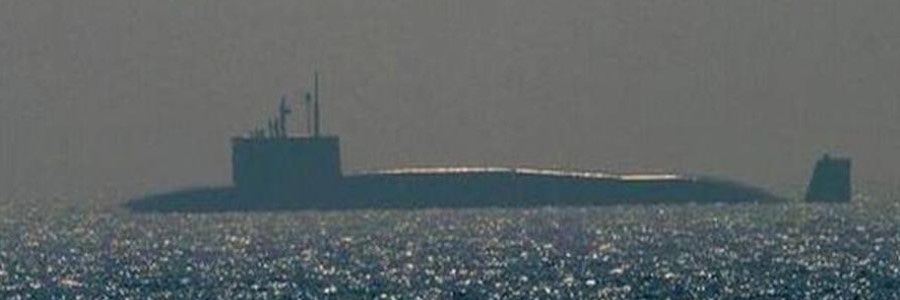
Recently, he created a Rocket Force. Why was it created?
Because during the war with India 🇮🇳, all the credit and praise went to the Air Force.
Moeed Pirzada:
Gen. Asim Munir is not stopping at one thing.
He wants to accumulate more and more power, becoming the sole authority over Pakistan’s affairs.
He has altered Pakistan’s constitutional and political structure for his personal power.
Every few weeks, he expands his authority further.
His hunger for power appears to have no end.
@Syednajamulsaq2@alpha_defense This is an absolutely insane defence. It places the military, and specifically the army above any effective legal or constitutional control by civilian government.
https://t.co/7T7NazS28R
Union Territory of Ladakh has started utilising 90 million litres of glacier water per day, for sustainable water and agricultural security in Ladakh.
Previously lost as untapped runoff into the River Indus, this volume of glacial-melt water from Stok village Nallah in Leh, is now being directly channelized into the Igoo-Phey Irrigation Canal, catering to nearly 12 villages and augmenting irrigation of over 1000 acres of barren land that earlier remained parched due to paucity of water into the canal.
(Source: UT of Ladakh)
@PureKhalsa_JSB I hope Indian handles highlight and share this post which actually shows India diverting a part of the Indus waters from Pakistan.
https://t.co/Wn7GiyvE9O
Union Territory of Ladakh has started utilising 90 million litres of glacier water per day, for sustainable water and agricultural security in Ladakh.
Previously lost as untapped runoff into the River Indus, this volume of glacial-melt water from Stok village Nallah in Leh, is now being directly channelized into the Igoo-Phey Irrigation Canal, catering to nearly 12 villages and augmenting irrigation of over 1000 acres of barren land that earlier remained parched due to paucity of water into the canal.
(Source: UT of Ladakh)
Union Territory of Ladakh has started utilising 90 million litres of glacier water per day, for sustainable water and agricultural security in Ladakh.
Previously lost as untapped runoff into the River Indus, this volume of glacial-melt water from Stok village Nallah in Leh, is now being directly channelized into the Igoo-Phey Irrigation Canal, catering to nearly 12 villages and augmenting irrigation of over 1000 acres of barren land that earlier remained parched due to paucity of water into the canal.
(Source: UT of Ladakh)
Thirty years of data show the serious ecological and economic costs of the 1996 Indo-Bangladesh Ganga Water Treaty, particularly for Bihar.
With the treaty expiring on December 12, 2026, the JD(U) position is clear: it must not be renewed in its present form. India should allow it to lapse and negotiate afresh based on the scientifically assessed water needs of Bihar and other basin states up to 2050, with Bihar firmly at the decision-making table.
Read my article in today’s @timesofindia 👇
#FarakkaWaterTreaty #WaterTreaty #Bihar
@CRPaatil@DoWRRDGR_MoJS@PMOIndia@MEAIndia
@nistula@Jduonline@SanjayJhaBihar The Farakka Barrage has to be dismantled and Bihar must be compensated for the humungous damage it has done to our agriculture and economy for decades now.
Very true. India should have released absolutely top tier evidence and video proof like Pakistanis did here. Absolutely irrefutable evidence of the great victory of Operation Banyan Patloon.
"Khanne hamaare mitr thhe. Ram Ram." 🤣🤣🤣🤣🤣
https://t.co/lcFDrbDaAt
More than a year after Marka-e-Haq, India refuses to face the harsh reality. Instead of conceding defeat in a failed venture, India has decided to colour history in her preferred hues. To achieve this mutilation of history, Indian content creators have produced a highly dramatised, coloured and factually inaccurate account of so-called Operation Sindoor, packaged as a documentary featuring senior political and military leadership of India. For its lack of nuance and seriousness, the documentary can be characterised as a tragedy and a comedy at the same time. Selectively edited interviews, emotional narration and cinematic Bollywood style reconstruction have been used to alter established facts and rewrite the operational outcome.
Tellingly, the documentary’s account contains fundamental contradictions, exposing a belated attempt to manufacture a domestically palatable version of events.
The documentary attempts to establish a deliberate linkage between an address by the Pakistan’s Chief of Army Staff on 16 April 2025 and the Pahalgam incident of 22 April 2025, conjuring a conspiracy theory out of nothing. More significantly, India subsequently claimed that the three alleged perpetrators of Pahalgam were identified and eliminated on 28 July 2025, 82 days after so called Operation Sindoor. Yet the documentary presents so called Operation Sindoor as the punishment for those responsible for Pahalgam. If the alleged perpetrators were eliminated on 28 July, India must explain, who it claims to have punished on 7 May 2025.
The claim of “100 percent mission success” is equally detached from operational record. During Marka-e-Haq, Pakistan’s Armed Forces successfully thwarted Indian aggression and shot down 8 military aircraft. Pakistan subsequently conducted Operation Bunyanum Marsoos, employing Fatah precision-guided rockets & missiles, PAF precision munitions, long-range loitering munitions and precision artillery against 26 military targets, including facilities used to target Pakistani citizens, and entities involved in fomenting terrorism against Pakistan.
The documentary itself further undermines its claim of clear Indian dominance. Indian military leadership acknowledges extensive Pakistani missile, drone and air activity, sustained engagements along the Line of Control and the activation of Indian air-defence systems. Such admissions are difficult to reconcile with its repeated portrayal of Pakistan being decisively defeated.
The documentary’s account of the cessation of hostilities is no less revealing. Its own narration confirms that hostilities ended through communication between the two DGMOs and an agreed cessation of military action. This alone contradicts the attempt to portray Op Sindoor as a unilateral Indian military triumph. A cessation of hostilities, facilitated by US, cannot subsequently be repurposed as evidence of unconditional victory.
The documentary also contradicts itself on escalation dynamics. It repeatedly emphasises surprise, precision, deep strikes and escalation dominance, while simultaneously claiming that India deliberately limited the conflict and provided Pakistan an “exit window”. These competing claims expose the production as a carefully constructed domestic narrative rather than an objective military account.
India has not declassified the truth. It has cobbled together a propaganda video to project a military blunder as a successful endeavour.
No amount of cinematic reconstruction can change the chronology, erase aircraft losses, conceal military casualties, alter the military engagements that actually took place or convert a battlefield defeat into a self-proclaimed victory.
Pakistan has no need to manufacture a narrative around Marka-e-Haq. The operational record, battlefield evidence, diplomatic exchanges and India’s own subsequent statements speak for themselves and are widely acknowledged by international community.
Pakistan remains committed to regional peace and stability. At the same time, the Armed Forces of Pakistan remain fully prepared and capable of defending the country’s sovereignty, territorial integrity and national interests. Any future military misadventure will be met with a firm, decisive and disproportionate response, after which no amount of cinematic perjury will be able to provide any face-saving to India.
@thenIslappedyou Pakistanis are destined to be humiliated by India at least once every generation and then to spend the next 10-15 years coping till its time for another round. After Kargil, this is the latest instalment. 😂
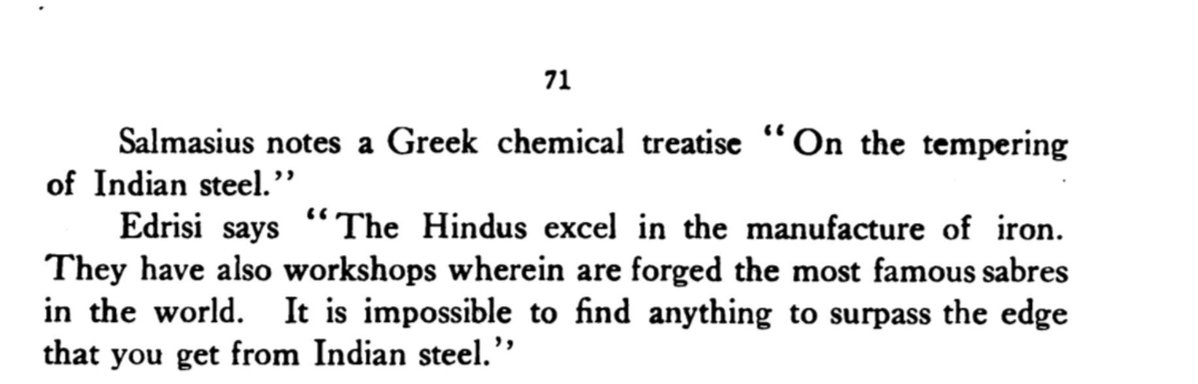
Arab geographer Muhammad al-Idrisi in his book (1154CE)
"The Hindus excel in the manufacture of iron.
They have also workshops wherein are forged the most famous sabres
in the world. It is impossible to find anything to surpass the edge
that you get from Indian steel.”
This pic helped change the air war over Kargil. An IAF MiG-25 Foxbat took it in the third week of June 1999. And there is a reason to tell that story today. On 17 Aug 1981, 45 years ago, No. 102 Sqn was raised, beginning the MiG-25’s career in the IAF.
18 years later, the Foxbat was called upon to solve one of the most critical problems confronting the IAF in Kargil: accurately finding targets. It is also an important part of Safed Sagar that @NetflixIndia largely ignored.
Identifying Pakistani positions and fixing their precise coordinates had become a serious problem. The Army’s maps were dated and inadequate for extracting accurate coordinates. Newer Survey of India maps would only reach the troops towards the end of June.
The IAF therefore needed vertical aerial photography. It had the Avro 748, Jaguar, Canberra and MiG-25 available, but each had limitations.
The Avro was unsuitable for a hostile environment. Jaguars with Vicon cameras produced excellent low-level imagery, but operating low over Kargil meant exposure to SAMs. A No. 106 Sqn Canberra had already been struck by an Anza missile on its first reconnaissance sortie.
That left the MiG-25.
The Foxbat normally operated above 20 km at around Mach 2.4. Its 72-inch focal-length cameras offered enormous photographic coverage, while its Peleng-DM navigation system could associate accurate positional information with the imagery.
But at its normal altitude, the resolution was insufficient to identify small bunkers, sangars and concealed positions in Kargil. The Foxbat had to come down.
At around 8 km, the imagery was superb, but the aircraft would be dangerously exposed to shoulder-fired missiles. A 13–14 km profile offered greater safety, but required minimum reheat and pushed the aircraft to about Mach 1.3.
The eventual compromise was remarkable for a Foxbat: around 10 km and Mach 0.9. It gave roughly 5 km of vertical separation from the missile belts while allowing an effective fighter escort. The MiG-25 had no RWR, flares or chaff.
Two MiG-29s provided top cover, with two Mirage 2000s accompanying it. If seriously threatened, the escape plan was pure Foxbat: maximum afterburner, climb to 20 km, accelerate to Mach 2.4 and get out.
Navigation accuracy was equally critical. The Peleng-DM, like any inertial system, could drift. Its feed was integrated with the RSBN beacon system, and Wg Cdr P.J. Thakur went a step further, borrowing a handheld GPS from No. 7 Sqn to verify that the positions being generated were accurate.
The MiG-25 was ferried to Adampur on 18 June. Weather ruled out operations on 19 and 20 June. On 21 June 1999, Wg Cdr P.J. Thakur flew the first operational photo-reconnaissance mission over the Drass–Kargil sector.
Mirage 2000s flown by Wg Cdr S. Chhabra and Wg Cdr Rohit Verma accompanied the mission, while MiG-29s led by Wg Cdr S. Harpal Singh provided top cover.
Two Pakistani F-16s approached during the photographic run. The MiG-29s deterred them, and the Foxbat stayed on task.
The exposed film was then flown back to Bareilly for processing. When the photographs reached Western Air Command and Air HQ, the impact was evident. Tololing. Muntho Dhalo. Tiger Hill.
Positions that had been difficult to locate with confidence were now clearly visible. Enlargements revealed bunkers, sangars and camouflaged positions. Crucially, the imagery could be tied to accurate coordinates.
Strike crews could now study their targets before take-off, see how they would appear from release height, fix their coordinates and plan the direction of attack.
Look again at the photograph. In the Kargil mountains, where locating a small position could be almost as difficult as attacking it, imagery of this quality mattered enormously.
The MiG-25 went on to fly four more missions over Kargil–Drass, besides reconnaissance over Rajouri–Poonch and a sortie to establish the situation around Gultari.
The Foxbat is remembered for Mach 2.4 and the stratosphere. Over Kargil, it made a critical contribution by doing almost the opposite: coming down to 10 km and slowing to Mach 0.9 so its cameras could see what mattered.
Happy birthday, No. 102 Squadron! #IAFHistory @IAF_MCC
@HannibalBarx Jaahil, this is not requesting a ceasefire. India informed Pak that we have completed our operation and do not wish to escalate further. Pak DGMO replied that they wanted to undertake their own retaliation. Then Pak got beaten even more and then begged for a ceasefire.
@HannibalBarx@lalit22100 Jaahil, this is not requesting a ceasefire. India informed Pak that we have completed our operation and do not wish to escalate further. Pak DGMO replied that they wanted to undertake their own retaliation. Then Pak got beaten even more and then begged for a ceasefire.
@Uchihaa_18 The only assets lost were the aircraft on BARCAP after the strikes on Pakistan were successfully executed. The entire strike package returned safely is what the Air Marshal says.