New here? Start with this one.
This account is a field guide for a first trip to China — written for the friend who just booked the flight and is quietly worrying about the practical stuff.
The essentials:
• How to pay for everything with one app, set up before you land
• Food delivery without a Chinese phone number
• High-speed trains with nothing but your passport
• Is China safe? The numbers — and a midnight walk around West Lake
Home base is Hangzhou and Zhejiang, the corner of China I know best. The rest of the country shows up whenever it's genuinely worth your time.
New guides and stories every day. Save this post — you'll want it when the trip planning starts.
It really is — and thank you! The plane trees are the quiet stars of West Lake's second act. If you go, walk the north shore toward the Broken Bridge in the late afternoon: the gold leaves against the lake light are at their best right now in late November, and the paths are much quieter than the south shore. Early morning works too, before the crowds arrive. Hope you get to see it in person one autumn! 🍁
The first wave of autumn at West Lake peaked in early November. But if you're here now, in late November, you haven't missed it — you've arrived for the second act.
The plane trees along Beishan Road are turning gold. The ginkgos on Solitary Island are yellow. And along Yanggong Causeway and at Maojiabu, the dawn redwoods are going rust-red, standing over the water like a forest that caught fire slowly.
The best way to see it is on foot, early. Mornings often bring a thin mist over the lake, and the maples along the shore reflect in the water — sometimes the reflection looks richer than the trees themselves. Climb Baoshi Hill for the classic view: the whole lake framed by red and gold. Or just walk the causeways at sunset, when the light goes low and the lake turns to gold.
November here is cool — around 17 degrees in the day, down to about 8 in the morning — and the October holiday crowds are long gone. Bring a layer, take your time, and don't just drive around the lake. The autumn is in the walking.
Yes — that 8am start is the whole secret! You'll have the trail mostly to yourself, and the tea roasting smell really does follow you all the way up. One extra tip: after your cup at the top in Longjing village, walk down the other side toward Nine Creeks instead of going back the way you came — it's about an hour, mostly downhill along the stream, and the maples are at their best right now in late November. Hope you get that morning soon! 🍵
Right now — mid-November — West Lake is at its best, and most people planning a China trip don't know when to go.
Hangzhou's autumn arrives slowly. The plane trees along Beishan Street turn gold first, peaking in early November. Then the ginkgos catch up: by mid-November the trees inside Lingyin Temple are full gold, leaves crunching underfoot on the stone steps. The maples on Su Causeway burn red last, and they're at their reddest after 3 p.m., when the light goes soft.
The lake itself changes with it. Morning mist, flat water, a wooden boat moving slow under a canopy of gold leaves. Come between 7 and 9 a.m. and the causeways are nearly empty — the crowds arrive later, and so does the noise.
A few practical notes if you go this week. Walk Beishan Street from the north end in the morning, when the lakeside trees turn first and one side of the road is gold while the other is still green. Cross to Su Causeway for the sunset, with Leifeng Pagoda silhouetted against the light. And save Lingyin for a sunny day: ginkgo gold against red temple walls is the photograph, and it only works when the sun is out.
The window is short — by early December the leaves are mostly down. If Hangzhou is on your list, this is the week.
You're exactly right — and thank you for flagging it so clearly. Worth adding for anyone reading: even if the train number changes, your ticket still works as long as the stations and departure time match, since 12306 ties the booking to the run, not the label. So search by stations and time, and don't panic if the number looks different at the gate. Really appreciate you helping other travellers avoid that headache!
China's bullet trains are the easiest part of the trip — if you book them right. Here's the whole thing in five steps.
First, get the 12306 app. It's the railway's own app, it has an English version, and it's the only official place to buy tickets — no booking fee. Register with your passport and complete the identity check: enter your name exactly as printed, upload a photo of your passport page, and wait. It usually clears in minutes, sometimes up to a day, and you cannot buy anything until it does — so do this a day or two before you need a ticket, not at the station.
Second, tickets go on sale 15 days ahead, counting the travel day. On holidays, the popular routes sell out in minutes.
Third, your passport is your ticket. There's nothing to print and nothing to collect. At the station, use the staffed passport lane at the gates — the automatic gates are built for Chinese ID cards.
Fourth, treat the station like a small airport. Arrive 40 to 60 minutes early, send your bags through the security scan, and be at your gate on time: boarding closes a few minutes before departure, and the train does not wait. One more check before you pay: the station name. Big cities have several — Hangzhou East is not Hangzhou station, Beijing South is not Beijing West — and your ticket is tied to one of them.
On board, it's straightforward: second, first and business class, hot-water dispensers if you bring a cup, and at around 90 stations you can order food to your seat through the app. As a first ride, try Shanghai to Hangzhou: about an hour on a G train, straight into Hangzhou East, one of the biggest stations in Asia — and from there, West Lake is a short metro ride away.
There's a new job in China: getting paid to fly. Not as crew — as a companion.
This autumn, Chinese social media filled with ads from "international flight companions" — young people offering to fly with strangers. Part guide, part courier, part babysitter: help an elderly traveller through customs, escort a pet, carry goods, look after a child flying alone.
One veteran, Liu, has done it five years and visited dozens of countries. He charges several thousand to tens of thousands of yuan a trip, airfare, meals and hotels included; clients have ranged from age 3 to over 80. His most memorable passenger: a little girl's bedtime doll, left behind when her family moved to America. Pet specialists on his team once escorted a dog valued at ¥200,000.
At the top end, a "butler-style" service for travellers to Britain: £150 an hour plus a £450 fee, and the companion must be a man over 35 who has lived in the UK at least three years, in a British suit the whole trip. One companion from Hangzhou hand-carries urgent business items — contracts, trade-show samples — faster than any courier.
Before you quit your job: insiders warn the barriers are high — multiple visas, translation skills, airport procedures in a dozen countries — and you must inspect every parcel yourself, or you could carry something prohibited. Liu logged more than 1,000 flight hours last year. As one commenter put it: this isn't for people who just want to travel for free.
The most beautiful morning in China right now starts at 5:30 a.m., in a village most travellers have never heard of.
Shicheng sits in the hills of Wuyuan County, Jiangxi — 58 km and about ninety minutes of mountain road from downtown Wuyuan. More than a hundred maple trees over a century old grow around the village, some 35 metres tall, and from mid-November to early December they turn the whole valley red. Right now is the peak.
The scene photographers come for is four things at once: red maple, white walls and black tiles in the old Huizhou style, morning mist, and smoke from kitchen chimneys. The viewing platform opens at 5:30 in maple season, and the light between sunrise and about 8:30 is when the village appears and disappears in the fog.
The mist isn't guaranteed — it comes most often after rain, when the sky clears and the night was much colder than the day — but the maples are worth the trip alone. Stay overnight so dawn is a short walk, not a mountain drive in the dark. Mornings run 8 to 18 degrees — bring a real coat — and go on a weekday if you can.
Shicheng is the quiet half of a Wuyuan autumn. Pair it with Huangling, where the harvest is still drying on the rooftops — red chillies, yellow corn, golden chrysanthemums spread across the white walls. Loud colour there, silence here. A single ticket for Shicheng is about ¥60.
Your suitcase is full and the tea is still on the shelf. Here's how to ship the rest home instead of paying excess-baggage ransom.
You only need two names. China EMS is the cheapest tracked way out: one to three weeks, most destinations capped at 20 kg per box, and it hands your parcel straight to USPS, Royal Mail or Australia Post through the postal treaty network. Walk into any green-and-yellow China Post branch, or call 11183. SF Express International is faster — three to seven business days, door pickup in the 顺丰速运 mini-program — but pricier over 2 kg. DHL, FedEx and UPS are fastest, several times the price — save them for documents you can't lose.
At the counter, bring your passport — every parcel needs real-name registration — and don't seal the box before you arrive. The clerk opens it and X-rays it. Write the destination address in Latin script, plus a phone number that rings.
Two traps: couriers charge by volumetric weight, so a big light box bills as heavy — pack tight, smallest box that fits. And walk-in counters never take batteries, liquids or powders. Lithium batteries go in your cabin bag, never the hold.
Don't buy these to ship: pre-1911 pieces can't leave China; 1911–1949 ones need a cultural-relics stamp; ivory, coral and turtle shell are banned outright. Declare the real value — under-declaring turns a delay into a seizure. Safest to send: tea, silk, small porcelain — museum shops pack them for travel.
In Chongqing, a man in his 30s has turned his car into an eyelash studio — and he says it earns him ¥50,000 a month.
Xiaofei already owned an eyelash shop in the city. Then clients kept asking him to come to their homes. Most of them are women, and a stranger's living room isn't always comfortable — so he moved the appointment into his car instead.
Here is how it works. The client reclines in the front passenger seat, which he covers with a disposable sheet. He takes a "before" photo, then uses photo-editing software to preview different lash styles on a screen in the car, and the client picks a look. A session takes about an hour, and he charges ¥300 to ¥500 — above the market average, and still, he says, fully booked.
He claims a guaranteed monthly income of ¥50,000, about $7,500. That is his number, not an audited one — but the bookings seem real enough: the story of the car studio has been all over Chinese social media this week.
Three years ago, Xiaofei was a bus mechanic, then a welder, then a truck driver. He taught himself lashes and never looked back.
China's service economy has a way of producing jobs that don't exist anywhere else: the flight companion, the professional queuer, and now the eyelash artist whose salon has four wheels and a parking space.
The lake gets the postcards. But the best ginkgo in Hangzhou right now isn't at West Lake — it's on an ordinary street in the middle of the city.
Qingyin Street, in the old Xiaoying neighbourhood, is lined with ginkgo on both sides, and this week they are at their peak. The leaves turn the whole street gold — they cover the pavement, drift onto people's shoulders, pile up along the kerb. A delivery rider weaves through in a pink helmet, a woman sells sugarcane from a cart, and locals stop to photograph their own street.
That's the difference between Hangzhou's lake ginkgo and its street ginkgo. At the lake, you go to look at autumn. On Qingyin Street, autumn is just what the neighbourhood looks like this week — laundry hangs from the balconies, the taxi rank is doing business, and the gold happens around everyday life.
The timing is now. Hangzhou's autumn ran about a week late this year, and the city's autumn guide puts the golden window at November 20 to 30 — ten days when ginkgo, maple and reed flowers overlap. The city ginkgo line runs from Wulin Square past the Hangzhou Tower escalator to Qingyin Street and Zhaohui Park: about 1.5 kilometres, half a day at most.
Go on a sunny morning. And if the leaves are still on the trees, walk on to Houshi Street, a few minutes away, where the falling leaves come down so thick the locals call it ginkgo rain.
@ChinaTravelMnl It's a gentle workout, promise — the path follows the stream the whole way up, and the closer you get to Longjing, the stronger the roasting smell gets. The tea at the top is the reward.
@deideixia That N/V number change is exactly the kind of thing that trips people up — search by the old number, find nothing, panic. Stations it is. Thanks for adding it.
China runs on QR codes. Your bank card won't work at a street stall — but your phone will, if you set it up first.
First, install Alipay and WeChat at home — inside China, Google Play is unreachable and the App Store may serve a different storefront. Alipay is your main wallet; WeChat Pay is the backup for WeChat-only shops.
Second, link your Visa or Mastercard and finish the passport check: register with your home number, add your card, verify with a passport photo and a selfie. It usually clears in minutes and unlocks the real limits — up to $5,000 per payment and $50,000 a year.
Third, two rules that catch people out. Under ¥200 is free; above ¥200 there's a roughly 3% fee on the whole amount — on a ¥300 dinner, the fee is on ¥300, not just the ¥100 over. Ignore old guides telling you to top up Alipay's Tour Pass: it has been retired.
Fourth, carry cash anyway — ¥500 to ¥1,000 in small notes. Since February 2026, shops may not refuse renminbi cash, and it's your backup when a small vendor's personal QR code won't take a foreign card — still the one thing that reliably fails.
One last habit: when a screen or ATM asks yuan or your home currency, always pick yuan. Paying in your own currency costs another 3 to 7% for nothing.
Set it up at home, test it once, and the whole country opens up.
Beijing's ginkgo season ended two weeks ago. Guangdong's is happening right now.
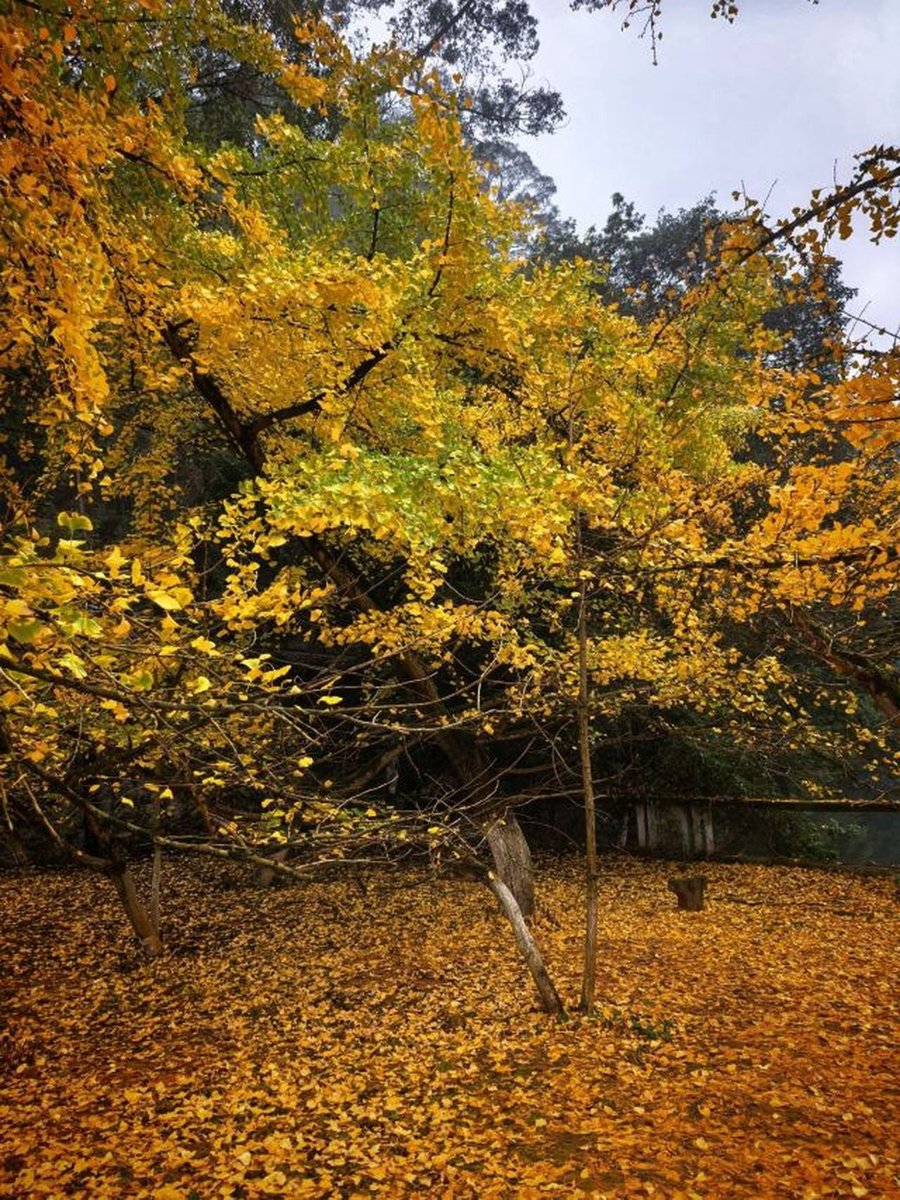
People say Guangdong has no autumn. Then they go to Nanxiong, in the hills of northern Guangdong, and find 10,000 acres of ginkgo trees turning gold all at once. The place is called the hometown of ginkgo in Lingnan, and its peak runs from mid-to-late November into early December — which means right now.
The main site is Maozifeng Forest Farm, where the Golden Avenue runs under a canopy of old ginkgo trees, the ground already thick with fallen leaves. Go early, around 8 in the morning, before the crowds — and during peak season, private cars can't drive in, so you'll take the scenic shuttle bus. The softest light is between 3 and 4 in the afternoon.
If you'd rather skip the ticketed park, Pingtian village is free, with ginkgo trees said to be a thousand years old standing between the old houses.
Getting there is easy from Guangzhou: about an hour by high-speed train, or two hours by car. One warning worth heeding: ginkgo yellowing depends on the temperature, so check the scenic area's latest photos before you go — the window is short every year, and once it's gone, it's gone until next November.
Autumn in China doesn't end in the north. It just moves south.
West Lake has no metro station of its own. Here's the one line that gets you there anyway.
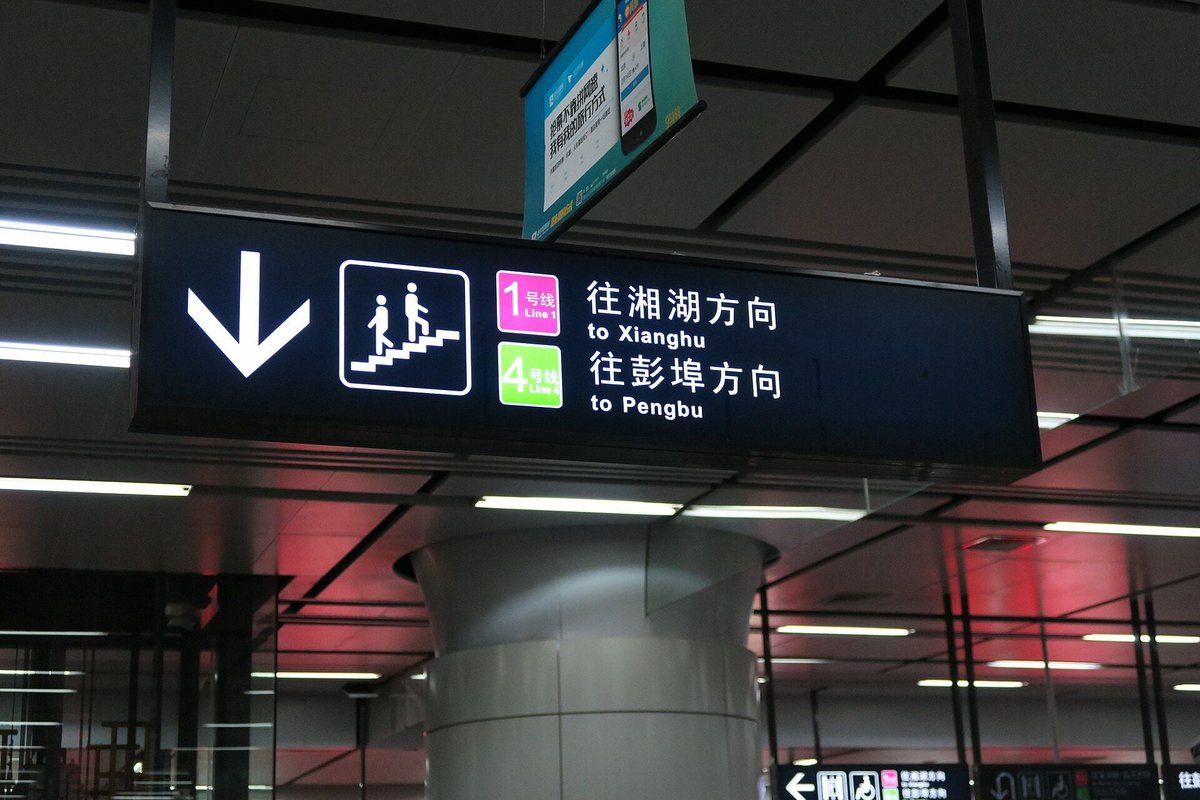
Take Line 1 to Longxiangqiao (龙翔桥). Use Exit C, and in about five minutes you're at the Hubin waterfront, by the musical fountain. From Hangzhou East railway station it's six stops, roughly 20 to 35 minutes, and ¥3. From the old city-centre station, Hangzhou station, it's just two stops.
If you're coming from Xiaoshan Airport, Line 1 runs direct — just make sure you board a train marked for the airport, because some Line 1 trains branch off toward Xiasha instead.
The station you want depends on which part of the lake you're after. Fengqi Road, on Lines 1 and 2, is the stop for Broken Bridge, about a 10 to 15 minute walk. Ding'an Road, also on Line 1, serves the south shore near Leifeng Pagoda. For Hefang Street, the old shopping street, use Wushan Square on Line 7.
Pay with the metro code in Alipay or WeChat — scan in, and the fare is deducted automatically when you scan out. Fares start at ¥2, and most central rides cost ¥2 to ¥9. Every station has a bag security check at the entrance, so allow a couple of extra minutes. Trains run roughly 06:00 to 23:00.
Two things the metro can't do: it doesn't reach Lingyin Temple or the Longjing tea fields — bus 7, ¥2, runs from Longxiangqiao. And once you're at the lake, don't rent a bike for the causeways — bikes are banned on both of them. Walk.
She used to race for China. Now she fries pastries on a street in Tianjin — and she says she’s happier.
Yang Fan started swimming at six. She came up through the Hunan provincial team, trained with the national squad in 2007 and 2008 alongside future Olympic medallists Sun Yang, Liu Zige and Jiao Liuyang, won the women’s 800-metre freestyle at the 2006 National Spring Championships, and finished runner-up at the 2008 national championships and Olympic trials.
She retired in 2009, went to university in Tianjin, and then did something nobody expected: she opened a street stall in Xibeijiao with her husband — also a retired athlete — selling dengzhanggao, a traditional deep-fried pastry from Wenzhou, made of rice batter and filled with things like beef and radish.
People keep assuming she’s playing the victim. She isn’t having it. “I feel very happy,” she said, “even happier than when I was an athlete.” She learned the craft with the same discipline she brought to swimming — she’s now spent more years making snacks than competing. “Although nobody hands me medals now, my food sells well and I earn good money.”
After the stall closes, she teaches children to swim. “Life has more than one arena,” she said. “When the curtain falls on one, you can still give your all in another.”
@ChinaTravelMnl You'll smell it before you see it — the whole village roasts tea in the street that week. Go on a weekday morning if you can; by the Qingming weekend the road up to Longjing is one long line of cars.