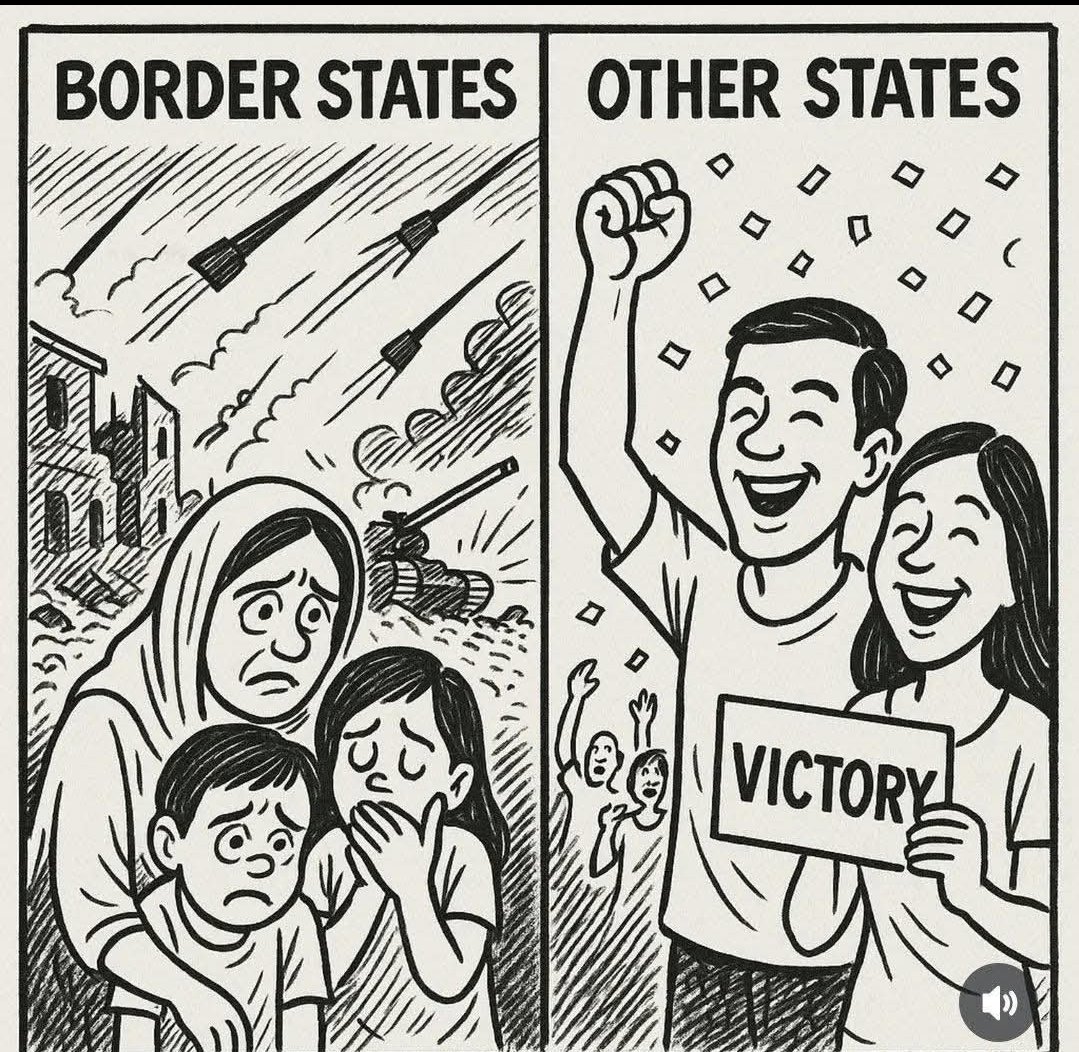
The failure of the Federal Board of Revenue is not merely an institutional failure; it is the manifestation of a much deeper structural malaise.
The current FBR chairman is himself a career bureaucrat from the DMG/PAS cadre. Throughout his career, he occupied some of the most coveted positions in the state apparatus,Assistant Commissioner, Deputy Commissioner, Commissioner, and later CEO level assignments in public sector entities. Few individuals have been closer to Pakistan’s power structure or have benefited more from its patronage networks.
Yet therein lies the problem. Economies are not run by coercive administrators. Financial systems do not thrive under intimidation, pressure, or bureaucratic muscle flexing. The mindset required to administer a district is fundamentally different from the mindset required to nurture investment, entrepreneurship, and economic growth.
Pakistan has fallen into a vicious cycle. The productive sector the very engine that generates wealth, employment, and tax revenues is already struggling under the weight of exorbitant energy prices, excessive taxation, regulatory uncertainty, and a growing web of indirect levies. Many businesses are no longer regionally competitive; increasingly, they are struggling to remain competitive even within Pakistan itself.
When the state responds to declining revenues by applying even greater pressure on an already distressed business community, the inevitable happens: industries contract, businesses shut down, trade slows, and economic activity diminishes. As economic activity shrinks, revenue targets are missed. To bridge the gap, policymakers introduce even more coercive measures, more legal complications, and more aggressive enforcement mechanisms. The result is a self-defeating spiral where every attempt to increase revenue further erodes the very tax base upon which revenue depends.
This was always the logical conclusion of such a model. It is not a temporary setback; it is the predictable outcome of a fundamentally flawed approach.
What is most alarming is that many policymakers still appear unable or unwilling to grasp how modern economies actually function. It is a tragedy for the country, a burden upon its people, and ultimately a challenge for the government itself, whose economic management increasingly rests either in the hands of imported finance ministers or career bureaucrats expected to perform economic miracles from behind a desk.
One is left wondering: if the gardeners continue uprooting the roots while demanding a larger harvest, what fate awaits the garden?
جنتی کوریج نیشنل میڈیا پر ’’انمول عرف پنکی‘‘ کو ملی ہے
لکی مروت اور بنوں دھماکے کو اس کا ایک فیصد بھی شائد نہ ملا ہوا
میڈیا کی ترجیحات بھی ریاست کی ترجیحات سے مختلف نہیں
Diplomatic efforts for peaceful settlement of the ongoing war in the Middle East are progressing steadily, strongly and powerfully with the potential to lead to substantive results in near future. To allow diplomacy to run its course, I earnestly request President Trump to extend the deadline for two weeks. Pakistan, in all sincerity, requests the Iranian brothers to open Strait of Hormuz for a corresponding period of two weeks as a goodwill gesture. We also urge all warring parties to observe a ceasefire everywhere for two weeks to allow diplomacy to achieve conclusive termination of war, in the interest of long-term peace and stability in the region.
@realDonaldTrump@JDVance@SecRubio@SteveWitkoff@SEPeaceMissions@drpezeshkian@mb_ghalibaf@araghchi
6 Dead So Far As Clashes Erupt Across Pakistan During Protests Linked to Khamenei’s Killing
Protests held across multiple cities in Pakistan on Sunday escalated into violent clashes, leaving several people dead and many injured, as demonstrators expressed solidarity with Iran.
In Karachi, a rally organized by Millat-e-Jafriya Pakistan turned tense when groups of protesters marched toward the United States Consulate. The situation quickly deteriorated as demonstrators attempted to breach security barriers, prompting a forceful response from law enforcement. Clashes resulted in at least six deaths and eight injuries, according to initial reports. The Embassies security used crowd-control measures to disperse the gathering.
In Lahore, a similar attempt was made by protesters to approach the US Consulate. However, heavy deployment of police and security forces prevented demonstrators from entering the premises. Minor scuffles were reported as authorities pushed back advancing crowds.
Islamabad also witnessed heightened tensions, where a rally was announced to march from G-6 toward the US Embassy. Anticipating unrest, authorities sealed the Red Zone and restricted access, urging citizens to avoid the area. While large crowds gathered, security forces maintained control, preventing any major breach, though confrontations between protesters and police were reported.
In Skardu, Gilgit-Baltistan, a large protest took a violent turn when demonstrators allegedly set fire to a United Nations building. The incident marked one of the most serious escalations outside major urban centers.
Meanwhile, in Umerkot (Omar Kot), Sindh, protesters gathered outside the local press club. While largely peaceful at the outset, tensions rose as crowds chanted slogans and blocked nearby roads, leading to minor confrontations with local authorities.
Authorities across the country have heightened security and warned of strict action against those involved in violence, as the situation remains tense in several regions.
[Protestors carrying proscribed Shia milita, Zainabyun Brigades flags in Karachi]
This is blatant racism not humour. Reducing a nation’s identity to a stereotype shows a deep lack of respect. Encourage education—history, politics, and culture—so people can grow, unlearn prejudice, and engage with the world with empathy and intelligence, not mockery."






![khorasandiary's tweet photo. 6 Dead So Far As Clashes Erupt Across Pakistan During Protests Linked to Khamenei’s Killing
Protests held across multiple cities in Pakistan on Sunday escalated into violent clashes, leaving several people dead and many injured, as demonstrators expressed solidarity with Iran.
In Karachi, a rally organized by Millat-e-Jafriya Pakistan turned tense when groups of protesters marched toward the United States Consulate. The situation quickly deteriorated as demonstrators attempted to breach security barriers, prompting a forceful response from law enforcement. Clashes resulted in at least six deaths and eight injuries, according to initial reports. The Embassies security used crowd-control measures to disperse the gathering.
In Lahore, a similar attempt was made by protesters to approach the US Consulate. However, heavy deployment of police and security forces prevented demonstrators from entering the premises. Minor scuffles were reported as authorities pushed back advancing crowds.
Islamabad also witnessed heightened tensions, where a rally was announced to march from G-6 toward the US Embassy. Anticipating unrest, authorities sealed the Red Zone and restricted access, urging citizens to avoid the area. While large crowds gathered, security forces maintained control, preventing any major breach, though confrontations between protesters and police were reported.
In Skardu, Gilgit-Baltistan, a large protest took a violent turn when demonstrators allegedly set fire to a United Nations building. The incident marked one of the most serious escalations outside major urban centers.
Meanwhile, in Umerkot (Omar Kot), Sindh, protesters gathered outside the local press club. While largely peaceful at the outset, tensions rose as crowds chanted slogans and blocked nearby roads, leading to minor confrontations with local authorities.
Authorities across the country have heightened security and warned of strict action against those involved in violence, as the situation remains tense in several regions.
[Protestors carrying proscribed Shia milita, Zainabyun Brigades flags in Karachi]](https://pbs.twimg.com/media/HCT_W5jbgAAza9p.jpg)