On Wednesday 15 October 2024, the Department of Health and Social Care announced an independent review of patient safety across the health and care landscape in England. This blog sets out @ptsafetylearn response to this announcement.
🆕Bella Knaapen, Surgical Support Governance & Risk Management Facilitator at @NNUH, shares how she developed ‘Speak Up For Safety’, a Just Culture training workshop https://t.co/yZzPhNjUOf #patientsafety#safetyculture
'Imagine never seeing your front door again'.
I posted this on @LinkedInUK a few days ago following a visit to @barnshospital and it seems to have resonated strongly. I hope ye don't mind me sharing it here🙏💙
https://t.co/5v0h2ndlyh
Could it be sepsis?
My new illustration means a lot to me. For many years I have pushed the use of simple language, images and information on a one pager in healthcare but we are still so far away from this:
https://t.co/AVv6cb9zhn
If you’re an NHS consultant based in England please search your email for the BMA job planning survey, it’s one of the biggest issues for most of us, we need to measure your experience! Only open for a couple of weeks, please do this weekend if possible,-) takes 10-15 min. Pls RT
Communication issues are commonest cause of never events & other serious medical issues in recent yrs
Sometimes its important to ensure specific instructions or updates are not only heard but understood
We use repeat back regularly to communicate effectively to optimise safety
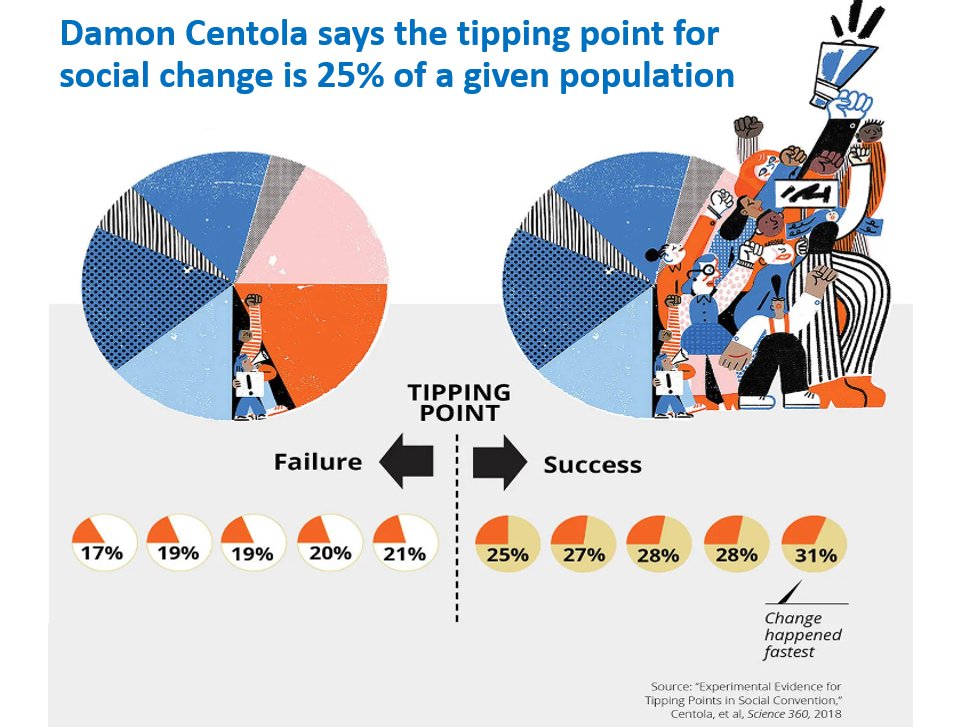
How many people does it take to change an organisation, system or culture? In his book "Change, How to Make Big Things Happen", @DamonCentola shows how change became inevitable when 25% of the people were on the side of making the shift - a “committed minority group” driving the change. But how do we get to 25%? Three strategies:
1) Use "non violent" change processes: where people can come into the change, make it their own, be part of a co-creative process & see/feel their stamp on the change.
2) Adopt the "Active, Sustained 3.5% Rule": a much smaller group actively engaged at the heart of the change, sustained over time.
3) Adopt the "Law of One Person and One Step": where we don’t need to train everybody, but instead, coach a small group of people to create a non-violent resistance to the old ways of working & bring new ways in.
https://t.co/N9UfEooWgw. By @dastillman
🚨LAST CHANCE 🚨
Gypsy, Roma and Traveller people experience some of the poorest health outcomes in the UK, including within mental health.
Join our event to find out how to improve knowledge and reduce barriers on 27 September, from 12pm-1:30pm!
Book: https://t.co/CrvjVSi9Kv
🆕REPORT. Published by HSSIB and arm's-length body members of the Recommendations to Impact Collaborative Group, this report looks at how the effectiveness of quality and safety recommendations in healthcare can be improved #PatientSafety#NHS#Healthcare https://t.co/sFX54OIL2K
I really like this new article on psychological safety (a belief that we can speak up, take risks & make mistakes without fear of being judged, humiliated or punished) at work. It sets out a series of activities/approaches that all of us can use to build psychological safety in our teams. These include:
- Manual of Me
- Team Charter
- Lifelife
- Activity from Google that ranks sources of anxiety
- 5-word Fridays
- Team temperature check
https://t.co/ovclOccF9q. By @ChristinaLai1, via @Elaineking91.
A link to an archived version of the article, in case the above link doesn't work for you: https://t.co/yM5rmUD2LV
Book added to the hub this week - Human Factors for healthcare: A guide for nurses and Allied Health Professionals https://t.co/obBtLSi36S #patientsafety#humanfactors
📢Tomorrow evening 5:30-7pm we're hosting our next National Hip Fracture Database webinar on improving KPI 0: right place, right time - there's still time to register! #NHFD https://t.co/N1wAsFIv8n
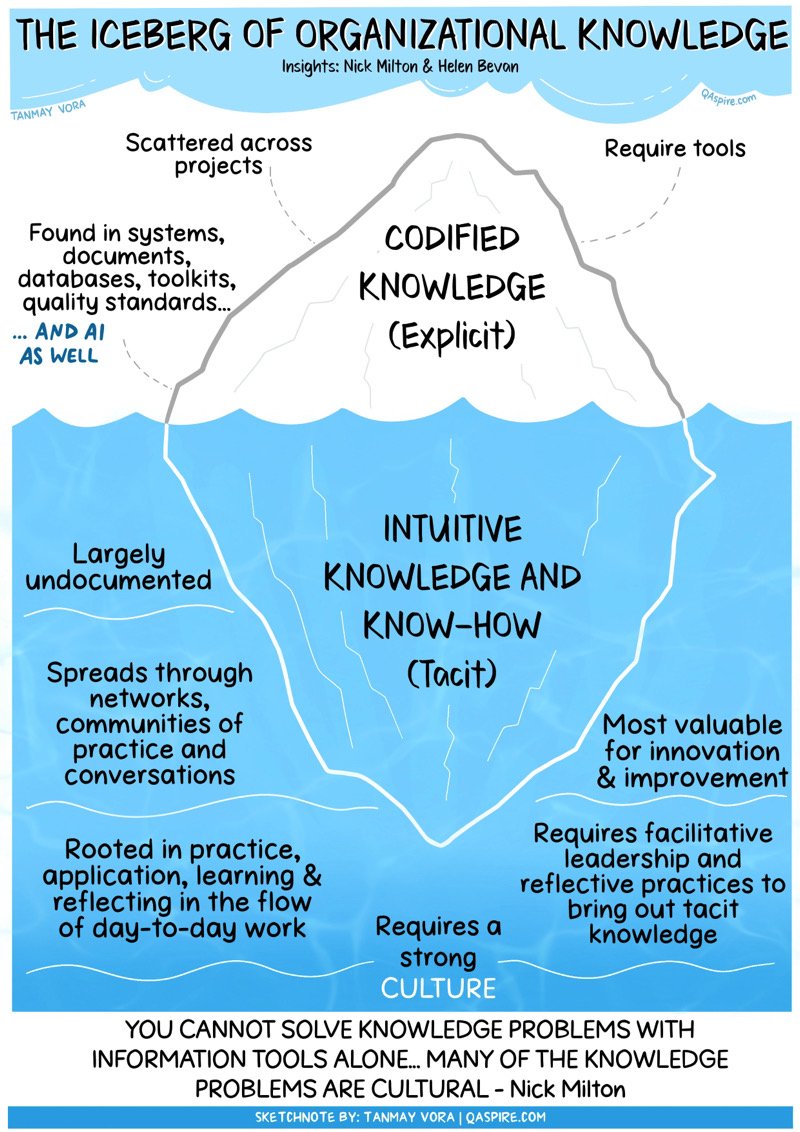
So much of our focus in trying to spread improvements is in "explicit" knowledge: toolkits, good practice databases, standardised pathways etc. Most of the content that AI repurposes from online resources is explicit knowledge.
Yet the biggest opportunities are in "tacit" knowledge: the practical "know-how" rooted in people, their experiences, insights & judgements. Unlocking tacit knowledge is how organisations break past their internal barriers to innovate & improve.
Thanks @tnvora for a striking new version of the explicit/tacit iceberg picture. Tanmay has also written an excellent blog on how to unlock tacit knowledge: https://t.co/IkfVQK4DBE