Pleased to see this paper receive publication offers from four leading international law journals at @DukeU, @Penn, @UMich, and @IndianaUniv.
As frontier AI labs including @AnthropicAI, @OpenAI, @GoogleDeepMind, @Meta, @xai, @MistralAI, @Baidu_Inc, @AlibabaGroup, and DeepSeek expand globally, regulatory volatility and emergency restrictions will increasingly collide with jurisdiction-specific investments in data residency, safety governance, red-teaming, licensing, cloud capacity, public-sector procurement, and enterprise integration.
The result is a fresh need to understand fair and equitable treatment and related doctrines of investment arbitration through a doubly positivist lens: one attentive both to legal content and to the political conditions in which it develops.
This paper’s cross-disciplinary bones made it hard. They also made it unusually fun to write. My calendar records more than 60 writing days dedicated to it over the past two years; when the galley proofs are in, I will miss them all.
Pleased to share a new paper on investor-state arbitration, now accepted by the Duke Journal of Comparative & International Law.
We ask why fair and equitable treatment drifted away from the minimum standard of treatment in arbitral jurisprudence, despite repeated efforts by states, including powerful capital exporters, to tether the two.
Our explanation is strategic and institutional. We develop a theory of jurisprudential drift in which arbitrators, counsel, claimants, and senior figures in the field coordinate around investor-protective interpretations, with reputational enforcement and legal techniques helping stabilize that coordination. Judicial economy, opinion writing, and professional commentary give tribunals room to maneuver in difficult cases without forcing a broader doctrinal reset.
At over 36,000 words, the paper draws on treaty practice, awards, separate opinions and dissents, legal commentary, IPE, sociology of arbitration, and the direct arbitral experience of my coauthors Kabir Duggal and Kevin Gray. It speaks to debates in the field over party-appointed arbitrators, the revolving door, and treaty interpretation.
The working paper is on SocArXiv and SSRN: https://t.co/UOBB9QvUxV
New in paperback! The Dawn of a Discipline | The history of international criminal justice told through the revealing stories of some of its primary intellectual figures. |
Save 20% with discount code PILAW26
https://t.co/rVxbVWKnWZ
#internationallaw
Pleased to see this paper receive publication offers from four leading international law journals at @DukeU, @Penn, @UMich, and @IndianaUniv.
As frontier AI labs including @AnthropicAI, @OpenAI, @GoogleDeepMind, @Meta, @xai, @MistralAI, @Baidu_Inc, @AlibabaGroup, and DeepSeek expand globally, regulatory volatility and emergency restrictions will increasingly collide with jurisdiction-specific investments in data residency, safety governance, red-teaming, licensing, cloud capacity, public-sector procurement, and enterprise integration.
The result is a fresh need to understand fair and equitable treatment and related doctrines of investment arbitration through a doubly positivist lens: one attentive both to legal content and to the political conditions in which it develops.
This paper’s cross-disciplinary bones made it hard. They also made it unusually fun to write. My calendar records more than 60 writing days dedicated to it over the past two years; when the galley proofs are in, I will miss them all.
Pleased to share a new paper on investor-state arbitration, now accepted by the Duke Journal of Comparative & International Law.
We ask why fair and equitable treatment drifted away from the minimum standard of treatment in arbitral jurisprudence, despite repeated efforts by states, including powerful capital exporters, to tether the two.
Our explanation is strategic and institutional. We develop a theory of jurisprudential drift in which arbitrators, counsel, claimants, and senior figures in the field coordinate around investor-protective interpretations, with reputational enforcement and legal techniques helping stabilize that coordination. Judicial economy, opinion writing, and professional commentary give tribunals room to maneuver in difficult cases without forcing a broader doctrinal reset.
At over 36,000 words, the paper draws on treaty practice, awards, separate opinions and dissents, legal commentary, IPE, sociology of arbitration, and the direct arbitral experience of my coauthors Kabir Duggal and Kevin Gray. It speaks to debates in the field over party-appointed arbitrators, the revolving door, and treaty interpretation.
The working paper is on SocArXiv and SSRN: https://t.co/UOBB9QvUxV
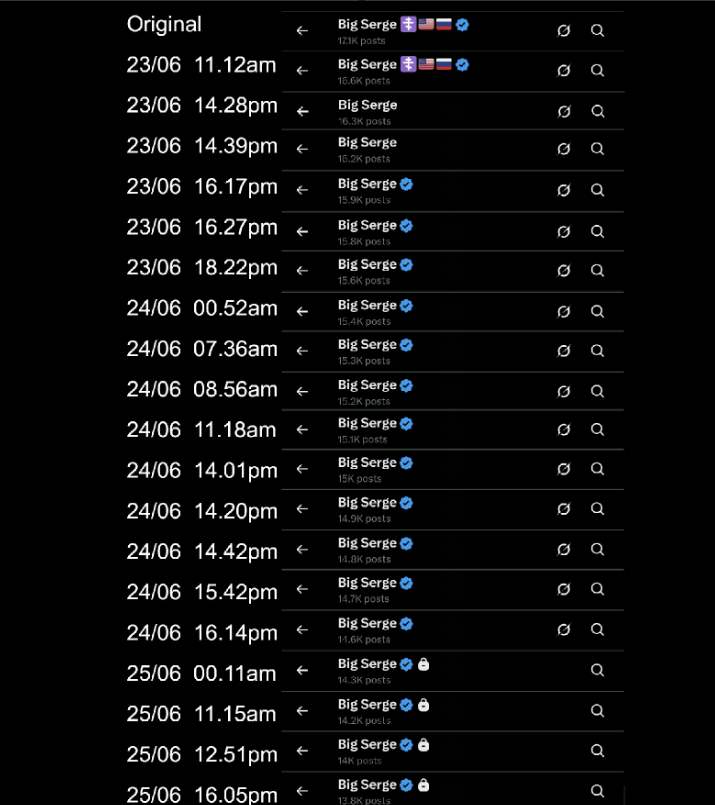
@slantchev The next question is whether any of the money traces back to a foreign government. It’s not hard to imagine Russian-linked actors quietly subscribing to a Substack through ordinary-looking accounts, so the writer gets paid without necessarily knowing who is behind it.
The jobs of the future will require high adaptability and creativity, focusing on complex problem framing rather than repetitive execution or specialized skills
@TUA_Research I would say "public servant" rather than "public official" but otherwise concur. I was using the term "doxxing" as shorthand for your investigative journalism. I expect the @nytimes will eventually write something about this and similar anonymous accounts in the blogosphere.
If you are running a blog that monetizes the proliferation of extremist political attitudes during shifts of your day job at a government agency, do not assume that journalists won't doxx you the next time your platform gets hacked.
After Sam was contacted, he immediately set about purging his account. We watched as he deleted thousands of tweets - 5k tweets to date, nearly 1/3rd of his total output. To make matters worse for Sam, his attempted coverup was done during @IdahoLabor work hours too.
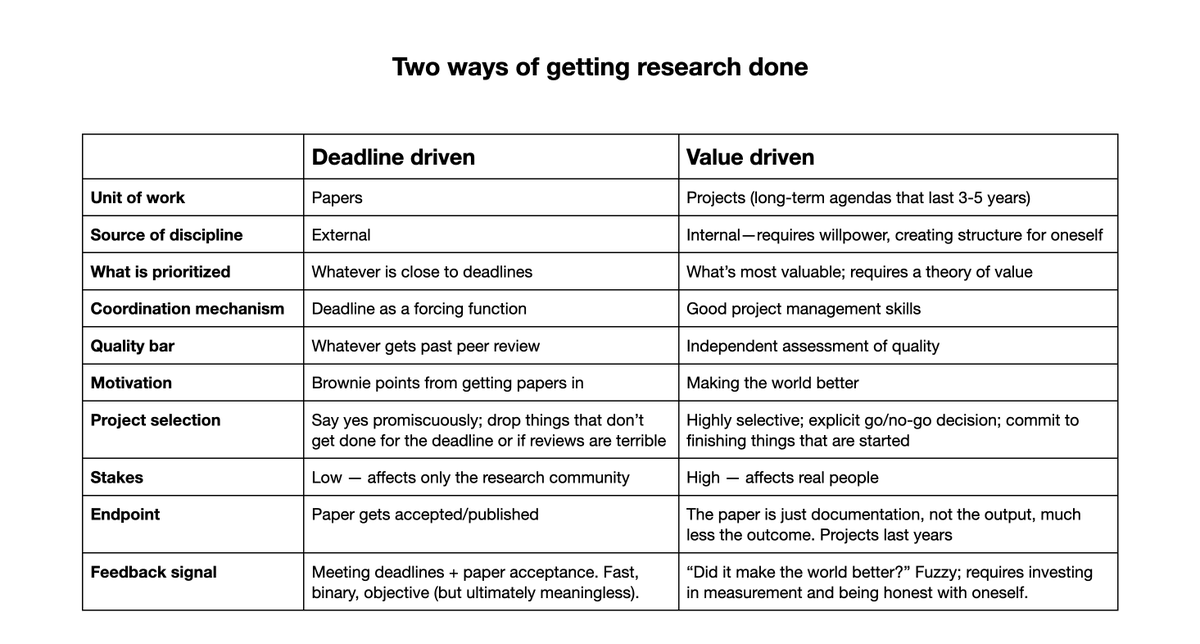
At the start of my research career I operated in a deadline-driven mode because that's what most researchers seemed to do. Gradually I discovered the value-driven way of working. I'm glad I had a supportive advisor who didn't make me chase deadlines. It took me 20 years to fully embrace the switch — it requires developing a long-term vision, willpower to create structure without deadline pressure, a theory of value, project management skills, good taste, the willingness to turn projects down, brutal honesty about whether our work is any good (even if it gets published), and a lot more. But there is no going back!
@Spotify also enables egregious abuses of IP rights by DJs worldwide in paid public performances, and obfuscates the provenance and quality of analogue masters, seriously degrading end-user experience. I’m a Pro subscriber for the gym, but find the platform genuinely disturbing.
Amongst my friends, Spotify is the lowest quality consumer app we still pay for. It certainly hasnt gotten noticeably better in the last couple years (arguably worse). So, this is not the positive look Ant and Spotify are spinning here.
Bigger picture, this is the problem with a lot of AI reporting. It reports completely meaningless metrics like deploys per day or LoC. Why don’t we start reporting consumer satisfaction reports? Actually end state research results.
All the no nuance AI people always come out and think that this is anti AI. Again, I think AI is great and Claude is great. But this is bad marketing and makes both look like clowns.
Hard to believe it’s improvisation, not choreography. Sosa and Naccuchio flew in from Tokyo and immediately gave one of the purest distillations of Villa Urquiza style I’ve ever seen. Each sequence polished by a combined 60+ years in tango and a lineage of real milongueros, plus Todaro, Dispari, and Herrera. Tangueros de Ley. 🏁⚓️🇦🇷
Although I've emphasized in my writing and speaking that AI won't cause mass job displacement, I do think knowledge workers must spend a much higher fraction of our time on learning, re-skilling, and growth, in order to stay competitive as AI capabilities increase. Simple economic logic predicts that this will lead to tensions between firms and workers.
C-suite will want rapid AI adoption because it doesn't care much about workers' long-term growth and prospects. After all, in the U.S. and many other countries, workers only stay with a firm for a couple of years, so the firm doesn't get to capture the benefits of workers taking time to invest in themselves. Since the firm controls how work gets done, it often mandates adoption patterns that don't contribute to human capital.
In contrast, workers tend to be much more careful about AI use because they are concerned about skill erosion, think beyond short-term productivity, and want to ensure that their AI use benefits their career trajectory and growth. So they resist top-down AI mandates and want to do it their own way.
The broken ladder for entry-level positions that we're all worried about is a special case of this more pervasive incentive misalignment. Firms might not want to hire entry-level workers because the amount of on-the-job training that it takes in order for workers to both master the skills themselves and to be able to drive and control AI for day-to-day tasks is too much for the firm to recoup.
How we manage this tension will have a huge impact on the pace of AI adoption and what jobs of the future will look like. I suspect that getting to a better balance between productivity and growth will require collective worker action, a few innovative companies finding new ways to re-align incentives*, and smart public policy. I'm cautiously optimistic for the long run, but I do think things will get worse before they get better.
I wonder if Japanese firms will have an advantage because they have a very different model — lifetime employment (shūshin koyō) coupled with much higher investment in worker training. Western commentators love to criticize the salaryman model as hopelessly outdated, and indeed it has led to slow digital adoption and the persistence of fax machines in 2026, but maybe there's a silver lining when it comes to AI adoption and AI-driven reskilling! The point is not faster AI adoption but better-aligned adoption that is more beneficial in the long run.
==
* One possible way could be through the idea of the "AI loop" becoming the new IP of the firm, as Satya Nadella recently advocated. This allows firms to better differentiate their AI-enabled workflows from their competitors. In Becker's classic economic model, this turns AI skills from general to firm-specific, so firms are incentivized to help workers reskill. But by the same token, the downside is that workers are more locked in to their employer because their skills are less transferable.
Thankful to have finally experienced several summer solstice nights in the enchanting depths of Moran State Park on Orcas Island. One hell of a haul getting there—but magic like none other. Among other things, there is an island within a lake within an island within a sea (patrolled by an ancient pod of killer whales). So cool.
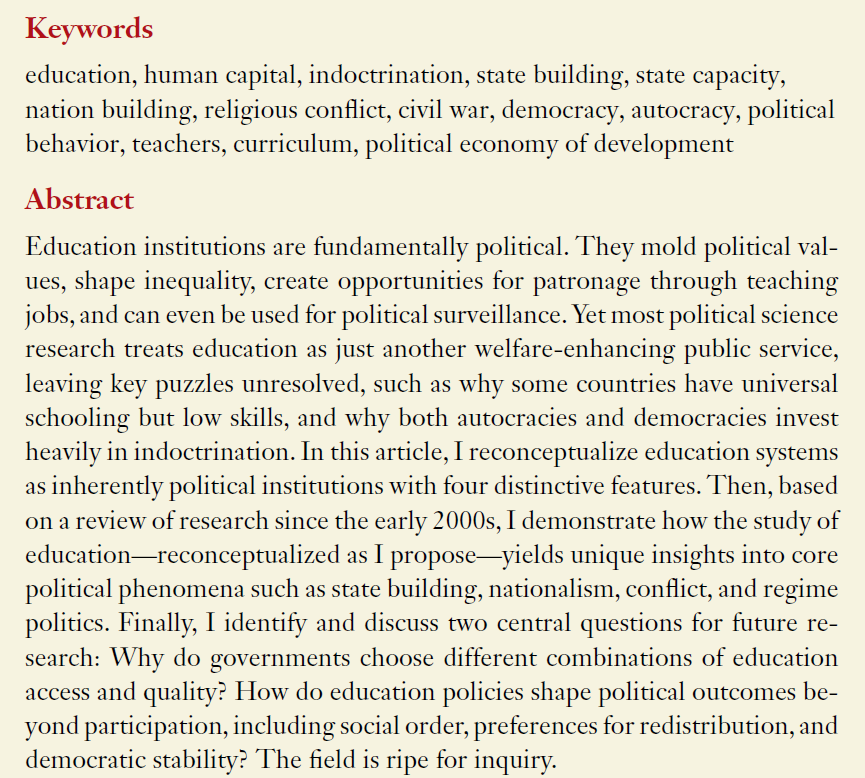
Brief pause from Messi's magic to share my new piece in the Annual Review of Political Science:
"Education as a Political Institution"
which explains why we should stop treating education as just another public service
Open access here: https://t.co/hW5rNVise5
@Noahpinion It’s been a tough location the last 6 years. Finding keen investors is the bottleneck. That’s now changing, based on what I hear from friends in the industry.
i'm obsessed with what's happening in AI reforestation right now
this Franco-Brazilian startup called MORFO took a patch of land in Brazil that was rock-hard and compacted from years of cattle farming. they replanted it using a single drone. months later the ground was covered in grass, bushes, and small trees. the land came back to life.
here's how the whole thing works.
1. drones scan the terrain with high-resolution cameras and sensors
2. AI analyzes the imagery alongside soil samples, moisture levels, slope, and surrounding vegetation
3. the system picks from a catalog of 300+ native species, deciding exactly which plants will thrive in which specific spot
4. the drone fires biodegradable seed pods packed with seeds, nutrients, and moisture at 180 capsules per minute
5. satellite and drone imagery monitors regrowth over time, with AI tracking vegetation cover and biodiversity
6. two people and one drone cover 50 hectares a day. a person planting by hand manages about one hectare.
and MORFO isn't alone. AirSeed in Australia drops 250,000 seed pods per day into bushfire-scarred koala habitat, replanting swamp mahogany that koalas depend on to survive. Flash Forest in Canada fires 50,000 pods daily into wildfire-destroyed boreal forest, planning the replanting alongside Cree Indigenous communities. re-green won Prince William's Earthshot Prize after planting 6 million seedlings across 30,000 hectares of Amazon and Atlantic Forest.
five companies across four continents built this same approach independently. nobody coordinated. the physics of the problem demanded it.
knowing which seeds belong in which soil used to require years of ecological fieldwork, manual planting crews, and budgets that made large-scale restoration nearly impossible. now two people with a drone and an AI model trained on local soil data can replant 50 hectares before lunch.
this is the AI work that'll still matter in 50 years.
I’m so excited to share this update on @Conception –
We’ve generated the first early human eggs derived from stem cells.
This is a big deal -- the potential to redefine fertility is real.
Cedrus atlantica—a mature individual of this endangered species, one of only four true cedars together with the Lebanese, Cyprus, and Deodar cedars. Cones totally saturated in the best-smelling sap. Virtually unseen in the wild.