WHO Gives 5-MeO-DMT Generic Name: Mebufotenin
According to its International Nonproprietary Names for Pharmaceutical Substances (INN) list, the World Health Organisation has given 5-MeO-DMT the nonproprietary name "mebufoteninum".
(Image from Proposed INN list)
The takeaway: under structured safety protocols, ibogaine's mortality risk appears low and concentrated in opioid detox populations — a profile that should inform clinical practice, regulatory evaluation, and prospective trial design.
Thanks for a great collaboration @barsuglia_dr & @kfshinozuka and the many participating clinics and colleagues for their willingness to share data and insights.
Preprint can be found here:
https://t.co/PJzSh9DKxl
Meeting Jesus on psychedelics? ✝️🍄🤯
NEW study: what happened when researchers gave psilocybin to (mostly) poor Black Christians in the South struggling with cocaine addiction?
Many described profound encounters with Jesus — as psychedelics tend to provide mystical experiences, sometimes amplifying pre-existing religious beliefs.
The study’s outcomes were incredible:
Participants had biologically confirmed abstinence rates approaching 100% at 6 months — an astonishing result.
Full podcast with @Drug_Researcher linked below.
A new open letter from ibogaine practitioners, researchers, clinicians, and integration specialists argues that responsible ibogaine development in the U.S. must include more than scale and clinical branding.
Preparation, integration, real-world expertise, and ethical accountability to Gabon and traditional communities cannot be afterthoughts.
https://t.co/usdSEJcb8Q
You’re hearing a lot about ibogaine lately. But ibogaine is just 1 of 30+ alkaloids in iboga. Nature doesn’t work through isolated fragments. The full plant matrix has guided healing for millennia—and will outlast single-molecule medicine. 🌿
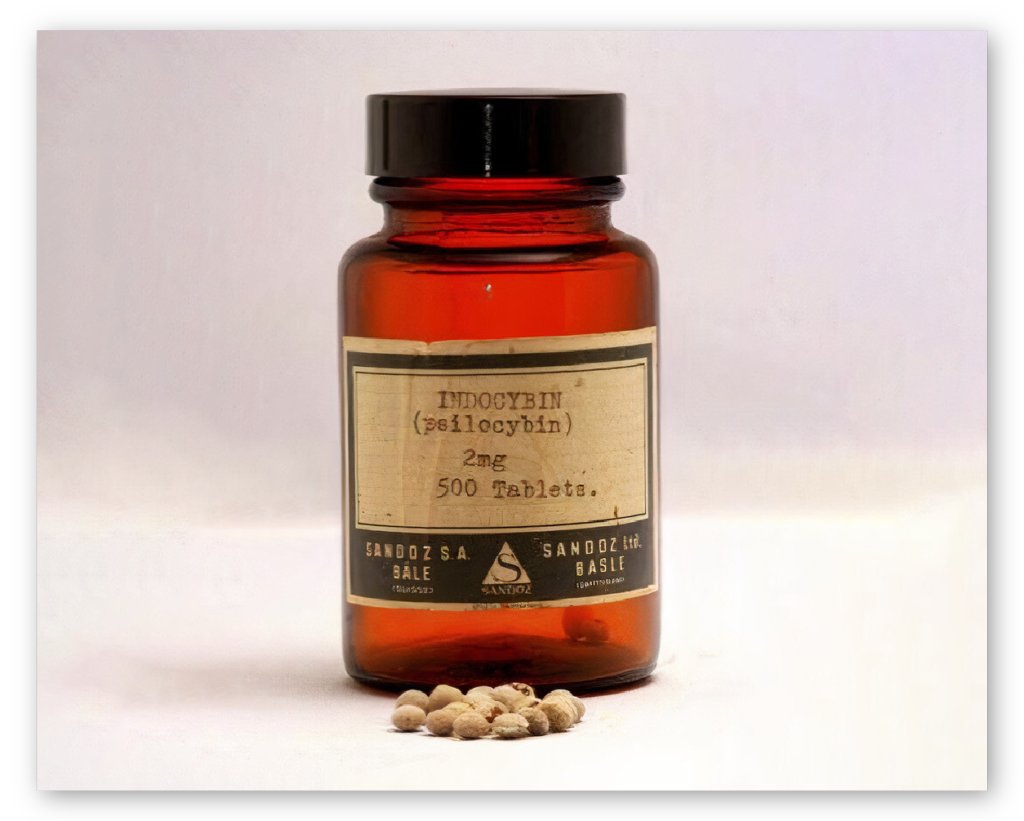
We already had legal psilocybin in 1958.
Sandoz Laboratories, the same company that invented LSD, sold pharmaceutical psilocybin legally throughout the 1960s.
It even had a brand name: 𝘐𝘯𝘥𝘰𝘤𝘺𝘣𝘪𝘯
Doctors prescribed it openly for: depression, anxiety & alcoholism.
2mg pills.
Sold all over the world.
Zero reports of serious complications.
𝗘𝘃𝗲𝗿.
It was removed from the market in 1965, not because of safety data, but because of politics.
Now we're calling it a breakthrough drug.
Same pills. Just 60 years later.
@RCarhartHarris Can’t wait to see the difference in the magnitude as a distinct predictor of therapeutic response compared to mystical-type experience, given the longstanding association and findings with MEQ, 5D-ASC, etc.
@PaulAustin3w I believe once COMP360 is approved, DEA is not compelled remove all psilocybin from Schedule I. FDA approval is product-specific, not substance-wide. Other psilocybin forms (natural) likely remain Schedule I. Reference Sativex/Cannabis. Illogical scheduling in the first place.
Check out my latest article: Is Your “Clean” Nicotine Hardening Your Arteries? What the Vascular Data Actually Show https://t.co/52zAAGn7EH via @LinkedIn
Science just did the unthinkable:
Researchers genetically modified the world's deadliest virus to trace how psilocybin physically repairs the brain...
𝗱𝗼𝘄𝗻 𝘁𝗼 𝘁𝗵𝗲 𝙚𝙭𝙖𝙘𝙩 𝗻𝗲𝘂𝗿𝗼𝗻𝘀 𝗶𝗻𝘃𝗼𝗹𝘃𝗲𝗱.
We've finally figured out why one trip can change your entire life 🧵
This is a map of repetition among all symptoms in the DSM-5.
The majority of symptoms are found across disorders, yet we treat them as separate entities.
Honored to be interviewed here by @abbierosner Rosner, who has a unique focus on psychedelics, aging, and elderhood.
In Sickness and in Health – Ibogaine’s Promise for the Aging Brain
https://t.co/5jLg7UEuel
@LauraLoomer@RobertKennedyJr Why would you assume that Matt Zorn called himself that. A news article did. If you are going to be the troll queen at least dont make 1000 assumptions
“In this review, we consider 24 studies, which included 705 individuals receiving ibogaine or noribogaine. This review includes two randomized, double-blind, controlled clinical trials, one double-blind controlled clinical trial, 17 open-label studies or case series (including observational or retrospective studies), three case reports, and one retrospective survey.”
https://t.co/jBBh2NOPKm