Das ZDF erfindet einen deutschen Giftgas-Einsatz in Südwestafrika, die Deutsche Welle erfindet Sklavenschiffe des deutschen Kaiserreiches und der Bayerische Rundfunk erfindet eine falsche türkische Volkszugehörigkeit des Nikolaus, die dieser nie hatte. Kein Wunder, dass der Bayerische Rundfunk erst kürzlich Marc Keller alias "Marcant" für "politische Aufklärungsarbeit" auszeichnete, obwohl der neulich alle Ostpreußen zu Polen erklärte.
Keine gute Bilanz des öffentlich-rechtlichen Rundfunks. https://t.co/BDtVv2w7PN
Folge @GanzeGeschichte für mehr!
Pastor Riemenschneider zur heuchlerischen Kirche und dem AfD-Nikolaus. Das aktuell größte Problem in Deutschland, könnte man meinen.
PS: der AfD-Nikolaus ist momentan ausverkauft. 😎
Brüssel bestellt, du bezahlst!
Seit Juli 2024 muss jedes neu zugelassene Auto in der EU einen sogenannten „intelligenten Geschwindigkeitsassistenten“ haben, der den Fahrer warnt, sobald er die erlaubte Höchstgeschwindigkeit ��berschreitet. Seit Juli 2026 ist zusätzlich ein Warnsystem Pflicht, das erkennt, wenn der Fahrer abgelenkt ist – meist eine Kamera, die ihm beim Fahren ins Gesicht schaut. Den Tempo-Assistenten darf man zwar abschalten, aber nur bis zum nächsten Start des Fahrzeugs. Dann ist er wieder an. So steht es in der EU-Verordnung 2019/2144.
Während Brüssel immer neue Pflichttechnik vorschreibt, wird das Auto für normale Bürger zum Luxus. Ein kleiner Verbrenner kostete laut ADAC im Juli 2024 im Schnitt 22.591 Euro, 2014 waren es noch 13.041 Euro. Damals entsprach das rund 60 Prozent eines durchschnittlichen Jahres-Nettoeinkommens, 2024 waren es fast 78 Prozent. Ein Teil davon geht auf die Inflation und den Wegfall günstiger Einstiegsmodelle zurück. Doch auch die Brüsseler Vorschriften kosten: Den VW up! hat VW eingestellt. Man müsste „eine komplett neue Elektronik-Architektur integrieren“, das wäre „schlichtweg zu teuer“, sagte VW-Markenchef Thomas Schäfer. Hintergrund sind laut dpa die neuen Cybersicherheitsvorgaben für Neuwagen ab Mitte 2024.
Für Familien, Rentner und Pendler heißt das: Der günstige Kleinwagen verschwindet, gekauft wird ein größeres, teureres Auto mit Technik, die niemand bestellt hat. Und selbst danach ist nicht Schluss: Die Kartendaten, mit denen der Tempo-Assistent die Tempolimits kennt, muss der Hersteller nur sieben Jahre ab Herstellung kostenlos aktualisieren. Danach darf er eine „angemessene Gebühr“ verlangen. Für ein System, das sich niemand ausgesucht hat.
Mein Name ist Anja Arndt und als Abgeordnete der ESN-Fraktion im Europäischen Parlament sage ich ganz klar:
Schluss mit der Bevormundung aus Brüssel! Assistenzsysteme gehören als freiwilliges Extra in die Aufpreisliste, nicht als Pflicht in jedes neue Auto. Der Bürger soll selbst entscheiden, was er in seinem Auto haben will und wofür er bezahlt. Freie Fahrt statt Brüsseler Bevormundung!
Why is Canada getting poorer than US. Not because it has less, it is because it cannot churn out more.
Credit for the video to Neighbors Apart
Grab a coffee: 9min.
JOHN CLAUSER, 2022 PHYSICS NOBEL PRIZE WINNER:
"I can very confidently assert, there is NO climate emergency."
“As much as it may upset many people, my message is the planet is NOT in peril. … atmospheric CO2 and methane have negligible effect on the climate.
The policies government have been implementing are total unnecessary and should be eliminated.
So far, [we] have totally misidentified what is the dominant process in controlling the climate, and all of the various models are based on incomplete and incorrect physics.
The dominant process, is “the cloud-sunlight-reflexivity thermostat mechanism.
Clouds are all bright white, and they reflected 90% of the sunlight back into space making them the most crucial yet most overlooked aspect of the climate system.
Two-thirds of the Earth are ocean. The Pacific Ocean alone is half the Earth. The average cloud cover for the Earth is 67%; about 50% over land and 75% over oceans.
I claim that the above conspicuous properties of clouds are the missing part of the puzzle.
I can very confidently assert, there is no climate emergency."
Die am stärksten vom Staat regulierten Sektoren:
- Die Gesundheit
- Die Bildung
- Die Wohnungsversorgung
- Die Energie
Die am stärksten degradierten Sektoren:
- Die Gesundheit
- Die Bildung
- Die Wohnungsversorgung
- Die Energie
Sicherlich ein Zufall.
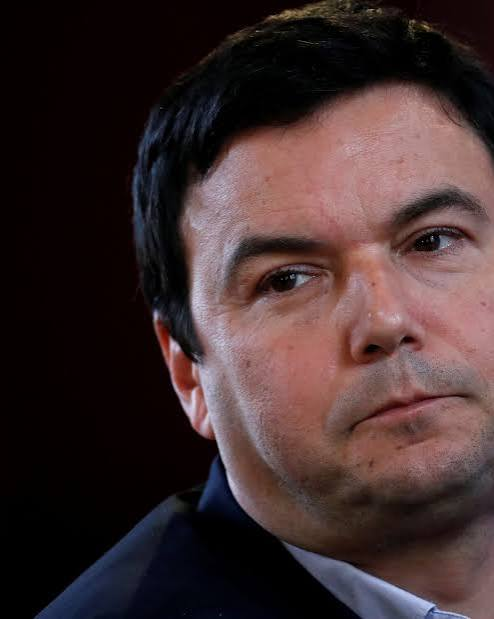
Thomas Piketty built a global reputation on a single, seductive claim: capital accumulates faster than the economy grows, causing wealth to concentrate permanently at the top, and only aggressive redistribution fixes this.
His 2013 book "Capital in the Twenty-First Century" sold over three million copies. Politicians treated it like scripture. But the entire foundation is rotten.
Piketty's central formula, r > g (the return on capital exceeds economic growth), relies on projecting historical capital returns forward indefinitely. This ignores capital consumption, entrepreneurial loss, and the constant destruction of old fortunes through bad investments, generational spending, and market competition. Andrew Carnegie's grandchildren did not control U.S. Steel. Vanderbilt money scattered within two generations. Markets punish miscalculation without mercy, so the aristocratic permanence Piketty fears keeps failing to materialize.
Somehow, that isn't even the most intellectually dishonest part of the book. Piketty treats capital as a static pool sitting on top of society, extracting rent from you while doing nothing useful. Capital is deferred consumption channeled into productive tools, which is why real wages in market economies rise alongside capital accumulation, not despite it. Every factory, every server farm, every distribution network that employs you and cheapens the goods you buy exists because someone saved instead of spent.
His proposed solution? A global wealth tax reaching up to 80 percent on high incomes, requiring an international enforcement apparatus with no exit option for capital.
Yet another manufactured crisis, built on dishonest numbers, and the solution is always to give globalists more of your hard-earned money.
La población mundial se multiplicó por más de siete entre 1820 y 2015 y, sin embargo, la pobreza extrema cayó de manera drástica. Esto desmonta la idea de que el capitalismo funciona como un juego de suma cero, en el que para que una persona prospere otra necesariamente debe empobrecerse. El capitalismo, apoyado en la propiedad privada, el comercio, la innovación y la acumulación de capital, permite crear nueva riqueza y generar resultados de suma positiva.
Durante gran parte de la historia, casi toda la humanidad vivió en condiciones de pobreza extrema. Con la expansión de la industrialización y de las economías de mercado, no solo aumentó la población, también creció enormemente la cantidad de personas que pudieron abandonar la miseria. El gráfico muestra que el número de personas fuera de la pobreza extrema pasó de ser prácticamente insignificante a representar a la inmensa mayoría de la población mundial.
Una persona promedio de la actualidad tiene acceso a alimentos, medicamentos, transporte, información, comunicaciones y tecnologías que ni siquiera los reyes más poderosos del pasado podían imaginar. No significa que todos sean más ricos que aquellos monarcas en términos patrimoniales, sino que disfrutan de una calidad de vida, una seguridad y unas posibilidades materiales que durante siglos estuvieron fuera del alcance de casi toda la humanidad.
La historia económica demuestra que la riqueza no es una cantidad fija que deba repartirse. Puede producirse, multiplicarse y extenderse. Allí donde se respetaron la libertad económica, la propiedad privada y el intercambio voluntario, la humanidad logró su mayor avance contra la pobreza.