I was hired fully remote.
Then they changed policy and wanted people back in the office.
I said no.
I stayed in Bali.
The contract ended.
So I launched my own UX studio.
being a web3 designer is basically:
users: “why is this so complicated?”
devs: “because blockchain”
me: tries to make chaos look intentional
anyone else designing in this ecosystem?
@LukeADesign this is for the people who don't enjoy the process and want to come up with something quick just to be done with it, and wouldn't know what real inspiration from those deep dives feel like.
if x402 + ai agents take off, we might end up with two markets on the internet:
- humans
- agents
and they care about completely different things.
humans respond to:
- branding
- storytelling
- social proof
- beautiful ui
agents care about structured signals:
- price
- latency
- reliability
- api schema
- success rate
to an agent, “marketing” might look like this:
endpoint: /route
price: $0.0004
latency: 120ms
success_rate: 99.8%
so we might be entering a world of machine-readable marketing.
people are starting to call this things like:
- agent-optimized APIs
- machine discoverability
- ai-native services
which basically means your product must be:
- easily callable
- easily priced
- easily comparable
seo for robots.
ironically, that makes good ux even more important for humans, because humans still decide which tools agents are allowed to use.
by now you’ve probably seen some talk about x402.
here’s what it actually is:
x402 is built around an old HTTP status code:
402 - payment required.
the idea is simple: a service can ask for payment directly inside an internet request.
example:
- an AI agent asks a weather API for data.
- request → “what’s the weather in bali?”
- the server replies:
- 402 Payment Required – $0.001
- the agent pays.
- the request runs again.
- now the server responds with the weather data.
no accounts.
no subscriptions.
no API keys.
just request → payment → response.
why people are talking about this:
it could allow software and AI agents to pay for services automatically.
instead of signing up for APIs, software could simply request data, pay a tiny amount, and move on.
think:
- data APIs
- compute
- trading routes
- analytics
- content
all pay-per-request.
like turning parts of the internet into small vending machines.
it’s still early.
but the core idea is interesting:
bringing payments directly into the internet protocol layer.
We built Yakz to make routing across CEX + DEX actually usable.
Today the testnet is live.
If you try it, break it, or hate something, tell me.
That’s how this gets better.
🦬 YAKZ Testnet is LIVE.
A liquidity aggregator routing across CEX + DEX.
Come test the routes.
Break the pipes.
Tell us what to fix.
App → https://t.co/LKOYNApvYh
Docs → https://t.co/3P5yIbixsU
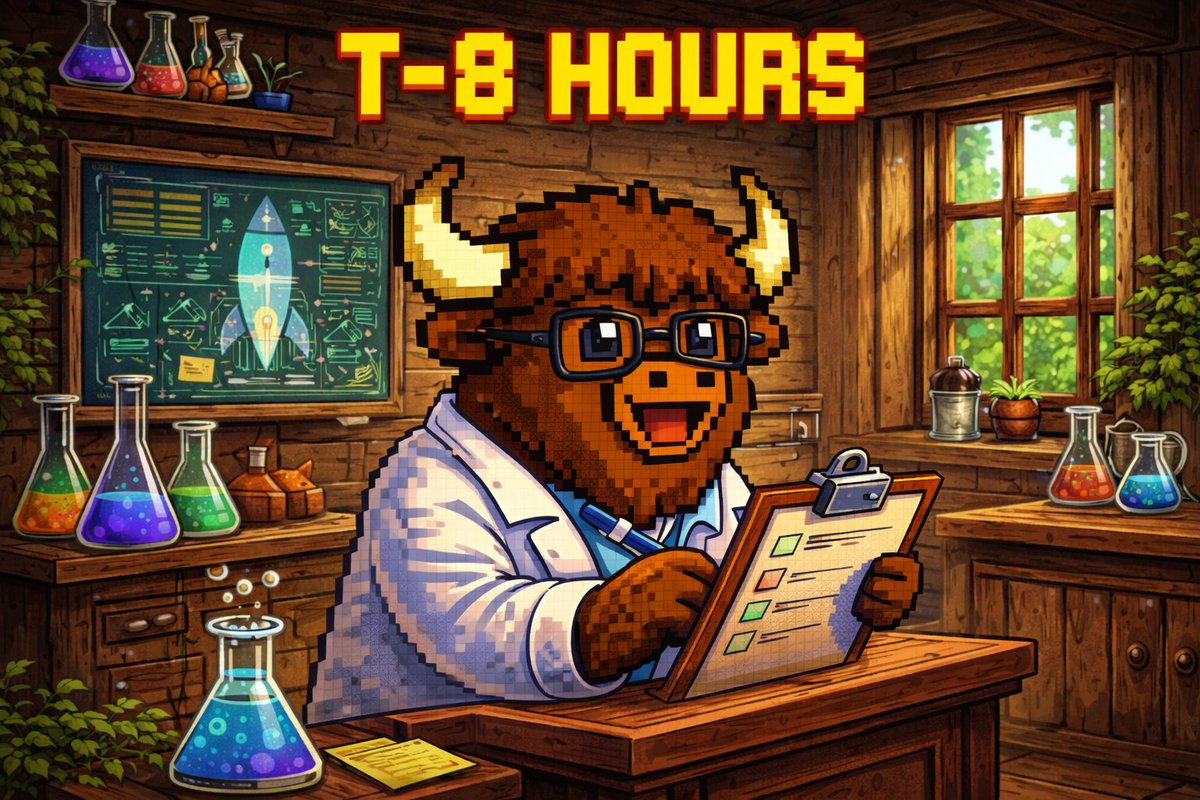
T-8 HOURS. 🦬
Final checks before Yakz Public Testnet.
The Yak is preparing the routes.
Docs are live.
Explore how it works ↓
📖 GitBook: https://t.co/4n0Gy9QU7g
Testnet opens today.
@PeterROCK_ why not approach this with the usual response: “it depends”? it depends on:
- the product,
- the target users,
- the context of use,
- the feature set.
there isn’t a universal direction that makes sense for every case.
Developments follow demand.
If people can’t use it, they won’t adopt it. And without adoption, there’s no funding, regulation, or global scale.
Also, crypto is bigger than financial rails for AI. It’s governance, ownership, coordination.
AI may transact on it. Humans still decide if it matters.
So yes, it needs to be human-friendly first.
$14 billion.
that is how much got stolen in crypto last year. 🚨
we usually treat security like it's strictly a smart contract dev problem, but honestly? trust is a UX problem.
if your dApp looks sketchy, has zero tooltips, asks for blind permissions, and relies on the "trust me bro" aesthetic, people are going to bounce. we aren't just designing interfaces anymore, we are designing psychological safety.
build guardrails. 🛡️
@TTrimoreau talk to users.
avoiding this is like being lost, thinking this is a familiar place and i can find my way around, and not asking the way to someone local, insisting that i'm not lost.
makes me lose time, get confused, and miles away from where i need to be.