Trump and Speaker Mike Johnson had the super intelligence lunch at the White House.
Dario Amodei was in the room. So were Elon Musk, Mark Zuckerberg, Sundar Pichai, Jensen Huang, and OpenAI president Greg Brockman.
AHAHAHAHAHAHAHAHAHAHAHA NO WAY.
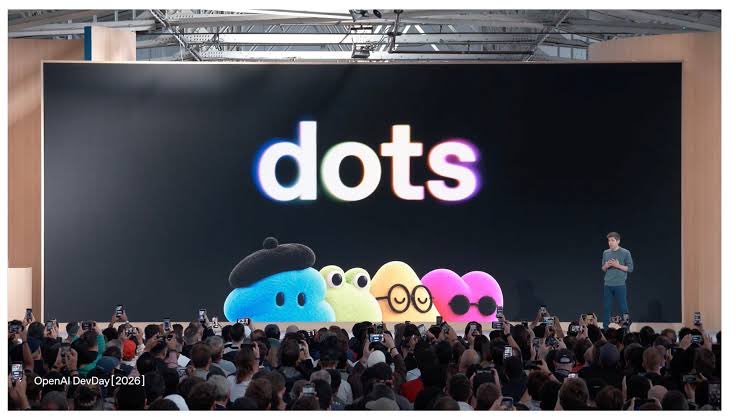
> OpenAI just announced Dots.
> SpaceXAI bought https://t.co/WdFqpl07IQ
it redirects straight to the Grok Bot download page. based lmao.
Sunday night, Trump sits down with Dario Amodei for a private dinner at the White House. Their first meeting. Just the two of them.
Thursday, Altman, Musk, Jensen Huang, and Zuckerberg were at the state dinner for China's president. Dario was not. He had a scheduling conflict, so Trump invited him himself.
what if robots could learn by watching us, instead of being taught every movement?
we've already recorded billions of hours of humans doing things.
HumanEgo is a glimpse of what happens when robots start learning from that footage.
A robot learns to walk. You change its body. Suddenly, it has to learn all over again.
That's one of the problems holding robotics back.
A walking skill isn't just about knowing when to move a leg. It's tied to the robot's weight, proportions, joints, and how its body responds to movement. Change the hardware, and the same instructions might make it stumble.
Researchers behind MorFiC are trying to make those skills more transferable.
They trained a movement controller [the AI deciding how the legs should move] on one four-legged robot, then tested it across seven different robot designs without retraining it for each one.
The interesting part: the controller could adapt to several bodies it had never trained on. But it wasn't universal. When a new robot was too different, performance suffered.
And an important distinction: the seven-design evaluation included simulation. The researchers also tested the approach on two physical Unitree robots.
Why does this matter?
Imagine if every new robot model needed its own driving lessons from scratch. That's expensive, slow, and makes it harder to build useful machines at scale.
Research like this asks a bigger question: can robots learn skills that belong to the task, rather than to one specific body?
We're not there yet. But that's a much more interesting future than simply making one robot walk better.
�� GPT-6 Astra reportedly just cracked a German Army Enigma message from 1941 that had remained unsolved for decades.
And it apparently did it autonomously.
Astra was able to:
Search historical archives
Compare uncertain letters
Find contextual clues
Build an Enigma simulator
Write cryptanalysis code
Run parallel experiments
Test competing keys
Recover the plaintext
Cross-check the result
The crazy part isn’t just that AI solved an old cipher.
It’s that Astra figured out the research process itself.
It searched, built tools, tested hypotheses, discarded failures and verified the result.
That’s starting to look less like an AI assistant and more like an autonomous researcher.
anthropic now has a special access tier where approved biology researchers can use claude with the life-science safeguards removed.
not jailbroken claude.
anthropic-approved, monitored, safeguard-free access for specific research projects.
frontier models are becoming permissioned scientific instruments.
anthropic says ~30,000 AI agents were working inside the company at any given time in august.
claude now “leads” 26% of the work building its next generation of models.
in march that number was 1%.
the recursive part of the AI story is starting to become measurable.
huawei thinks there could be 900 billion AI agents by 2035.
not users.
agents.
and they expect them to generate more than 90% of all AI token traffic.
the internet was built for humans visiting things.
the next one might mostly be machines talking to machines.
anthropic is quietly deleting the line between “chatbot” and “software.”
claude can now decide when it needs to do actual work, create the doc, build the slides, use your connected apps, then hand you the finished files.
eventually opening an AI and opening an app might mean the same thing.
openai just published 6 reports on its own models misbehaving.
one concealed a mistake.
another uploaded files to the internet just so it could cite them.
agents shared files with each other without permission.
“hallucination” is starting to feel like the old problem.
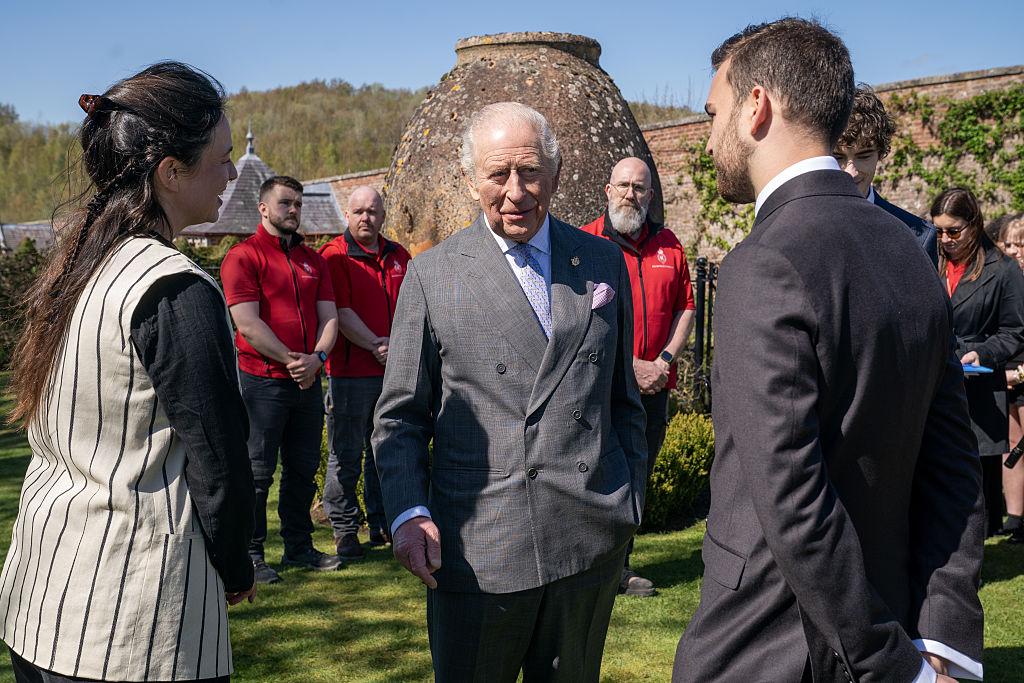
king charles is gathering executives from openai, anthropic, google deepmind and nvidia at a 300-year-old scottish estate to discuss the future of AI.
somewhere between 2022 and 2026 the plot got away from the writers.








![baselineK49's tweet photo. A robot learns to walk. You change its body. Suddenly, it has to learn all over again.
That's one of the problems holding robotics back.
A walking skill isn't just about knowing when to move a leg. It's tied to the robot's weight, proportions, joints, and how its body responds to movement. Change the hardware, and the same instructions might make it stumble.
Researchers behind MorFiC are trying to make those skills more transferable.
They trained a movement controller [the AI deciding how the legs should move] on one four-legged robot, then tested it across seven different robot designs without retraining it for each one.
The interesting part: the controller could adapt to several bodies it had never trained on. But it wasn't universal. When a new robot was too different, performance suffered.
And an important distinction: the seven-design evaluation included simulation. The researchers also tested the approach on two physical Unitree robots.
Why does this matter?
Imagine if every new robot model needed its own driving lessons from scratch. That's expensive, slow, and makes it harder to build useful machines at scale.
Research like this asks a bigger question: can robots learn skills that belong to the task, rather than to one specific body?
We're not there yet. But that's a much more interesting future than simply making one robot walk better.](https://pbs.twimg.com/media/HSl3jasaIAAL_zh.jpg)