I am late to it, but this micro website, on how the marvelous and magical has become commonplace, is truly amazing.
Via @mattyglesias
https://t.co/m5pY53EgZ5
If you've ever wondered why smart TVs are so cheap, this is why.
@log4j rooted his Samsung and found an always-on hot mic, automatic content recognition, geolocation, network mapping, ad targeting and user profiling, shared with Samsung's "400 partners".
A lot of it can be blocked in <15 min, wrote a basic guide below.
What your TV is doing
The main culprit is ACR (automatic content recognition). Your TV screenshots what's on screen, fingerprints it, and sends it home to build your ad profile. Samsung does it every 500ms, LG every 10ms [1].
What is insane: it happens on connected devices too.
Plug in your laptop, your console, your work machine, and your TV can fingerprint that via HDMI [1].
He also found that if your Samsung doesn't have a mic, it'll look for one from a connected soundbar or bluetooth device.
https://t.co/vNdTnIQ6KF
It's on by default, and you likely agreed to it on the setup screen you clicked through in 10 seconds.
Step 1: Turn off ACR
Samsung: Terms & Privacy → Viewing Information Services
LG: Live Plus
Vizio: Viewing Data
Roku: "Use info from TV inputs"
Sony/Google TV: Samba Interactive TV
Menus vary by model, but those are the names to look for. While you're in there, opt out of interest-based ads, reset your advertising ID, decline every optional privacy agreement, turn off voice recognition, and delete apps you never open.
Step 2: Give smart devices their own network
Put the TV, cameras, speakers and vacuum on your router's guest/IoT network. The logic is simple: these devices rarely get patched. If one gets compromised (getting drastically more frequent with AI), it shouldn't be able to see your other devices or home network.
Step 3: Block trackers for the whole house with DNS-level filtering
NextDNS (cloud-based) is easy and has a solid free plan. Pi-hole is a little bit more work if you prefer self hosting. For simplicity we'll focus on the former.
1. Sign up at https://t.co/IwhafVWVM8 (free tier is plenty)
2. Privacy tab: add a blocklist (OISD is a good bet) and turn on Native Tracking Protection for Samsung, LG, Roku, Amazon (see attached image)
3. Setup tab: copy your endpoint
4. Paste it into your router's DNS settings as DNS-over-HTTPS/TLS (or use the IPs + "Link IP" if your router only does plain DNS)
5. Bonus: block outbound port 53 except to your router. Some devices hardcode their own DNS to get around you
Then open the NextDNS logs and watch how often your TV phones home. It's eye-opening. If an app or update breaks, find the domain in the logs and allowlist it.
Why they do this
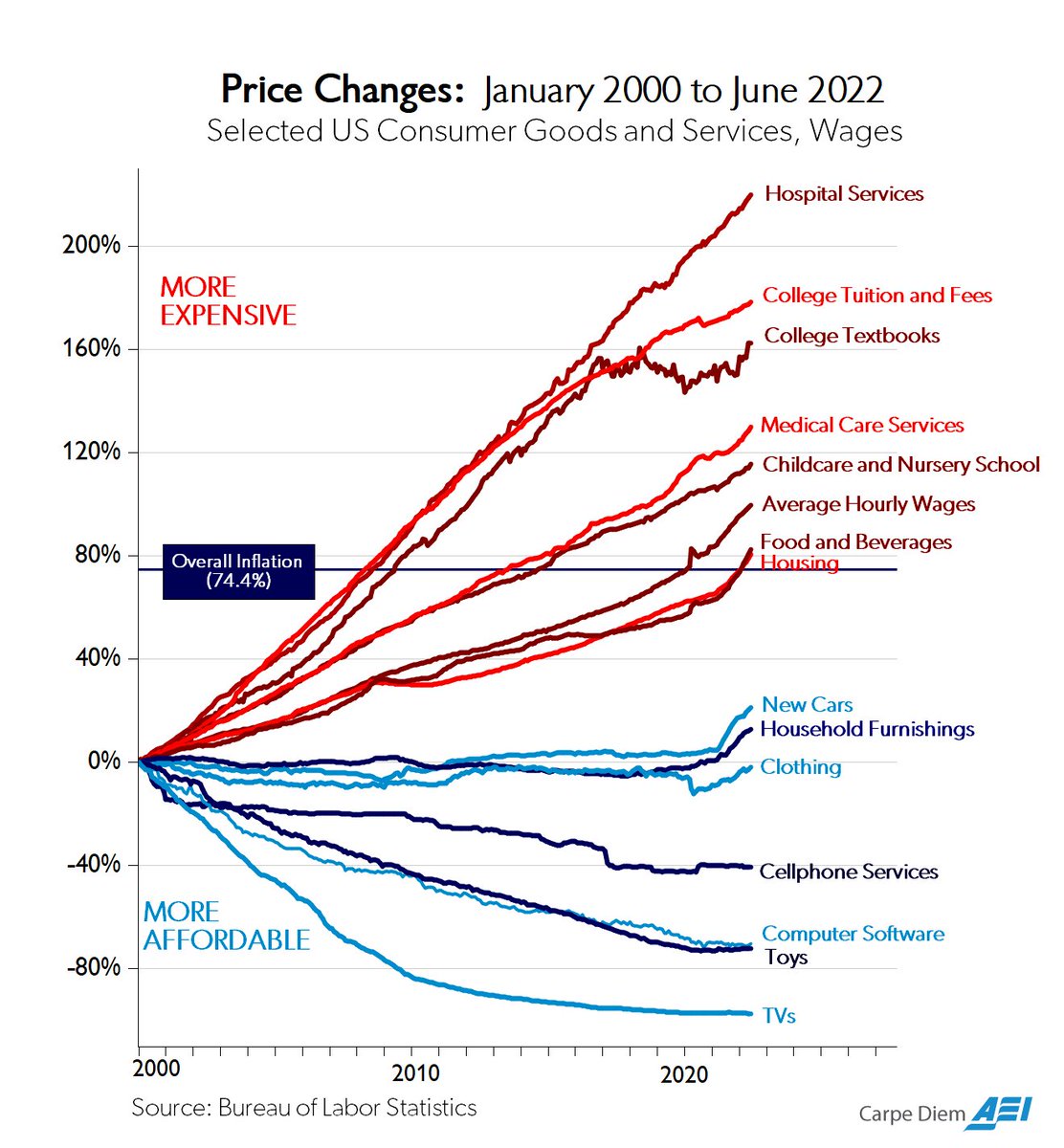
TV prices are down 97% since 2000 [2]. Most of that is better manufacturing and brutal competition. But once margins on the hardware hit zero, the cost moved to you.
In Q3 2024, Vizio lost $6.7M selling TVs and made $115.8M in gross profit from ads and viewing data [3]. They've said on earnings calls that they keep TV prices low to grow the audience they sell to advertisers. Walmart bought them in 2024.
This isn't a conspiracy theory either. Vizio paid $2.2M to the FTC in 2017 for tracking 11 million TVs without consent. Last December, Texas sued Samsung, LG, Sony, Hisense and TCL over ACR. Samsung and LG have since agreed to stop collecting that data without explicit consent [4].
TL;DR
1. ACR off
2. Ads + voice off
3. Smart devices on their own network
4. NextDNS filtering on the router
Sources:
[1] ACR study: https://t.co/S1IS8lXNbA
[2] Cost of US consumer goods: https://t.co/nclXELXcbd
[3] Vizio Q3 2024: https://t.co/CrVbwc9ZXk
[4] Texas v. Samsung: https://t.co/wFOUdeh1if
So basically, today PHP got two critical bugs that let anyone run code on your server without even logging in, which is bad, and then the details leaked before the patch was even out, which is worse, and it works on WordPress and MediaWiki and Magento and Joomla and Laravel, and Censys says like 1.5 million servers are running a version with no fix, so the NSA was like "take your system offline," and the FBI was like "take your system offline," and CISA and the UK and CERT-EU were all like "take your system offline," and then the Prime Minister of Japan, the actual Prime Minister, posted at 5:55 in the morning telling 48.8 million people to take their system offline, so everyone took their system offline, like the Dutch cybersecurity agency took its own website offline, and the Dutch parliament went offline, and the Port of Rotterdam went offline, and Finland and France and Denmark started pulling government sites, and Wikipedia went down, and https://t.co/QlOXb3COq3 went down, and Asana and GOG and Something Awful went down, and the University of Vienna's webmail went down for some reason, and that's just PHP. Because GitLab also dropped a CVSS 10.0, which is the highest score they give out, for a bug that's been there since 2014, so that's every self-hosted GitLab for twelve years, and then LiteLLM 1.107.0 got hijacked and shipped a credential stealer and a remote access trojan in every single wheel and the Docker images, including latest, and you didn't even have to import it, just installing it was enough, and it's the second time this year, and then Railway paused every deployment on the entire platform because someone got into the environment variables, so now everyone has to rotate every secret they've ever stored there, and TiDB Cloud said someone was walking around inside with stolen credentials for basically a month and an extortion group says they took 10.6 terabytes, and Zeabur got breached for the second time in two months and is just shutting down, like the whole company, and Node.js patched remote code execution and a TLS bypass, and CISA says Plex is being actively exploited, and someone took over 300 Tor exit relays to steal SSH passwords, and SafePay ransomware has hit over 600 critical infrastructure orgs, and India's biggest bank filed a data loss incident, and Japan has been in an official state of emergency in cyberspace since October 9, which honestly explains the 5:55 AM post. Oh, and eMudhra, a certificate authority that's issued over 60 million certificates, whose entire job is proving websites are who they say they are, was supposed to be using private keys that are random numbers over a hundred digits long, and one of them was 4. Just 4. And the others were like 66 and 237. Anyway, it's Wednesday.
Why are Euro auto brands losing to China? Well... let's look at costs, productivity, employee output, etc. Hard to compete with this.
"Using VW’s auto plants as a proxy, labor costs, labor productivity, sick leave rates, unit costs and electricity costs in its China plants are a fraction of what they are in Europe, so no one should be surprised at the market share shifts on the right. Even the imposition of 17%-35% tariffs has done little to slow European imports of Chinese EVs."
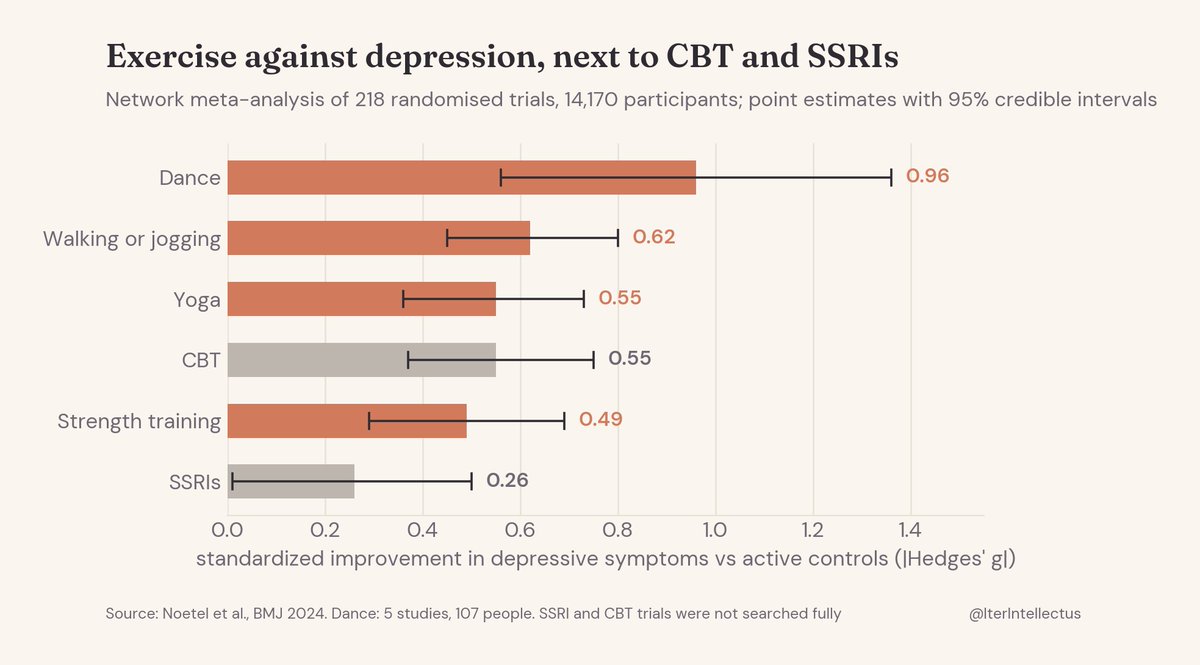
walking or jogging reduce depression about as much as therapy and have a much larger effect than SSRIs
the largest effect in the entire analysis was from dancing
Monet’s heavy use of white was groundbreaking—but dangerous.
His “snowy peaks” were painted with lead, a toxic metal.
Today, conservationists handle Monet’s works with caution. #artbots#monet
Today you need less than $500 of hardware to locally run a model that outperforms models that were the best in the world 6 months ago
Welcome to the future
Anthropic and OpenAI cannot become profitable unless they can reduce the ratio of training cost to inference profits. In the long run, their survival may depend on outlawing competitive open source models. This can only be done under the guise of safety regulation.
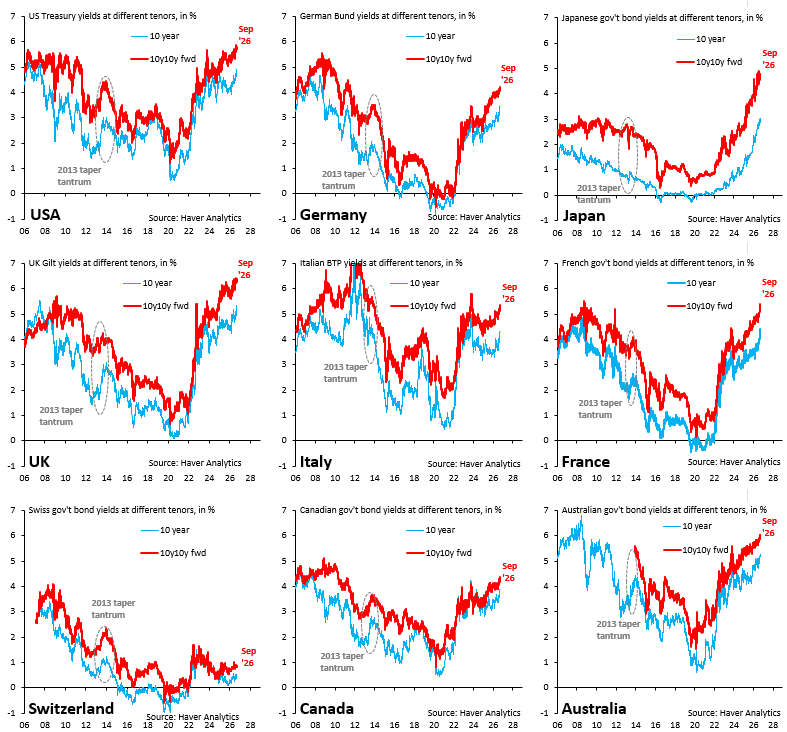
What's amazing about the global bond sell-off is how many people are saying rising yields are about strong growth. Seriously!? You think rising yields in Japan, France, Italy or UK are about growth? We're in a global debt shock. Not a global growth shock.
https://t.co/jYf8dyylvD
El Púgil en reposo (también conocido como el Púgil del Quirinal o Púgil de las Termas) es una obra maestra de la escultura de bronce helenística datada entre los siglos IV y I a.C..
Esta icónica pieza rompe por completo con el idealismo clásico de perfección y juventud, optando en su lugar por un realismo crudo y profundamente humano.
Actualmente se conserva y exhibe en el museo Palazzo Massimo alle Terme en Roma.
Representa a un boxeador profesional veterano sentado justo después de un combate. Gira la cabeza abruptamente hacia su derecha con un gesto de fatiga, vulnerabilidad o sorpresa.
Su cuerpo atlético muestra el desgaste de los años y de la brutal disciplina. Tiene los hombros caídos y la espalda encorvada por el cansancio.
El rostro presenta orejas de coliflor (típicas de los luchadores), la nariz rota y desviada, y múltiples cortes.
La estatua fue fundida en ocho partes mediante la técnica de la cera perdida. El escultor incrustó cobre de tonalidad roja en los labios, cortes y heridas para simular de forma hiperrealista la sangre fresca y los hematomas.
Lleva puestos los himantes, unos gruesos guantes o vendajes de cuero con refuerzos que se utilizaban en los combates de la antigüedad.
La escultura fue desenterrada en marzo de 1885 en las laderas de la colina del Quirinal en Roma, cerca de las antiguas Termas de Constantino. Fue hallada junto al Príncipe helenístico, otra destacada pieza de bronce.
Los arqueólogos determinaron que ambas piezas fueron cuidadosamente enterradas en la antigüedad y rellenadas con tierra tamizada para proteger el bronce de la corrosión y el vandalismo, lo que permitió que sobrevivieran casi intactas hasta nuestros días.
This is the exact same way France's Airbus lost a $19 billion contract with Iran. Germany is now being forcefully decoupled from Russia, despite the fact that its entire modern export-based economy was built on the foundation of cheap Russian energy. Today, ASML, the most valuable technology company in Europe, is being pressured by Washington to cut ties with China, a market that accounts for roughly 40% of its total exports.
Europe needs to wake up and realize that Russia, China, and Iran are not just surviving these sanctions; they are adapting to them. Russia's production of standard artillery shells and heavy munitions currently outpaces that of the United States and all European NATO members combined. Their S-series integrated air defense systems remain globally respected, while American defense systems are frequently humiliated on the global stage by Iranian-backed asymmetric forces. Furthermore, despite facing unprecedented financial sanctions, Russia's electronic warfare capabilities remain among the most formidable in the world, and they continue to maintain world-class expertise in solid and liquid-fuel rocket propulsion, ballistic missiles, and hypersonic glide vehicles.
Meanwhile, heavily sanctioned Iran is actively confronting the most technologically advanced maritime superpower on earth and is still navigating the region from a position of geopolitical strength. In contrast, "free" Europe, which is happily aligned with American hegemony and can supposedly engage in free trade with the entire globe, is currently struggling to fight seasonal wildfires, secure affordable energy for its citizens, and prevent the rapid deindustrialization of its own economies.
China, on the other hand, continues to accelerate. They have built some of the most powerful supercomputers on the planet, mastered the mass production of advanced gas turbines and next-generation jet engines, and are rapidly developing their own indigenous semiconductor supply chains to completely bypass Western tech restrictions.
The sanctions are simply not working. The BRICS bloc continues to expand and excel, while European manufacturing companies are shutting down their domestic plants and relocating to the United States. China can eventually survive without ASML, but ASML cannot survive losing a customer that buys 40% of its equipment while still hoping to maintain its financial research and development edge in the global industry. Western Europe is being economically decimated, yet its political leaders seem content with merely managing this decline rather than asserting their strategic autonomy and defending their own industrial sovereignty.
1/ I'm a cardiologist. I've practiced for twenty-five years, through a lot of "breakthroughs" that turned out to be press releases. So understand the weight of what I'm about to say: I have never seen a single week in medicine like the one we just lived through.
In the span of a few days, four separate scientific breakthroughs landed. The stock market treated them as four unrelated stories and sent a handful of biotech companies soaring. But that's the shallow read. Look closer and they are not four stories at all. They are four faces of the same story — the biggest shift in medicine since the discovery of antibiotics.
Medicine is becoming programmable. Individualized. Written for one human being instead of the average of millions.
Let me walk you through exactly what happened, in plain language, and show you where this is actually headed. Because the future arrived quietly this week, and most people scrolled right past it.
Interesting conversation with a growth lead at a $100M+ ARR AI company. They run about a 100 seeded Reddit accounts driving 15M views/month, for them to be cited in top 3 of their category on Claude, GPT & Gemini.
LLM citations are the new mass discovery channel.
🇪🇺🇨🇳 China’s assault on Europe was planned.
China engineered this trade asymmetry for decades.
🔸 EU dependencies on China rose ~260%
🔸 China’s dependencies on the EU fell ~53%
🔸 US dependencies on China rose ~330%
🔸 China’s dependencies on the US fell ~51%
China replaced foreign inputs with domestic production through state long-term planning.
This was not accidental globalization.
Europe now needs a coordinated strategy to reverse it.
The Fed put isn't under the stock market.
2022 proved it: stocks fell hard and the Fed raised rates seven times anyway.
It's under the debt. On Tuesday that debt crossed $40 trillion.
Bitcoin's 21 million is the other side of that trade. https://t.co/iPCFcoEwah