Who controls the client context? Who sets the mandate and permissions?
And who carries the responsibility when something goes wrong?
These may become the most important questions in investment management.
See full article. https://t.co/hwL8yAYuOI
Advice, portfolio strategies, execution and financial infrastructure are becoming more independent.
But here's the twist: software can bring them back together.
That is where rebundling begins.
What happens when your AI adviser recommends a portfolio, an agent executes the trades, and your assets move onchain?
Who is your investment manager then?
Investing has been going digital for decades. But the core of the investment process stayed human.
AI is starting to change the decision layer. Digital assets are changing the rails underneath.
What happens when the two come together?https://t.co/EuJDqSrtkb
AI slop is not just a quality problem. It is changing what is scarce.
As cognitive production gets cheaper, judgment, context and trust become more valuable.
https://t.co/zYA5EiydEp
The more interesting question is often: What becomes possible what simply wasn’t possible before?
AI and digital assets may ultimately be judged as much by what they enable as by what they replace.
I like crypto as an asset class.
But the danger is that it hides blockchain’s more fundamental contribution.
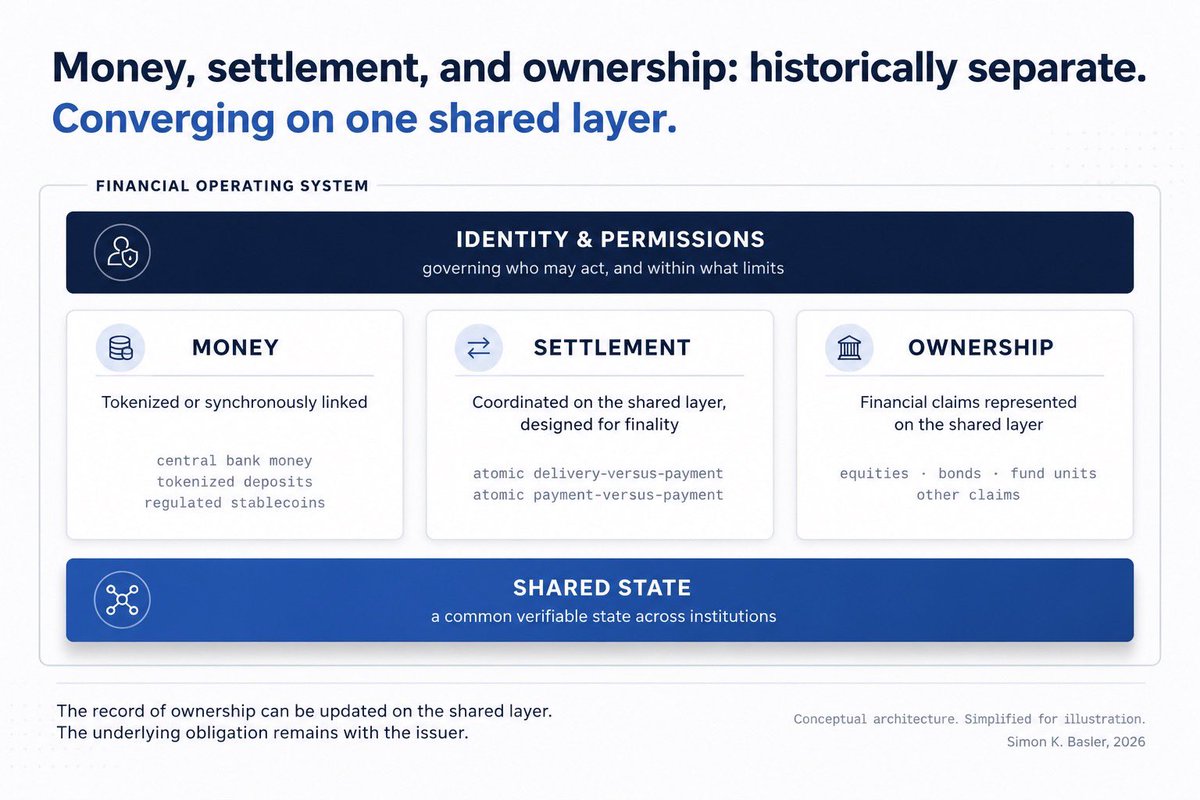
For most of financial history, money, settlement and ownership have operated as separate systems.
What if the real innovation is bringing them together?
Crypto may not be blockchain’s most consequential contribution to finance.
The deeper shift may be the financial operating system emerging beneath it.
https://t.co/swghdj6mdc