Canada is debating new pipelines — but global oil demand may peak this decade and start declining by the 2030s.
The reason? EVs are taking over road transport, which makes up 70% of oil use.
Are we ready for what comes next?⚡
#EnergiMedia#OilDemand#EVRevolution #CanadaEnergy
If you scroll through climate headlines right now, it’s easy to feel discouraged.
BP scaling back its wind plans. Big banks pulling out of net-zero alliances. Google’s emissions go up instead of down. In the US, political winds are blowing hard against decarbonization efforts.
Projects are getting defunded. People are losing jobs. The mood? Anxious, frustrated, even apocalyptic.
But zoom out, and the data tell a different story.
The Economist recently spotlighted a new trend in corporate climate strategy, which they called greenhushing.
In short, companies are doing the work (i.e. cutting emissions, setting ambitious targets, cleaning up their supply chains), but they’re talking about it less—not because they’ve given up, but because public attention is noisy and politicized. Instead, they’re flying under the radar and quietly doubling down.
Let’s look at the numbers:
• 37% of companies actually increased their climate ambition last year (PwC)
• 67% are on track to hit their targets, up from 64% in 2023
• Scope 3 targets (the hard stuff) are booming: 67% of firms have them, up from just 28% in 2022
• Companies with targets cut emissions intensity by 8%, compared to 3% for those without (MSCI)
• Record sales of carbon dioxide removal (CDR) credits in 2025, surpassing all previous years combined (https://t.co/AabZ9eSFT1)
In other words: less noise, more action.
Yes, there are political setbacks, and some companies are scaling back the marketing of their sustainability work to avoid backlash. But in the background, many are giving the culture wars the finger and continuing anyway.
I find that… oddly encouraging.
This doesn’t mean we’re on track (we’re not, by a large margin), but the idea that ambition is evaporating ignores the full picture. The quieter truth is, decarbonization is still moving forward, just less loudly than before.
So to anyone feeling disillusioned by the headlines: don’t mistake silence for surrender.
There’s real progress happening behind the scenes.
CATL: Solid-State Battery Promising 2,000 km Range by 2027
CATL, the world’s largest battery manufacturer, has provided an update on its solid-state battery program. The company announced that its latest prototype achieves an energy density of 450 Wh/kg, enabling an estimated driving range of up to 2,000 kilometers and a fast-charging time of just 10 minutes.
CATL also highlighted that solid-state batteries offer significantly reduced power loss in extreme temperatures compared with conventional lithium-ion batteries. According to reports, at –30 °C, traditional batteries can lose up to 40% of their power, while solid-state batteries experience only about a 20% reduction.
The company plans to begin mass production of solid-state batteries by 2027.
@catl_official #CATL #China #EVs #SolidState
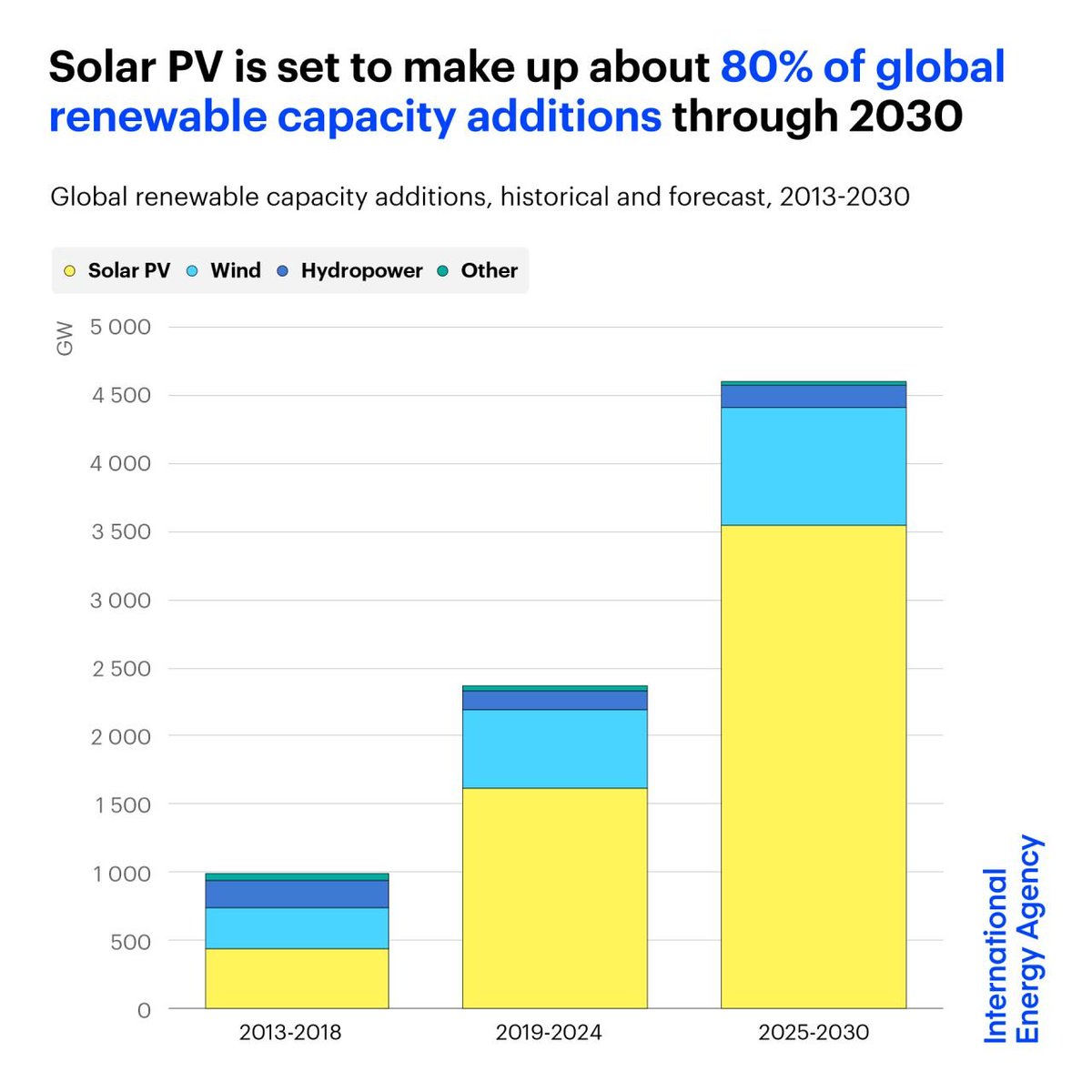
Global renewable capacity is set to double by 2030 amid headwinds from supply chains, grid integration & financing.
Solar PV makes up about 80% of the rise – growing in established markets, but also surging in Saudi Arabia, Pakistan & Southeast Asia 👉 https://t.co/21Ctb3driv
Mark arguing that transitioning the US to 100% renewables needs LESS land than fossil fuel.
Fossil fuel currently use 1.16% of land.
Ethanol 1.24% (for 4% of road transport).
100% renewables would need 0.26% of land for solar and 0.56% for onshore wind (that can still be used for agriculture). The rest is rooftop solar, off-shore wind and existing hydro.
Trump loses yet another legal battle against wind.
Federal judge lifts Trump administration’s halt of nearly complete offshore wind farm in New England
Judge states that "granting the injunction is also in the public interest"
https://t.co/bNvUnY8qUB
Canada’s Parliament just gave Charlie Kirk a standing ovation.
You can oppose political violence without rewriting the legacy of a man who did a lot of harm to vulnerable and marginalized communities.
But Canada’s politicians, some media and many employers don’t seem to entirely understand that:
Jesus.
A standing ovation — from Liberals too — for Charlie Kirk in the Canadian House of Commons.
You can (and should) oppose political violence without doing all this, you know.
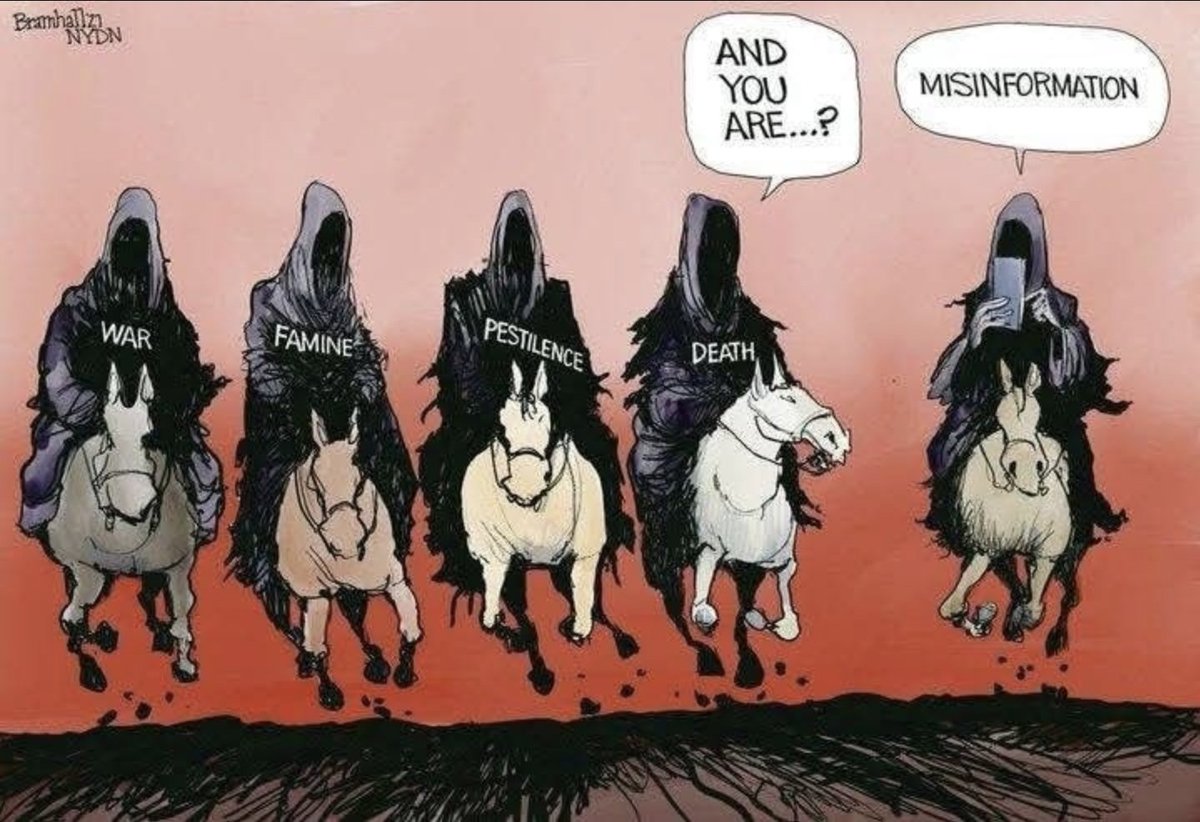
So much disinformation on this site tonight in the wake of the horrific Kirk murder, with conservatives cynically suggesting that all of the political violence in this country comes from the left.
In fact it’s the opposite. Here are the facts for those with short memories:
The man who targeted and killed Democratic state Rep Melissa Hortman was a Trump supporter.
The man who targeted the home of Dem Governor Josh Shapiro was a Trump supporter.
The men who wanted to hang Mike Pence on Jan 6th were Trump supporters.
The man who targeted and killed the son of Obama-appointed District Judge Esther Salas was a Trump supporter.
The man who tried to kidnap Nancy Pelosi and assaulted her husband was a Trump supporter.
The men who were convicted trying to kidnap Dem Governor Gretchen Whitmer were Trump supporters.
The man who sent pipe bombs to the homes of Obama and Biden was a Trump supporter.
There is no equivalent or even similar list of Obama or Biden supporters who have carried out similar murders, attempted murders, or violent attacks.
Saskatchewan's total gross debt was $10.4 billion at the end of 2007-08 fiscal year. It's projected to reach $38.8 billion by March 31, 2026, per the latest provincial financial report. This represents an increase of about $28.4 billion under the Saskatchewan Party's governance since 2007. Net debt rose from $5.9 billion in 2008 to a projected $17.3 billion in 2026.
The 1993 closures of acute-care services at 52 rural Saskatchewan hospitals by the NDP government were driven by a severe fiscal crisis. The province faced a $15B debt and annual deficits inherited from the prior Progressive Conservative government (1982-1991) under Grant Devine, amid a recession. Cuts aimed to balance the budget; health costs were 1/3 of spending. Many sites converted to other facilities. Sources: academic studies, news reports.
The saskparty can't even staff the hospitals we have now. These facilities will never work here with an anti-labour government. Some private sector construction are sure getting some nice kickbacks from their saskparty donations, though
Working with Ahtahkakoop Cree Developments, the Saskatoon UCC is over 25% complete.
Opening in 2027, the UCC will serve patients with urgent healthcare needs, easing pressure on EDs.
UCCs are planned for PA, Moose Jaw, North Battleford and 2nd Regina and Saskatoon locations.