Thread with tweets I refer to often.
First my studies showing EVs are really much better
Article Joule https://t.co/OzSgcEL8aO
CO2 study with Prof Steinbuch https://t.co/IXdo7K4n1G
Us in Der Spiegel https://t.co/qX7PI5dC5W
Transport & Environment tool
https://t.co/oPxqB7fi82
What I like best is that they are very very transparent. I always look at the annex with underlying assumptions and here I think it is well written, short but exhaustive and accurate. https://t.co/wxdjmwY0YG
So you're saying that a society with a greater openness to immigration and better ability to integrate new arrivals into its fabric will gain insuperable advantages over one built on racial hierarchies and exclusion?
Interesting.
I like this idea of human-AI collaboration as a centaur: the strategic thinking of a human coupled with the power and speed of a horse. Arguably this started when we adopted the first tools and has been the case ever since we started using computers, but with current AI the collaboration has become much more intense.
And as I said: I really like it. But I don’t know it will stay this way in mathematics or even in other fields.
I know this centaur idea from chess. Gary Kasparov lost from Deep Blue in 1997. Kasparov then engineered “Centaur Chess” where a human uses a computer during the game and this combo won until 2017 when computers developed neural nets that improved on human long term positional intuition (the only part humans were still better at).
In Go (where brute force - like in chess - was never an option) strategic thinking was instrumental to winning from the start and therefore human-AI centaurs were never a thing.
Basically what I expect is that the better defined the challenge (in terms of rules and what winning means) the faster AI will take over.
That would mean that AI will take over last in creative domains like music and poetry. But I’m not so sure about that either. I think at a certain moment AI will become better at predicting human behaviour than humans themselves. And then it can evaluate how its music and poetry will be received better than human artists.
So a human-AI hybrid would be nice, but I don’t know were we are going. Hopefully AI will become “moral” and celebrate life and flourishing the same way most humans do. Then we would get friendly overlords that like to work with us. I would like that. But it doesn’t seem like a sure bet at all.
What I DO know however, is that we’ve entered the human-AI centaur era. Ready or not. And the best each of us can do individually is learn how to make the most of the combination.
I’ve also thought a lot about what that means for schools. We know that children using mobile phones, social media and current AI in the classroom are not learning more. I friend of mine was a visionary on Internet turned teacher and just developed a python programming course that is expressly a book and the exercises are mostly pen and paper. And I think he’s right. For now.
But in the future I think teachers will also become centaurs, as will children. It’s a question of finding out more about ourselves so we know what helps and hurts us in what situation.
And for those of us who are now at the forefront. What should we do?
My best advice is: listen to yourself. Take a step back regularly and ask yourself: is this helping or hurting? What does my body tell me? Do I sleep better? Do I feel better about myself? Maybe keep a diary and record what helps you and what hurts you.
If I look at myself personally, my goal is to contribute to human flourishing in harmony with nature in ways that I seem competent in. And AI is helping. Tremendously. It helps me to keep large stacks of scientific research and large stacks of datasets organised. I had already replaced coding myself with working with human coders and now I am increasingly working with AI coders that I basically treat the same way: I don’t look at the code but use a test-harness to judge the quality and find the bugs. Making websites and coding is now SO much faster.
I think especially young people owe it to themselves to find out how they can become the best centaur they can be. Not by giving themselves over to AI but by finding how it can enhance them in ways that make them feel good about themselves. As I said: keep a diary to keep yourself honest and experiment. And ask teachers, parents, partners and spouses to help. This is arguably the biggest change humanity has ever faced. Nobody knows what’s best yet, and it will be different for everybody. But at least we can try to use AI in a way that makes us flourish.
The Economist's headline said AI had conquered mathematics' greatest challenge.
Mathias Sundin writes that it's wrong.
AI didn't solve the Riemann hypothesis.
A human together with an AI did.
A centaur.
https://t.co/M8WzkXQ3y2
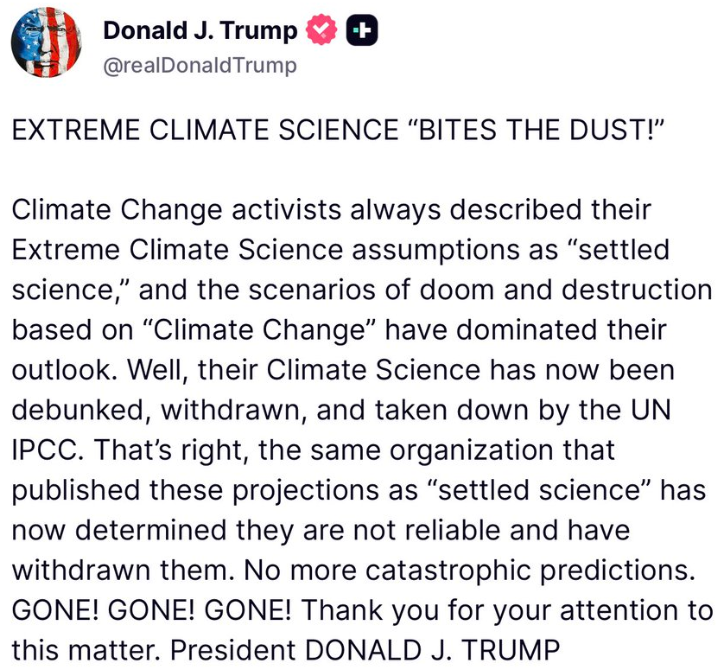
Im a lead author of the upcoming IPCC 7th Assessment Report and I have absolutely no idea what our president is talking about here. We have not “withdrawn” any climate science that I’m aware of.
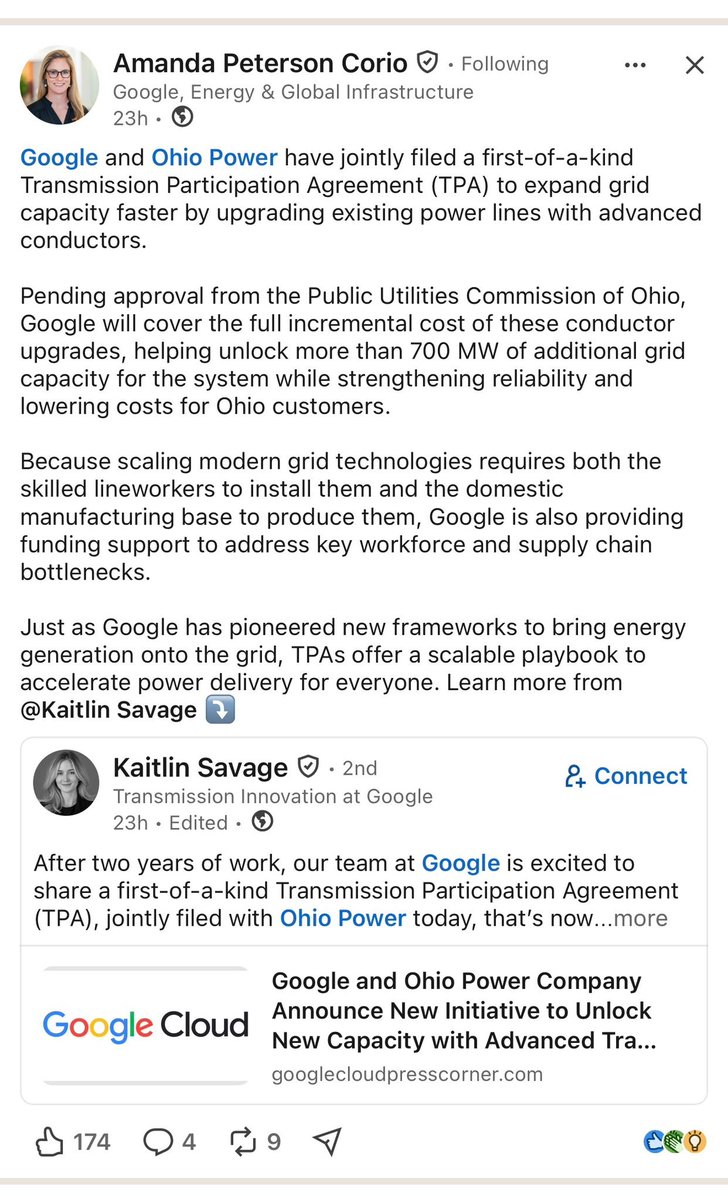
Crazy that grid operators need the help of Google to speed up no brainers like upgrading existing power lines with carbon core cables that can move twice the electricity (because they hardly sag when they get hot). We need this the Netherlands too but the pace of grid operators make snails look like formule I cars.
This is the way!
Awesome news: Google and Ohio Power just filed a first-of-a-kind Transmission Participation Agreement, pending PUCO approval, to upgrade existing power lines with advanced conductors.
Google is covering the full incremental cost to unlock over 700 MW of additional grid capacity, while also funding lineworker workforce and domestic manufacturing bottlenecks.
Hyperscalers spent years innovating on generation contracts, but transmission is the binding constraint. Greenfield lines take very long to permit and build. Paying to reconductor existing corridors while shielding local ratepayers is a replicable playbook, assuming regulators sign off and utility execution holds up.
In 1986 the programmer Craig Reynolds showed that three rules for each bird are enough:
1. steer away from birds that are too close
2. match the heading of the birds around you
3. drift toward their centre.
He called his simulated birds boids.
In the video 150 birds start with random headings and an alignment score of only 10%. Each bird looks only at its neighbours, yet the score passes 90% within ten seconds and reaches 98% by the end.
The control run is the same flock without the copy-the-heading rule: it clumps together but never lines up, and ends at a score of 12%.
Measurements of real starling flocks suggest each bird tracks only about seven of its nearest neighbours, not the whole flock. The order is not designed by anyone. It is what a simple local habit turns into when thousands of animals share it.
Supegoed! Maar Eindhoven is op deze pagina het enige project dat gedaan is en er zijn nog 5 projecten in ontwikkeling terwijl er honderden knelpunten zijn. Stel dat we hier een miljard per jaar aan zouden besteden over de komende vijf jaar praat je al snel over een paar honderd projecten per jaar. En gezien de >10mrd congestieschade per jaar en gezien het feit dat dit in veel gevallen kosteneffectiever is dan nieuwbouw (nu >10mrd per jaar) is het slecht dat die honderden projecten er niet zijn.
Wat me ook opvalt: het gemiddelde europese project dat reconductoring toepast leidt tot 76% meer capaciteit en de nieuwste kabels kunnen 100-200% meer vervoeren dan staalkabels maar volgens het filmpje levert het maar 30% op. Met DLR wordt dat nog meer. Het laatste plaatje is onze simulatie voor Helmond-Oost - Helmond-Zuid.
Waar komt dat verschil vandaan vraag ik me dan af. Extra veiligheidsmarges? Ik zou graag iets lezen met meer diepgang en verantwoording in plaats van oppervlakkige PR praat terwijl er zoveel miljarden schade veranwoord moeten worden door een monopolist in publieke handen.
https://t.co/hwgBLPU4Do
Mijn laatste info van TenneT: 20% van 380kV lijnen, 10% van alle TenneT lijnen, 5% van alle bovenleidingen. Ik tot nu toe ben ik het op knelpunten die ik bestudeerd heb nog niet tegengekomen.
Hun DLR pagina zegt eigen "Dit is heel cool en gaan we meer doen en binnenkort gaan we ook pilots doen met transformers en ondergrondse leidingen." En dat is mooi.
Maar het is niet bepaald: "Bij het berekenen van de wachtrij gebruiken we DLR optimaal en marktpartijen kunnen hier en hier de data vinden en hiermee bijvoorbeeld berekenen wat een batterij als congestieverzachter of het slim aansturen van lokale flex precies doet. Kortom: voor mij als iemand die kansen ziet en die pro-actief (samen met gemeenten en provincies) wil voorrekenen is het meer een zoethoudertje. Snap je?
@WattisDuurzaam Tennet heeft 20% 380kV lijnen gedaan: dat is 10% van hun totaal en dat is weer 5% van bovenleidingen in Nederland. Nee het gaat niet snel genoeg. Dit zou in maanden kunnen als je de sensoren binnen hebt. In plaats daarvan kost het vele vele vele jaren.
@WattisDuurzaam VS gaat niet sneller. Ze hebben alleen veel rapporten. En DLR is hetzelfde als reconductoring: staat absoluut op de radar en wordt nauwelijks gebruikt vergeleken met potentieel (overal).
Klopt! In hoeveel procent van de knelpunten denk je? Ik schat 3%. In Noord-Oost Brabant (wachtrijschade minimaal 5 milljard en twee korte voor de hand liggende trajecten voor reconductoring die grootste deel van knelpunten vormen) 0% voor zover ik uit de vele congestierapporten kan nagaan.
1 zwaluw maakt nog geen zomer, ik had gehoopt dat jij of all people dat met me eens zou zijn.
Zelfde verhaal voor dynamic line rating sensors die al snel 20% extra leveren: alle bovenleidingen daarvan voorzien kan in een jaar voor minder dan 20 miljoen euro - gewoon sensors van 1-5k met goedkope drones aanbrengen. In plaats daarvan is er nu een pilot zonder datadelen en resultaten optimaal gebruiken voor 10% van de TenneT leidingen en 0% van de niet TenneT leidingen.
Zelfde verhaal voor dynamic thermal rating van trafo's: levert al snel 30-50% extra capaciteit op met goed model en sensor van een paar duizend euro die onder spanning aangebracht kan worden maar in plaats van dat inmiddels overal gedaan te hebben blijft het bij hier en daar een pilot en elkaar dan op de rug kloppen. En dat getreuzel kost de samenleving minimaal tientallen miljarden. Ik wordt er gek van.
Hoe zie jij dit?
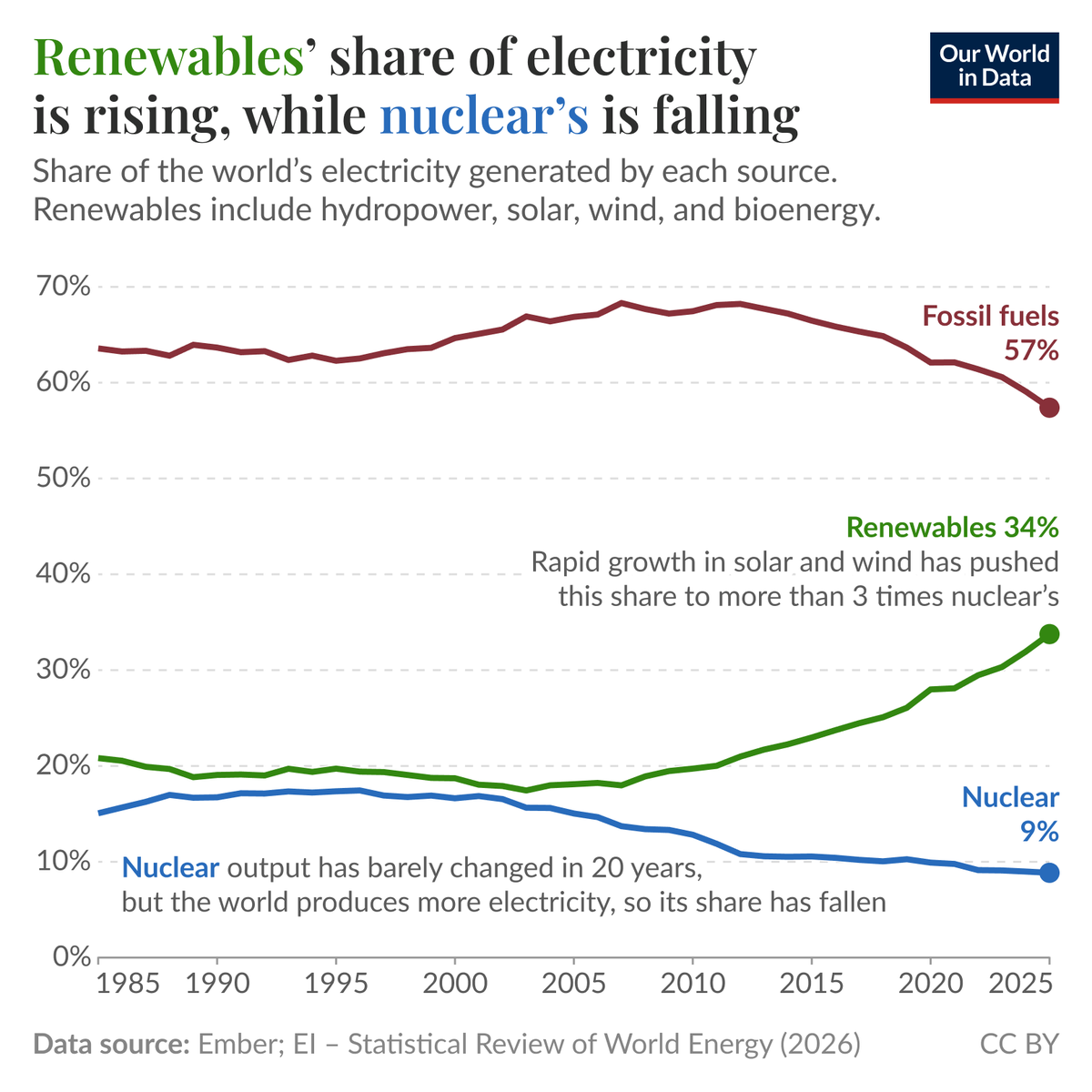
For decades the share of global electricity coming from fossil fuels was over 60% — renewables were rising, but that was offset by the decline of nuclear power.
Now this is finally changing. The share from fossil fuels is going down.
Batteries dont work they say. I would rather my taxes subsidise home battery installations to provide energy independence for Australians, and a more resilient grid, and reduce reliance on fossil fuels. yet opponents happy to keep subsidising fossil fuels, and pay more.
This is insane: if Abdul El-Sayed said his job in the Senate was to be the ‘guardian of the Muslim ummah’, that the Quran gave Palestine to the Muslims and Jews not believing this is why there is no peace, and that his job in the Senate was to keep the left ‘pro Muslim ummah’, he would (rightly) be denounced as a religious extremist, and have his secular credentials questioned.
But Chuck Schumer has proudly, publicly, and repeatedly said all those things and more about Israel but to point that out is now apparently antisemitic. Gaslighting of the highest order.
My timeline is >90% anti-Russian. "Following" ~95% and "for you" ~90% How is this for others, and what explains this do you think? (E.g. are you from the US, EU or somewhere else.)
Two- thirds of Americans disapprove of Trump's handling of Russia and Ukraine.
(So don't be misled by the pro-Russian algorithm on this platform)
https://t.co/eeoj5JrXuZ
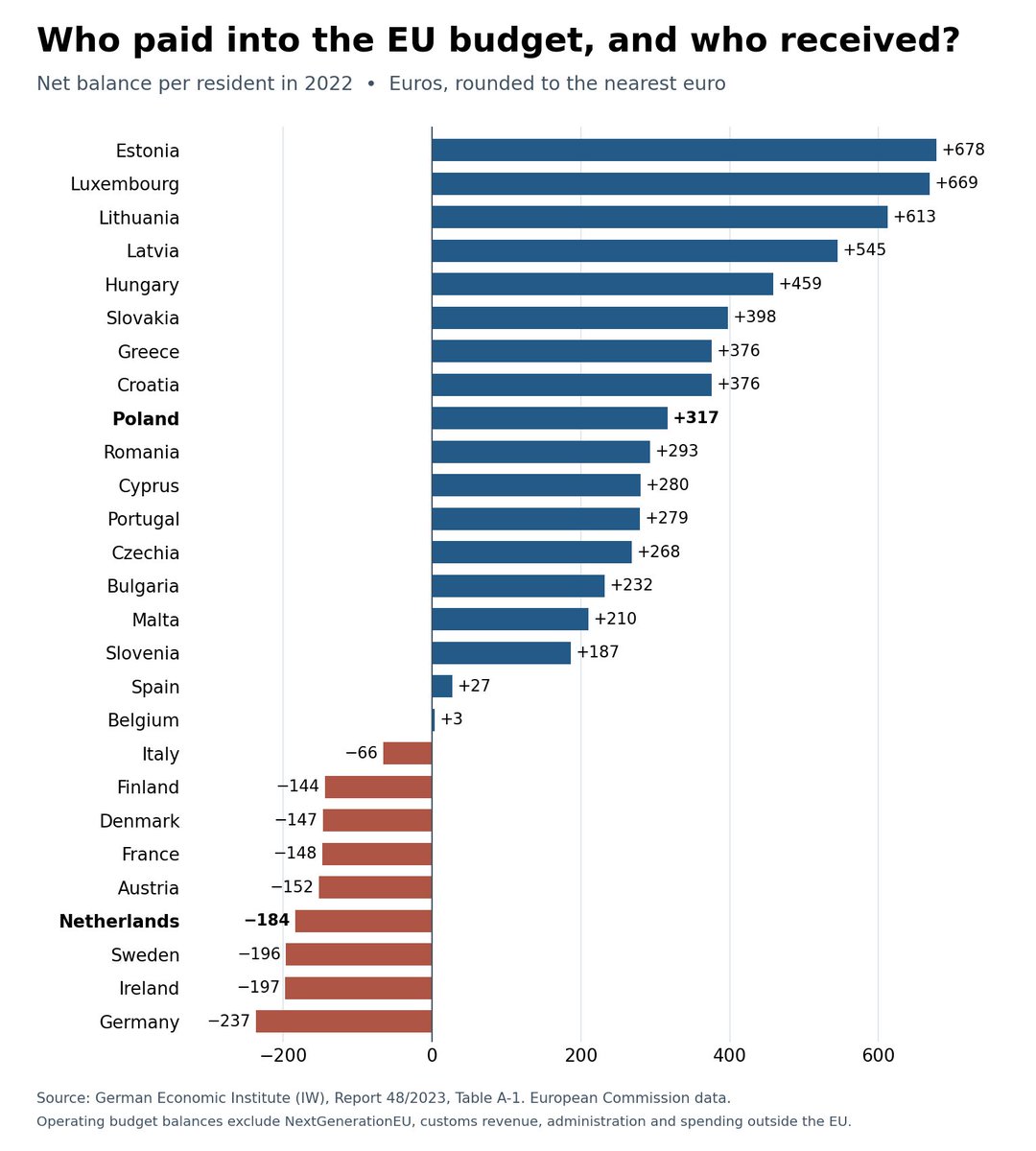
Some will say: but Poland received more from the EU than they paid. And that's correct (see graph). So maybe they didn't do it on their own 100%.
But while Poland received 317 euro per person, their growth every year was more than double that (and in 2022 triple that). So they took the EU money and provided a multiplier.
And did the old members lose? That is not what the evidence says. Overall the old members also won because they got better integrated and richer trading partners. It was a net win for them, even after subtracting EU budget transfers.
For 2004–2019, a rough calculation using an IMF working paper puts the extra GDP at about €225 per existing-member resident per year. The ten entrants received about €43 per resident per year in net transfers, including €20 for Poland. That leaves roughly €180 per person per year, averaged over those 16 years.
That is not a certainty by the way. It's hard to estimate how much faster the old members grew because of the new members joining. One peer-reviewed study found a modest gain after budget costs; another study following the old members through 2019 found no clear GDP effect. But overall probably a win.
And that's apart from the stronger block the EU becomes when it grows and shows successes like Poland. And that strength is more important than ever. Because we all know we have to defend against Putin on the war path while the US is choosing Putin's side and China is getting more powerful.
IMF paper, Figure 6:
https://t.co/FcIEa9u3G7
Annual EU budget figures (select year):
https://t.co/HHV0miZ2SX
Kohler, on gains after budget costs:
https://t.co/hi3wYfm6JF
Grassi, on the 2004–2019 comparison:
https://t.co/og1JIQagX6
This is why I love the EU. Don't get me wrong: Poland did it on its own. 100%. But the EU provides a safe and stable environment for prosperity to grow. In a world that's often a madhouse, that is something to treasure.
Poland's golden age, in one picture.
Since joining the EU in 2004, GDP per person rose from 52% to 81% of the EU average, level with Portugal. The economy more than doubled. Unemployment fell from 19.1% to 3.1%, half the EU average.