🧨 BREAKING: Introducing Pyth Indices.
Proprietary 24/7 indices across U.S. equities, oil, metals, and thematic baskets co-developed with @MarketVector.
Launched in collaboration with include @coinbase, @krakenfx, @nadoHQ, and @dYdX. 🧵
@TheBlockCo oh? big one!
To note:
- Pyth had the first oil index live well before others (oil in March, the rest in stealth with live integrations like dYdX)
- 24/5 is Pyth's playground. Launched in September 2025 with Blue Ocean exclusivity, it now offers 150+ 24/5 US equity feeds
$SPCX. SpaceX. June 12.
The most-anticipated listing in years. The largest equity perp market ever to launch onchain.
Pyth will be live the moment it prints.
Full breakdown: https://t.co/j7vtGBVN8K
@KemarTiti so we aren’t stopping Pyth Core instead letting current (and future) users experience Pyth Pro via subscriptions!
i’d say it is the best outcome!
🤯
Sunday night.
U.S. exchanges closed.
$10.5B in U.S. equities traded anyway.
@BlueOceanATS hit an all-time record this weekend for after hours trading.
Pyth is the only oracle with exclusive access to Blue Ocean–sourced overnight U.S. equity pricing.
Cashtag says $TSLA is at $393.58 (after hours)
@PythNetwork says it is at $395.62
I’d believe the one that has “exclusive” access to @BlueOceanATS
and you know that is Pyth
@Lowkeighh@monad@PythNetwork monad is currently top of pyth core usage since launch and with fees applied from Q1, they made the 2nd spot on total fees accumulated
there was a time when @Cboe sells Pyth data on their data shop
now, Pyth itself are distributing financial institutions data via the Pyth Data Market Place
times have changed
🚨BREAKING: 6 GLOBAL FINANCIAL TITANS JOIN PYTH TO STREAM PROPRIETARY DATA ONCHAIN
@PythNetwork has introduced the Data Marketplace. The protocol partners with Fidelity Investments, Euronext, and four other major financial institutions to move proprietary market data directly onchain.
Through the new Pyth Data Marketplace, these firms will distribute real-time pricing for fixed income, Crude swaps, Spot FX, and precious metals.
This transition moves critical financial data from closed terminals to open infrastructure designed for decentralized finance.
The partnership includes Tradeweb, OTC Markets Group, SGX FX, and Exchange Data International.
about 2.5 Million $Pyth distributed to the community via the 2025 Pyth Community Council with 400k of it from February initiatives (distributed this March)
My term will also end and excited for a new council to replace me.
Good luck to the new council on the upcoming term!
*hit me up if you would like to continue to use @Dune DB
Introducing https://t.co/E8fCxHvsDF
Using @PythNetwork Entropy to award prizes randomly to our awesome Discord members.
We are live now on @monad, so get yourself some $MON, spin the wheel, and win prizes.
Not yet a member? Join us at https://t.co/bBaoUdKyfS
Don't have any $MON? You can use @mayan to bridge some funds from other chains to get yourself some MON cheap and easy!!!
How the fuck is CT grading this response on tone instead of product judgment?
Thinking the issue is that a warning appeared, that a user checked a box, or that the trade could technically be completed, is stupid.
The issue is that a leading interface in DeFi allowed a $50M order to move through a flow where catastrophic execution was an entirely predictable outcome. Once you know the order size, know the available liquidity, know the expected slippage, and know the probable output degradation, responsibility shifts to the system design itself.
At that point, hiding behind user consent is weak as fuck.
Consent inside a badly designed decision environment does not suddenly become good product architecture. Imagine using the same checkbox for acceptable slippage on a normal trade and on a trade that can lose $50M....
What they are doing, through lack of vision and lack of standards, is pushing liability downstream.
What makes this worse is that the solution is obvious.
Extreme order sizes should trigger a different class of interface behavior because they belong to a different class of risk.
Hard execution thresholds, delayed confirmations, forced acknowledgment of minimum output in large font, segmented execution paths, deeper routing logic, stronger friction as size detaches from liquidity, and escalation rules for absurd trades.
None of this requires a research breakthrough.
It requires teams to stop acting like legality at the transaction layer is enough to claim integrity at the product layer.
Aave has enough stature, enough resources, and enough industry visibility to know this.
So when one of the flagship names in crypto answers an event like this with “the warning was shown and the system worked as intended,” what it really communicates is something much uglier: the mindset of too many crypto founders is complacent as fuck, and that is exactly why the industry still struggles to earn the trust it keeps claiming it wants.
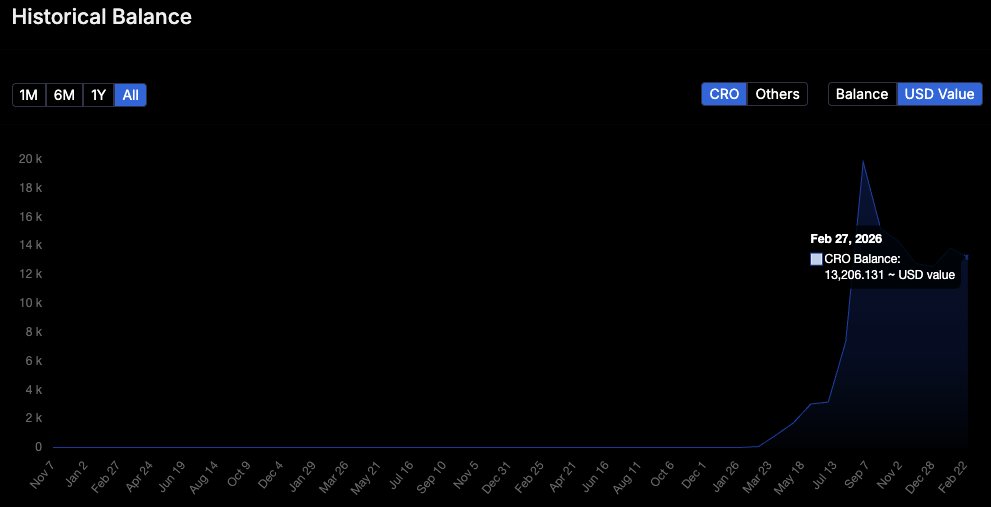
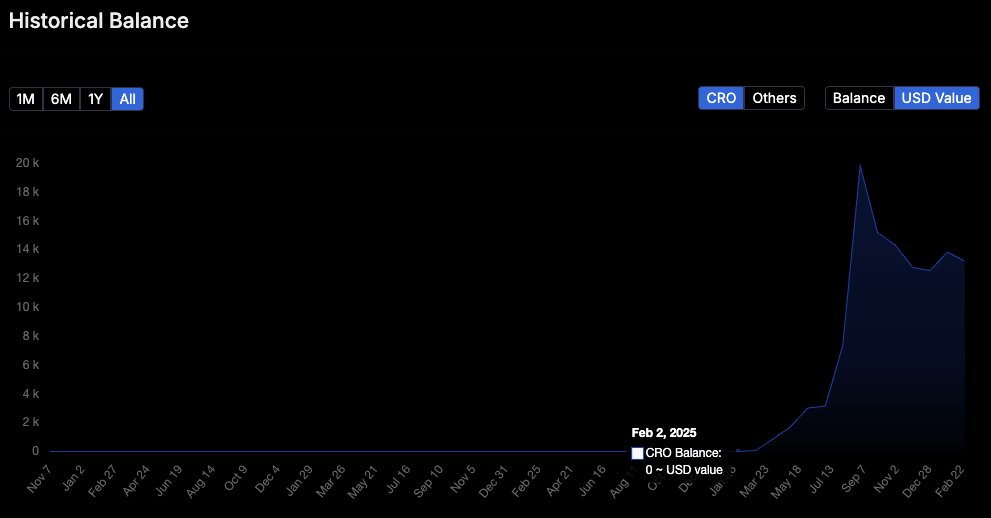
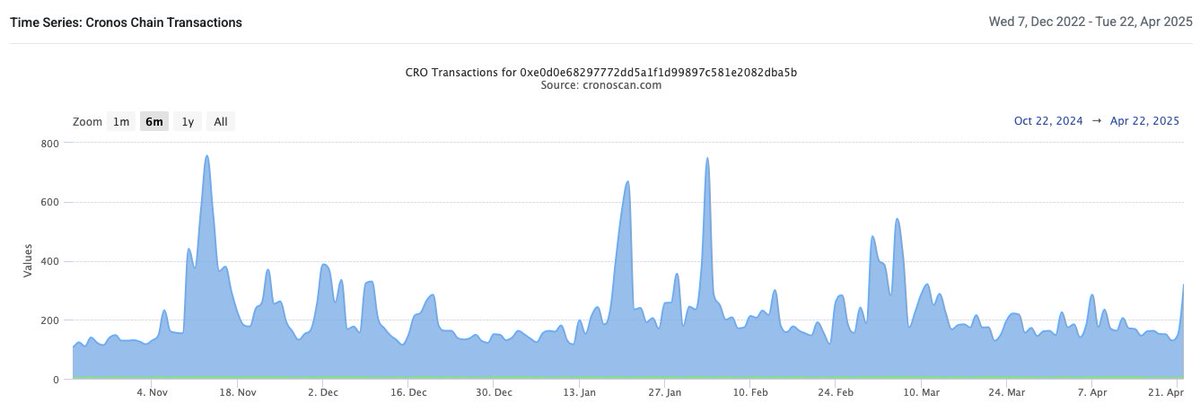
1 year since the implementation of fees on @CronosApp
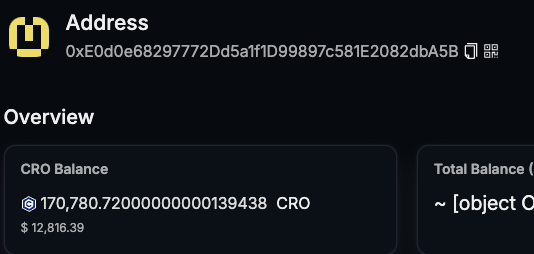
fee wallet accumulated a total of 170k $CRO which is equal to almost 13,000 USD (ATH at almost 20,000)
checked most of the Pyth Price Feed Fees wallet and it looks Cronos collected the top spot in fees collection.
it even went above opBNB which is the first chain to have fees activated.
with fees activated on all EVMs chain, i wonder what will be the result next year.
Cronos
13,777 $CRO = $1,258; $629 (Average)
Cronos went above the expected amount
Each Price Feed Update txn has 24 Feed updates
Number of txns also doesn't seem to be changing even after the application of new fees