For more than 55 years he lay in an unmarked grave, until a German mine-clearance team found him in 2000. His remains went to a U.S. Army laboratory in Hawaii for identification, and in May 2001 he was buried with full military honours in Clear Lake, Wisconsin, the town he had left for the war.
We visited the spot today on our Hürtgenwald battlefield tour.
He stood 2.01 metres tall. That is how they finally confirmed his identity. PFC Robert Cahow, 311th Infantry Regiment, 78th Infantry Division, was killed in the Hürtgen Forest on 13 December 1944, bringing in wounded men under fire. A mine killed him, and German fire kept his comrades from reaching the body.
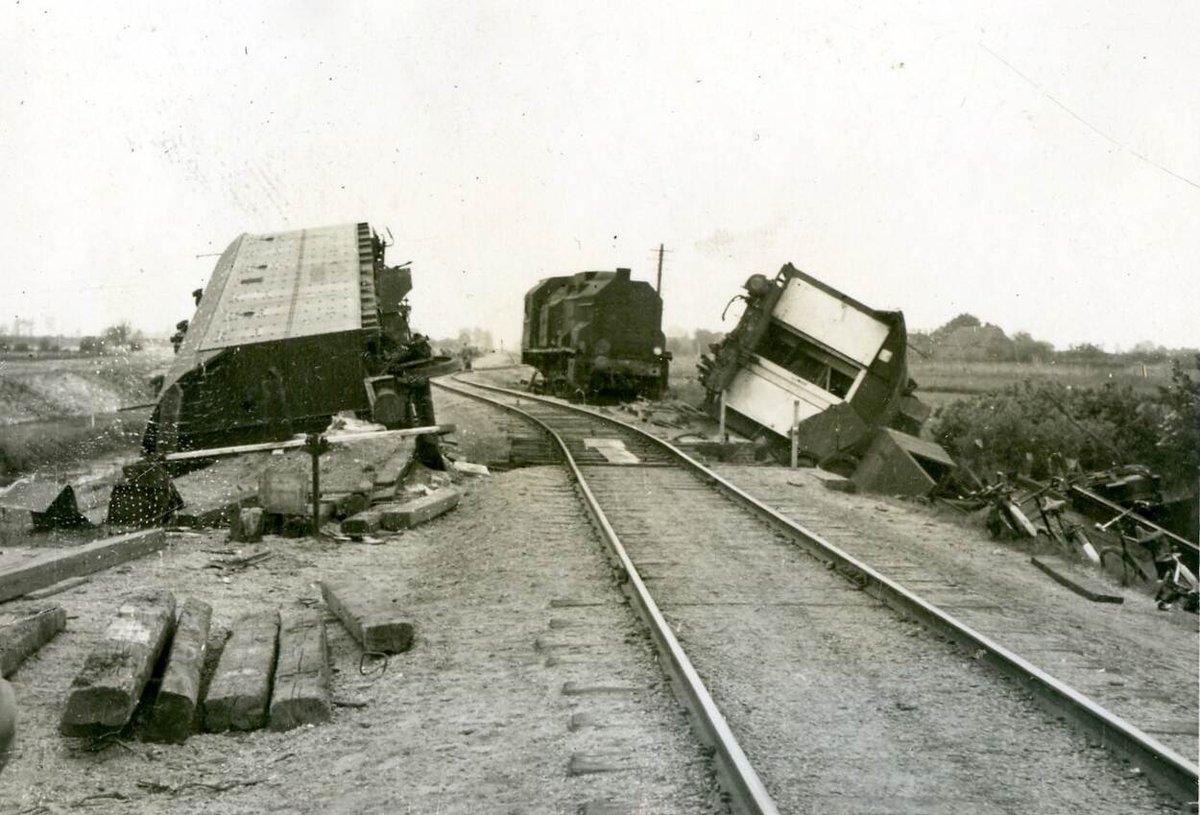
The angled steel posts in the railway at Mill are a reconstruction of the Dutch anti-train barrier that once stood here. Before dawn on 10 May 1940, a German armoured train ran straight past this point and crossed a fortified line without a shot being fired. 1/5
The Dutch still held it; the trains had simply slipped through ahead of them. As the armoured train was sent back towards the border, Dutch engineers closed the barrier across the rails at Mill and reinforced it with mines. 4/5
"Five-Oh-Sink." That was the nickname the 506th Parachute Infantry Regiment earned from its first commander. Robert Sink activated the regiment in 1942, drove it through the training at Camp Toccoa, and led it through Normandy, Market Garden and Bastogne. He commanded it for the entire war as a colonel. The general's stars came afterwards. He is buried at Arlington National Cemetery, interred in December 1965, a retired lieutenant general.
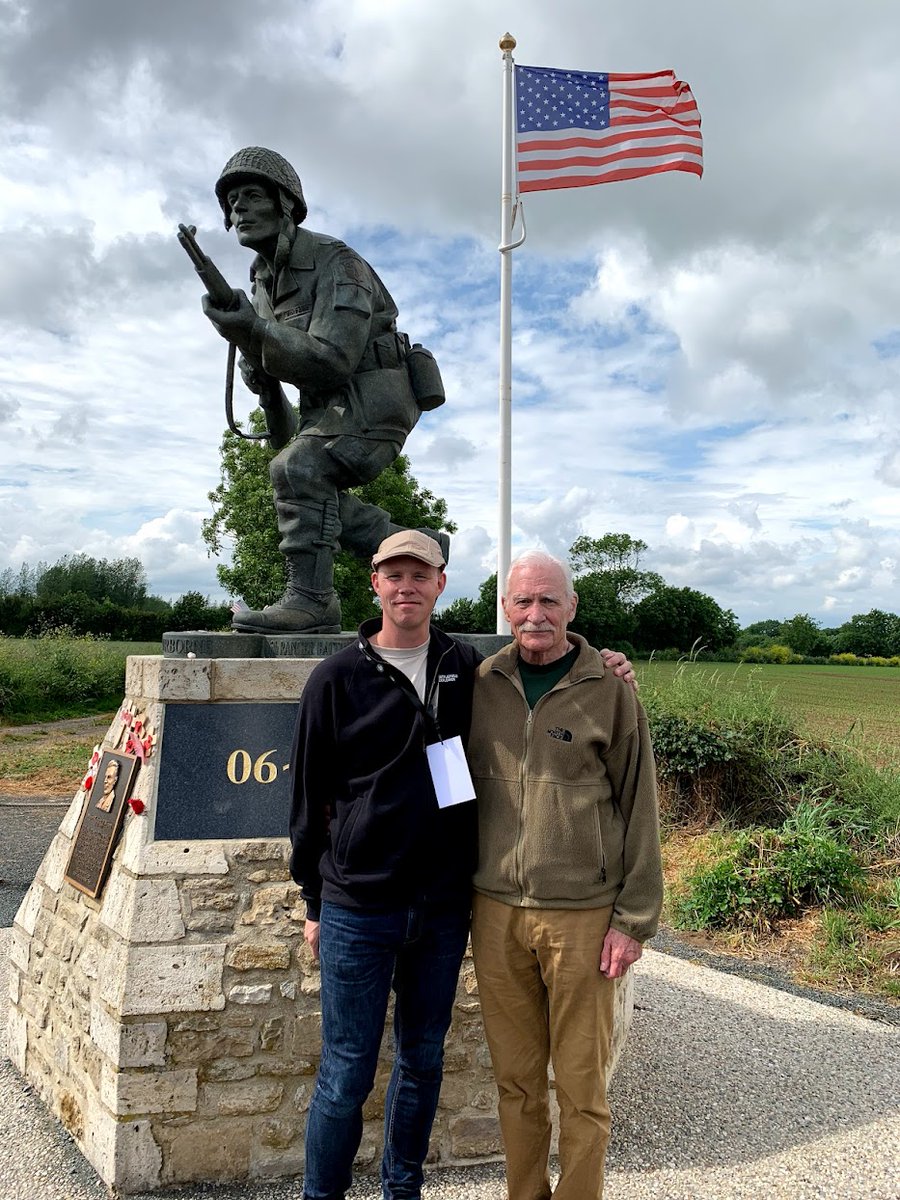
Sculpted by Stephen Spears, it was dedicated on the 68th anniversary, 6 June 2012. Winters never saw it. He died in January 2011, seventeen months before this statue was unveiled. 3/3
This is not an Easy Company memorial. The face is Dick Winters, but the dedication names no unit and no individual: "to all American junior officers who led the way on D-Day." Winters insisted on that. 1/3
A humble man, he agreed to lend his likeness only if the honour was collective.
The statue stands on the causeway from Utah Beach to Sainte-Marie-du-Mont, near where he landed off target in the dark before dawn on 6 June 1944. 2/3
This Sherman spent the end of the war sunk in a Luxembourg dung pit. Wiltz, December 1944. Lt. Col. Ripple’s command tank of the 707th Tank Battalion bogged down at Erpeldange during the Battle of the Bulge. The crew abandoned it and were captured minutes later. Fifty years on, Ripple returned to Wiltz and recognised the tank at the town entrance as his own. Restored in 2016, it stands there today, a stop on our Battle of the Bulge tours.
The horse stable that billeted Easy Company in England now sits five miles from Currahee Mountain, which the men used to run every day. The stable was built in Aldbourne, Wiltshire, in 1922 and housed Able and Easy Companies before and after D-Day. 1/2
Facing demolition decades later, it was dismantled, shipped to Georgia, and reassembled inside the old train depot in 2004. In 2022 I was lucky enough to visit the Currahee Military Museum in Toccoa, Georgia. 2/2
The last stop on the WWII museum’s England to the Eagle’s Nest battlefield tour. This time we had perfect weather and a grandiose view of the area below.
Opened in 1933, Dachau was the first concentration camp of its kind in Germany and the model for those that followed. Camp guards were trained here before being posted elsewhere. Visited today with the National WWII Museum’s Easy Company Tour.
Three German prisoners were taken under heavy fire, Eugene Jackson was killed running into his own grenade. A second patrol was ordered the next night. Captain Winters reported it carried out. It never was. 3/3
The house looks nothing like the one in Band of Brothers. This is the actual target building in Haguenau, France, which we visited today with the National WWII Museum's Easy Company tour. 1/3