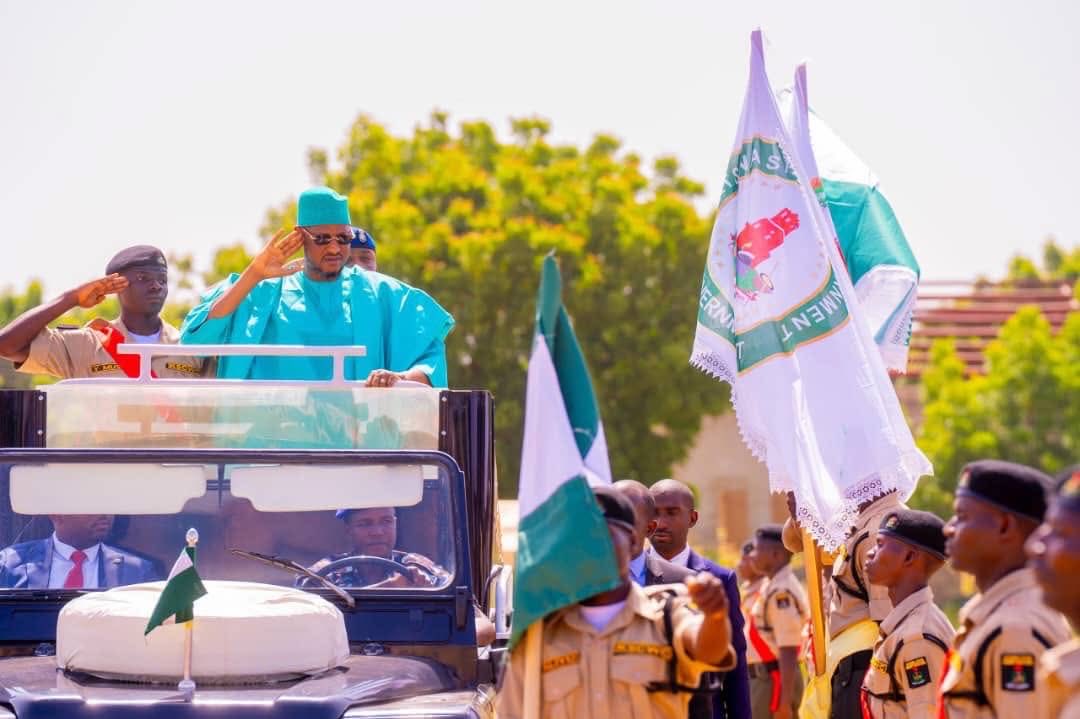
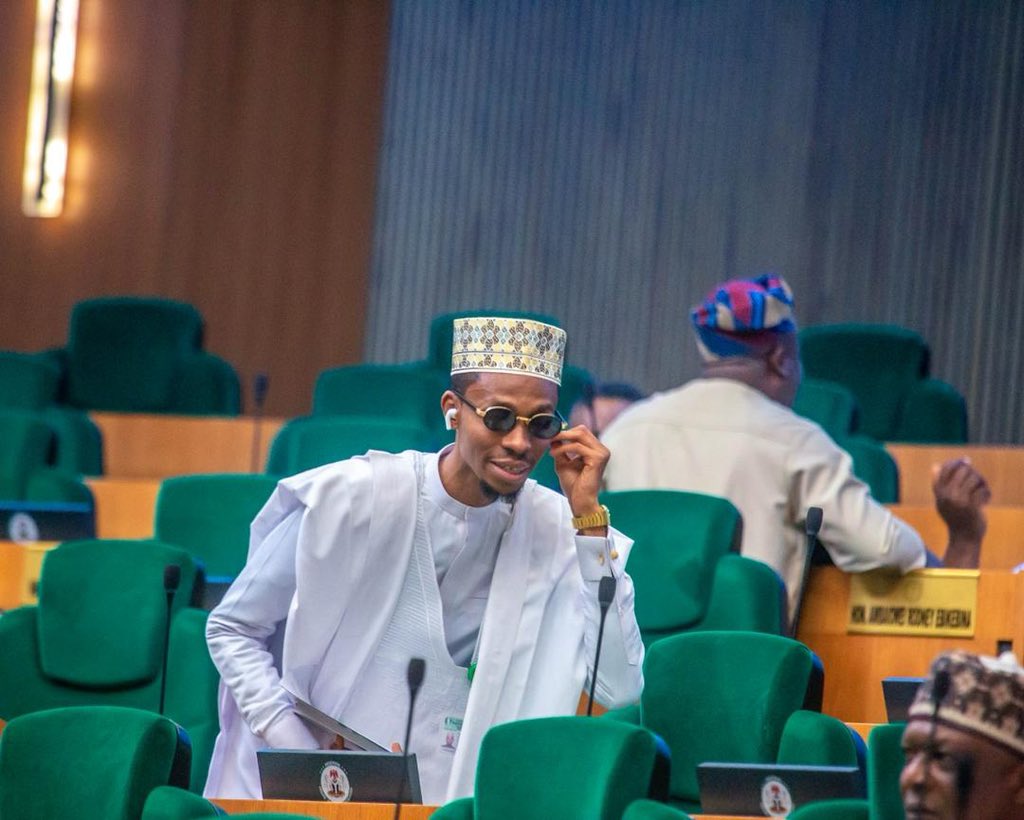
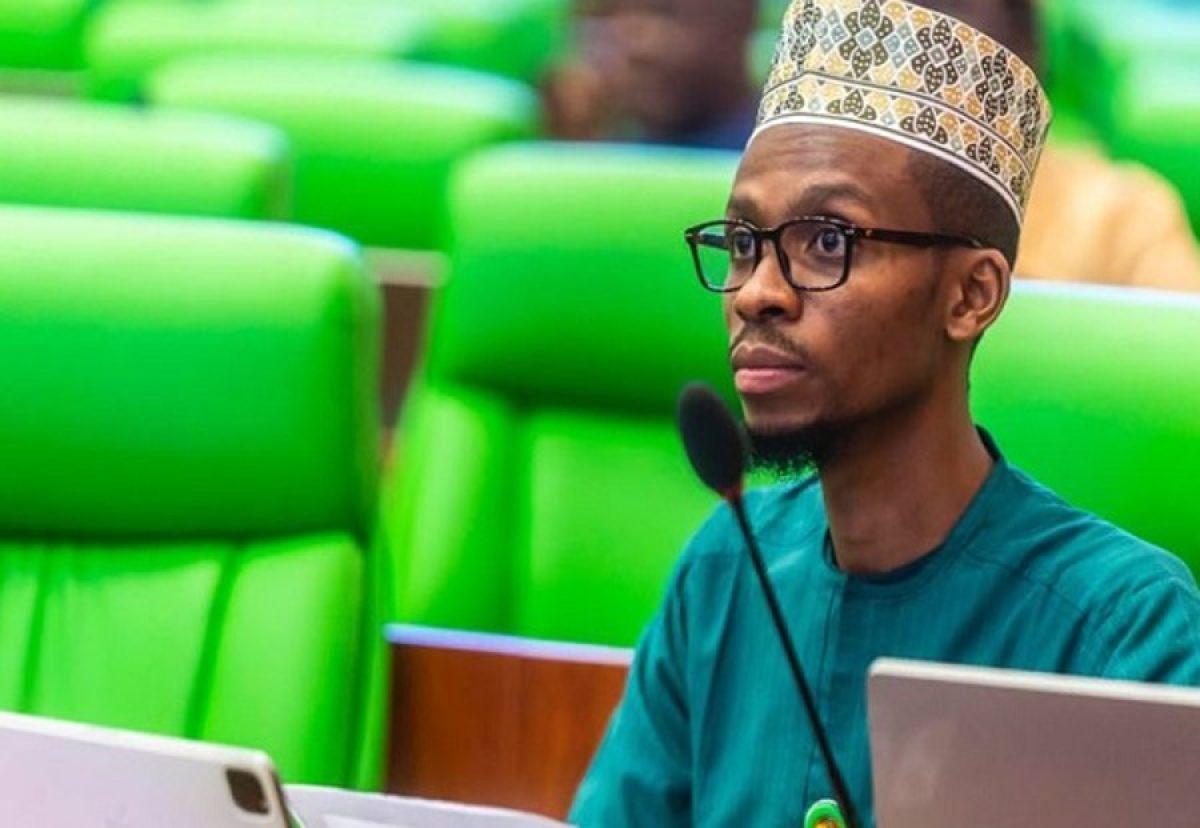
In the name of Allah, the Most Beneficent, the Most Merciful. A few hours ago, the Rt. Hon. Speaker of the 10th House of Representatives, Hon. Tajudeen Abbas GCON, announced my letter of resignation from the All Progressives Congress (APC) and my formal move to the African Democratic Congress (ADC) at plenary. I am now a member of the ADC, and I will be seeking re‑election to continue representing the good people of Kaduna North Federal Constituency on this platform.
I am joined in this new chapter by our respected elder, Hon. Engr. Suleiman Richifa, representing Soba, and my dear brother, Hon. Umar Ajilo, representing Makarfi/Kudan, who both defected from their previous parties to the African Democratic Congress. Together, we are building a home for progressive, people‑focused service.
This decision was not taken lightly. As a proud son of Mallam Nasir @elrufai, I am guided by courage, conviction, and the unshakable belief that our people deserve the very best. To the people of Kaduna North: our work continues, and it will not stop. We will never compromise on delivering quality representation. There is still so much to do.
By the grace of God, I will soon announce the ad hoc committee for the Primary Health Care initiative I unveiled last week. We will be equipping Primary Health Care Centres with medical supplies, starting with 1,000 syringes per PHC and other essential items. Phase I begins with two centres: Unguwar Sarki Ward and Badarawa/Malali Ward.
May Allah SWT continue to guide us as we serve the people. And may He bless Nigeria with the best leaders.
Signed
Hon. Mohammed Bello El-Rufai
Member.
Kaduna North Federal Constituency
Chairman, Committee on Banking Regulations.
May 7, 2026.
I asked someone who lives in Kwaru who he'd vote for, Bello or Kaka, his reply was Hafiz nobody would do what Bello has done for us. If you try to tell the people in our area especially the women to vote for someone other than Bello, you would receive curses like someone who has committed a grave sin.
Bello built a road for them linking Kwaru to the New Malali road behind Legislative Quarters.
Bello solved their problem of water for them, something they have been battling for years, now they no longer suffer in the dry season because of water, they have much available now.
He reiterated to me that wallahi their votes are for Bello El-rufai free of charge.
I have witnessed more than 5 roads built by Bello El-rufai, I'm not even talking about the scholarships and others.
Gaskiya Bello ka cika Gwarzo!!!
NIGERIA UPDATE - Nigeria’s Growth Crisis Is a Talent-Allocation Crisis - by: Nasir Ahmad El-Rufai - 1st April, 2026 - Part 2
4. Sectoral Reality: Why Building Is Harder Than Extracting
Consider a few concrete Nigerian constraints.
Power
Nigeria’s average available grid capacity is just over 5,300 megawatts for a population exceeding 200 million. No serious manufacturing or services economy can scale under such conditions. When power is unreliable, firms remain small by necessity.
Ports and Logistics
Average vessel turnaround time at Nigerian ports has been around five days—far above global best practice. Each delay creates gatekeeping opportunities, raising costs and uncertainty.
Jobs and Firm Structure
With wage employment hovering around 16%, most Nigerians work in survival-level activity. This is not because Nigerians lack ambition, but because the system penalizes formal growth.
When these constraints persist, entrepreneurship becomes a high-risk, low-reward path. Rational talent looks elsewhere.
5. Evidence from Other Countries—and What It Means for Nigeria
Cross-country evidence supports this argument. Countries that channel more of their top talent into engineering, applied science, and production tend to grow faster. Countries where talent concentrates in rent-oriented legal and administrative activity tend to grow more slowly .
The lesson is not that law is unimportant. On the contrary: law is essential when it enables commerce. But when legal and regulatory systems become tools for extraction rather than facilitation, they draw talent away from growth-enhancing activity.
Nigeria today sits at that crossroads.
6. Signs of What Is Possible
There are encouraging signals.
Nigeria’s non-oil exports have grown strongly, driven by products such as cocoa, fertiliser, cashew, and processed agricultural goods. This shows that when incentives align—even partially—Nigerian firms can compete and scale.
The task before us is to generalise this success, not treat it as an exception.
7. The Real Reform Objective
Nigeria’s reform agenda should be summarised in one sentence:
Make value creation more rewarding than value capture.
Everything else flows from this.
This means:
•Shrinking discretionary power and rent opportunities in government;
•Making rules predictable, transparent, and digital by default;
•Ensuring property rights and contracts are enforced quickly and fairly;
•Making it easier to scale a business than to stay small and hidden;
•Aligning finance with long-term production and exports, not short-term arbitrage.
When these conditions exist, the most talented Nigerians will move—naturally and voluntarily—into productive enterprise.
8. What Success Looks Like in 24 Months
If Nigeria is serious, progress should be visible and measurable within two years:
•Power availability rising from ~5,300 MW toward 8,000–10,000 MW reliably delivered.
•Port turnaround times falling below four days, with fewer physical interventions.
•Wage employment rising toward 18–20%, signalling firm formalisation and scale.
•Tax-to-GDP moving toward 10%, driven by digitisation and base broadening—not harassment.
•Manufacturing and tradables expanding their share of GDP and exports.
•Non-oil exports growing not just in value, but in the number of exporting firms.
These are not technocratic targets. They are signals to talent—telling Nigeria’s brightest minds that building, producing, and exporting now pay better than extracting.
9. The Strategic Choice Before Us
Nigeria’s future does not hinge on slogans, nor on personalities. It hinges on who wins in our economy.
If the system rewards brokers over builders, we will continue to underperform.
If it rewards producers over extractors, growth will follow—rapidly and durably.
This is the central lesson of economic history, and it is the challenge of our moment.
Nigeria does not lack talent.
Nigeria must reallocate it.
God Bless our Country.
NIGERIA UPDATE - Nigeria’s Growth Crisis Is a Talent-Allocation Crisis - by: Nasir Ahmad El-Rufai - 1st April, 2026 - Part 1
Nigeria is often described as a paradox. We are a nation of extraordinary human capital—energetic, inventive, resilient—yet our economic outcomes fall persistently short of our potential. Growth remains shallow, productivity weak, firms struggle to scale, and prosperity does not spread widely enough.
Today, I want to advance a clear and uncomfortable proposition:
Nigeria’s growth problem is not primarily a shortage of talent, capital, or ideas.
It is a problem of where our best talent goes—and why.
This is not a moral argument about individuals. It is a political-economy argument about incentives.
1. The Core Insight: Talent Follows Returns
Across societies and across history, highly capable people choose occupations that offer the highest returns to ability, especially where small differences in skill translate into large rewards. Economists describe this as increasing returns to talent.
When those returns are highest in entrepreneurship, innovation, and production, economies grow.
When those returns are highest in rent-seeking—activities that redistribute existing wealth rather than create new value—growth slows or stalls .
People do not wake up intending to harm their country. They respond rationally to incentives.
So the right question for Nigeria is not “Why are people corrupt?”
It is: “What activities does our system reward most handsomely?”
2. Nigeria’s Current Incentive Structure
Let us be honest about Nigeria’s reality.
•GDP growth was about 4.1% in 2024, respectable on paper but insufficient for a country with our demographics.
•GDP per capita remains around US$1,084, placing Nigeria among lower-income economies despite our scale.
•Informal employment accounts for roughly 93% of the labour force, meaning most firms are small, fragile, and defensive rather than scalable.
•Nigeria’s tax-to-GDP ratio is only about 8.2%, one of the lowest in Africa—signalling weak fiscal capacity and heavy reliance on discretionary collection rather than broad, rule-based taxation.
These numbers are not abstract. They describe an economy where scale is risky, visibility attracts predation, and long-term investment struggles to compete with short-term access.
In such an environment, the most capable Nigerians often find that the fastest and safest returns come not from building large, productive enterprises—but from proximity to state power, regulatory discretion, political brokerage, or legal and administrative contestation.
This is exactly the mechanism identified in the economic literature: when the “market” for rent-seeking is large, talent flows there .
3. Why Rent-Seeking Damages Growth
Rent-seeking harms an economy in three cumulative ways.
First, it absorbs labour and capital without creating output. Resources are spent competing over existing wealth rather than expanding the economic frontier.
Second, it acts like a tax on productive activity. Businesses face delays, uncertainty, informal payments, and arbitrary enforcement—raising costs and discouraging investment.
Third—and most damaging—it diverts the very people who would otherwise be the most productive entrepreneurs and innovators.
When the brightest minds are pulled away from production, the quality of entrepreneurship falls, technological progress slows, and the economy’s long-run growth rate declines .
This is why rent-seeking does not merely lower income levels; it can permanently reduce growth.
The Katsina State Government has opened a portal for the recruitment of health care professionals.
Click the link below to fill in.
https://t.co/CxPFCyQMcB
Katsina Bolsters Fight Against Banditry: Governor Radda Commissions New Community Watch Corps Operatives.
- Today’s Event (October 15, 2025):
Governor Malam Dikko Umaru Radda commissioned 200 new operatives into the Katsina Community Watch Corps (KCWC) “Batch C” at the College of Peace and Disaster Management, Babbar Ruga.
Recruits from high-risk areas (e.g. Bakori, Danja, Funtua) received five Toyota Hilux vehicles and motorcycles to bolster community patrols alongside federal forces.
- Previous Recruitment Milestones:
Batch A (October 10, 2023): 1,456 operatives commissioned at Muhammadu Dikko Stadium, equipped with 10 Armoured Personnel Carriers, 70 Hilux vehicles, and 700 motorcycles.
Batch B (November 8, 2024): 550 operatives graduated, stabilizing hotspots like Jibia and supporting joint operations.
- Total KCWC Strength:
Batch A: 1,456
Batch B: 550
Batch C: 200
Cumulative Total: 2,206
HV:
Gwamna Radda Ya Kaddamar da Sabbin Jami’an Katsina Community Watch Corps
-Taron Yau (15 ga October, 2025):
Gwamna Malam Dikko Umaru Radda ya kaddamar da sabbin jami’ai 200 na Katsina Community Watch Corps (KCWC) “Batch C” a College of Peace and Disaster Management dake Babbar Ruga.
Sabbin jami’an, waɗanda aka zaɓo daga yankunan da ke fama da barazanar tsaro kamar Bakori, Danja, da Funtua, sun samu motoci Toyota Hilux guda biyar da babura domin ƙarfafa sintiri tare da jami’an tsaron tarayya.
- Muhimman matakai da akaci nasara a baya:
Batch A (10 ga October, 2023): Jami’ai 1,456 aka kaddamar a Filin Muhammadu Dikko Stadium, inda aka samar da Armoured Personnel Carriers guda 10, motocin Hilux 70, da babura 700.
Batch B (8 ga November, 2024): Jami’ai 550 suka kammala horo, inda suka taimaka wajen daidaita yankuna kamar Jibia.
- Jimillar Yawan Jami’an KCWC:
Batch A: 1,456
Batch B: 550
Batch C: 200
Jimilla: 2,206
Under the administration of His Excellency @dikko_radda, the Katsina State Government and Wema Bank @alat_ng have joined hands to start a big training program called the Katsina–Wema Capacity Development Programme (also known as FGN/ALAT Digital Skill Innovation Program for MSMEs).
It’s meant to train 500,000 youths and business owners (MSMEs) in digital and financial skills.
HV:
A karkashin jagorancin Mai Girma Gwamna Malam Dikko Umaru Radda, Gwamnatin Jihar Katsina tare da Bankin Wema sun haɗa kai don kaddamar da babban shirin horo mai suna the Katsina–Wema Capacity Development Programme (also known as FGN/ALAT Digital Skill Innovation Program for MSMEs).
An tsara shirin ne domin horar da matasa da ‘yan kasuwa 500,000 a fannonin fasahar zamani, anfani da ita da kirkira ko sarrafata (digital skills) da ilimin kuɗi da sarrafasu (financial skills).
A total of 126 traders have once again benefited from a loan facility worth approximately ₦300 million provided by the Katsina State Enterprise Development Agency (KASEDA) to enhance and expand their businesses.
How to Apply:
1.Formal Application Letter
•Addressed to the Director General, KASEDA.
•Clearly state the purpose and need for the loan.
•Must be signed by the applicant and include the applicant’s phone number.
2.CAC Certificate
•Either a Business Name Registration Certificate or a Limited Liability Company Registration Certificate.
3.KASEDA Business Certificate
•Obtainable from the KASEDA website: https://t.co/o5ub9Lf4TB.
4.Bankable Business Plan
•A detailed plan demonstrating the viability and feasibility of the business.
5.Submission
•Submit all the above documents to the KASEDA office at NYSC Camp, Mani Road, Barhim, Katsina.
Next Steps:
•Once the application is approved, a list of successful applicants will be forwarded to KASEDA partner banks (Bank of Industry – BOI and Sterling Bank).
•The respective bank will then contact applicants for further documentation and clarifications.
HV:
Abubuwan da Kowace Sana’a ko Kamfani ke Bukata lokacin neman rance a KASEDA
1.Takardar Neman Rance
• Mutum zaya rubuta ta zuwa ga Director General na KASEDA tareda bayyana dalilin da ya sa ake neman rancen da kuma yadda za a yi amfani da shi.
•A sanya hannu tare da saka lambar waya ta mai nema.
2.Takardar Rijistar CAC
•Zai iya zama Business Name Registration BN kenan ko Limited Liability Company Registration.
3.Takardar Shaida ta Kasuwanci daga KASEDA
•Ana iya samu daga shafin yanar gizo na KASEDA: https://t.co/o5ub9Lf4TB.
4. Shiryawa da tsara Kasuwanci (Bankable Business Plan) tsarin kasuwanci da banki ta yadda dashi dake iya kawo kudi ya kuma biya bashi.
•Wanda ke nuna cewa kasuwancin yana da amfani kuma zai iya dorewa.
5.Bayan gama hada komi sai mika Takardu
•A kai dukkan waɗannan takardu ofishin KASEDA dake NYSC Camp, Mani Road, Barhim, Katsina.
Mataki na gaba:
•Bayan an tantance takardun, jerin sunayen waɗanda suka yi nasara za a tura su zuwa bankunan haɗin gwiwa na KASEDA (Bank of Industry – BOI da Sterling Bank).
•Daga nan, banki zai kira waɗanda suka ci nasara domin ƙarin bayanai da da abinda yakamata.
Why are these people responding to and writing long epistle about the one they now refer to as "inconsequential El Rufai"?.
Shouldn't 🌽FC be throwing an all-night party to celebrate his departure from the APC?
MRS Petrol is now selling at new regional prices! The prices may vary, but one thing stays the same—we give you high-quality fuel that keeps your engine running at its best.
If you notice any station selling above the listed price, we’re just a call or email away.