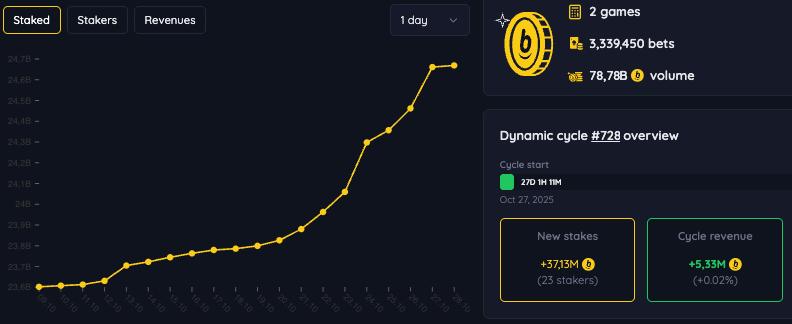
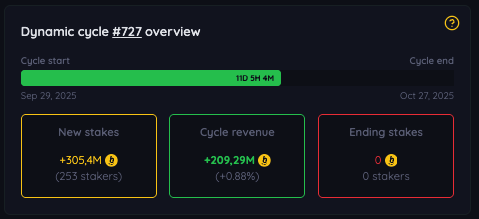
BetFin is a new Web3 technology - APY 60%
We are not waiting for licenses and permits in the traditional world if the blockchain gives access to casino property!
BetFin breaks the old rules. Subscribe and follow the announcements.
#oasislive25#CryptoMarket#brunardo#Bitcoin
My custom tournament for 10,000 $USDT 💵 has ended.
TOP-1 by PNL with a result of +182% was taken by user "al***[email protected]".
TOP-1 by turnover with a result of 16.5M$ was taken by user "1258".
The first places within 10 days will receive 1,500 $USDT 💵 to their balances, and the 7,000 $USDT 💵 will be divided among the remaining 38 winners according to the tournament table.
All my referrals automatically participated in the tournament, so even if you didn't follow the tournament, you could still win a prize. Check here - https://t.co/xNz1C43piB ⏪ to see if you won.
#Crypto #trading #BingX @BingXOfficial
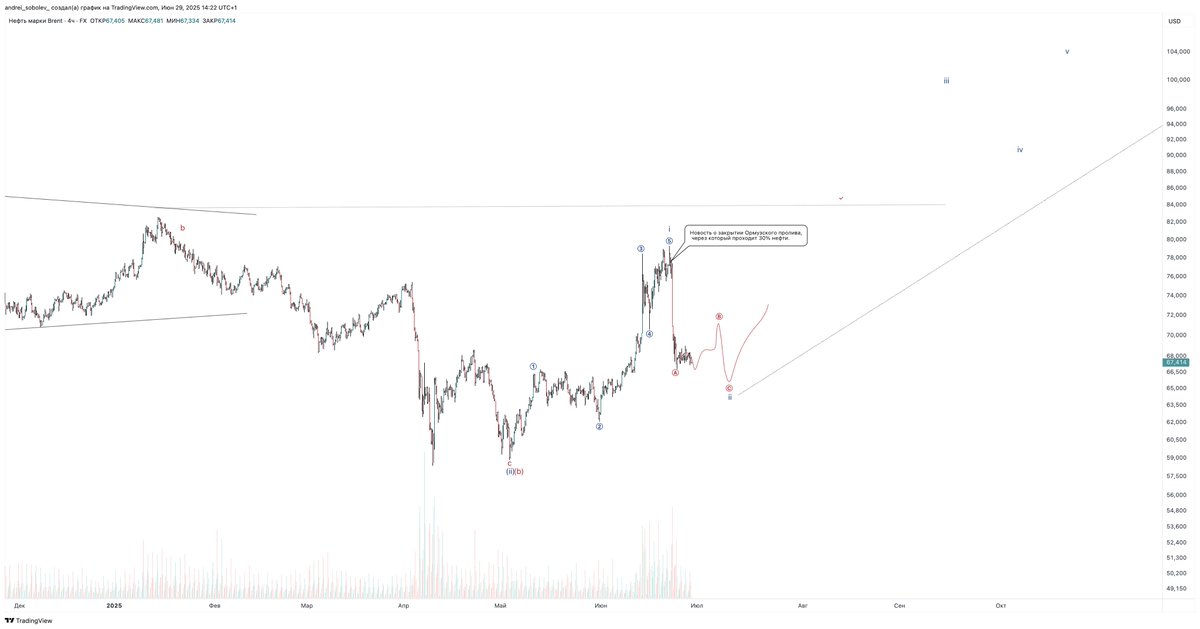
$UKOIL / $USD 4h 🛢
I will comment on oil.
The market reacted with a decline to the news of the closure of the Strait of Hormuz, through which 20-30% of the world's oil is exported. It seems that commodity markets are just as scammy as crypto markets 😂
Gerchik writes (https://t.co/K9ife6Ukkf) that he has never seen anything like this in his 27 years of trading)
I will continue to lead the upward calculation with impulse and correction, and upon completion of the correction with a clear triple, I will try to trade long on BingX Standart Futures (https://t.co/DuiYzvch7v)
#Oil #UKOIL #Trading
👑 BTC/USDT
As expected, BTC broke out upward from the symmetrical triangle.
Exact structure is hard to predict, but we have a clear target zone — that’s where we act. 📷 24h liquidations: $645M
$ADA $NEAR $BNB $TRX $XRP #crypto#bitcoin#ethereum#cryptocurrency#web3
LOL this is actually fun 😂
A platform where memecoin communities go head-to-head, and the winners get rewarded?
Count me in 🤝
Right now, the battlefield is 🔥🔥
It’s $PFZUCK vs $PFELON.
Who’s gonna win? 👀 You can back your community, and if your side wins, you get rewarded!
I'm glued to my screen to see how this plays out. Will it be the Zuck or Elon side that comes out on top?
I’ll update you all on the winner later, but you can join the action NOW. Vote for your pick, if your team wins, you’ll earn rewards!
This is pure memecoin chaos in the best way possible.
Not all yield is created equal.
Some are earned.
Some are subsidized.
Some are hiding a ticking bomb.
Let’s talk about real yield, risky yield and why DeFi needs to rethink the way incentives are structured 🧵
DeFi is full of numbers. But not all of them mean what you think.
A 5,000% APY might sound impressive and 20% yield on stablecoins might seem like a dream.
But in many cases, these figures are just surface-level distractions masking unsustainable practices.
1️⃣ The Illusion of Yield
During market euphoria, yield becomes the biggest magnet.
Protocols launch with massive incentives, attracting liquidity by printing tokens.
This model can work in the short term, especially to bootstrap ecosystems. But it rarely lasts.
As rewards dilute and real activity stagnates, users chase emissions rather than earn actual returns.
This creates a dangerous loop: more incentives attract more users, which demands more emissions and eventually collapses under its weight.
Value gets inflated, but not created.
Users, meanwhile, are often unaware of the risk, guided by dashboards that prioritize flashy numbers over clarity.
2️⃣ What Real Yield Means
Real yield comes from economic activity with intrinsic demand. It’s generated when protocols earn through usage, not inflation.
This includes trading fees on DEXs, lending spreads from borrowers and lenders, protocol fees on bridges or vaults and validator income on proof-of-stake networks.
These are revenue streams grounded in real value, not token gimmicks.
The problem is that most interfaces don’t show this clearly. APYs are displayed without context.
Risk exposure isn’t explained. The sustainability of the yield source remains hidden.
And for users, it becomes nearly impossible to tell the difference between a legitimate opportunity and early exit liquidity.
3️⃣ Why Modularity Changes the Game
This is where modular infrastructure starts to shift the landscape. When yield strategies are abstracted into smart, modular systems, they can adapt in real time.
Vaults can move funds between protocols based on market conditions. Logic can be built to prioritize long-term yield sources over short-term spikes.
Systems can monitor for unsustainable reward structures and respond proactively, without the user having to make every decision manually.
At Haust, we don’t treat yield as a static number. We treat it as a dynamic flow. Our modular approach enables capital to follow logic, not hype.
And the user stays in control, but with a clearer picture of what’s happening under the hood.
4️⃣ A More Honest Future
The next phase of DeFi won’t be about who prints the most. It’ll be about who earns and who sustains.
Real yield is quiet. It’s consistent. And it doesn’t require blind faith.
As protocols mature and the market resets, systems like Haust are helping users choose better.
Because sustainable yield is about understanding where they come from and what they cost.
Not all yield is created equal.
Some are earned.
Some are subsidized.
Some are hiding a ticking bomb.
Let’s talk about real yield, risky yield and why DeFi needs to rethink the way incentives are structured 🧵
DeFi is full of numbers. But not all of them mean what you think.
A 5,000% APY might sound impressive and 20% yield on stablecoins might seem like a dream.
But in many cases, these figures are just surface-level distractions masking unsustainable practices.
1️⃣ The Illusion of Yield
During market euphoria, yield becomes the biggest magnet.
Protocols launch with massive incentives, attracting liquidity by printing tokens.
This model can work in the short term, especially to bootstrap ecosystems. But it rarely lasts.
As rewards dilute and real activity stagnates, users chase emissions rather than earn actual returns.
This creates a dangerous loop: more incentives attract more users, which demands more emissions and eventually collapses under its weight.
Value gets inflated, but not created.
Users, meanwhile, are often unaware of the risk, guided by dashboards that prioritize flashy numbers over clarity.
2️⃣ What Real Yield Means
Real yield comes from economic activity with intrinsic demand. It’s generated when protocols earn through usage, not inflation.
This includes trading fees on DEXs, lending spreads from borrowers and lenders, protocol fees on bridges or vaults and validator income on proof-of-stake networks.
These are revenue streams grounded in real value, not token gimmicks.
The problem is that most interfaces don’t show this clearly. APYs are displayed without context.
Risk exposure isn’t explained. The sustainability of the yield source remains hidden.
And for users, it becomes nearly impossible to tell the difference between a legitimate opportunity and early exit liquidity.
3️⃣ Why Modularity Changes the Game
This is where modular infrastructure starts to shift the landscape. When yield strategies are abstracted into smart, modular systems, they can adapt in real time.
Vaults can move funds between protocols based on market conditions. Logic can be built to prioritize long-term yield sources over short-term spikes.
Systems can monitor for unsustainable reward structures and respond proactively, without the user having to make every decision manually.
At Haust, we don’t treat yield as a static number. We treat it as a dynamic flow. Our modular approach enables capital to follow logic, not hype.
And the user stays in control, but with a clearer picture of what’s happening under the hood.
4️⃣ A More Honest Future
The next phase of DeFi won’t be about who prints the most. It’ll be about who earns and who sustains.
Real yield is quiet. It’s consistent. And it doesn’t require blind faith.
As protocols mature and the market resets, systems like Haust are helping users choose better.
Because sustainable yield is about understanding where they come from and what they cost.