Une pensée pour ceux qui avaient dit que le blocus ne marcherait jamais.
De 1/ les USA n'ont pas bloqué le détroit d'Ormuz mais la ligne entre la frontière irano-pakistanaise au nord, et la pointe du sultanat d'Oman au sud.
De 2/ le blocus US coûte à l’Iran environ 435 millions $ / jour en exportations et importations, soit 13 milliards / mois.
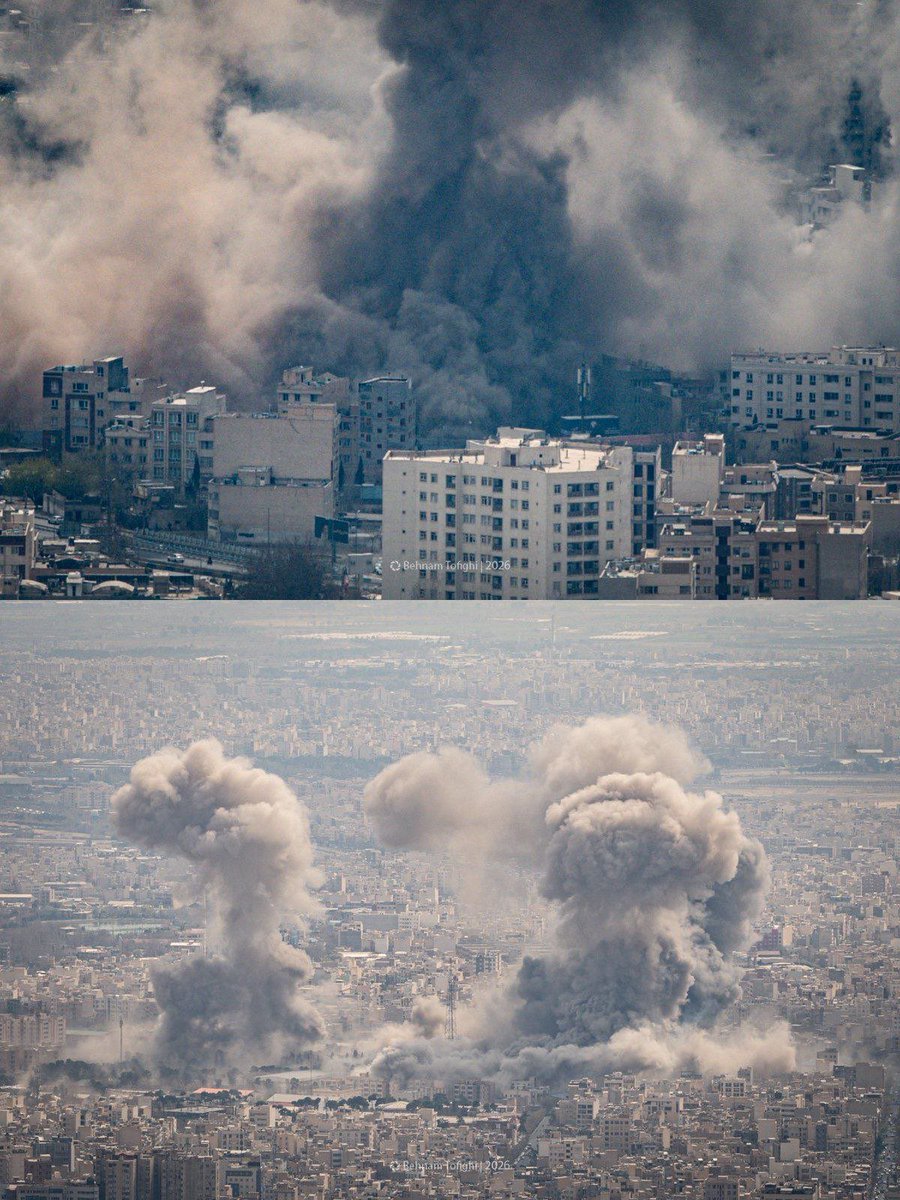
Perso je préfère le blocus car il assèche les renégats mollahs au pouvoir, au lieu de bombardements dont on ne sait jamais qui peuvent être les victimes avec ce régime islamiste qui n'hésite pas à utiliser les civils comme boucliers.
And that single component (trade services) accounts for nearly 1/5th of the entire PPI. Yes, one of the most important inflation gauges in the world derives 20% of its value from a metric that doesn't measure current inflation at all.
Put simply, the March PPI was not a real-world inflation reading. It was engineered to come in cooler than expected at a politically sensitive moment. Stocks got the memo and are back at ATHs, but inflationary dangers are not abating.
The vaccine dosage was obviously too high and done too many times.
I had the original Wuhan virus before there was any vaccine and it was much like any other cold/flu. Bad, but not terrible.
But my second vaccine shot almost sent me to the hospital. Felt like I was dying.
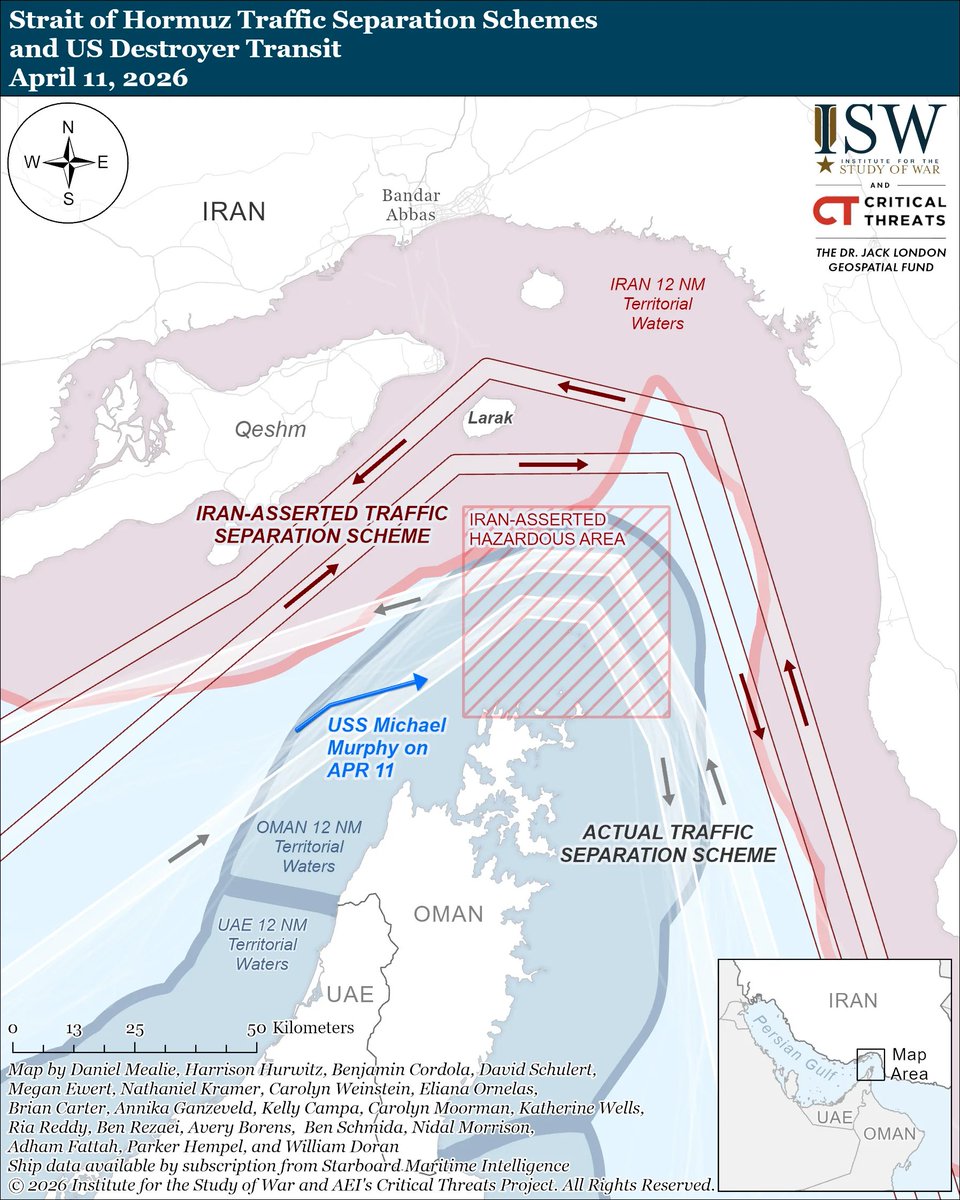
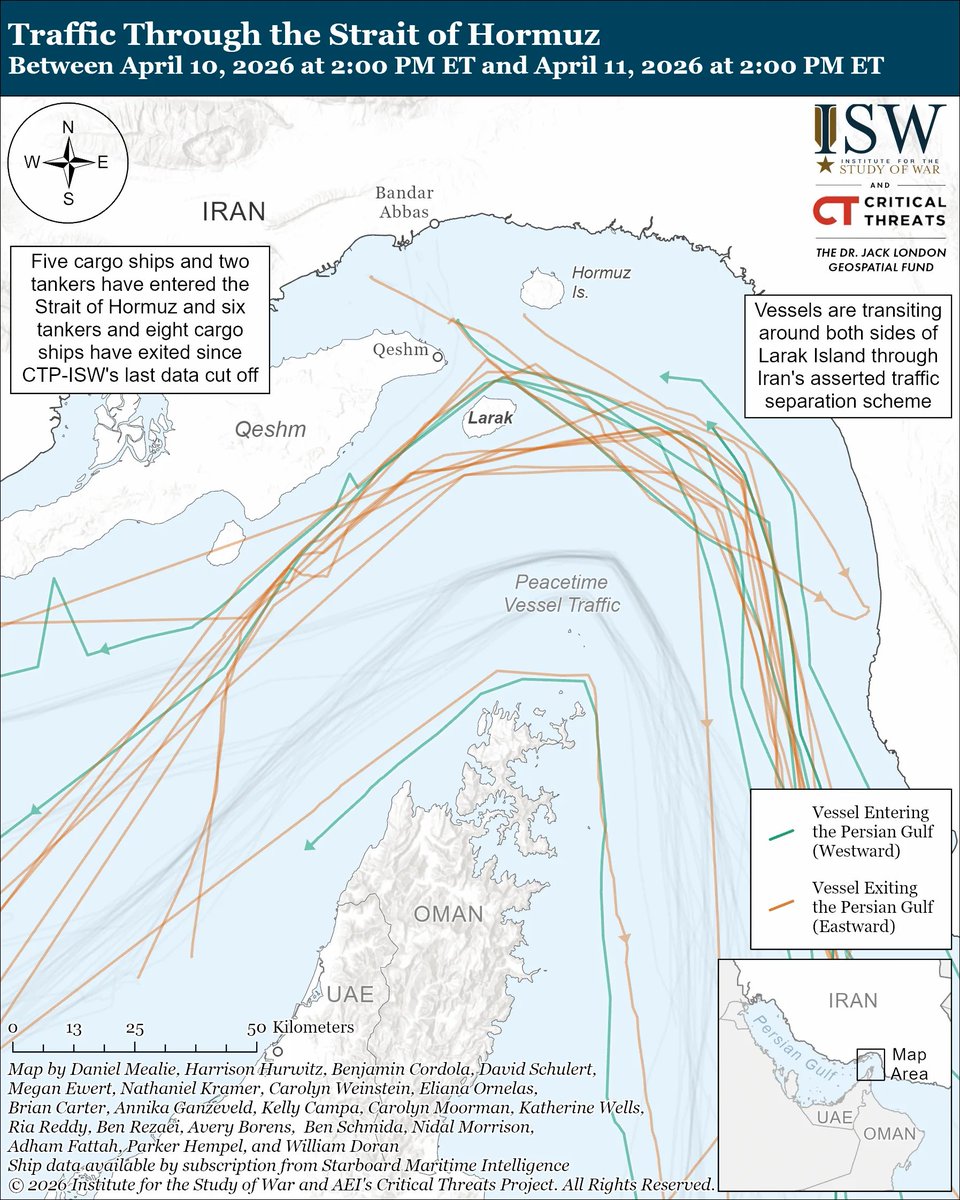
Iran is using the existence of an unknown number of naval mines it laid in the Strait of Hormuz to force ships to use Iranian territorial waters to traverse the Strait, which enables Iran to shakedown these ships for fees while the ships are in Iranian territorial waters. Iran likely designed its threatening behavior and its shakedowns to disrupt the global economy, which Iran calculates will enable it to extract concessions from the United States.
Iran warned merchant ships that mines could exist in a “hazardous area” that covers 1,394 sq km of the Strait, including the normal traffic separation scheme (shipping lanes) that ships use to transit the Strait. Ships seeking to avoid the Iranian-declared hazardous area must transit Iranian territorial waters.
Iran then shakes down these merchant ships by extracting “protection fees.” These “protection” fees protect ships from Iranian attacks. This protection racket is illegal under maritime law. No state bordering a strait is permitted to restrict traffic or extract fees under the United Nations Convention on the Law of the Sea.
Unspecified US officials told the New York Times on April 11 that Iran laid its mines—of which there are reportedly fewer than a dozen, according to a previous March 23 report—” haphazardly,” which has prevented Iran from locating or removing them. These mines may or may not be in the 1,394 sq km “hazardous area.”
The threat of mines also enables Iran to keep the price of oil and shipping insurance as high as possible for as long as possible without conducting attacks that would cause the ceasefire to collapse. Iran may calculate that the high price of oil and shipping insurance would cause the United States to cave on some of Iran’s demands.
The United States is attempting to undermine Iran’s ability to use the threat of mines in the “hazardous area” by using US Navy destroyers to prove that the normal traffic separation scheme is safe and viable for traffic. Iran can only use the threat of mines to keep these costs high if the fear of mines persists. US President Donald Trump said on April 11 that the United States is “starting the process of clearing out” the strait.
Arleigh Burke-Class destroyers USS Frank E. Peterson and USS Michael Murphy transited the Strait to clear the Strait of naval mines. US CENTCOM commander Admiral Brad Cooper said that the US Navy will share the route of safe passage with civilian shipping as soon as possible. Such a move would undermine Iran’s threats and badly damage its leverage in negotiations. The Qatari Transport Ministry announced later on April 11 that it will resume operations ”for all types of maritime vessels and ships” between 6:00 AM and 6:00 PM local time on April 12.
أريد أن افهم فقط....
- أدناه، ناقلة نفط روسية عملاقة عبرت مضيق هرمز ليلة أمس وهي متجهة لجزيرة خرج لتحميل النفط الإيراني.
- يوجد في المنطقة بحرية أميركية وبريطانية وفرنسية و.... و
- إيران هي الدولة الوحيدة في المنطقة التي استمرت بتصدير النفط يوميا عبر مضيق هرمز ، وكأن الحرب لم تحصل إطلاقا.
- في الوقت الذي ضرب فيه الأميركيون جزيرة خرج، استمرت السفن افيرانية بتحميل النفط الإيراني!
- ترمب استثنى النفط الإيراني الموجود في البحار وكل السفن التي تحمله من العقوبات الأميركية.
- أمس أفرغت سفينة إيرانية حمولتها من النفط الإيراني ف�� ميناء مصفاة باراديب الهندية التابعة لشركة النفط الهندية المملوكة من الحكومة، الحكومة التي يرأسها مودي الذي زار إسرائيل قبل الحرب على إيران مباشرة ووق�� عقد تسليح ضخم.
BREAKING: Iran has launched a multi-base ballistic missile salvo against Israel and Saudi Arabia, with simultaneous strikes underway in both directions.
Iranian launches reported from Isfahan, Shiraz, Babak City (Kerman Province), and Yazd Province. Targets reported toward central and northern Israel, with Saudi threat alerts active for Yanbu and Eastern Province. UAE air defenses are engaging missile and drone threats. Israeli Home Front Command sirens have sounded in southern and central Israel.
A US coalition base at Baghdad airport, Victoria Base has reportedly been struck. At least 10 explosions reported in Andimeshk, Khuzestan Province, inside Iran.
The salvo began roughly 90 minutes after Trump announced a two-week ceasefire on Truth Social.
This is a matter of pure market forces versus national strategy, and given the geopolitical landscape as of 2026, the latter is highly likely to prevail.
If I am right Japan, South Korea and Taiwan will receive preferential access to U.S. LNG exports in the coming days to the detriment of Europe instead of energy just following a market-clearing price.
If Iran actually goes through with this, it will simply go down in history as a colossal failure born of sheer desperation. It’s a textbook example of a move that’s guaranteed to alienate everyone, leaving Iran with no allies.
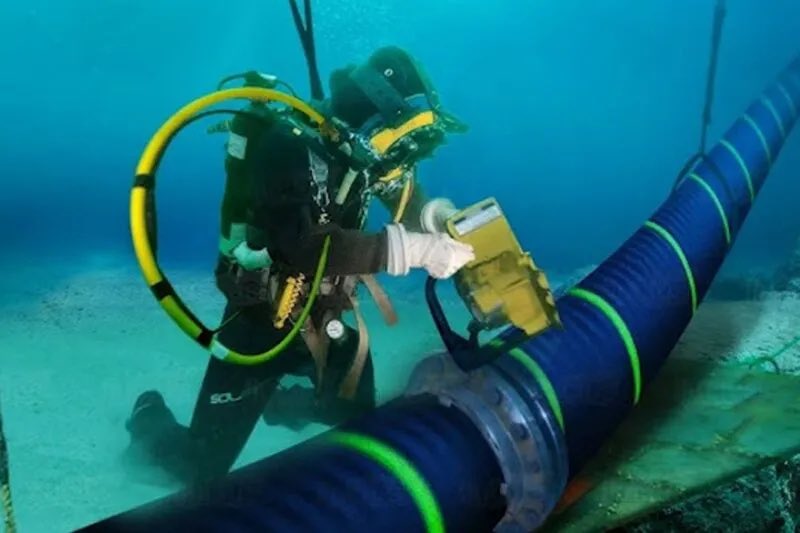
JUST IN: Iran just threatened to cut the undersea internet cables running through the Strait of Hormuz and the Red Sea.
Ninety-five to ninety-seven percent of global internet traffic does not travel by satellite. It travels through physical glass fibres buried one to two metres beneath the seabed. Your bank transfers. Your stock trades. Your cloud computing. The data flows connecting every financial market on earth to every other financial market. All of it runs through cables laid across the same shallow waters where the IRGC is currently operating a selective toll regime and collecting yuan for passage.
The cables at risk per TeleGeography: FALCON, Gulf Bridge International, Europe India Gateway, SEA-ME-WE 6, AAE-1, and FLAG in the Hormuz corridor. EIG, AAE-1, Seacom, SMW-4, SMW-5, SMW-6, IMEWE, and 2Africa Pearls in the Red Sea. These are not obscure regional links. They are the backbone of global digital commerce connecting Asia, Europe, the Middle East, and Africa.
The IRGC stated on March 28: “Critical infrastructure in Hormuz and Red Sea will not be spared if aggression continues.”
No cable has been cut. Google and Meta have activated contingency rerouting. The threat is credible as asymmetric signaling but execution is high-risk and likely a bluff. Here is why.
In 2008, eight cables were severed off the Egyptian coast. Seventy to eighty percent of Middle East-to-Europe traffic went dark. Repairs took three to eight weeks. In 2024, Houthi-related anchor drags in the Red Sea damaged four cables. Repairs took months. Both incidents were almost certainly accidental. Deliberate state-sponsored cable sabotage at scale has never been executed because the consequences are mutually destructive: Iran’s own connectivity depends on these same cables, and any confirmed cut would trigger immediate US, UK, and French naval retaliation from fleets already in theatre.
But the threat itself is the weapon.
Cable operators are rerouting. Rerouting costs money. Insurance on cable infrastructure is repricing. Every institution that relies on sub-40-millisecond latency between Asian and European financial centres is now running contingency scenarios that did not exist 28 days ago. The threat creates friction in the global financial plumbing without requiring a single fibre to be severed.
And the beneficiary of the threat is sitting on a Trump-Modi phone call discussing Starlink India approval.
Starlink’s LEO constellation of over 9,500 satellites provides resilient broadband via phased-array terminals that electronically steer narrow beams to avoid jamming. Iran has deployed GPS spoofing and RF noise against Starlink since January. Packet loss spiked to 30 to 80 percent. Starlink countered with firmware updates and beamforming nulls that reduced loss to usable levels. The arms race is real but Starlink is winning it.
Starlink Maritime is already deployed on tankers rerouting around the Hormuz corridor. Major shipping lines are equipping vessels with flat-panel terminals delivering 100 to 220 megabits per second at 20 to 40 milliseconds latency. SpaceX is reportedly filing its IPO prospectus this week per Bloomberg, Reuters, and The Information, targeting a $1.5 to $1.75 trillion valuation in June. Filing into a war where the alternative to his product is glass fibres buried in contested seabed.
The same strait carrying 20 percent of the world’s oil, 20 percent of its LNG, and one-third of its helium also carries 95 percent of the world’s data. Oil. Gas. Helium. Semiconductors. Fertilizer. Internet traffic. Yuan tolls. All flowing through or over 39 kilometres of water between Iran and Oman.
One chokepoint. Every domain. The market has not priced the convergence.
https://t.co/32ixeQpN7N
Netanyahu's been posting selfies, holding pressers, and mourning Chuck Norris like it's just another Tuesday��yet the internet still thinks he's a ghost. Bro, if denial was a sport, you'd win gold in mental gymnastics.
AI already one shotting people on Twitter
Millions of conspiracies flying around that videos of Netanyahu are AI generated and he's actually dead
It's pretty impossible to tell what's real
This shit is gonna get so bad, people will distrust anything online or lose their mind
The post’s claim that “the economic war hasn’t started yet” is only half true.
The Trump administration has already begun it—striking the military with airstrikes while using sanctions and targeted economic attacks to wipe out the finances of the Khatam al-Anbiya Empire.
JUST IN: The military America says it destroyed runs 800 companies, owns banks with 600 branches, and operates zinc mines across three provinces. The war is not being fought against an army. It is being fought against a conglomerate.
Khatam al-Anbiya Construction Headquarters is the IRGC’s economic flagship: 812 registered companies, 1,700 government contracts, 250,000 workers, operating across oil, gas, construction, telecommunications, and mining. US Treasury sanctions lists identify its subsidiaries by name: Fater Engineering, Makin Institute, Ghorb Karbala, Oriental Oil Kish, Sepasad Engineering, Hara Company, and SADRA shipbuilding among them. Fortune reported in March that the IRGC’s foundations control over half of Iran’s GDP by some estimates. Hegseth says the defence industrial base has been “functionally defeated.” The defence industrial base is a fraction of what the IRGC owns. The rest builds dams, lays pipelines, mines zinc, and deposits the proceeds in banks it also owns.
Beneath Khatam sits a second layer: the Basij Cooperative Foundation, established in 1996, operating 20 corporations and financial institutions. Ansar Bank alone has 600 branches and 6 million customers. The foundation controls zinc and lead mining complexes in Bafq, Anguran, and Zanjan, petrochemical investments, agricultural operations, and construction subsidiaries. US Treasury designated the foundation in 2018. Its purpose is not commerce. It is loyalty. Housing grants, small-business loans, and rural development projects flow to Basij members and their families, creating a patronage network that converts economic dependency into political obedience and military readiness.
The two empires overlap. Khatam builds the infrastructure. Basij distributes the benefits. The IRGC commands both. And the Habib Ring that installed Mojtaba channels profits offshore through intermediaries like Ali Ansari, whose network connects £200 million in London property and €400 million in European hotels to the same financial architecture that funds a $20,000 Shahed drone.
When Araghchi told CBS “we are ready to defend ourselves as long as it takes,” he was not describing ideology. He was describing a balance sheet. The IRGC does not need state budgets to fight. It has its own banks. It does not need government contracts to sustain operations. It has 812 companies generating revenue under sanctions through smuggling networks, black-market transactions, and cryptocurrency channels that the 15,000 strikes have not touched because you cannot bomb a shell company registered in Dubai or a zinc mine in Zanjan.
The Khatam al-Anbiya spokesman confirmed the escalation logic on 11 March: the “enemy left our hands open to targeting economic centres and banks” linked to America and Israel across the Gulf. The threat is not abstract. It is specific. Any energy infrastructure in which an American company holds shares. Any banking facility linked to the coalition. The conglomerate that runs 812 companies is threatening the companies of the countries bombing it, and the threat is credible because the same conglomerate already hit AWS data centres with drones it funded from revenues those 812 companies generated.
Fifteen thousand strikes have destroyed Iran’s air force, navy, missile production, and air defences. They have not destroyed the zinc mine in Bafq. They have not destroyed Ansar Bank’s 600 branches. They have not destroyed the petrochemical investments in Bushehr. They have not destroyed the shell companies in Dubai or the mansions in London. The military is rubble. The economy that funded the military is intact. And the economy does not need the military to launch a Shahed. It needs $35,000 and a garage.
The war America is winning is against Iran’s armed forces. The war America has not started is against Iran’s economy. And “as long as it takes” is the IRGC’s way of saying the second war is the one that matters.
https://t.co/eMrt5qYYst
Some commercial cloud services (non-classified) may be used globally, but AI applications related to military, intelligence, and critical infrastructure should immediately accelerate their return to domestic infrastructure.
The AI that selected the coordinates for the strike that killed Iran’s Supreme Leader just announced a sovereign operating system for warfare. On the same day the IRGC declared it a legitimate military target.
Palantir and Nvidia released their Sovereign AI Operating System Reference Architecture today, 12th March. A complete turnkey stack: Nvidia’s Blackwell GPUs running the accelerated inference, Palantir’s Ontology layer fusing every sensor, satellite, signal intercept, and human intelligence source into a single operational picture, and Anthropic’s Claude performing the reasoning that converts raw data into targeting decisions. The system compresses what used to take analysts days into seconds. CENTCOM used it to locate Khamenei. The B-2 that dropped the GBU-57 on Parchin flew a mission planned inside it. Every precision strike in Operation Epic Fury passes through this architecture before a weapon is released.
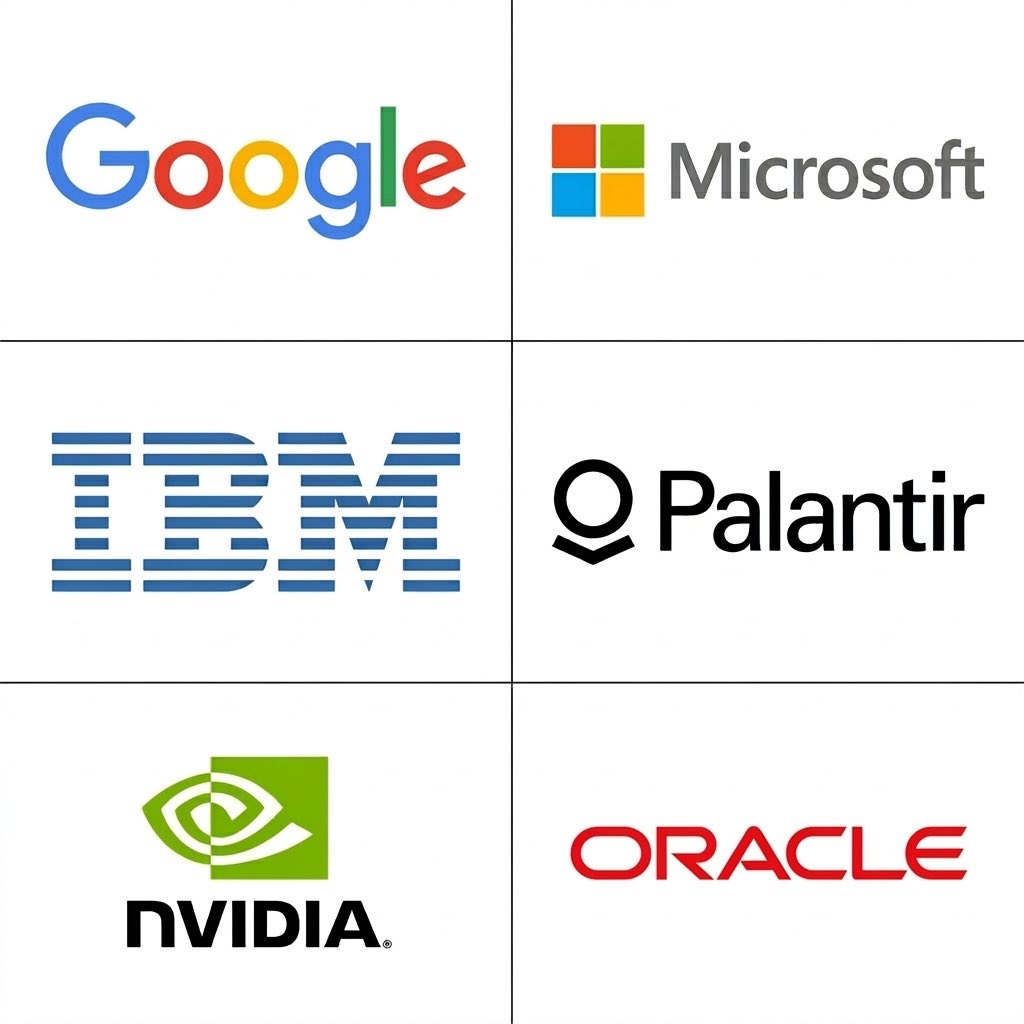
Iran’s Khatam al-Anbiya published both companies on its target list yesterday. Google. Microsoft. Palantir. IBM. Nvidia. Oracle. Amazon. The IRGC is targeting the AI that is targeting the IRGC. The companies whose chips select the bombs and whose software sequences the strikes are now on the same list as the military infrastructure those bombs are destroying. The war has become recursive: the targeting system is itself a target.
This is the asymmetry that governs the 21st century and it was announced on the same day the war demonstrated it.
On one side: an AI architecture that ingests every data source on Earth, fuses it through a semantic layer that understands what every object IS and how it relates to every other object, runs inference on the most powerful GPUs ever manufactured, and produces targeting coordinates in seconds. Sovereign. Classified. Air-gapped. Scalable to every theatre the United States operates in. The announcement today was not a product launch. It was a declaration that the architecture already winning this war is now available as a reference design for every allied nation on Earth.
On the other side: 31 autonomous IRGC commanders with sealed orders from a dead man, firing $20,000 drones at $2 billion data centres, laying mines by hand from small boats, and publishing target lists that include the companies whose AI selected the coordinates for the strike that killed their Supreme Leader. Human doctrine versus machine intelligence. Mosaic versus Ontology. Sealed orders versus real-time inference.
The cost ratio tells the story. The GBU-57 that hit Parchin was selected by an AI system running on chips that cost thousands of dollars, processing data that arrived in milliseconds, producing a targeting solution that was verified, approved, and executed within a single operational cycle. The IRGC’s response to that strike was a $20,000 drone aimed at an AWS data centre and a handwritten target list published on a news agency website. One side operates at the speed of light through silicon. The other operates at the speed of a fast boat through a minefield.
The war is not between America and Iran. It is between two paradigms of military organisation. One fuses every source of information on Earth into a single decision layer and acts in seconds. The other distributes authority to 31 human commanders who act on paper orders from a dead leader and cannot be updated, recalled, or redirected because the chain of command terminates in a cardboard photograph.
Palantir’s stock surged on the announcement. Nvidia’s Blackwell chips are backordered through 2027. And somewhere in a tunnel beneath Isfahan, 200 kilograms of uranium sits one week from weapons grade, located by the same Ontology that cannot yet send an inspector to verify it, targeted by the same AI that cannot yet open the door.
The machine knows where the material is. The doctrine prevents anyone from reaching it. That is the war.
https://t.co/eMrt5qYYst
Ripple will take a comprehensive approach to protect XRP's payment use cases, rather than prioritizing its own profits like Coinbase. This is a smart strategy to win on both fronts while avoiding industry fragmentation.
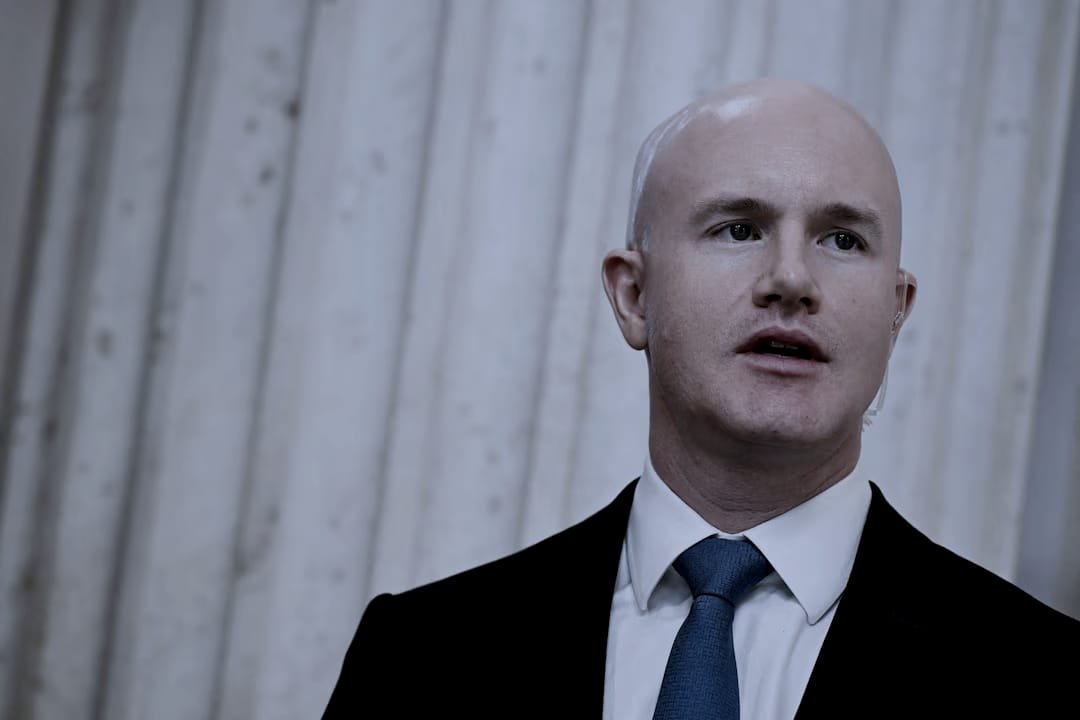
Coinbase is quietly lobbying to kill Bitcoin's de minimis tax exemption.
The company reportedly told legislators that "no one is using Bitcoin as money" and that a Bitcoin de minimis exemption would be "DOA." Meanwhile, they're pushing for the exemption to apply only to stablecoins, specifically regulated, dollar-pegged stablecoins like USDC.
Coinbase made $1.35 billion in stablecoin revenue in 2025, up 48% year over year, almost entirely from interest earned on U.S. Treasuries held in USDC reserves. Bloomberg estimates that number could surge 7x under the GENIUS Act. Every person who uses USDC for payments instead of Bitcoin is a person whose dollars are sitting in Coinbase's reserve pool generating risk-free yield for Coinbase.
A de minimis exemption for Bitcoin would let people spend it freely for everyday purchases without triggering a taxable event. That makes Bitcoin a direct competitor to USDC as a payment method. Coinbase doesn't want that competition. They want you locked into their centralized stablecoin ecosystem where they clip yield on every dollar you park there.
The irony is that a de minimis exemption doesn't even make sense for stablecoins. They're pegged to the dollar. They don't fluctuate in value. There's no capital gain to exempt. The exemption matters for Bitcoin precisely because it does fluctuate, and without it, every coffee purchase becomes a taxable event.
Senator Lummis proposed a $300 de minimis exemption that would cover Bitcoin. The House framework only covers stablecoins under $200. The Bitcoin Policy Institute has already warned that Bitcoin is being deliberately excluded from these talks.
A de minimis exemption that covers stablecoins but not Bitcoin isn't a tax framework. It's a subsidy for Coinbase's treasury management business disguised as consumer protection.
For Trump, relocating the AI hub to the U.S. kills three birds with one stone: “reshoring manufacturing,” “energy independence,” and “military superiority.”
BREAKING: The IRGC just published a target list on Tasnim: Google. Microsoft. Palantir. IBM. Nvidia. Oracle. Amazon. Every US technology company with infrastructure in the Gulf is now a declared military objective of 31 autonomous commanders who need no permission to strike and answer to a Supreme Leader made of cardboard.
Three AWS data centres have already been hit. UAE and Bahrain. 1 to 3 March. Outages occurred. Redundancy restored service. But the precedent is not the outage. The precedent is the doctrine.
When a centralised government declares a target, you call the leadership and negotiate its removal. When 31 autonomous provincial commands each possess independent firing authority over missiles, drones, and fast boats, and each holds a published list of American technology facilities, there is no phone number to call. There is no authority that can withdraw the list. There is no ceasefire that binds a commander in Bushehr who decides tonight that the AWS facility in Bahrain falls within his operational zone and his sealed orders from a dead Supreme Leader authorise him to strike it. The Mosaic Doctrine does not just enable attacks on tech infrastructure. It makes them ungovernable.
The targeting is not irrational. Palantir’s Mission Manager software provides the AI-driven targeting that selects which Iranian facility each American bomb hits. AWS hosts US military workloads. Nvidia’s chips power the surveillance models. In IRGC doctrine, these companies are not collateral. They are the digital nervous system of the kill chain that assassinated Khamenei. Destroying them degrades the precision that makes American strikes devastating. A $20,000 Shahed drone navigating at low altitude toward a $2 billion data centre campus produces the same cost asymmetry that a $500 mine produces against a $4 billion destroyer. And 31 commanders means 31 independent calculations every night about whether to send one.
The Gulf staked over one trillion dollars on becoming the world’s AI hub. UAE targets 90% sectoral penetration by 2030. Saudi NEOM. Qatar cloud zones. Bahrain fintech. All built on the assumption that the Gulf would remain stable enough to host the servers the world trusts with its data. The IRGC target list published today proves that assumption was structurally wrong.
The actuarial mechanism that closed Hormuz now migrates to the cloud. A facility on a published IRGC hit list, in a region where 1,440 drones and 253 ballistic missiles have been fired in eleven days, where the 94% interception rate still permitted 81 drone impacts and 20 missile penetrations, cannot be priced by any existing insurance model. If it cannot be insured, enterprise clients cannot host workloads there. If workloads migrate, the trillion-dollar AI investment becomes the largest stranded asset class in technology history. The drones do not need to destroy the data centres. The list itself is the weapon. The insurance response to the list is the damage.
And the list cannot be withdrawn. A centralised government could retract it in a ceasefire. But 31 commanders already hold it, with non-expiring authority from a dead man and no constitutional mechanism for a cardboard successor to rescind it. The same deadlock that prevents Mojtaba from stopping Hormuz mines prevents him from removing Google’s address from a targeting database.
The first chokepoint was oil through a strait. The second is data through a server farm. Both governed by the same doctrine, the same insurance mathematics, and the same Supreme Leader who cannot override either.
https://t.co/eMrt5qYYst
Within the next eighteen months you’ll start seeing IT departments at major companies who default to a low-risk conservative posture around AI adoption start getting fired.
CEOs and boards are going to view the people who have an obvious incentive to mitigate downside-risk as the enemy.
It sounds batshit now. These people are protecting the enterprise under traditional frameworks. So what if employees gain access to the latest AI on a one year lag. Think of all the data risk.
That entire way of thinking is going to quickly change as models get more economically valuable.
Compliance and cybersecurity were the final arbiters until now. Now they are what is going to doom your company competitively.
Any IT guy who is dragging their feet is a liability not an asset.
“You don’t understand how enterprises operate”
No, I understand fully. I’m telling you the value of these models are about to increase so much that none of the traditional risk-reward calculus matters.
It is an existential event. And Joe in IT using data security as an excuse to drag his feet is now the enemy.
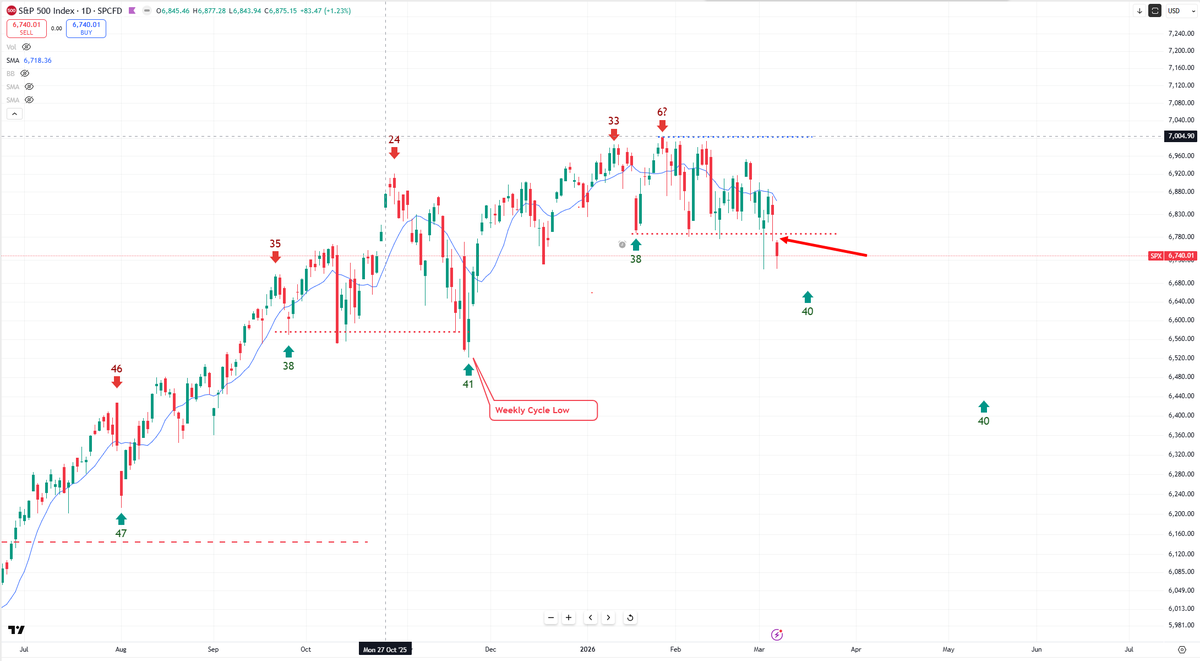
Stocks showed us a Failed Daily Cycle this friday on closing basis. In last 4 years, only 2nd such case (March 25 other) of a Failed cycle when it wasn't expected or due.
Doesn't guarantee anything, but does very often signal an intermediate timeframe downturn is underway.
This tech-driven approach is smarter than the Kurdish-controlled route and offers greater economic and diplomatic benefits for the U.S. administration (Trump-style).
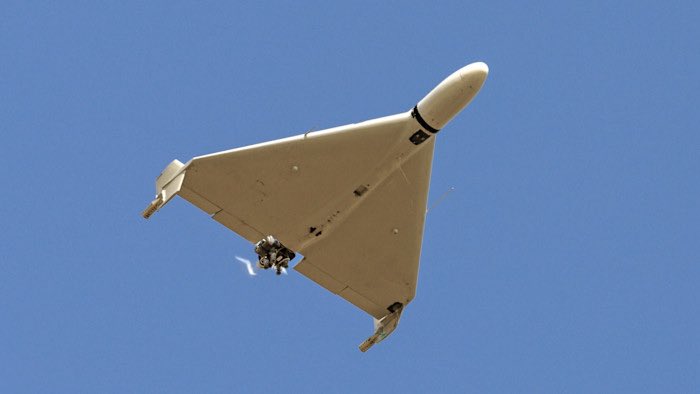
Thought experiment: we airdrop 1m stripped down cellphones with direct-to-satellite Starlink service that lets Iranians report IRGC movement, attempted drone & missile launches, and general OSINT. Run AI on it and pair with drone data.
Highest utility in more rural areas where the launchers are anyways. For dense areas like Tehran maybe over a drone as a makeshift cell tower.
At $200 -$300 a pop that’s less than one days oil premium and has tons of benefits because you can later use it to pole Iranians on who they want for govt the day after etc.
Might be retarded - just thinking out loud ���♂️
BREAKING: Iran just struck Microsoft data centers in the Gulf. Not Amazon. Not a generic cloud provider. Microsoft — whose Azure platform runs the operational backbone of NATO, the US Department of Defense, and every major Western financial institution that has expanded into the Gulf over the last five years.
This is categorically different from the AWS strikes earlier in the war.
Microsoft Azure is not simply a commercial cloud product. It is a defense-grade infrastructure platform operating under FedRAMP High and DoD Impact Level 5 and 6 authorizations, the highest security classifications available to a commercial provider. Azure GovCloud runs classified US government workloads. Azure for Operators runs 5G military communications infrastructure. The Gulf Azure availability zones, built under billions of dollars of sovereign cloud commitments to UAE, Saudi Arabia, and Qatar, sit at the intersection of commercial enterprise and military-adjacent operations in a way no other cloud platform does. When Iran fires missiles at Microsoft data centers in the Gulf, it is not attacking a commercial storage facility. It is attacking the digital connective tissue between American defense architecture and Gulf sovereign AI ambitions.
The mechanism Iran is applying across every domain of this war is now operating at the infrastructure layer of the global digital economy. Hormuz for maritime insurance. BAPCO and Ras Tanura for oil infrastructure insurance. Manama hotels for corporate presence insurance. AWS for basic cloud insurability. Microsoft for the tier of cloud infrastructure that carries defense-adjacent and government workloads. Each successive target has moved one layer deeper into the critical infrastructure stack.
Microsoft has not yet confirmed the extent of damage or the impact on service continuity. That silence is itself data. When AWS facilities were struck earlier in the war, the company posted status updates within hours. The Microsoft situation is being handled with a different communication posture, which is consistent with facilities that carry sovereign and defense-adjacent contractual obligations that restrict what can be publicly disclosed about operational status.
The Gulf was supposed to be the proving ground for the sovereign AI thesis. Every major hyperscaler made the bet simultaneously: Gulf governments want their data onshore, under their own regulatory frameworks, close to their own populations, contributing to their own AI capability development. Microsoft, Google, AWS, Oracle, all committed multi-billion dollar buildouts to that thesis in the last three years. The thesis assumed physical security. The thesis assumed the Gulf was a stable operating environment for long-term digital infrastructure. That assumption was always geopolitically contingent. It is now empirically falsified.
Every CTO and every procurement officer running a sovereign cloud negotiation anywhere in the world is looking at the Microsoft strike footage right now and running the same calculation: if the Gulf is a ballistic missile target range, where does the sovereign AI buildout go instead?
Iran cannot win this war militarily. But it is methodically repricing every assumption the American-aligned economic order made about the Gulf as a safe jurisdiction for permanent infrastructure.
The missiles hitting Microsoft data centers today are not attacking cloud storage. They are attacking the confidence interval on a decade of digital infrastructure investment.
https://t.co/ULBgEzZ3A8
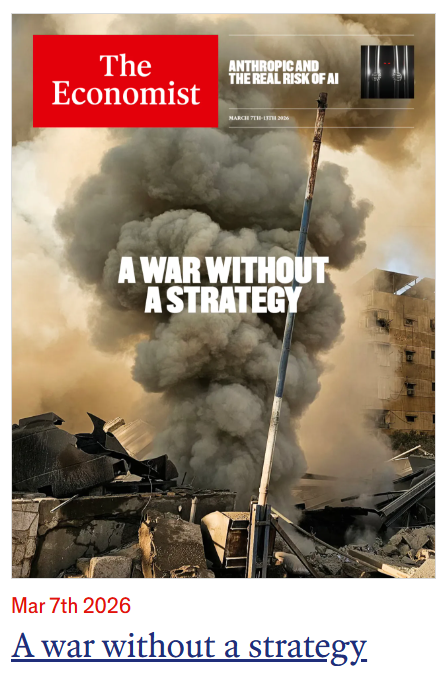
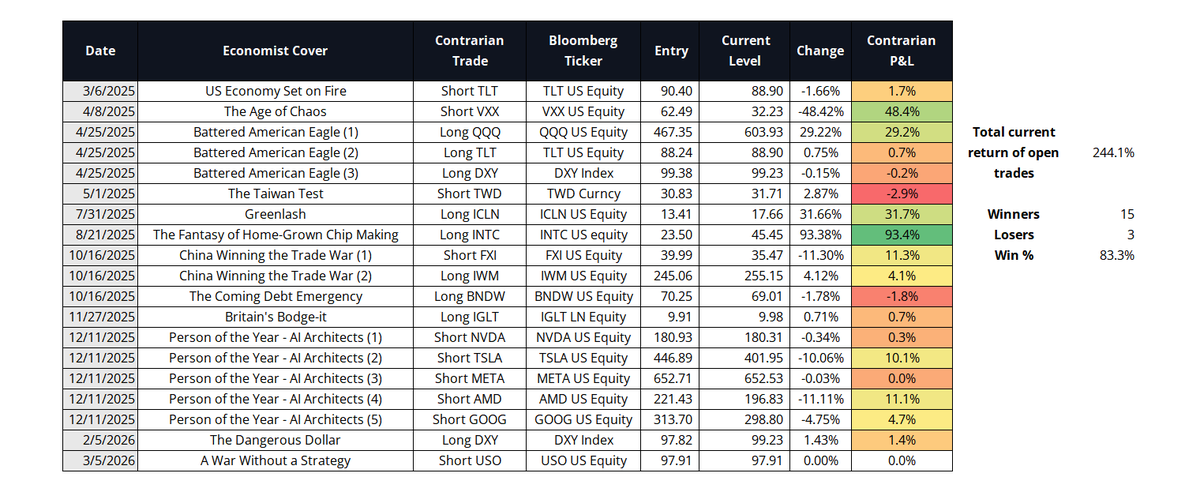
Magazine Cover Capital goes short USO.
As was the case when it went long US dollars a few weeks ago... I hate it ! But the indicator is the indicator. It's worked out of sample for more than 10 years now.
Last 12 months results xls attached. 15 of past 18 are in the money. Absurd gross returns 244% (not vol-weighted yes obviously yadda yadda).
If you're not familiar with this indicator go to spectra markets dotcom, library, and type "magazine cover" in the search ... it's free.
Please read article before arguing about cherry picking or sample size etc none of those things apply here. It's all objective and real-time and the sample size is in the 100s over 30+ years in and out of sample.
Brands and advertising are a tax on the cognitive capabilities of the median consumer. In a world of agents the concept will be reshaped. Adversarial review swarms will become a thing.
Might actually be a useful instantiation of the blockchain. Shit is gonna get so weird.
“AI designs molecules → Robots perform high-speed synthesis and testing → AI learns from data feedback”
This loop is becoming a reality.
In other words, robots are starting to physically solve the “bottleneck in drug discovery.”
If you understand why Silicon Valley has been such a dominant source of innovation - where density of intelligence attracts density of capital availability which morphs into an organism constantly feeding on itself with new ideas, talent and capital to pursue them - then you should intuitively grasp why the explosion of intelligence provided by
AI will quickly snowball by driving capital and talent towards what’s left: robotics and drug discovery.
They aren’t distinct problems. They operate within the same system.