Democracy needs us to fight. End the electoral college,it is a force multiplier of racism & slavemaster remnant/ expand SCOTUS/ Court reform #holdtheline#Khive
Who saw this a while back and just KNEW this was not gonna end well?
Trump made his motorcade drive down the reflecting pool before it was sealed.
The contractor didn’t clean up the motor oil and tire dust, they just painted right over it.
The paint failed exactly as predicted.
By June, massive gashes of blue lining were peeling off in the exact shape of the motorcade’s path. The oil trapped underneath stopped the paint from sticking.
Surface prep 101.
Six innocent people arrested.
You honestly have to love the absolute state of Russian military logistics right now, with Chief of Staff Valery Gerasimov frantically preparing an emergency report to tell Putin that the army has officially run out of gas.. 🇷🇺⛽️🚨
A massive internal crisis has erupted within the Russian General Staff. Following highly effective Ukrainian drone strikes on major refineries, the Kremlin has been forced to redirect fuel away from the frontlines to stabilize a growing fuel shortage in Moscow. The result? Total paralysis for Russian armor. Commanders on the ground have bluntly informed Gerasimov that offensive operations cannot continue because supply trucks and tanks are literally running on empty. 🏎️💨
To make matters worse, occupied Crimea is rapidly sliding out of Moscow's control. Fuel shortages are so severe that the occupation administration just banned all civilian gasoline sales, suspended public transport after 10 PM, and left Russian "tourists" stranded in massive lines. According to the internal leaks, the General Staff has concluded that Russia cannot simultaneously defend Moscow, hold Crimea, and sustain an offensive in Donbas with their current resources. Oh, and the air defense missile stockpiles in Belgorod and Kursk are completely depleted because they were moved to protect Moscow's elite. Grab your popcorn, the entire war machine is stalling in real time! 😂🍿
Source: Internal Russian General Staff data leaks, regional administrative updates via Reuters, and strategic monitoring by The Moscow Times (June 23, 2026).
On the fourteenth of December, 1927, at three-forty in the afternoon, a thirty-six-year-old Black anthropologist named Zora Neale Hurston boarded a southbound train at Penn Station in New York City, bound for Mobile, Alabama. Her destination, on the far end of the journey, was a small all-Black settlement on the northern edge of Mobile called Africatown, which had been founded sixty-two years earlier by a group of freed slaves whose distinguishing characteristic was that they had been brought to the United States not in the documented eighteenth-century trade in human beings that had built the American South, but on the very last slave ship ever to make the Atlantic crossing — a private illegal smuggling vessel named the Clotilda, which had docked at Mobile in 1860, fifty-two years after the international slave trade had been outlawed by act of the United States Congress.
Hurston was traveling to Africatown to interview a man.
The man's name, in Mobile, was Cudjo Lewis. His name, in the small village in the Bantè region of present-day Benin where he had been born in approximately 1841, was Oluale Kossola. He had been captured, in his late teens, in a slaving raid conducted by warriors of the neighboring Kingdom of Dahomey on behalf of an Alabama-based illegal slave-trading consortium led by a wealthy Mobile shipbuilder named Timothy Meaher. He had been held for three weeks in a barracoon — a fortified stockade for captured Africans awaiting transport — in the West African port city of Ouidah. He had been shipped, with approximately one hundred and ten other captives, across the Atlantic in the hold of the Clotilda. He had been enslaved, in the Mobile area, for five years and six months. He had been freed by Union soldiers on the twelfth of April, 1865. He had been free, by the time Hurston knocked on his door, for sixty-two years.
He was the only person on earth, at that point in 1927, who could recount, in personal first-hand testimony, the experience of having been taken captive in Africa, held in a barracoon, transported across the Middle Passage, and sold into chattel slavery in the United States.
He was eighty-six years old.
He spoke an English heavily inflected by the West African languages he had grown up speaking and by the Alabama vernacular he had learned during his sixty-seven years in the United States. He had been interviewed, in the previous decade, by several other researchers. None of them, by their own subsequent acknowledgment, had succeeded in getting him to talk at length.
Hurston had brought peaches. She had brought ham. She had brought watermelon. She set them on his porch. She asked him who he was and how he had come to be a slave.
He told her.
She returned, over the next four years, repeatedly. She wrote, in 1931, a manuscript that consisted, almost entirely, of his own words in his own voice in his own English. She titled it Barracoon: The Story of the Last Black Cargo. She submitted it to a series of New York publishers in the early nineteen-thirties.
Every one of them rejected it.
The grounds for rejection, by the documented record of the correspondence she received, were not that the manuscript was insufficiently researched or inadequately written. The grounds were that she had refused to standardize Cudjo's English. The publishers wanted her to rewrite his speech in standard literary American prose. They explained that contemporary American readers would find the dialect difficult and that the book would not sell.
Hurston declined to revise. She believed, on the documented evidence of her notes and her correspondence, that the entire point of the project was that the man should be allowed to speak in his own voice, and that to standardize his English would be to silence him a second time.
The manuscript went into a safe deposit box.
Cudjo Lewis died, at his home in Africatown, on the seventeenth of July, 1935. He was approximately ninety-four years old. Zora Neale Hurston died, in a county welfare home in Fort Pierce, Florida, on the twenty-eighth of January, 1960. She was sixty-nine. The manuscript she had refused to revise was, by the time of her own death, in the archives of the Moorland-Spingarn Research Center at Howard University in Washington, D.C. It would sit there for the next fifty-eight years.
On the eighth of May, 2018, the Amistad imprint of HarperCollins published the manuscript, edited by a Hurston scholar named Deborah G. Plant, in the form Hurston had originally prepared it. The book entered the New York Times bestseller list at number two in its first week.
If her story moved you, drop one word in the comments — Zora, Cudjo, Barracoon, anything that comes to mind. Tap the like button so more people find this story. The page is small. Every reaction helps us keep telling stories like this one.
После окончания войны все операторы российских дронов и командиры ракетных расчетов, совершавшие военные преступления против мирного населения Украины, должны предстать перед Международным трибуналом.
— ретвит, если согласны.
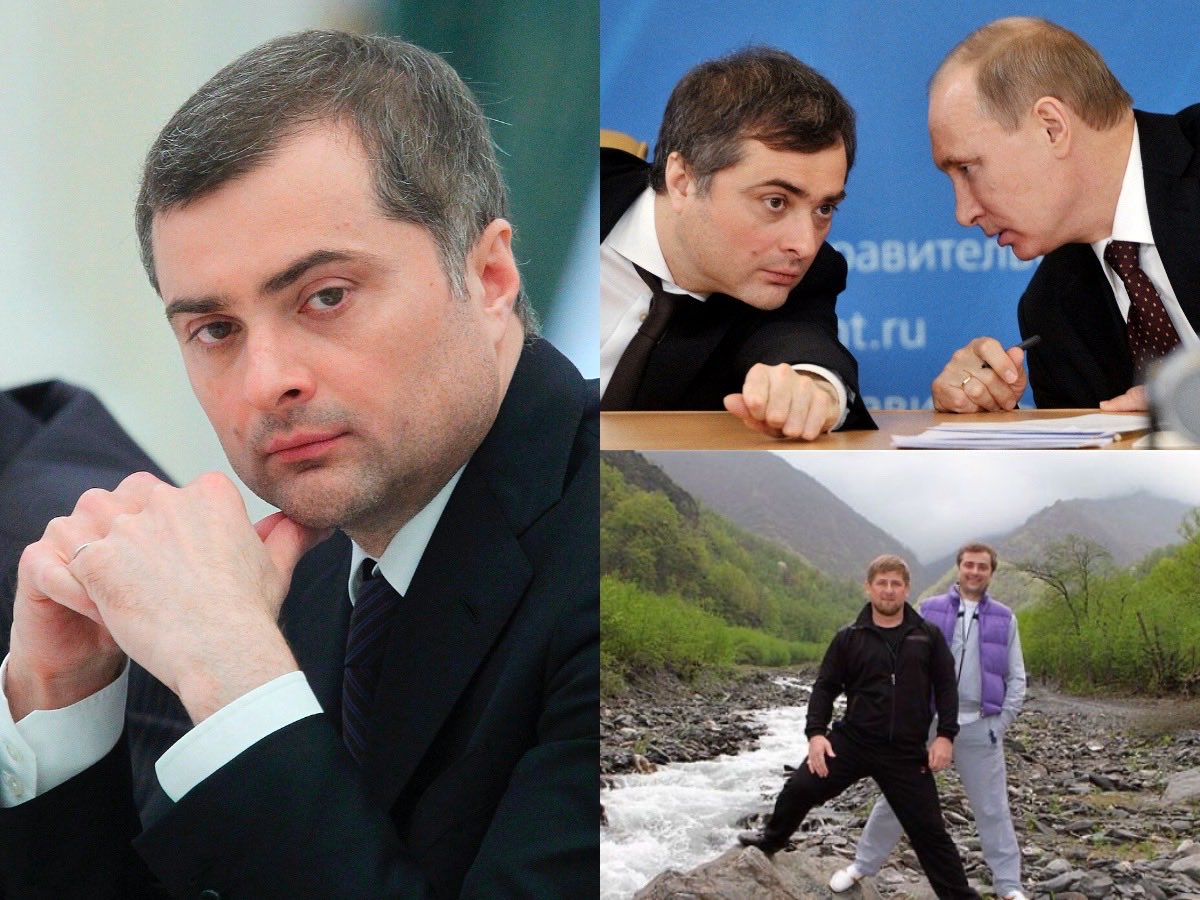
You cannot understand the rot of modern politics without studying Vladislav Surkov, the dark political strategist who engineered Putinism.
He is a profoundly dangerous figure who mastered the art of weaponized illusion, creating a blueprint of deception that has been copied by many, including Donald Trump.
Many know about Surkov’s existence because of The Wizard of the Kremlin, but both the book and the movie have faced intense blowback for humanizing Putin and Surkov too much. The truth is much uglier.
Surkov built the infrastructure of modern Russian authoritarianism through managed democracy, a toxic system where the Kremlin secretly funds and controls almost every political faction, from violent skinheads to liberal human rights organizations, ensuring the population remains divided, confused, and powerless.
His philosophy is entirely built on turning an act into reality. Everything is an act, and while most people realize everything is an act, they choose to play along with the spectacle.
As the chief engineer of the 2014 invasion of Ukraine, Surkov manufactured the entire Donbas separatist movement out of nothing. He deployed paid crowds, fake protests, and crisis actors to stage a civil war, while sending real Russian soldiers to masquerade as local separatists, firing real bullets. This manufactured theater laid the groundwork for the current catastrophic war, an act of aggression that was completely unprovoked, and chosen by Russia.
Donald Trump has mirrored this dangerous methodology, adopting the fake-it-till-you-make-it strategy, utilizing paid crowds, and spreading absolute cynicism. We saw it in Greenland. Trump uses these Surkovian tactics to erase objective truth, gaslight voters, and resort to brute force or raw intimidation the moment his fabrications start to fall apart.
Surkov's horrific legacy continues to poison global discourse. He must be widely studied and exposed so the public understands that chaos is rarely accidental. It is actually a post-modern warfare strategy designed to make us submissive to dictators
It Was Supposed to Be History
I'm a Polish filmmaker living in London.
I wasn't raised to care about antisemitism. Quite the opposite.
Like many Poles of my generation, I grew up with a version of history that focused heavily on Polish suffering during the Second World War. I visited Auschwitz as a teenager, yet somehow left without truly understanding the scale of what had happened to Europe's Jews.
That changed when I was 19 and worked on Schindler's List.
For the first time, I was confronted with parts of history that had been missing from my education. Later, living in Paris and spending time in New York, I met Jewish people whose understanding of Poland, Europe and history was very different from my own. Some conversations were uncomfortable. A few were life-changing.
The more I learned, the more I realised that antisemitism didn't disappear after the Holocaust. It adapted.
Today it often arrives dressed as political activism, conspiracy theories, selective outrage, historical revisionism, or simply a double standard applied to the world's only Jewish state.
I am not Jewish. I have no family connection to Israel.
What I do have is a deep distrust of propaganda, mob thinking, and people who demand that history be simplified into slogans.
My work on antisemitism began with a simple realisation: if I could be misled about history, so could millions of others.
That is why I make films, conduct interviews, and challenge narratives.
Not because I have all the answers.
Because I spent too many years believing things that weren't true.
I saw a post on Reddit that said that “The underlying purpose of AI is to allow wealth to access skill while removing from the skilled the ability to access wealth.” And I don’t think I’ve ever seen AI described so incisively.
The Carney government just dropped a $3.2 billion food security strategy and it’s worth understanding what it actually does.
Right now, only 11 cents of every dollar you spend on groceries reaches the farmer who grew it. Five companies control 80% of the grocery market. And Canada exports billions in agricultural products while turning around and importing processed versions of the same food from the US at a markup.
This plan attacks that problem structurally. $1 billion goes toward food terminals and distribution hubs so independent grocers can buy directly from Canadian farmers, cutting out the middleman. The Competition Bureau gets a funding boost to go after the property control tricks big grocers use to block competitors from moving in nearby. And Farm Credit Canada gets $1 billion for domestic food processing so we stop exporting raw product and importing it back as something more expensive.
The targets are concrete: expand the Ontario Food Terminal by end of year, open two new food terminals and 10 regional food hubs by 2028.
This isn’t a handout to Loblaws. It’s infrastructure to break their stranglehold on the supply chain.
Will it fix your grocery bill overnight? No. But building real competition into the system is how you get lasting price relief, not a rebate that disappears after one quarter.
Too on point not to share. This is great, but too bad the Orange Felon’s enablers won’t let him see it.
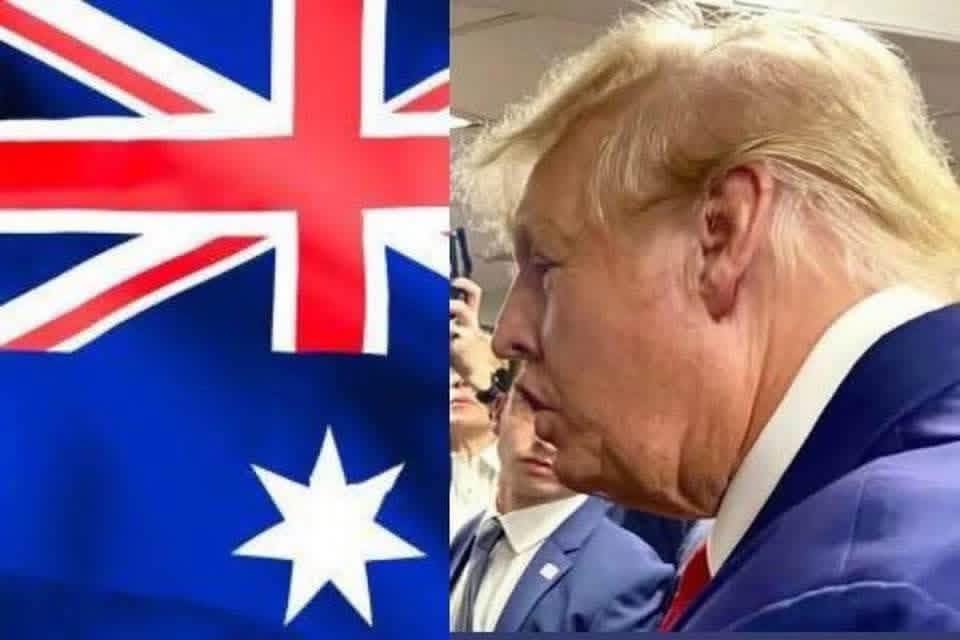
This Australian's reply to #Trump's rant about “NATO not being there for America” is perfect.
"Mate. You run a country with 600,000 homeless people sleeping on the street tonight. A country where 40% of adults can't cover a $400 emergency without borrowing money. A country where insulin costs more than a car payment and people are rationing it to survive. A country where medical debt is the number 1 cause of bankruptcy. A country where women are dying in hospital car parks because doctors are too scared of abortion laws to treat a miscarriage.
You lock up more of your own citizens than any nation on earth. More than China. More than Russia. More than North Korea. The land of the free has 2 million people in cages, and a quarter of them haven't even been convicted of anything. They're just too poor to make bail.
Your life expectancy is going backwards. You're the only developed nation where that's happening. Your infant mortality rate is worse than Cuba's. Your kids do active shooter drills between maths and English while you sell the gunmaker's stock to your mates.
Your minimum wage hasn't moved in 15 years. You've got teachers working 2 jobs and veterans sleeping under bridges and you just spent a trillion dollars flattening a country that didn't attack you.
And you’ve got a convicted felon, adjudicating raping, paedophile protecting, porn star shagging insurrectionist running the biggest dumpster fire war campaign since the Taliban thanked you very much for losing again.
And you're calling Greenland poorly run?
Greenland has universal healthcare. Free education. One of the lowest incarceration rates in the world. Nobody goes bankrupt there because they got sick. Nobody dies in a waiting room because their insurance said no.
'NATO wasn't there when we needed them." When exactly was that, champ? September 11? Because NATO invoked Article 5 for the first and only time in history FOR YOU. Soldiers from dozens of countries deployed, fought, bled, and died in Afghanistan FOR YOU. Australia wasn't even in NATO and we still showed up. For 20 years.
And you pulled out at 2am without telling anyone and left them to deal with the mess.
So maybe before you start calling other countries poorly run, have a look at your own backyard, you spray-tanned aluminium siding salesman. The only thing poorly run in this picture is your f----- mouth."
- Tony Locke
Just a thought:
Ukraine’s President is Jewish.
Our Defense Minister is a Muslim, a Crimean Tatar.
The Commander-in-Chief of the Armed Forces is an ethnic Russian.
Our top drone ace — recently awarded the title Hero of Ukraine — is an ethnic Hungarian.
Over 70,000 women serve in the military now.
Almost all of the most renowned combat medics are women.
The revolution that changed this country forever began with a Facebook post by an ethnic Afghan Pashtun, a prominent Ukrainian journalist.
And in our parliament, we have a Black MP — an Afro-Ukrainian and universally admired Olympic champion.
All of this — in a country that is still, for the most part, Slavic.
On the streets of Kyiv today, you’ll see halal restaurants for Muslim tourists standing peacefully next to Jewish eateries. Nearby are a museum and a monument to Sholem Aleichem, and a plaque bearing the face of Golda Meir, who once lived here.
Among our main landmarks: 19th-century synagogues. Just a short walk away — a large mosque and Muslim cultural center. And above all, of course — the ancient Christian churches and monasteries that are the oldest and most significant in the East Slavic world.
I still can’t get over the fact that Ukraine’s chief Muslim mufti (an ethnic Tatar from Donetsk) stepped down to serve as a frontline paramedic in the army. That our chief rabbi works tirelessly every day to help Ukraine across the globe — and that his adopted son died fighting for Ukraine, weapon in hand.
For many years now, a giant glowing menorah has stood each Hanukkah in the heart of Kyiv’s main square. And on Independence Day, every religious denomination gathers in Saint Sophia Cathedral to offer prayers for Ukraine, each in their own rite.
Just as they all come together for remembrance at Babyn Yar and the Holodomor monument.
The more you look at the world, the more often you realize how much healthier Ukrainian society has become when it comes to coexistence between nationalities and faiths.
We weren’t always like this. We are becoming this now — as the country is being radically transformed by revolution and by the defense against imperial Russia.
We are shedding the weight of so many remnants of the past — really fast.
Just recently in May, Ukraine held its WWII commemorations — with poppies and the slogan “Never again!”
What a stark contrast to the satanic frenzy of Russia’s “Victory Day,” with its death cult, its “We can do it again!” bravado, and its glorification of dying for the Tsar.
Against the backdrop of war, Ukraine is living through a real national and cultural renaissance. We are rediscovering the Ukrainian language, Ukrainian books, music, cinema — as something precious.
And for how many decades were we taught to look down on everything Ukrainian — as “third-rate,” “peasant,” “inferior”?...
I walk the streets of Kyiv on Christmas (December 25th, not January 7th as demanded by Moscow priests) and see bands of children in traditional embroidered clothes carrying colorful Bethlehem stars and singing carols. “Ukrainian Christmas” is returning to these lands as a vibrant cultural tradition.
On Easter, crowds gather near Saint Sophia Cathedral for picnics and spring dances. In the old city above Podil, I often hear youth pounding out Cossack songs on drums. I always see many people at our nation’s sacred places — the Kyiv Pechersk Lavra, the cathedrals of Lviv, the Motherland Monument, the old castles.
We haven’t suddenly become devout believers. We’ve simply come to take pride, like never before, in being Ukrainian — in treasuring our traditions, our culture, our history, and our way of life, in our own country.
New traditions keep being born in wartime, against all odds.
Today, we honor war veterans by inviting them to make the symbolic first kick at football matches — and then we give them a standing ovation from the stands, for their service.
I could go on like this for hours.
What I’m trying to say is — I love what Ukraine is becoming.
This hope — breaking through unspeakable pain and hardship — feels like a light piercing the tunnel.
Ukraine now, and Ukraine 12 years ago, are two completely different countries.
The road ahead is brutally hard, but if only — if only our Ukraine can survive this war for its very existence.