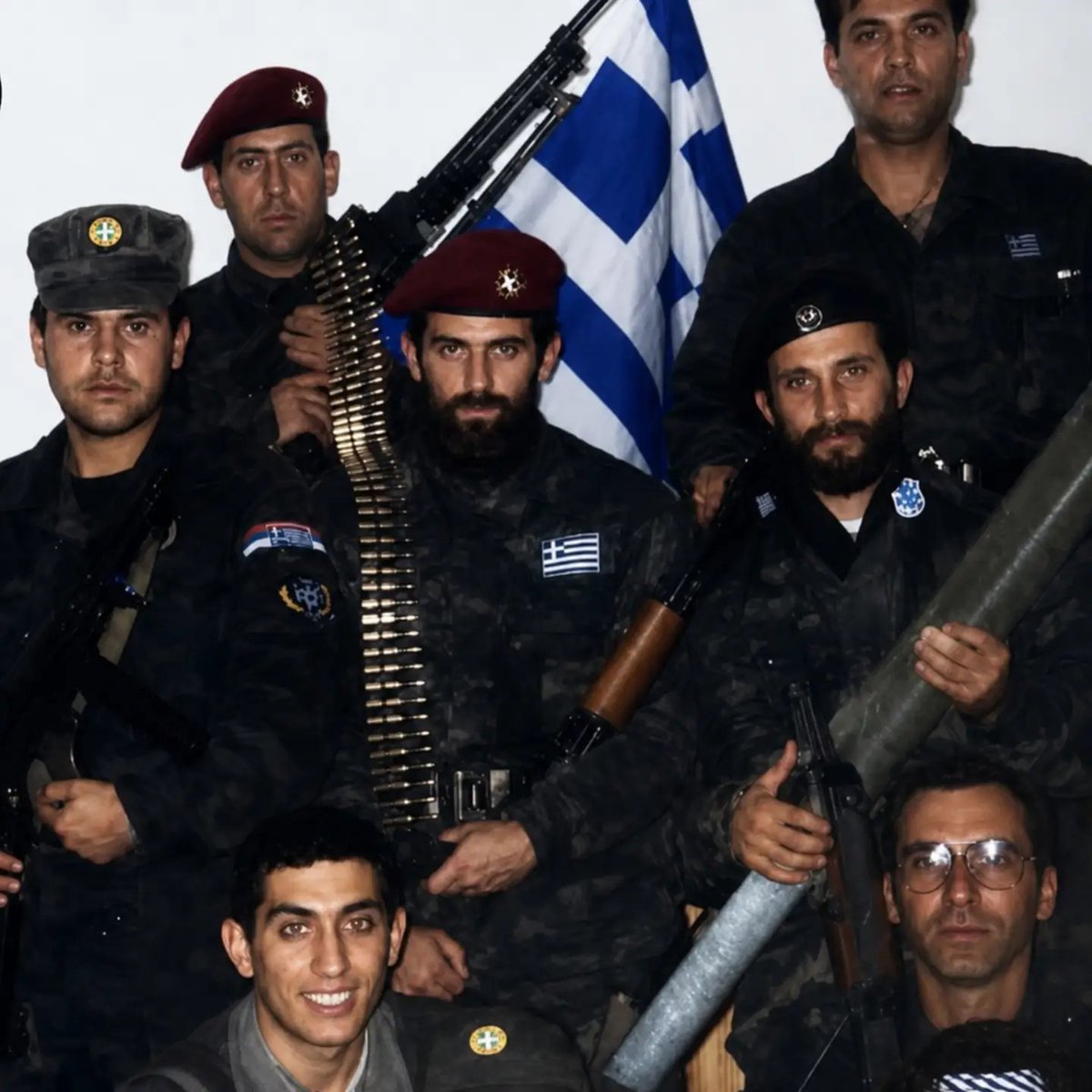
Saddam's Iraq was closer to Serbia during this period. Iraq and Serbia developed close ties in the 1990s as states facing heavy NATO sanctions and sharing a common enemy.
Remember the 'human bomb'? May 2018 during SAA liberation of #Yarmouk from #ISIS. A Syrian Arab Army soldier was bound head to foot and fitted with a helmet packed full of explosives. He was suspended above the street and then dropped headfirst. The helmet exploded and decapitated him.
But "Alhamdulilah Assad is gone"
OMAR AL ABRASH, IRAQ AND THE GOLAN HEIGHTS - 1973
The hero of the October War is the martyr and hero Major General Omar Al Abrash, a native of Al Salihiyah, Damascus. He was assassinated by the butcher Ibrahim Al Safi under orders from Hafez al Assad.
On October 6, 1973, Egypt and Syria declared war on Israel. However, Hafez al Assad had an agreement with Israel that included surrendering Damascus to them, withdrawing to Homs, and moving the Syrian capital either to Homs, Aleppo, or Latakia. This was similar to the betrayal in 1967 when he handed over the Golan Heights while serving as Minister of Defense. To fulfill this plan, only one division was placed at the border under the command of Brigadier General Omar Al Abrash, making it easy for the Israeli army to annihilate.
However, the unexpected happened. The 7th Mechanized Infantry Division, under the leadership of Omar Al Abrash, managed to break through Israeli defenses, engaging in a fierce battle in the Tel Al Makhfi area in the central Golan sector. It became one of the largest tank battles of the 20th century. Omar Al Abrash succeeded in liberating Mount Hermon, the entire Golan Heights, and advancing to the Banat Yaqub Bridge and Lake Tiberias.
Then, a call came from Hafez al Assad ordering him to withdraw. Furious, Omar Al Abrash responded:
“You are just a MiG-17 pilot; what do you know about leading battles?”
But Hafez bypassed him and ordered lower ranking officers to retreat. He then sent Ibrahim Al Safi, who assassinated Omar Al Abrash on October 8, 1973. They initially declared it a suicide and later altered the story to claim he was killed by the Israeli army. The rest of Omar Al Abrash’s division retreated, shocking the world, and Damascus became vulnerable to surrender.
The surprise was the arrival of the Iraqi army, which saved Damascus. The first units of the Iraqi 12th Armored Brigade arrived on October 10, followed by the 8th Mechanized Infantry Brigade and the 6th Armored Brigade. The 12th Brigade, led by Colonel Salim Shaker Al Imami, confronted advancing Israeli forces near Damascus, inflicting heavy losses despite the lack of air support.
An Egyptian military report highlighted the pivotal role of the Iraqi brigade in halting the enemy’s advance, stabilizing the front, and recovering lost positions.
When the Iraqis refused to accept a ceasefire and continued fighting, Hafez al Assad took steps to force them to withdraw. He closed the Syrian-Iraqi border to cut off supplies, restricted water flow from the Euphrates River by closing the Al Tabqa Dam, and accused the Iraqi army of conspiring against him. Facing isolation and lack of support, the Iraqi forces were forced to withdraw after sacrificing around 900 martyrs.
In 1974, Hafez al Assad signed a disengagement agreement with Israel, dividing the Golan Heights. Most of the territory remained under Israeli control, while a smaller portion became a demilitarized buffer zone. This betrayal prevented the liberation of occupied territories, with Israel taking key strategic positions in Mount Hermon and the Golan Heights.
📚 Sources:
October 73: Weapons and Politics - Mohamed Hassanein Heikal
The War Path to Peace - Hamdi El Kanisy
The Iraqi Army in the October War - Colonel Salim Shaker Al Imami
The Six Day War and Fifth War Scenarios - Abdul Sattar Al Tawilah
Memoirs of the October War - General Saad El Shazly
Crossing and the Gap - Edgar O’Ballance
A Piece of Bread - Sami Al Jundi
Summary of Iraqi Military Operations in the October War - Abdul Wahhab Al Jibouri
Israel and Syria - Anthony Cordesman
The Ramadan War - Moen Al Adassi
Assad is still bad, btw. The problem is in borders: Syria should’ve been divided from the very beginning. A state for Alawites, a state for Druze, a state for Kurds, and everything would more or less work out.