PGF NATIONAL CHAMPIONS!!!
What an amazing experience getting to play with these girls on ESPN!
Through this tournament, I gave up 0 earned runs in 26 innings pitched.
I couldn’t ask for a better team to be here with!🧡💙 @MojoPardue@LineDsoftball@TimFouts14#classof2028@PGFnetwork
When you’re a PO and get the opportunity to hit in Colorado, you take advantage!!!💣
So far I’ve given up 1 earned run in 9 innings pitched!
We are 4-0 headed into bracket play in the power pool🧡💙 #classof2028@MojoPardue@triplecrownspts@COSparkFire
Drinking beverages sweetened with the zero-calorie sweetener sucralose may significantly alter brain mechanisms involved in hunger regulation, according to a new brain imaging study.
Acute consumption of sucralose increased hypothalamic blood flow by 7.9% compared to sugar-sweetened drinks (sucrose) and by 7.8% compared to water. Increased hypothalamic blood flow is a neural marker typically associated with greater hunger, and indeed, hunger ratings were significantly higher after consuming sucralose.
In contrast to sucralose—which was metabolically inert due to its lack of calories—sucrose (table sugar) raised blood glucose, insulin, and GLP-1 levels, all metabolic changes that corresponded with reduced hunger and decreased hypothalamic activity.
While this study investigated acute effects rather than long-term outcomes, these results underscore that non-caloric sweeteners like sucralose could disrupt the body's natural appetite control mechanisms, challenging the assumption that they represent a neutral or beneficial alternative to sugar.
DOI: 10.1038/s42255-025-01227-8
Karra Tucker and Mary Keene Marrs, staying in the swing of things this Summer at the Woodford Legends Invitational in Versailles, Ky. as part of the LPGA Legends Tour!
#GoBigE
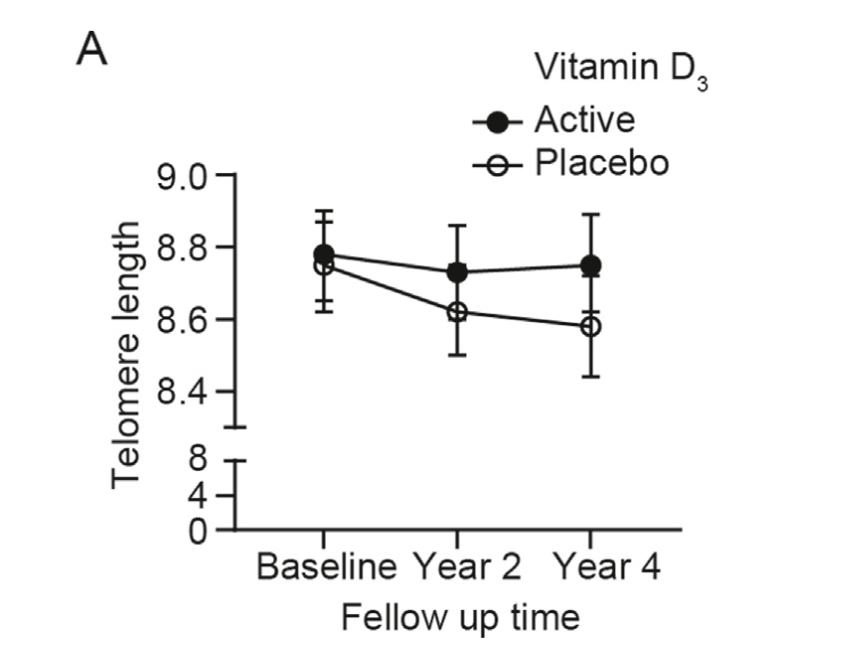
Daily supplementation with 2,000 IU of vitamin D slows the rate of telomere shortening, preserving telomere length equivalent to delaying ~3 years of biological aging over four years.
Telomeres are protective DNA sequences that cap the ends of chromosomes and are critical for preventing genomic instability. Their shortening is closely linked to aging and an increased susceptibility to chronic diseases.
Mechanistically, vitamin D may exert these anti-aging effects by increasing telomerase activity, reducing DNA damage, and modulating inflammatory pathways via vitamin D receptor–dependent mechanisms.
The VITAL Telomere sub-study was a rigorous, randomized, double-blind, placebo-controlled trial that assessed telomere length in leukocytes from 1,054 adults aged 50 years and older over a 4-year period.
Maintaining serum vitamin D levels of 40–60 ng/mL through daily supplementation is a reliable, evidence-based strategy to slow telomere shortening and potentially delay biological aging.
Study PMID: 40409468
Thank you @LineDsoftball for recognizing me as # 11 in the class of 2028!! Also thank you to my family, coaches, and teammates for everything they do!
So exited to get back on the field with my Mojo girls🧡💙 @MojoPardue@Lview_Softball@bbphoptown
Your armpit is an absorption zone.
If your deodorant contains:
– Aluminum
– Fragrance
– Parabens
– Propylene glycol
…you’re applying toxins to your lymph nodes daily.
Drinking Core Power first thing in the morning?
You’re starting your day with:
– Carrageenan (gut disruptor)
– Acesulfame potassium + sucralose (linked to microbiome damage)
– Cellulose gel (aka wood pulp filler)
– Maltodextrin (spikes blood sugar)
42g of protein doesn’t cancel out toxic ingredients.
You can do better. Start your day with real fuel
Creatine supplementation is not only safe for kids, it might be essential
In fact, research confirms it can significantly enhance brain development, bone health, muscle growth—and even agility, coordination, and balance
These benefits likely stem from improved motor unit recruitment and muscle activation
The optimal dose?
0.1 g/kg body weight (about 3 grams daily for a 65-pound child)
I’m beyond thrilled to celebrate and congratulate my dear friend and close ally, @CaseyMeansMD on her nomination for Surgeon General of the United States.
This moment is not only historic, it’s deeply personal. Casey is one of the most courageous, nurturing, and pure-hearted humans I’ve ever had the privilege of knowing.
She has poured her brilliance, compassion, and relentless dedication into the fight for a healthier, freer future for all of us.
Just 5 years ago, after reading my book on the broken food system, Food Fix, Casey made the bold decision to walk away from a prestigious surgical career and devote herself fully to the root-cause mission, to unearth and heal the true drivers of chronic disease and help reclaim health freedom for our nation.
Her conviction wasn’t abstract; it was total. And just 6 months ago, she showed up for me, literally, on Christmas Day in the hospital, when I was facing one of the darkest, most vulnerable moments of my life. She brought presence, love, and strength when I needed it most.
That’s who Casey is: someone who shows up, who listens deeply, who leads with her heart as fiercely as with her mind.Her nomination signals a new chapter, not just for public health, but for the soul of healthcare in America.
Casey embodies the kind of leadership we need: science-forward, root-cause focused, people-centered, and uncompromisingly ethical. There is no better person to carry this responsibility. And I can’t wait to see what she does next.
Congratulations, Casey. You are the future we’ve been waiting for.
Congrats to @CaseyMeansMD on her nomination for Surgeon General. This is a huge step in the right direction for the health of our country, especially our children.
I've spent time with Casey and had her on my podcast - She is a beautiful human who truly cares about health.
Vitamin D isn't just a vitamin—it's a steroid hormone that regulates over 5% of your entire genome
Yet over 70% of Americans don't have adequate vitamin D levels, severely limiting their immune function, mood regulation, and cognitive health
Clinical evidence points to blood levels of 40-60 ng/mL being the sweet spot
Supplementing with 4,000 IU daily typically moves people from deficiency to sufficient levels (in general, 1,000 IU raises blood levels by roughly 5–10 ng/mL)
"The heart attack at 50 began at 20.
The Alzheimer’s at 70 started at 40.
The loss of independence at 80 began at 30.
The aging you want tomorrow begins with the choices you make today."
- Dr. Bob Rako