Besides residuals, we should also monitor quantities such as:
*Forces and moments
*Pressure drop
*Mass-flow balance
*Torque / power
*Temperature or other key engineering quantities
A solution may show very low residuals while important engineering outputs are still drifting.
#OpenFOAM Weekly #05 | Residuals are dropping — but is your #CFD solution really converged?
Low residuals are important, but they are not enough on their own to confirm that a CFD solution is physically converged.
🚀 Call for Experts – Engineering AI & Industrial Projects!
BB-SIMTECH is seeking engineers, researchers & developers for potential collaborations in CFD, FEA, AI training data, Agentic AI & open-source simulation.
📩 [email protected]#EngineeringAI#CAE#CFD#AI
🚀 Physics-Based Simulation Data for Engineering AI!
BB-SIMTECH generates custom CFD & FEA datasets using OpenFOAM and PrePoMax/CalculiX, supporting AI agents, surrogate models & digital twins.
🌐 https://t.co/z31oA9ipG3
#EngineeringAI#CFD#FEA#SimulationData
✈️ Why do airplanes sometimes land sideways?
🌬️ During crosswind landings, pilots use the crab technique to keep their ground track aligned with the runway.
Ground Velocity = Air Velocity + Wind Velocity
🚀 Engineering is everywhere.
#Aviation#CFD#Aerodynamics
🚀 Our New Aerospace Engineering Course Is Now Available at BB-Simtech Academy! ✈️
🎓 Open-Source Finite Element Analysis for Aerospace Structures using PrePoMax/CalculiX
🎁 Limited-Time Offer: 30% OFF!
🏷️ Coupon Code: BBACADEMY30
🔗 Enroll Now:
https://t.co/6lqxvJEiMz
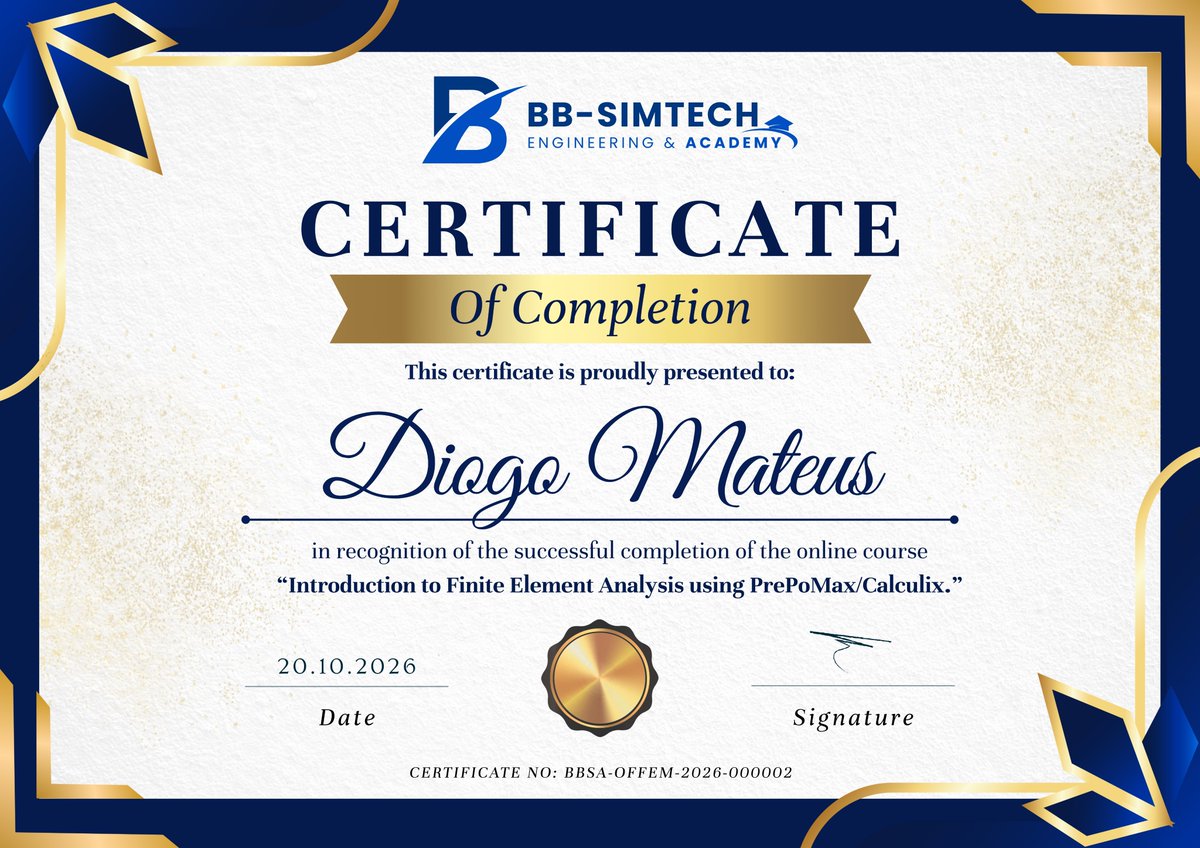
🎉 We are pleased to share another achievement at BB-Simtech Academy.
Our participant Diogo Mateus has successfully completed the Introduction to Finite Element Analysis using PrePoMax/CalculiX online course and received the Certificate of Completion.🏆
#BBSimtech#FEA#CFD
Which workflow do you use most often for external meshes?
A — Fluent → OpenFOAM
B — ANSA → OpenFOAM
C — Gmsh → OpenFOAM
D — Other
Comment A / B / C / D — and feel free to mention your usual workflow.
#OpenFOAM#CFD
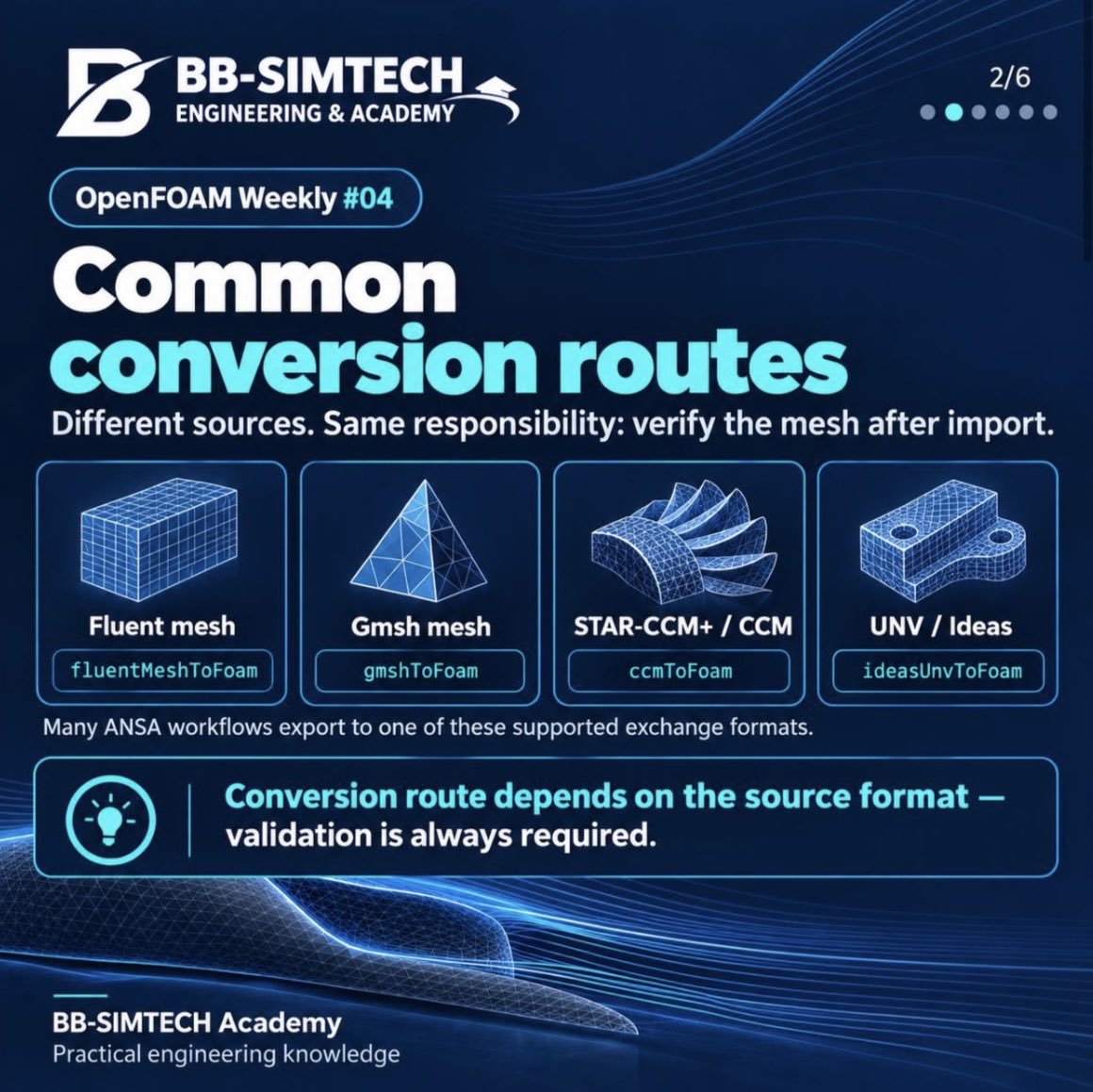
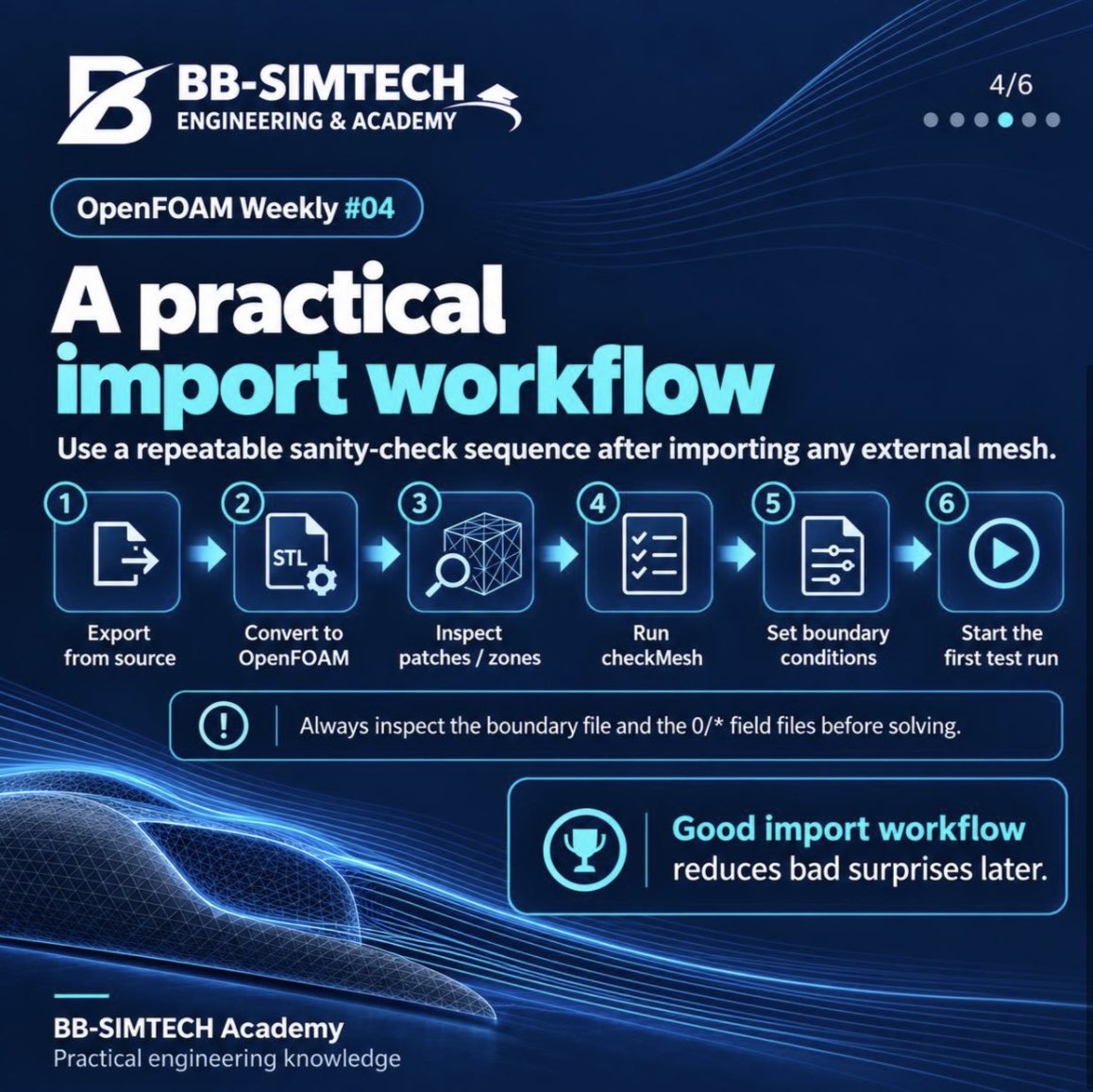
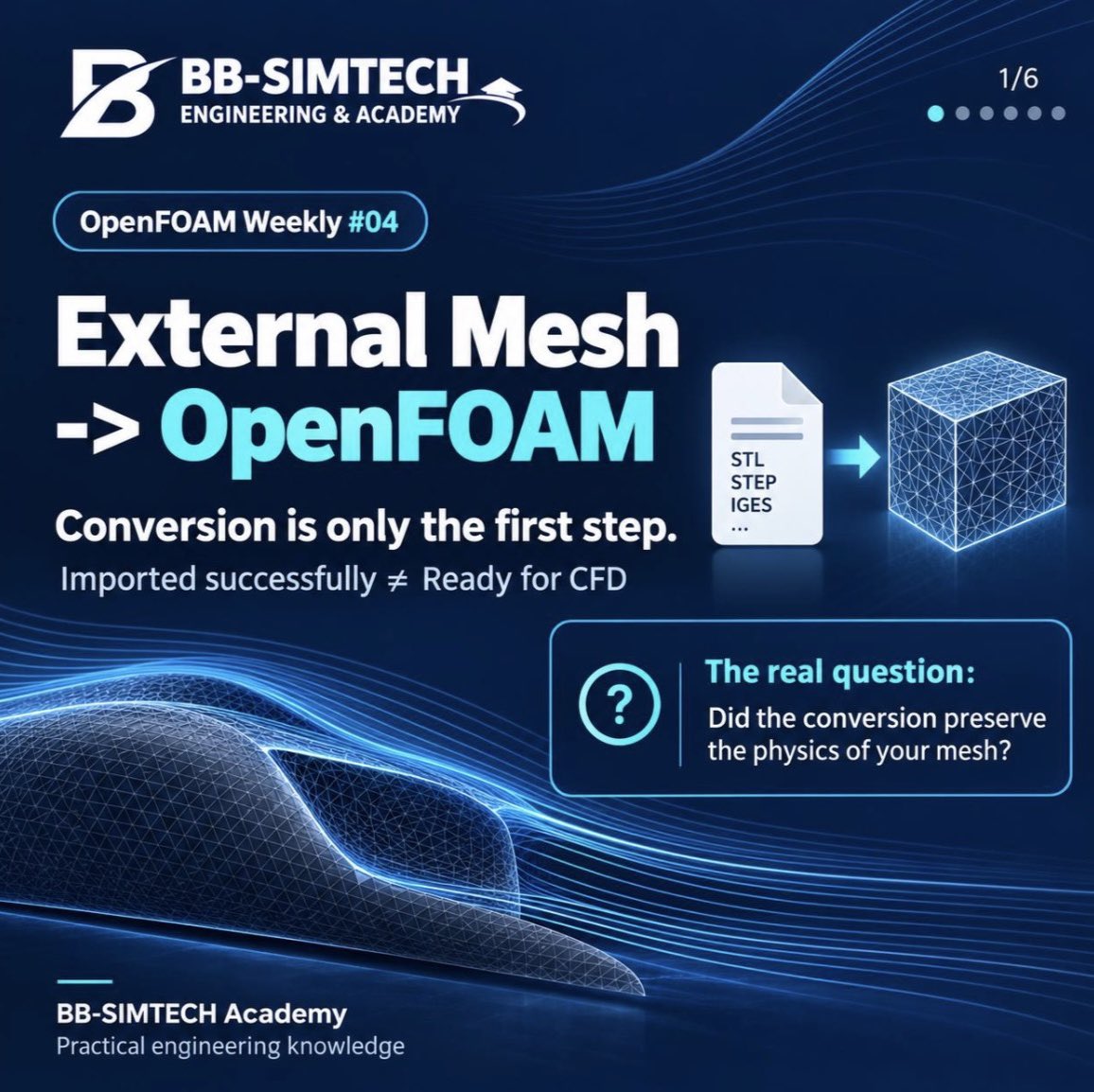
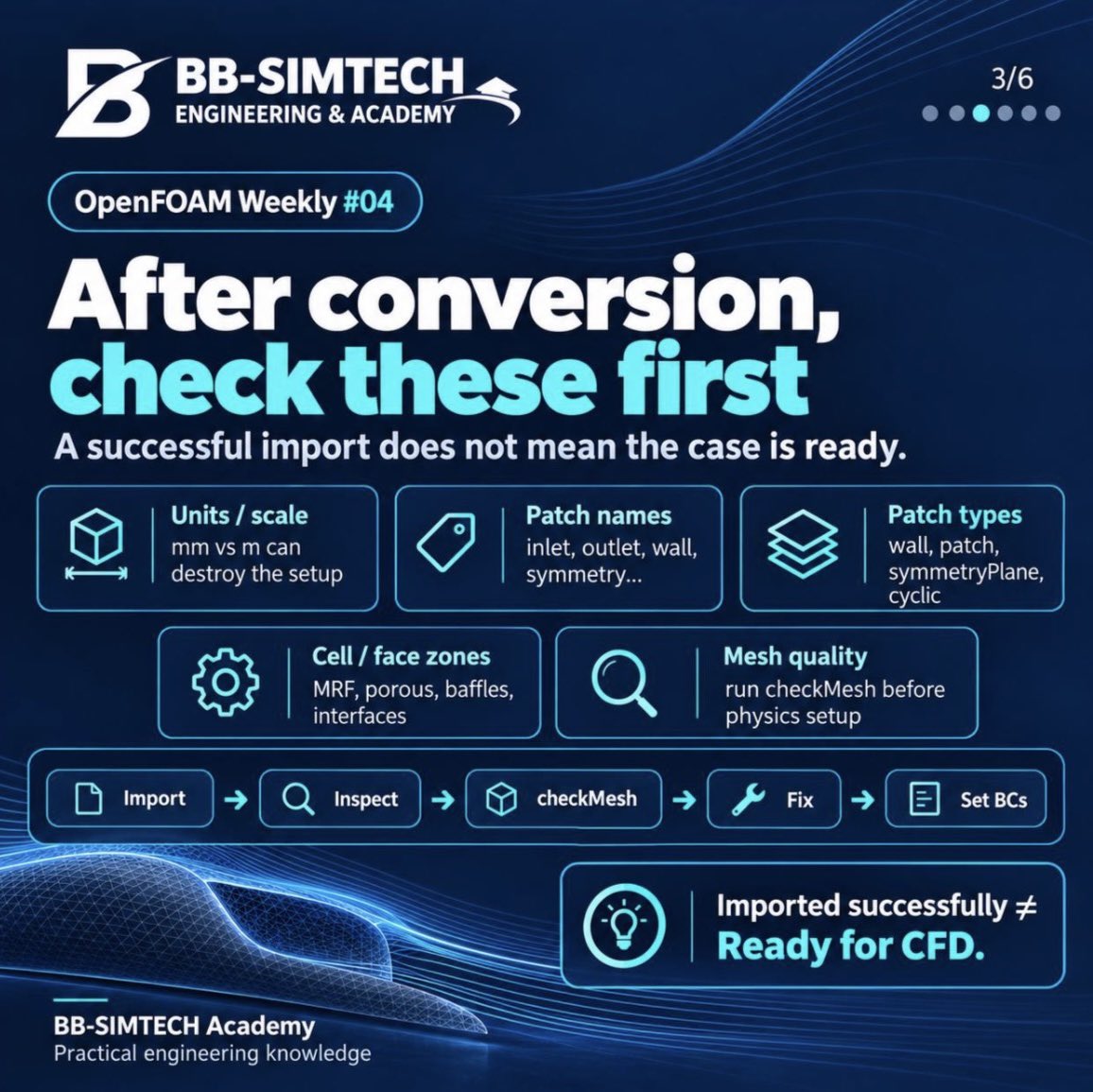
OpenFOAM Weekly #04 | External Mesh → OpenFOAM
Converting an external mesh into OpenFOAM is often straightforward.
But a successful conversion does not necessarily mean the mesh is ready for CFD.
After importing a mesh, it is important to verify:
A mesh may look correct after conversion, while the physical setup is still wrong.
So the real question is not only:
“Did the mesh convert successfully?”
but:
“Did the conversion preserve the physics of the case?”
And a quick question for the OpenFOAM community:
🏎️ ABS ON vs. OFF — Why wheels lock
As a GT3 slows, downforce (∝ V²) drops, reducing grip.
🔴 ABS OFF: Wheels may lock.
🟢 ABS ON: Adjusts brake pressure to limit lock-up.
💡 ABS doesn’t create grip—it helps use it.
🎓 Academy:
https://t.co/5qOP108AG3
#CFD#BBSIMTECH
OpenFOAM Weekly #03 | checkMesh found bad cells — now what?
A maximum non-orthogonality or skewness value tells you how bad the worst part of your mesh may be.
But it does not tell you whether that cell actually matters.
The next questions should be:
📍 Where is it?
🔢 How many problematic cells are there?
🌊 Which part of the physics does it affect?
In this week's OpenFOAM Weekly, we look at how to locate problematic mesh regions and decide whether they really require action.
The key point is simple: A number alone doesn’t define mesh quality. What matters is where the issue is located and how it affects the physics of the case. Practical OpenFOAM knowledge, one topic at a time.
#OpenFOAM#CFD#Meshing#MeshQuality#Simulation
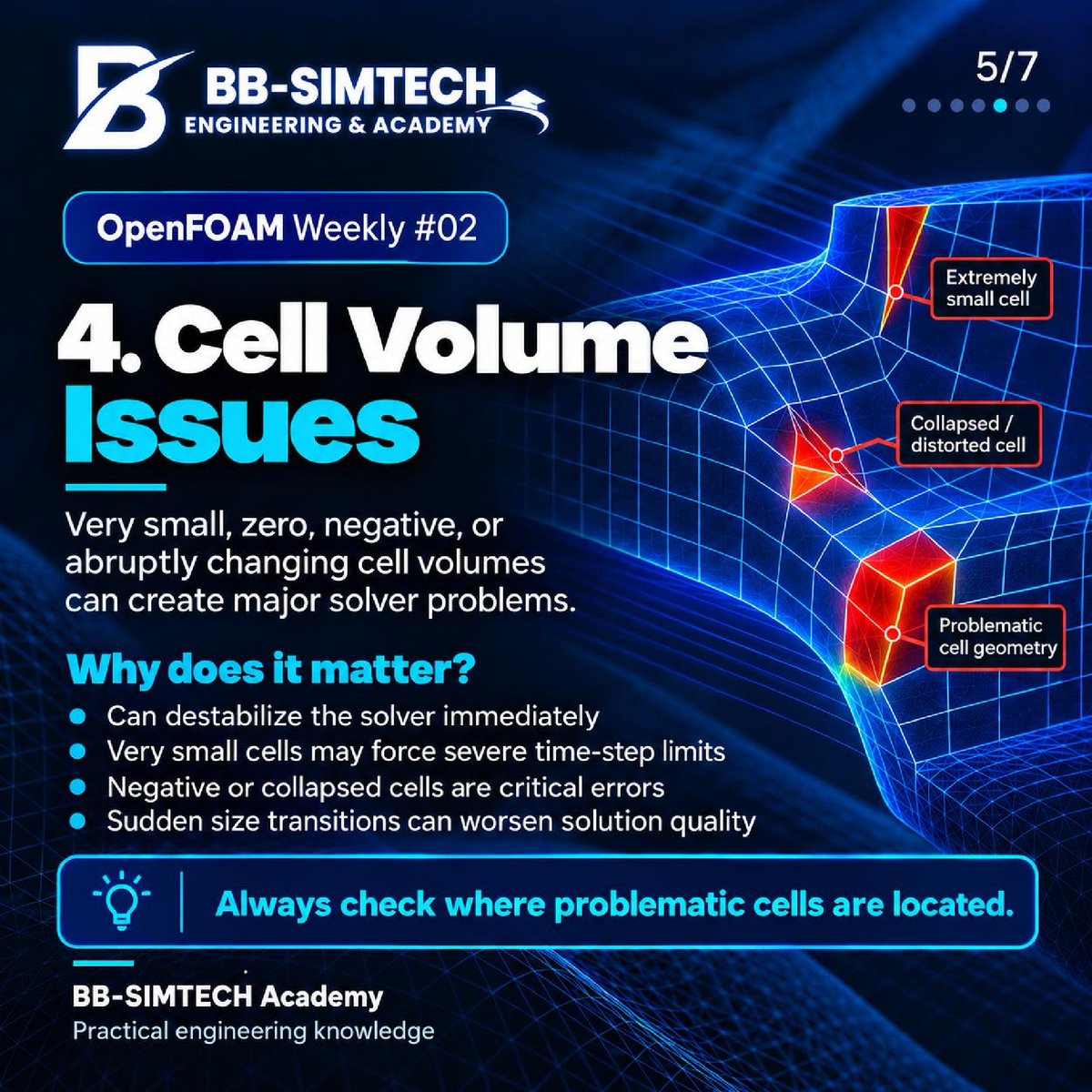
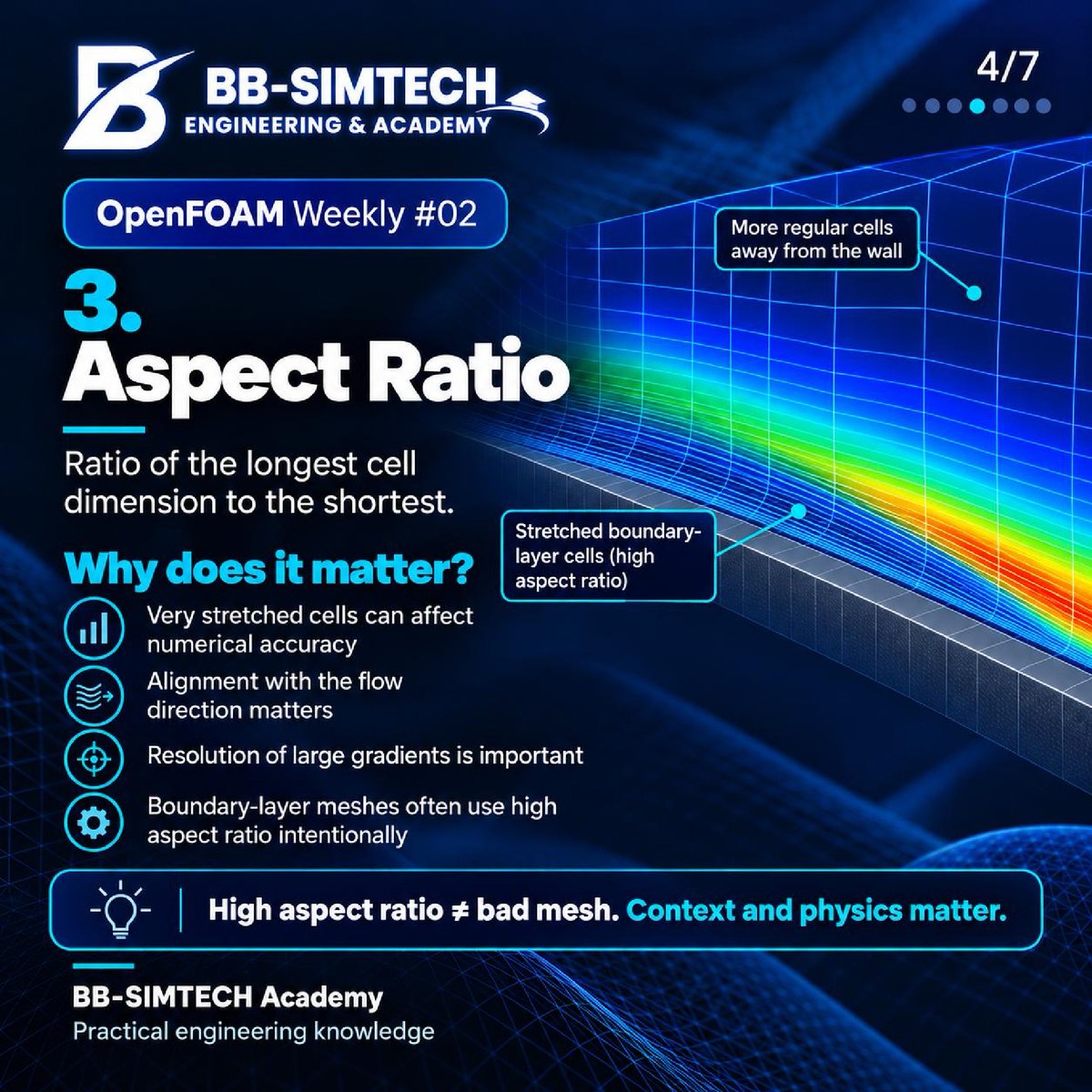
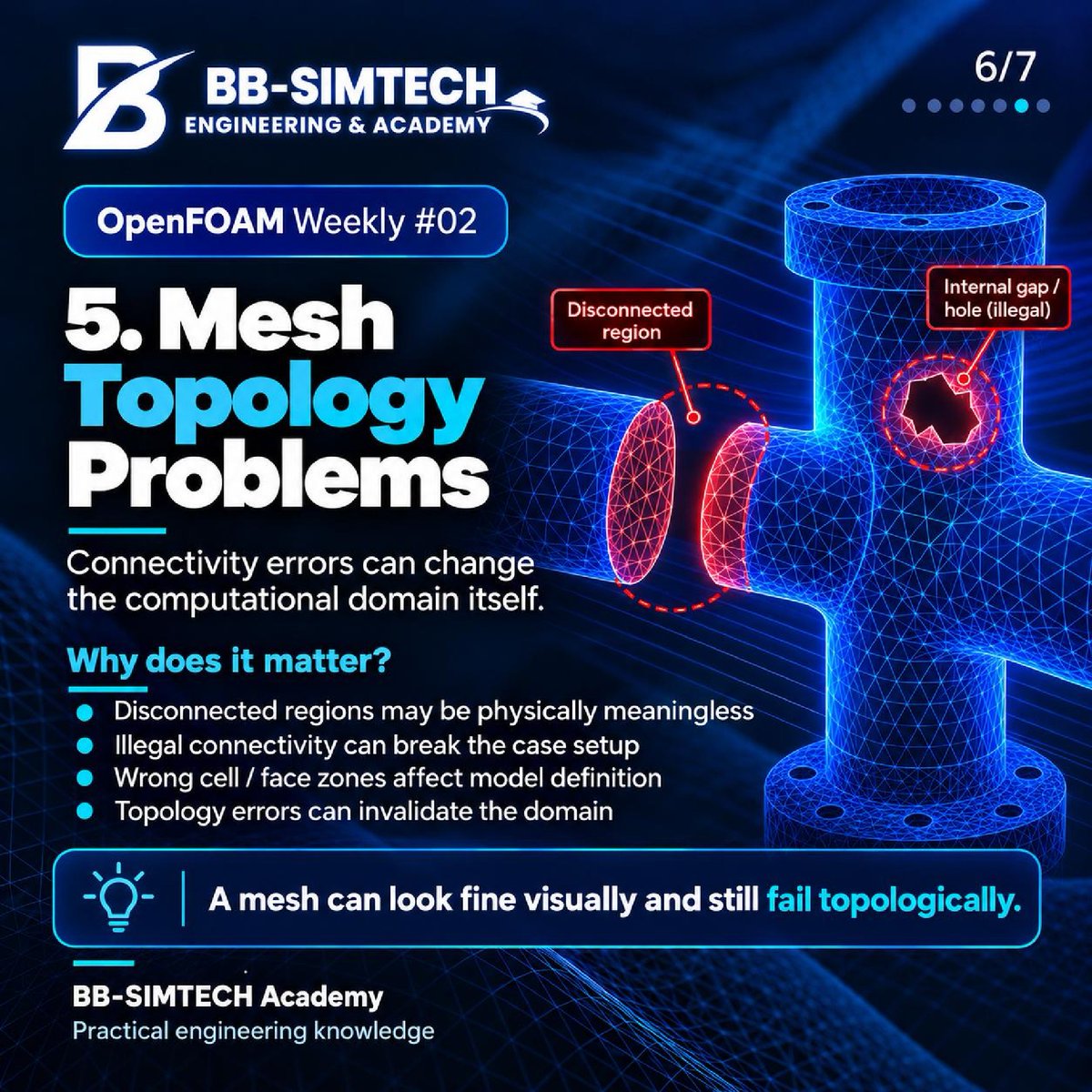
OpenFOAM Weekly #02 | How do you interpret checkMesh results?
In this week’s post, we take a practical look at some of the most common mesh-quality checks in OpenFOAM, including:
Non-orthogonality
Skewness
Aspect ratio
Cell volume issues
Mesh topology problems