Gazette Notification Issued for Standardised English Spellings of Districts, Blocks and ULBs
According to the notification signed by Additional Chief Secretary (Revenue) @arvindpadhee , the revised spellings will come into effect from the date of publication in the Odisha Gazette (June 22, 2026)
The government has clarified that the changes relate only to English spellings and do not alter the official names of any administrative units. The move aims to restore traditional nomenclature and ensure uniformity in official records and communications.
KIIT No. 1 in India in 3 SDGs in THE Sustainability Impact Ratings 2026
Happy to share that KIIT has achieved another proud milestone in the Times Higher Education Sustainability Impact Ratings 2026, securing the 101–200 global rank band and 4th position overall in India.
KIIT had a very humble beginning, but it has made its mark globally through rankings, accreditations and quality education. Today, KIIT stands with confidence among the reputed universities of the world. In India too, it has made a significant impact as a leading university.
KIIT has secured:
• 1st position in India in three SDGs — SDG 10: Reduced Inequalities, SDG 14: Life Below Water, and SDG 16: Peace, Justice & Strong Institutions.
• 2nd position in India in two SDGs — SDG 9: Industry, Innovation & Infrastructure, and SDG 15: Life on Land.
• 3rd position in India in three SDGs — SDG 4: Quality Education, SDG 6: Clean Water & Sanitation, and SDG 7: Affordable & Clean Energy.
All remaining SDGs are within the Top 10 in India.
Slow and steady wins the race, and this journey of KIIT proves that sincere effort, discipline and faith always bring results. This recognition belongs to all our students, faculty, staff and well-wishers of KIIT & KISS. We will continue to work with humility and responsibility for a better and more sustainable world.
On the 12th International Day of Yoga, I convey my best wishes to all.
Yoga is Bharat’s precious gift to the world. It gives strength to the body, peace to the mind and balance to life. In today’s busy world, Yoga is very important for good health, discipline and healthy ageing. I feel happy that it has become a global movement and people across the world are accepting it as a way of healthy and peaceful living.
Let us practise Yoga regularly and live a healthy, peaceful and meaningful life. Happy International Day of Yoga.
I feel very happy to see my lovable KISS children doing so well in Romania.
My tribal children from KISS are performing Santali dance and Shakespeare in Santali on a foreign land, and I have been told that everyone there is appreciating them with so much love. This gives me great happiness.
This is the best way to give good exposure to our tribal children from India, particularly Odisha. When our children go to another country and receive love for their talent and culture, it gives them more confidence in life.
My blessings and best wishes to all my students in Romania. They are bringing a good name to Odisha, India, KIIT and KISS, and presenting the tribal language and culture of India and Odisha with pride on a foreign land.
73rd Honorary Doctorate
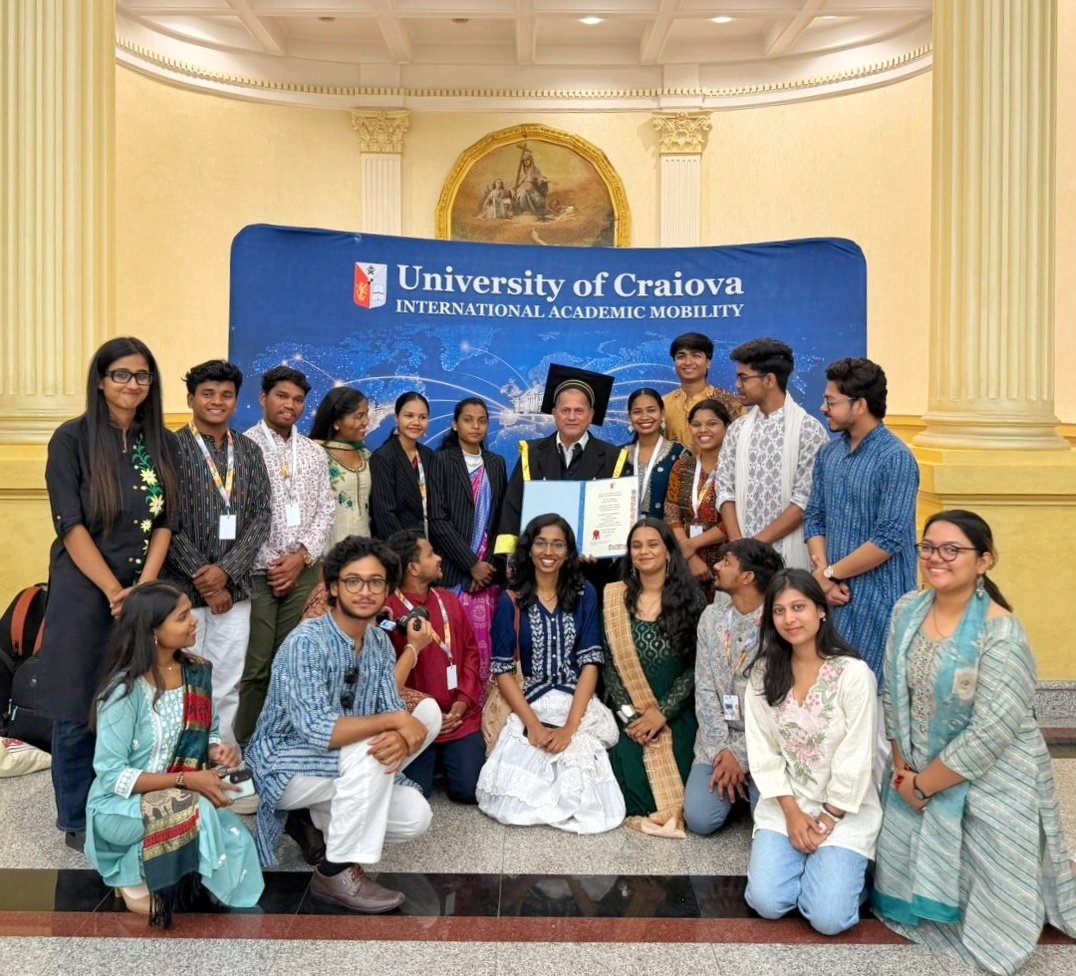
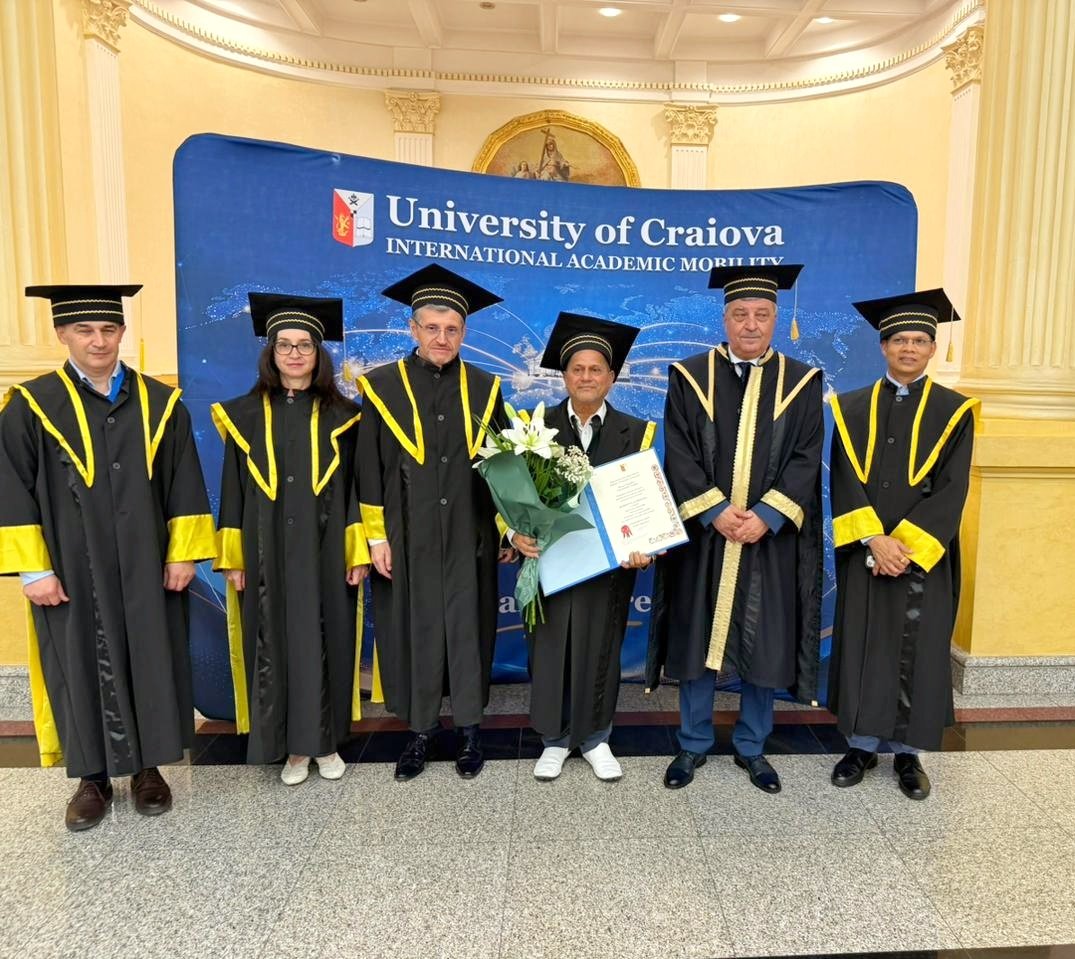
Deeply humbled to receive my 73rd Honorary Doctorate from the University of Craiova, Romania, one of the oldest, largest and most respected public universities, established in 1947.
This honour was conferred after careful consideration of my work and achievements during the last 30 years in education, research, social inclusion and service to humanity, and after approval through different academic committees and finally by the Senate of the University.
This honour will remain very special in my heart. I have received many recognitions in different parts of the world, but this is the first time I received an Honorary Doctorate on a foreign land in the presence of my lovable KIIT & KISS students. Seeing them there, far away from Odisha, doubled my happiness.
I express my heartfelt gratitude to the University of Craiova, its leadership, Hon’ble Rector, President, Senate and all respected members for this love, honour and recognition.
KIIT & KISS are two institutions born from the soil of Odisha. Today, when they carry the message of education, tribal empowerment, compassion and inclusion to the world, I feel very happy that the small work started 30 years ago is bringing pride to the soil of Odisha.
Happy to share that KIIT Deemed to be University has signed 9 international MoUs with leading universities from Kazakhstan, Uzbekistan, Thailand, Poland, Mexico and Georgia during the IAUP Conference 2026 held in Almaty, Kazakhstan.
These partnerships will further strengthen KIIT’s global academic engagement through student and faculty exchange, joint research, study abroad programmes, academic collaborations and knowledge sharing.
My sincere thanks to the leadership of all our partner universities for their trust, cooperation and willingness to join hands with KIIT. These partnerships will open new global opportunities for our students, faculty and staff.
My best wishes to our new partner universities:
• Almaty Management University, Kazakhstan
• Khalel Dosmukhamedov Atyrau University, Kazakhstan
• Alikhan Bokeikhan University, Kazakhstan
• Central Asian University, Uzbekistan
• International School of Finance Technology and Science, Uzbekistan
• Siam University, Thailand
• University of Technology and Arts in Applied Sciences in Warsaw, Poland
• CETYS University System, Mexico
• Caucasus University, Georgia
The smarter women are, the more hostility they face.
In the U.S. & China, the higher women’s IQs, the less they're liked—and the more they’re undermined by coworkers. Men pay no price for being bright.
It's long past time to recognize female intellect as an asset, not a threat.
Keshav Negi ji an innocent cook has been arrested for Malviya Nagar fire. I can go to Malviya Nagar, Pahar Ganj, today and make 1000 videos of illegal hotels made after bribing MCD officials and are violating safety norms.
> Problem is not that problem is with police officers and hotel owners who made Keshav ji Scapegoat and thought they can ruin an innocents life . Before money workers should first ask for dignity which is nowhere seen at such places .
> The whole bloody system is rigged for rich and powerful people , somebody can run his car over innocent people kill them and then post a video of dancing after getting bail. While innocent people like Keshav Negi ji will rot in jail for some corrupt MCD officials who took bribes for giving licenses to all these illegal hotels running without proper fire tenders .
#malviyanagar #justiceforkeshav
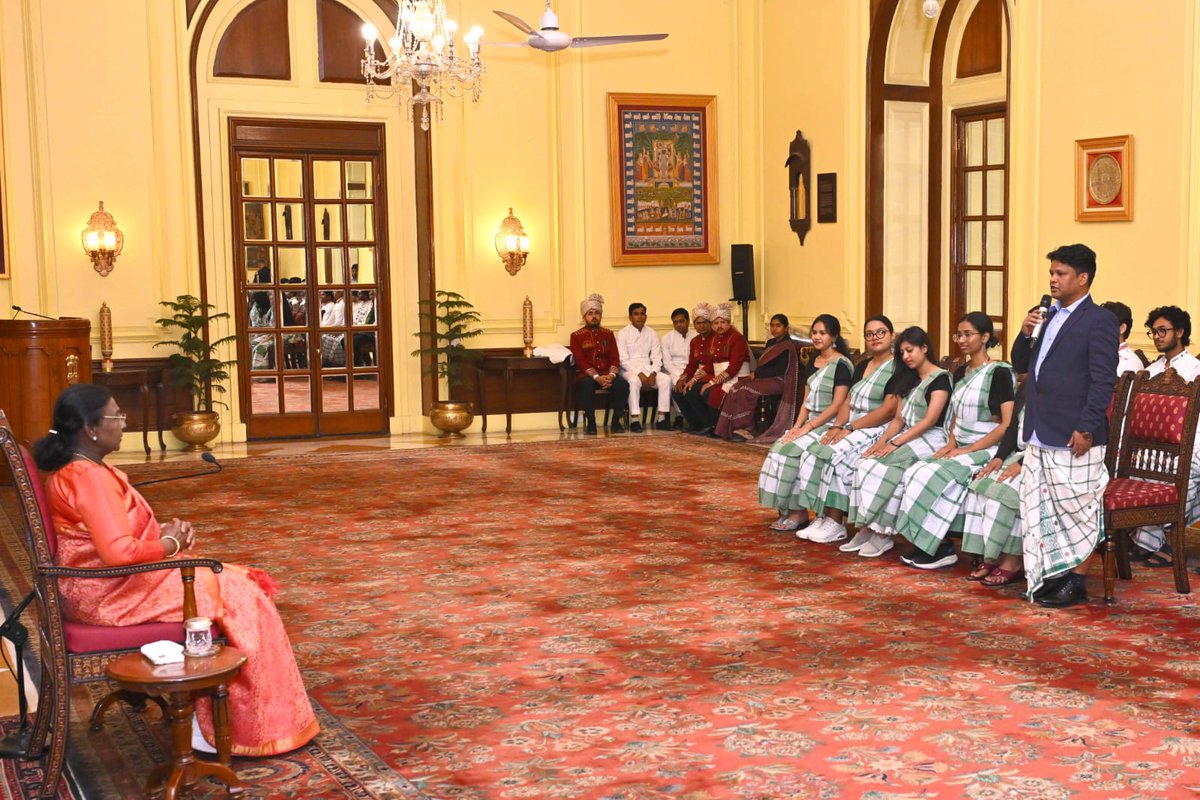
Today, our 20 KIIT and KISS students had the privilege of meeting the Hon’ble President of India, Smt. Droupadi Murmu Ji, after their return from Romania.
She appreciated their participation and beautiful performances at the International Shakespeare Festival, where they represented India, Odisha and Santali language through Shakespeare’s Hamlet, Macbeth and Romeo and Juliet in Santali.
It is a very proud and emotional moment for all of us. Our children have shown that with opportunity, encouragement and confidence, they can carry their culture and talent to the world.
My heartfelt gratitude to Hon’ble President Smt. Droupadi Murmu Ji for her love, blessings and encouragement to our children.
@rashtrapatibhvn
Students lose lives, their future, and trust in the system. The entire country's top exams being messed up and the consequences-- a transfer here, an apology there and a panel for probe? That's it.
Britain has failed its little girls. These depraved criminals should be caught and hanged at war footing. Shame on a country which has abandoned its own little girls. Is being a girl and white a crime?
Heartfelt congratulations to Ms. Ekta Priyadarshini, a final-year student of Chemical Engineering at Veer Surendra Sai University of Technology (VSSUT), Burla, on securing All India Rank (AIR) 1 in the prestigious GATE 2026 examination. Your hard work, dedication, and academic excellence have brought immense pride to the university and our state. May Mahaprabhu bless you with continued success. Best wishes for your bright future!
@VSSUT_official
Why bring children into a world of instability, violence and poverty? Where peodophiles are ruling countries and holding power? Where food, security, health and education are chances not.
In more than two-thirds of the world’s 195 countries, the average number of children born to each woman has fallen below the “replacement rate” of 2.1 that keeps populations stable without immigration.
In 66 countries, the average is now closer to one than to two. In some, the most common number of children born to each woman is zero.
Walking on Footpaths is more dangerous than jaywalking. At least the drivers are alert on the road, bikes on footpaths will just whiz past giving you a heart attack.
In peak India moment today, I got scolded by an uncle on bike for walking on the footpath during traffic hours. He said and I quote, “pagal hai kya be, footpath koi chalne ki jagah hai?”
This election in West Bengal was not merely an election for a change of power; it was an explosion of long-accumulated anger, exhaustion, and deprivation. People did not vote only to bring the BJP to power; even more than that, they voted to defeat the Trinamool Congress. A party that had once become the symbol of change gradually came to represent, in the eyes of many, the arrogance of power, corruption, and partisan domination.The list of allegations against the Trinamool Congress is also long. For years, opponents have argued that the politics of Muslim appeasement in the state crossed all limits, that the administration and police increasingly turned into instruments of the ruling party, and that corruption and extortion became institutionalized from the panchayat level to the highest ranks of government. The teacher recruitment scam, the culture of “cut money,” and the abnormal financial rise of local party leaders did not escape public notice. Villagers saw people who once possessed nothing become owners of enormous wealth within only a few https://t.co/ouQGBIRL6x the same time, a section of the population came to believe that instead of genuine industrialization, employment generation, or long-term development, the government relied on welfare-dependent politics to preserve its vote bank. Although schemes such as Lakshmir Bhandar and other social welfare projects benefited many people, the opposition successfully established the narrative that instead of development, “votes were being bought with allowances.”Government employees were also deeply dissatisfied. The DA movement, resentment over jobs, and the growing distance between the administration and citizens pushed many educated middle-class voters away from the Trinamool Congress. Allegations of electoral violence, booth capturing, attacks on opposition workers, and chaos surrounding elections created long-standing frustration and distrust toward democracy itself. Public anger also grew over women’s insecurity, rape, and violence against women, as well as the administration’s handling of such incidents. In many cases, the absence of justice, political interference, and insensitive remarks by those in power generated deep disappointment and outrage among ordinary people.Most importantly, many people came to believe that Mamata Banerjee was no longer the same combative leader she once was. After remaining in power for a long time, an atmosphere of personality cult, excessive centralization, and arrogance of authority emerged around her. The opposition successfully attacked this image and established in the public mind the political message: “Bengal no longer wants you.”History repeatedly shows that governments do not lose solely because of the strength of the opposition; they lose when people begin to feel that those in power no longer listen to them. In this election in West Bengal, that psychology played the most decisive role.Bengal was once not merely a geographical region; it was an intellectual civilization. It was the capital of thought, the center of renaissance and awakening. From Raja Ram Mohan Roy to Swami Vivekananda, from Rabindranath Tagore to Subhas Chandra Bose, from Satyajit Ray to Mahasweta Devi—this land built itself upon traditions of free thought, humanism, rationalism, and https://t.co/x5QZUV7y3b was in this Bengal that Ram Mohan stood against religious superstition, and Ishwar Chandra Vidyasagar endured social hatred and humiliation in support of widow remarriage. Rabindranath spoke for humanity even against the blindness of narrow nationalism. Kazi Nazrul Islam wrote songs of equality and rebellion against divisions of religion and caste. Jibanananda Das discovered the lonely beauty of Bengal, while Sukanta Bhattacharya dreamed of a world free from hunger, poverty, and exploitation.The artists and writers of Bengal once refused to bow before power. They were the conscience of society. When they witnessed injustice, they protested. Rabindranath returned his British knighthood in protest; Nazrul was imprisoned. The question today is this: does contemporary Bengal still inherit that tradition? Or has much of today’s artistic and literary community grown accustomed to applauding power? Many writers, poets, actors, artists, and academics in Bengal are no longer viewed by people as independent voices; rather, many believe they are openly engaged in praising the rulers in order to receive patronage.There are, of course, exceptions. But the perception that has formed in public consciousness is that a once-protesting cultural sphere has largely transformed into a culture of dependence and obedience. Allegations have arisen that conscience has been traded away in exchange for state grants, awards, positions, committees, and invitations. When art surrenders to money and privilege, artistic freedom dies and literature degenerates into flattery.The issue of minority appeasement also played a major role in this election. Many people in West Bengal came to feel that under the name of secularism, a form of biased politics was being practiced. Secularism means that the state should treat all religions equally; but if one particular community is used as a vote bank, resentment among the majority population is hardly https://t.co/kTvxdAjtef of attacks on Hindus in Bangladesh—temple vandalism, forced occupation of property, and persecution of religious minorities—has regularly reached West Bengal. As a result, many Hindus in West Bengal have become fearful of the rise of Muslim fundamentalism. They fear that if fundamentalism is encouraged for political interests, the social balance will be destroyed. Whether this fear is entirely real or partly exaggerated, its influence on the election cannot be https://t.co/KxaCqfiojz the same time, Islamist groups in Bangladesh are criticizing the BJP’s victory as a “victory of Hindutva.” Yet here a profound hypocrisy becomes visible. Most Christian-, Jewish-, or Hindu-majority countries in the world have established themselves as secular states. Yet in many Muslim-majority countries, Islam is the state religion; in some places Sharia law prevails, in others freedom of expression and the right to leave religion are restricted, and in many minority rights are curtailed. Many Islamist groups support religion-based states in their own countries while demanding secularism elsewhere. This double standard further obstructs modernization and self-criticism within Muslim societies.The political history of West Bengal seems trapped in a recurring cycle. Once, people removed the Left Front government because they believed the CPI(M), after decades in power, had become detached from the public. They rejected it over allegations of deindustrialization, party dictatorship, political violence, and minority appeasement. Riding that wave of anger, the Trinamool Congress came to power with promises of change. But over time, in the eyes of many people, the Trinamool also began walking the same path—only in a more open, aggressive, and reckless form.I myself have been a victim of this political culture. The CPI(M) government banned my book—a book written against religious fundamentalism and in favor of secular humanism. I was forced to leave West Bengal. Later, the Trinamool government also did not allow me to return to the state. Events around my books were stopped, and the broadcast of my television serial was blocked. Such treatment of a writer is not merely a personal attack; it is an attack on free thought, freedom of expression, and the right to question. A society that fears writers ultimately fears independent thinking itself.I am not a worker of any political party, nor am I a blind supporter of one. I believe no party is above criticism. Good work must be acknowledged, and wrongdoing must be opposed. In a democracy, the first duty of a citizen is not to become blindly partisan, but to preserve one’s conscience.Since people voted in hope of change, their expectations are enormous. They want corruption reduced, violence stopped, administration made impartial, transparency restored in recruitment, industry and investment expanded, and the education system revived. They want West Bengal once again to become a radiant center of thought, culture, art, literature, and humanity.But changing governments alone does not change society. Society changes when people transform themselves from within—when artists refuse to sell themselves, journalists refuse to live in fear, teachers refuse to become servants of parties, and writers refuse to stop speaking the truth. The great question before West Bengal today is whether it will return to its liberal, rationalist, and humanist traditions, or move further toward polarization, hatred, and the politics of revenge.Once, Bengal gave India the direction of renaissance, the courage of free thought, and new languages of literature and culture. Even today, people expect much from Bengal. At this moment of change, what is most necessary is not only a change in power, but also a change in political culture. Otherwise, history will repeat itself once again, and the people of Bengal will continue to move endlessly in the same circle.